Pool and outdoor living design continues to evolve as homeowners rethink what they expect from their backyards. Rather than treating the pool as a standalone feature, many projects now integrate the pool, deck, coping, waterline tile, fire elements, lighting, and gathering areas into a single coordinated environment.
Resort-inspired design is no longer limited to hotels and vacation destinations. Improved access to materials, prefabricated features, and specialized outdoor products has made it easier to create personalized outdoor spaces across a wider range of residential projects.
Recent research on outdoor renovation reflects this shift. According to the 2026 U.S. Houzz Outdoor Trends Study, 83% of renovated outdoor spaces include a lounge or seating area, while fire features and water features each appear in 18% of planned outdoor improvements. These choices point to backyards becoming fully developed living spaces—not simply areas built around a pool.
From Pool to Personal Oasis
The outdoor living space is becoming an extension of everyday life rather than simply a backdrop for the pool. Homeowners are creating spaces intended for relaxing, entertaining and spending time together, often prioritizing how the backyard will feel and function over its potential resale value.
“Homeowners are investing more in the experience element of their backyard,” says Paul Golomski, Hardscape Category Manager at Aquabella.
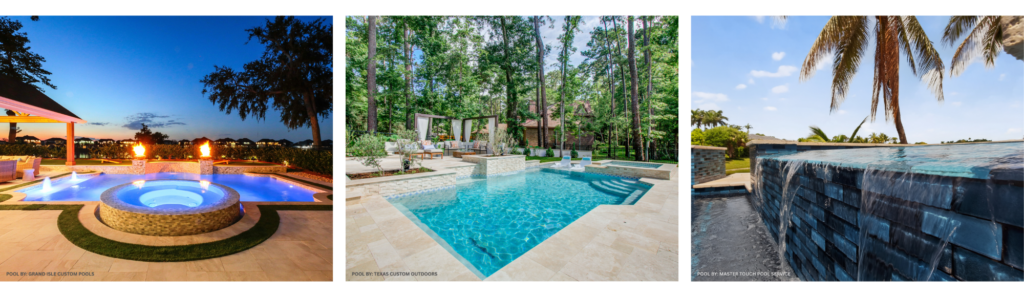
Large-format coping and porcelain pavers can help create cleaner lines and a more coordinated, resort-inspired appearance. Fire features, including linear fire pits and fire-and-water bowls, are also being used as visual anchors that extend the use of an outdoor space beyond the pool itself.
Built-in seating adds another layer of function and permanence. Fire-pit benches, in-pool seating, and tanning ledges (often called Baja ledges) allow designers to create defined areas for gathering, lounging, and enjoying the water without making the overall project feel overly complicated.
Architectural Water Features Add Movement
Architectural water features are becoming an important part of the overall pool experience. Rain curtains, scuppers, and spillways introduce movement, sound, and visual interest while helping connect the pool to raised walls, outdoor structures, and surrounding hardscape.
Prefabricated components have also made these features more accessible than fully custom installations. Depending on the design, a water feature can become a focal point, define different areas of the pool, or introduce a greater sense of privacy and enclosure.
Aquabella scuppers provide a way to introduce a controlled stream of water into raised walls and other architectural features. Their clean lines work especially well with modern, geometric pools, but they can also provide a refined accent in more traditional outdoor environments.
Wellness By Design
Another emerging direction in outdoor living is the desire to create spaces that support relaxation, recovery, and everyday wellbeing. As Master Pool Builder Rusty Britton describes it, the market is experiencing a “demographic pivot: from asset to atmosphere.”
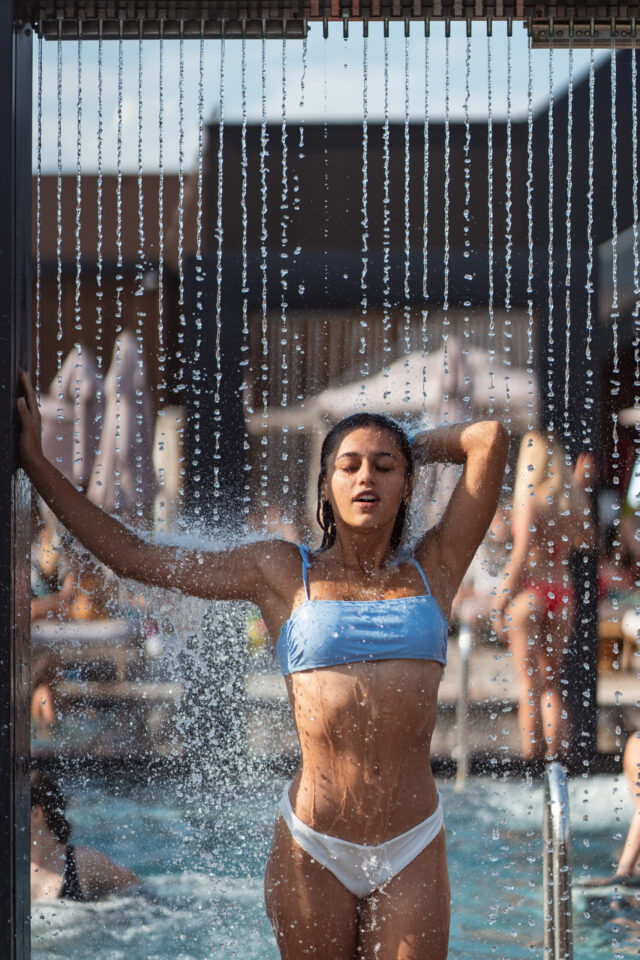
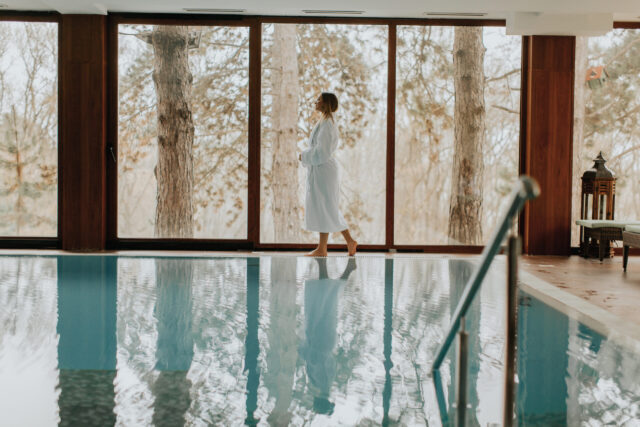
The pool is increasingly being considered as one part of a broader retreat. Spas, cold plunges, shaded lounge areas, and quieter gathering spaces can all contribute to an environment designed around how homeowners want to feel and use the space.
Cold plunges remain a specialized wellness feature rather than a necessity, but they are appearing more frequently in projects centered on recovery and year-round outdoor use. Some homeowners are even willing to reduce the size of the main pool to make room for a spa, plunge pool, or other complementary feature.
Wellness-oriented design also includes the materials people physically interact with. Comfortable coping edges, appropriate surfaces for wet areas, and refined pool interiors can make the environment more inviting. A smoother aggregate finish, such as Aquabella Micro Pebble, can support this experience by creating a more refined surface underfoot.
Emerging Trends in Outdoor Living Aesthetics
Material, shape, and color preferences are also evolving as homeowners look for outdoor spaces that feel more coordinated and intentional.
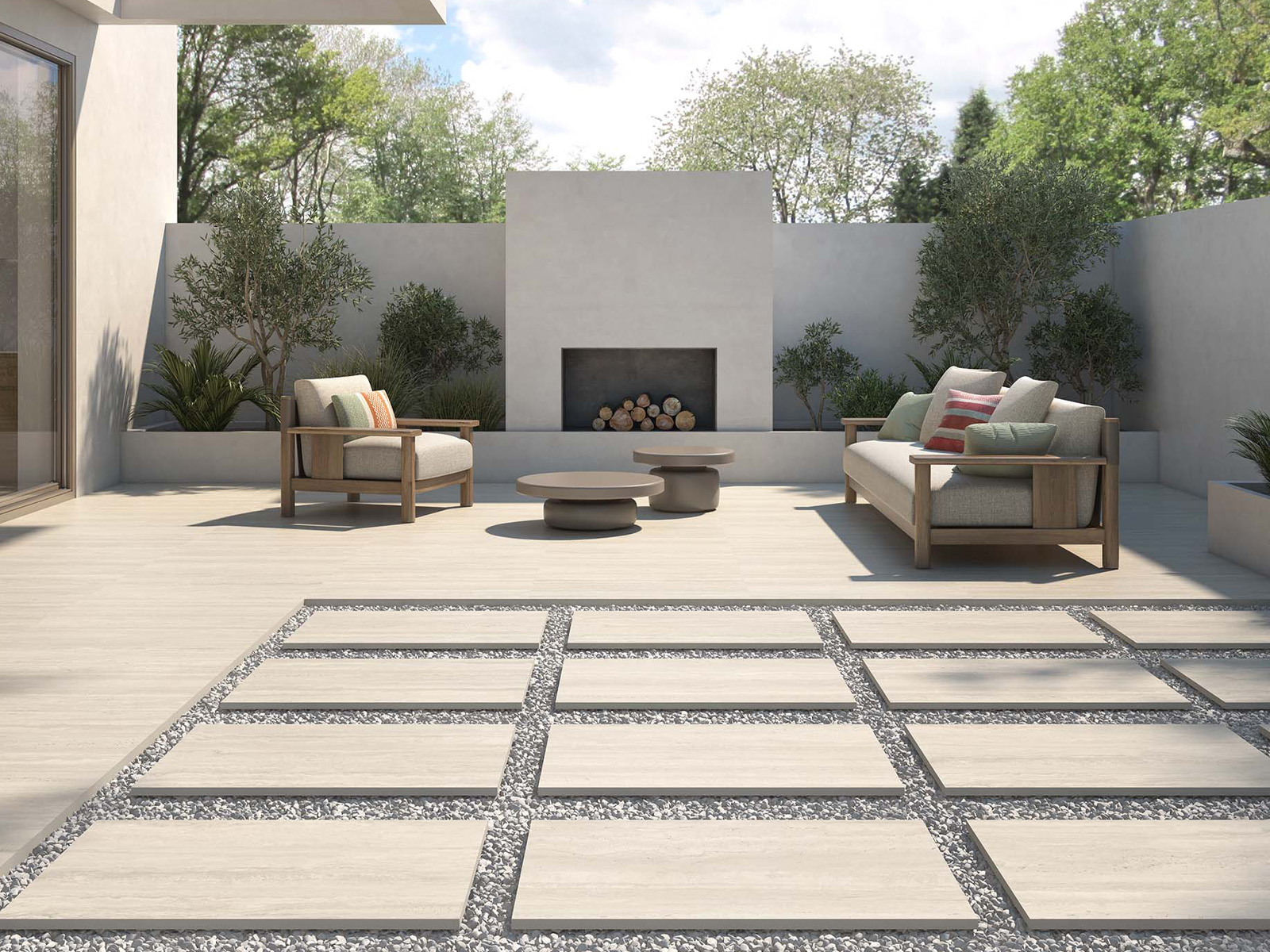
Based on the projects and product selections Aquabella is seeing across its markets, there is continued interest in cool, ethereal, and muted earth tones, including light grays, beiges, creams, and whites. Instead of combining several competing materials, many projects are using a more restrained palette to connect the waterline, coping, deck, and surrounding architecture.
Straight or eased-edge coping paired with large-format pavers can support a cleaner, more minimal appearance. Lighter decking remains requested, while darker waterline tile can provide contrast and help define the pool’s edge. Elongated tile formats, such as Aquabella’s Himalaya 2×6, can reinforce the horizontal lines found in many contemporary pool designs.
Rectangular and modular layouts remain especially well-suited to this approach because they allow the pool, spa, decking, and other outdoor features to follow the same visual structure. Rather than treating every element as a separate selection, designers can use repeated lines, proportions, and materials to create a more unified environment.
Porcelain pavers are also receiving greater consideration for outdoor projects. Properly specified products can offer low water absorption, consistent sizing, and tested resistance to freeze-thaw cycling. Product specifications, installation requirements, and local climate conditions should always be reviewed before a final selection is made.
Surface temperature should also be evaluated carefully. Lighter colors and more reflective surfaces may help reduce heat absorption, but color alone does not guarantee that a paving surface will remain cool. Sun exposure, material composition, solar reflectance, airflow, and surrounding conditions can all affect how hot the surface becomes.
Many projects are trending toward a minimalist look created by straight and eased-edge coping combined with large-format pavers. Lighter shades are increasingly in demand for decking, with darker colors in decline. There is also growing interest in pairing darker waterline tiles with lighter decking to create contrast and definition.
Selecting Materials for the Complete Environment
Creating a coordinated outdoor environment requires more than selecting products based on appearance alone. Before finalizing materials, builders, designers, and homeowners should consider climate exposure, freeze-thaw conditions, wet-area performance, coping profiles, surface temperature, maintenance expectations, and the installation system required for each product.
Selections should also be reviewed together whenever possible. Comparing the waterline tile, coping, pavers, and pool finish simultaneously can help prevent competing undertones and create a more cohesive transition from the water to the surrounding outdoor space.
Product suitability and installation requirements can vary by application and location. Final selections should be confirmed using current product specifications, physical samples, and guidance from qualified pool and installation professionals.
What This Means for Pool Design
Homeowners are no longer selecting only a pool. They are creating an environment that may include places to swim, relax, entertain, gather, and enjoy the outdoors throughout more of the year.
For builders and designers, this means product recommendations should address the entire setting. Waterline tile, coping, pavers, pool finishes, fire elements, and water features should work together visually while also responding to the project’s climate, maintenance requirements, and intended use.
Luxury is becoming less about adding more features and more about making intentional decisions. A well-designed outdoor space can feel elevated through coordinated materials, comfortable surfaces, thoughtful proportions, and products selected for lasting performance.
Explore Aquabella’s porcelain pavers, pool tile, fire and water features, and pool finishes to create a coordinated outdoor environment from the waterline to the surrounding hardscape.
About the Author
 Kali Edwards
Kali is part of the Aquabella team, with over 17 years of experience across sales, marketing, and business development. Her work focuses on customer experience, account development, and aligning market needs with product and design direction.