There’s a moment—usually just after sunset—when a backyard changes completely.
The water settles. The light softens. And if the space has been designed well, something else takes over: warmth, movement, atmosphere.
This is where fire comes in.
Not as decoration, but as the element that turns a pool into a place people gather, linger, and remember.
Outdoor spaces today are no longer separate from the home. They are part of it—an extension of how we live, entertain, and unwind. As noted by the American Society of Landscape Architects: “Outdoor spaces are increasingly designed as true extensions of the home, reflecting a broader shift in how residential environments are conceived.”
And in that shift, fire has become one of the most powerful tools designers use to shape the experience.
Why Fire Changes Everything Around a Pool
Think about how most pools feel without it:
- Beautiful during the day
- Quiet at night
- Visually flat once the sun goes down
Now imagine the same space with fire:
- Light reflecting on water
- A warm focal point draws people in
- A sense of depth and movement
That transformation isn’t accidental. Across high-end residential design, spaces are increasingly being conceived with the comfort, finish, and atmosphere of hospitality environments in mind.
In landscape architecture, elements are no longer chosen just for how they look, but for how they make people feel in a space. The Landscape Architecture Foundation describes this shift clearly: “Landscape design today prioritizes how people experience and move through space, rather than relying on purely decorative elements.”
Fire does exactly that. It gives the space a center, a rhythm, a reason to gather.
Pool Fire Bowls: The Moment That Frames the Space
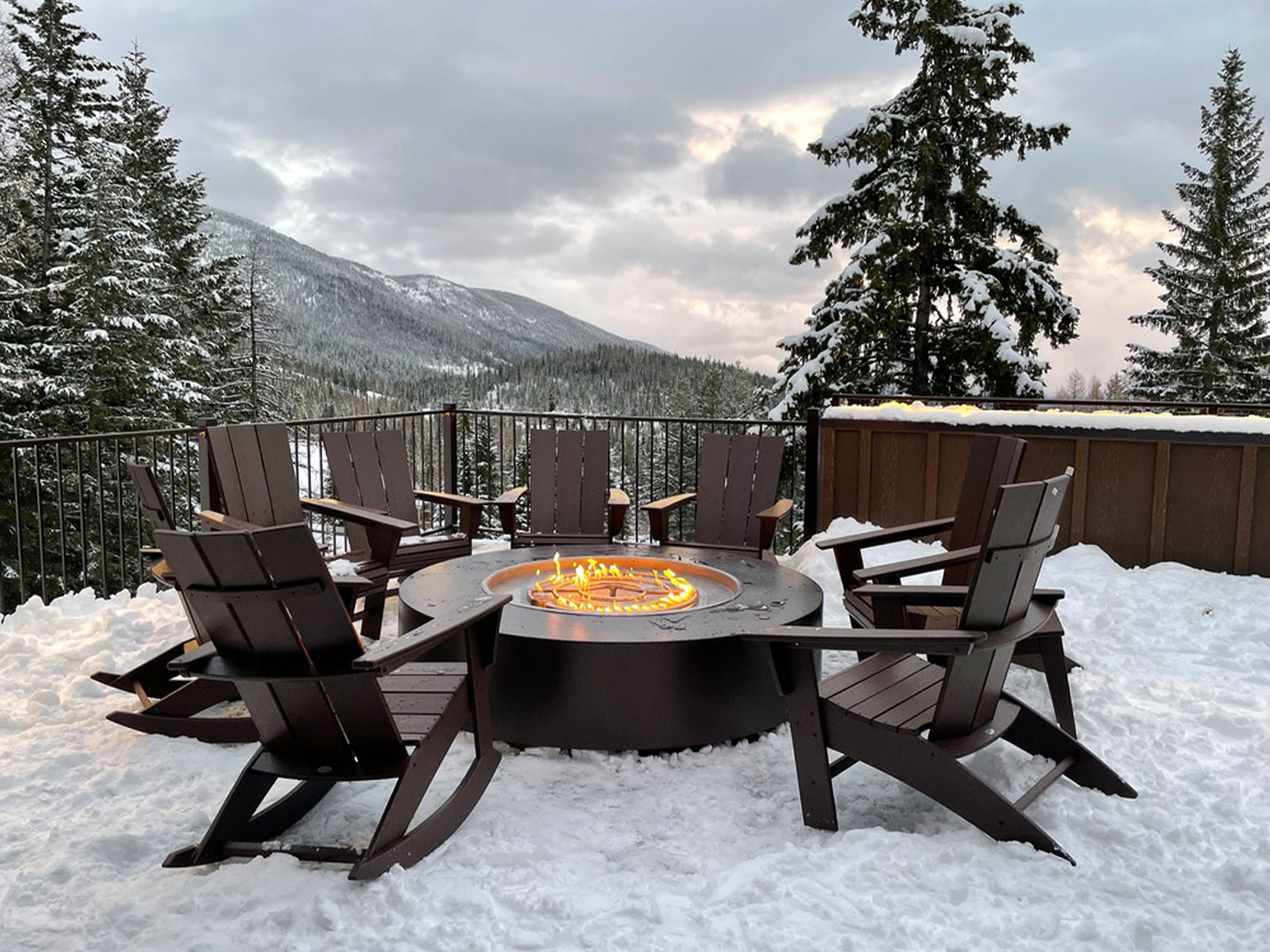
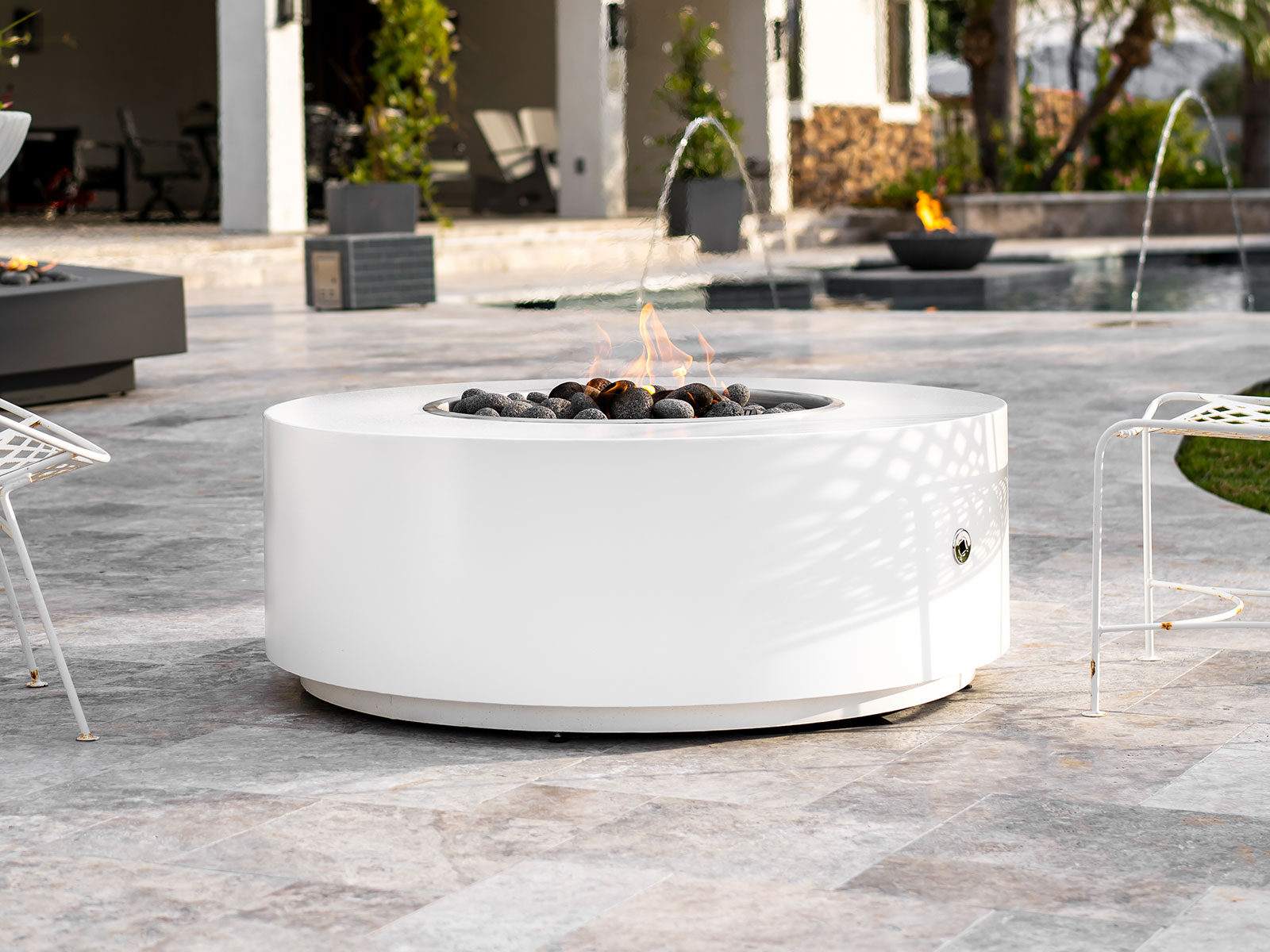
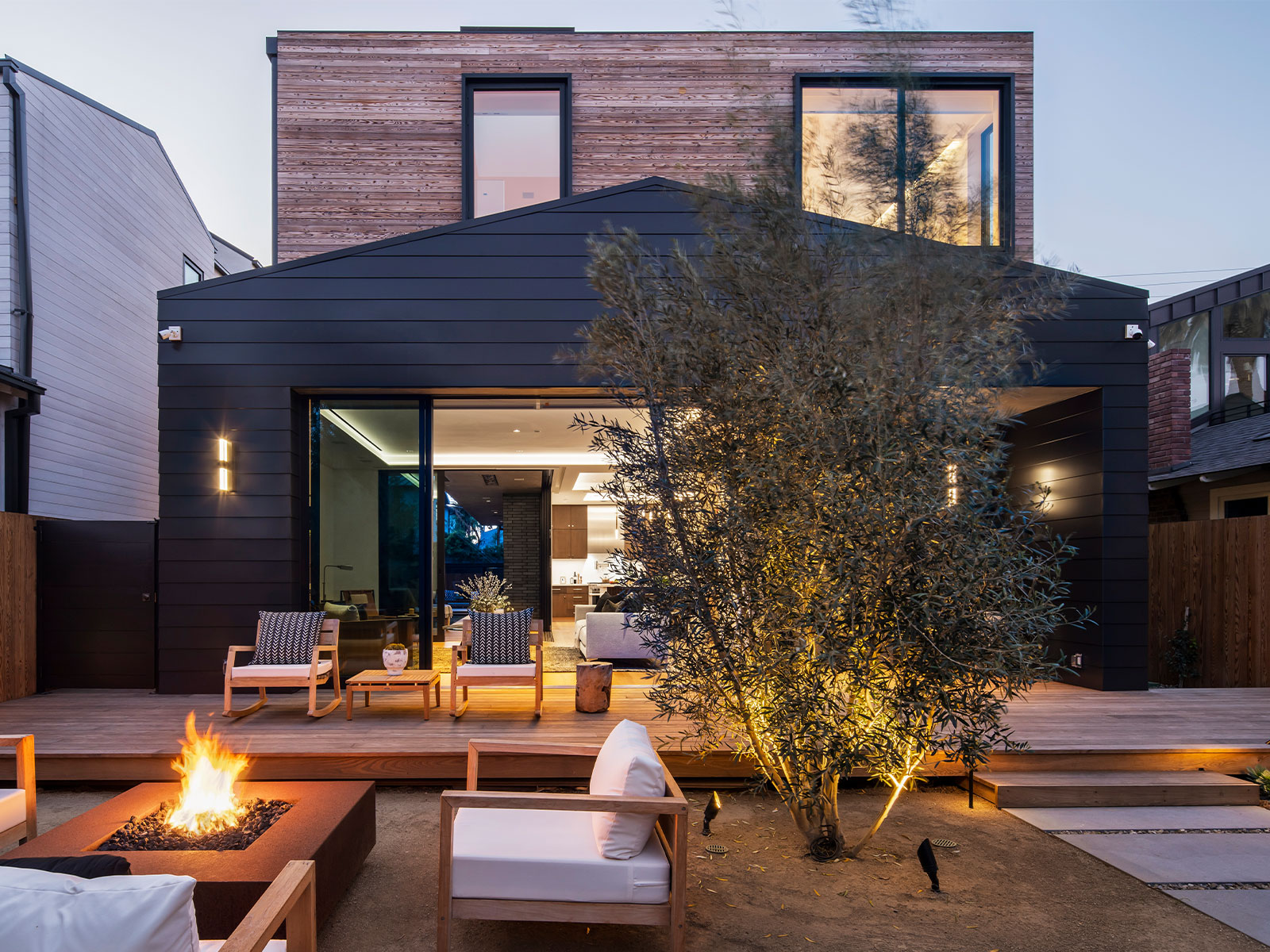
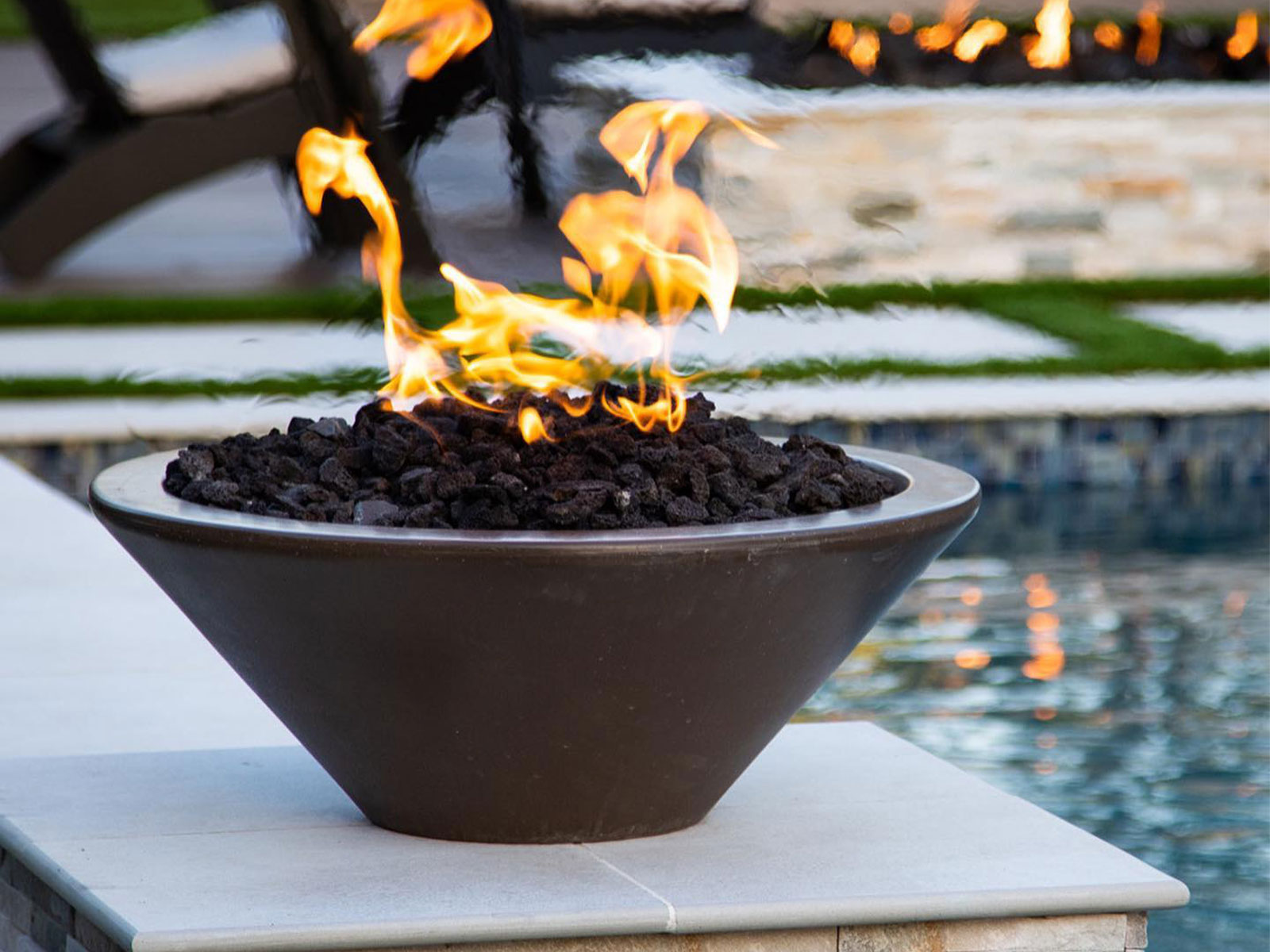
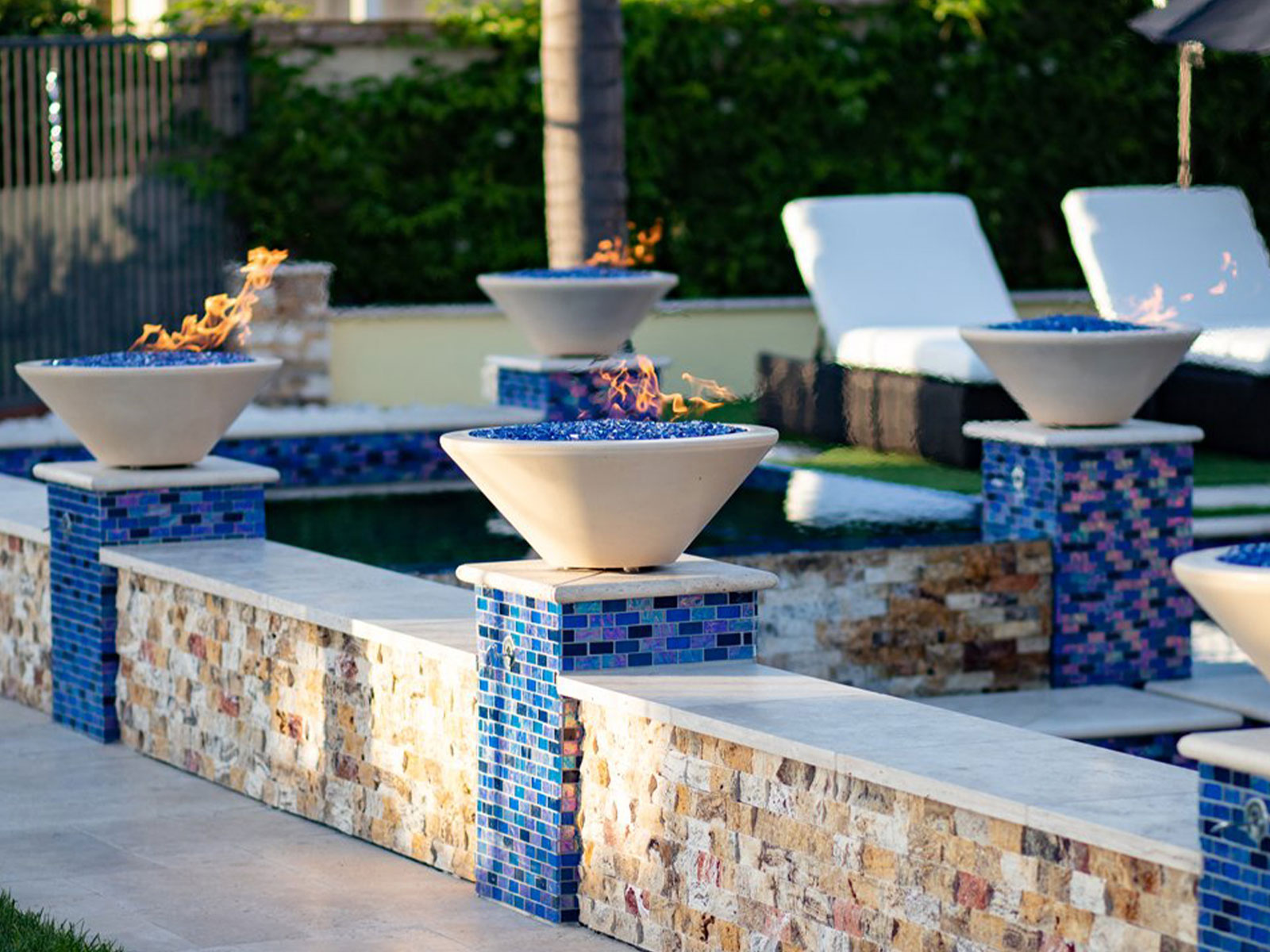
Not all fire features create the same impact. The most compelling designs use fire with intention—integrated into the architecture of the space.
Fire + Water: A Contrast You Can Feel
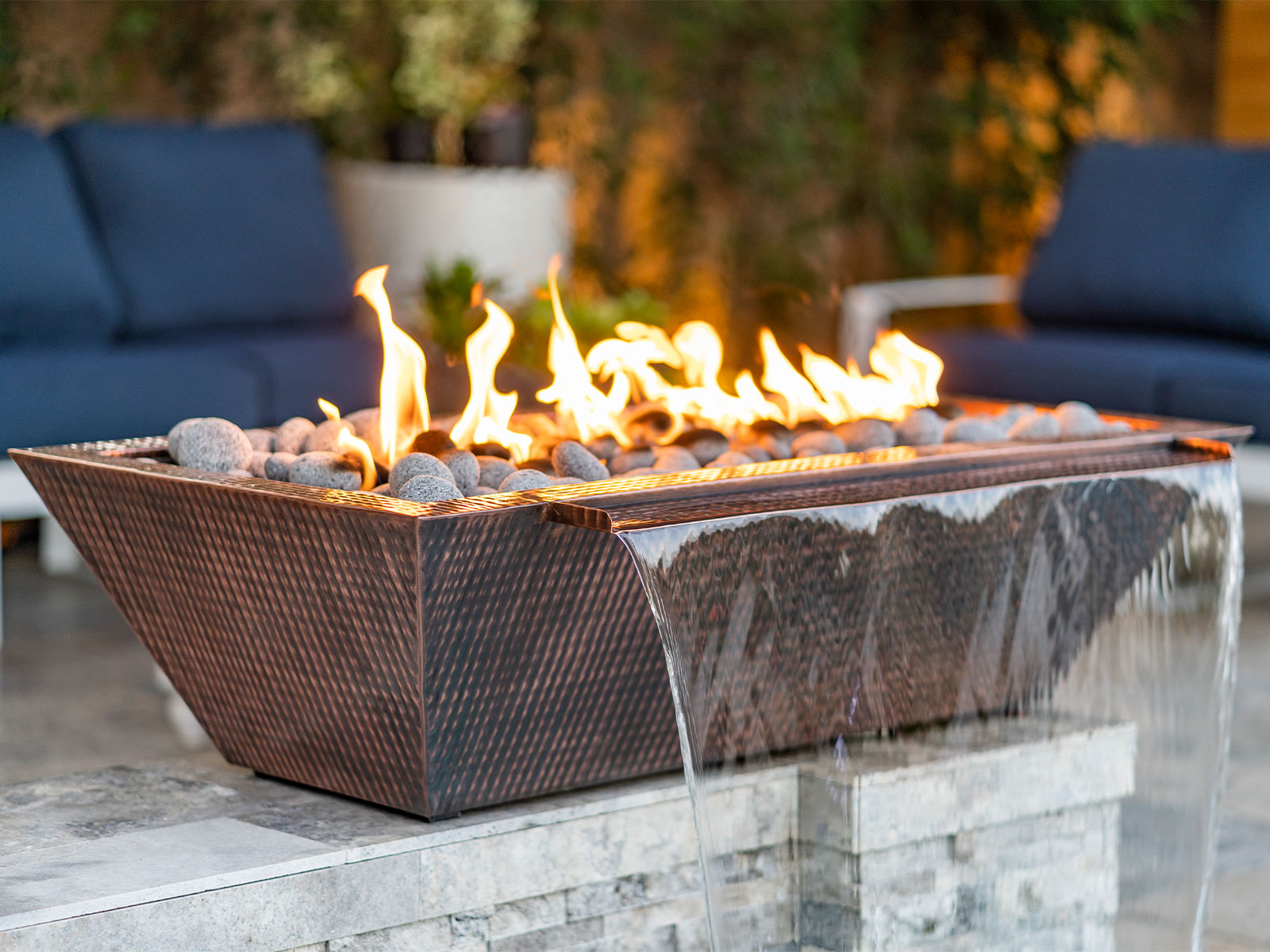
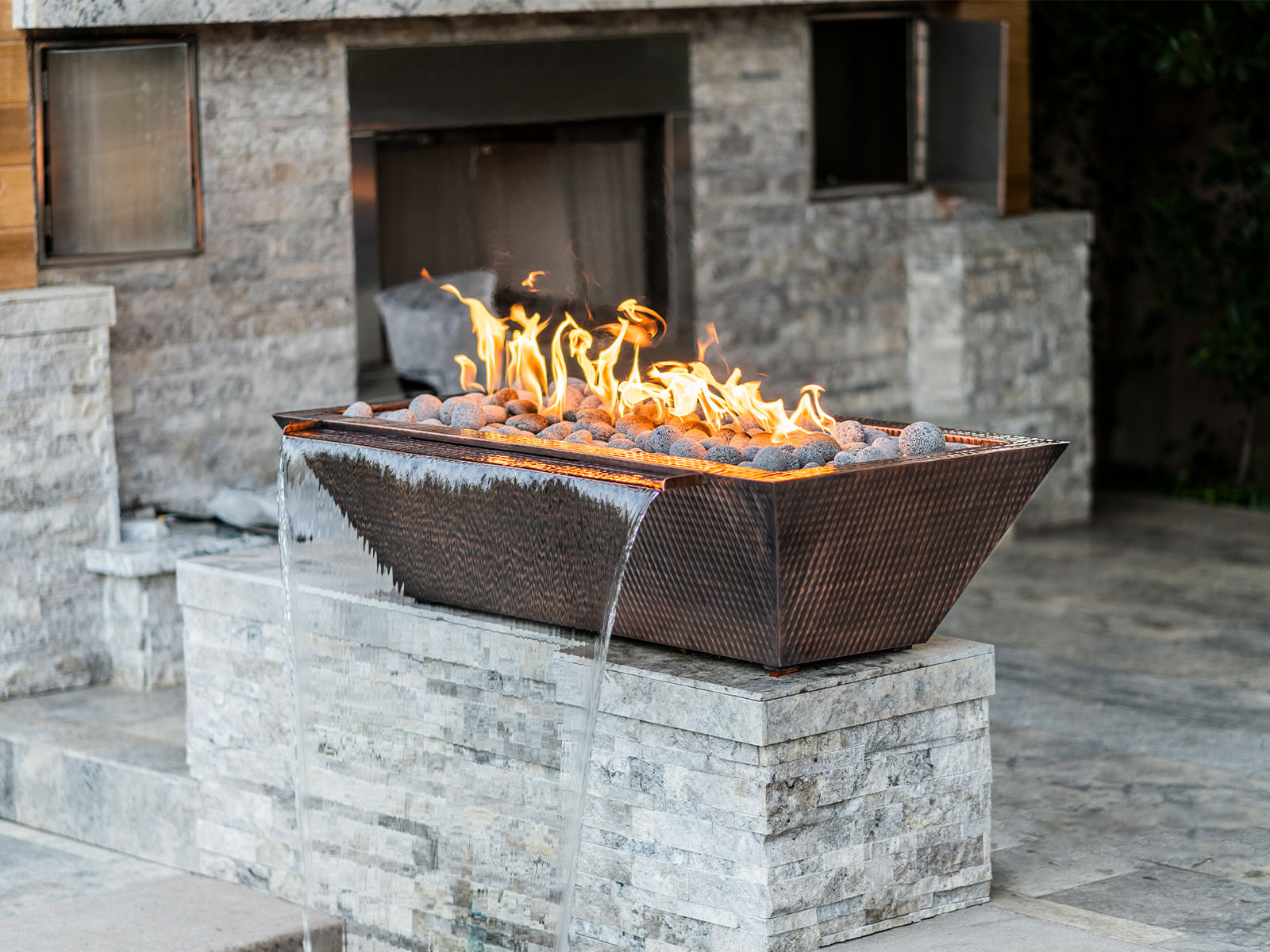
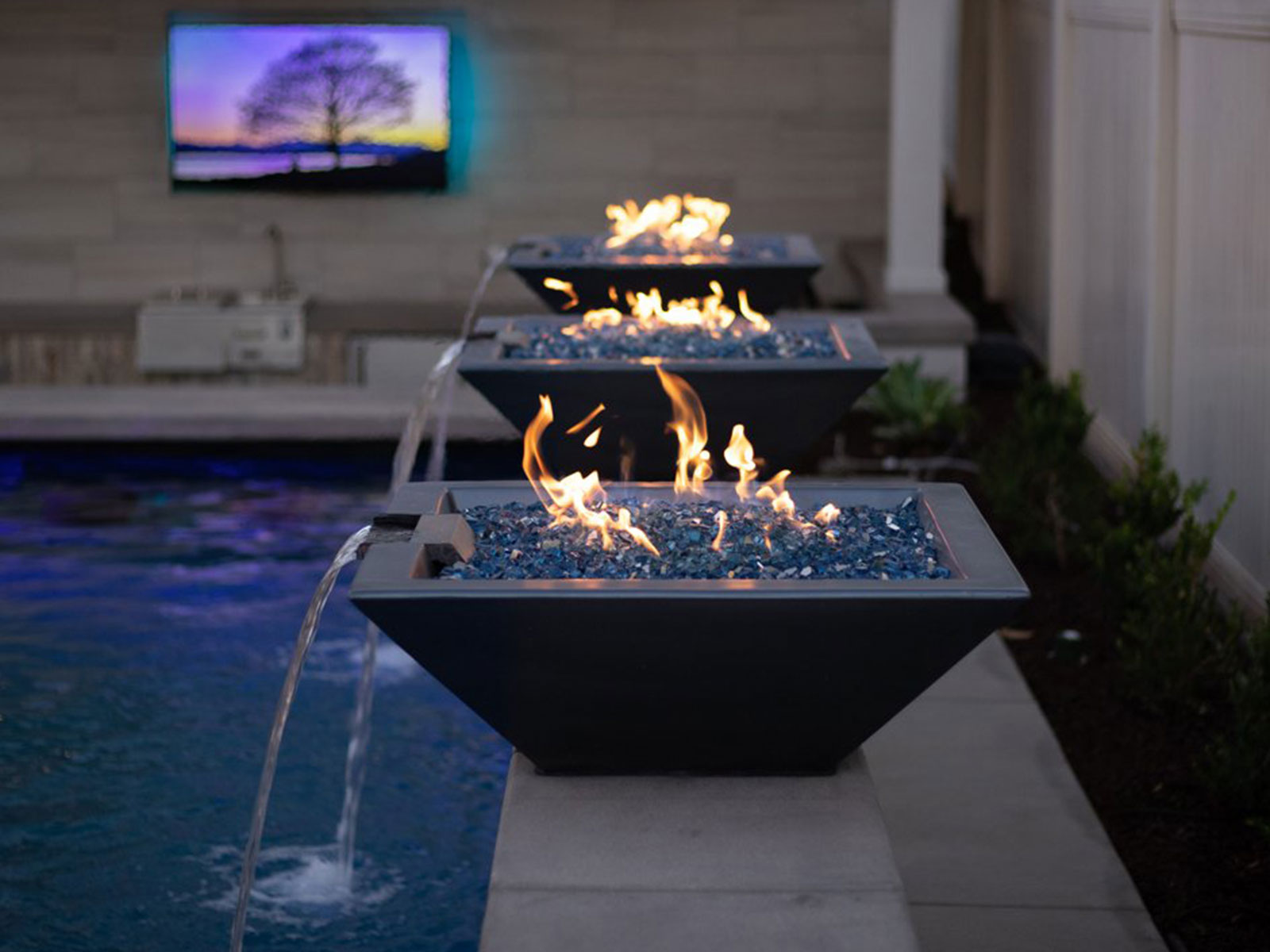
Linear Fire: Subtle, Modern, and Architectural
Not every fire feature needs to be bold.
Some of the most beautiful spaces use fire quietly—almost invisibly.
Linear fire features run alongside the pool, creating:
- A soft, continuous glow
- Clean architectural lines
- A calm, modern atmosphere
This approach reflects a broader design movement toward simplicity and restraint, often associated with architects like John Pawson: “Minimalism is about achieving clarity through reduction—removing the unnecessary to reveal the essential.”
For more contemporary spaces, linear fire elements offer a quieter way to introduce warmth without disrupting the architecture.
Fire alone doesn’t create a great space. What surrounds it does.
The surfaces, textures, and tones around a fire feature determine whether it feels integrated—or out of place.
Elevated Fire: A Focal Point You Notice From Anywhere
When fire is lifted above the pool, it becomes something else entirely.
It becomes a landmark.
You see it from:
- Inside the home
- Across the yard
- Every angle of the space
At night, it anchors everything.
The most successful spaces are designed as a complete system—where surfaces and fire elements work together.
The Material Around the Fire Is What Makes It Work
Fire alone doesn’t create a great space.
What surrounds it does.
The surfaces, textures, and tones around a fire feature determine whether it feels integrated—or out of place.
Design firms like Rockwell Group often emphasize how materials interact with light: “Materials come to life through light, shadow, and movement, shaping how a space is perceived and experienced.”
This is where thoughtful material selection becomes critical:
- Warm tones enhance the glow of fire
- Texture adds depth through shadow
- Clean surfaces reflect light subtly
At Aquabella, this is the foundation:
– Fire is not added to the space
– It is designed with the space
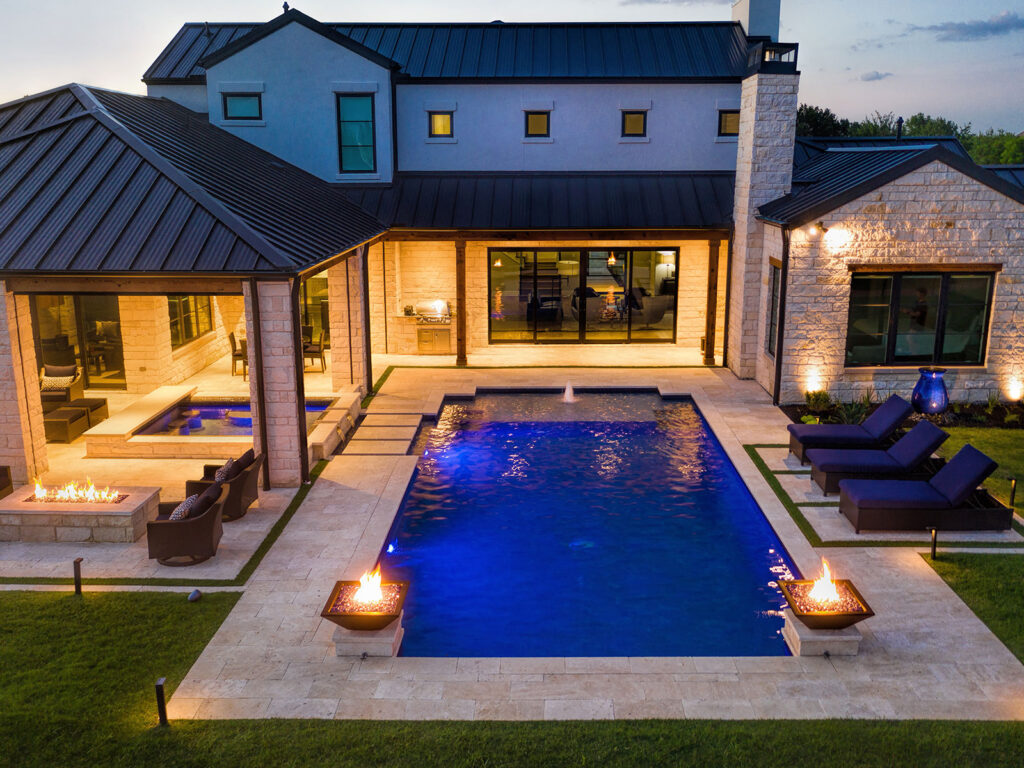
Designing for Night Changes Everything
Most people design their backyard for the day.
But the best spaces are designed for what happens after the sun goes down.
Organizations like the International Association of Lighting Designers highlight how lighting shapes perception: “Lighting plays a critical role in how environments are perceived, influencing both atmosphere and human experience.”
Fire becomes:
- The light source
- The mood
- The reason people stay outside longer
The most memorable outdoor spaces aren’t the ones with the most elements. They’re the ones where everything works together.
More Than a Feature—It’s a Feeling
At the highest level, outdoor design is no longer about features—it’s about how a space makes you feel. As Peter Zumthor writes, “architecture is capable of touching the human soul.”
Not just light.
Not just warmth.
But presence.
Final Thought
The most memorable outdoor spaces aren’t the ones with the most elements. They’re the ones where everything works together. Where the materials, the water, and the fire feel connected. Where the space invites you to stay just a little longer.
At Aquabella, pool fire bowls and thoughtfully designed poolside fire feature ideas aren’t about adding something extra.
They’re about creating a space that feels complete.
About the Author
 Miguel Bermeo
Marketing Director at Aquabella, with a focus on brand identity, showroom experience, and market intelligence. His work centers on how Aquabella shows up across touchpoints — from store flow and product presentation to how the brand connects with both homeowners and builders.