When planning a new pool, one question often comes up: Do you really need waterline tile?
For most residential concrete pools, the practical answer is yes. Waterline tile is more than a decorative border. It creates a durable, easier-to-clean surface in one of the most demanding areas of the pool while providing a finished transition between the pool interior and the coping or deck.
Although waterline tile may not be required for every residential pool, it has become an industry-standard feature because it helps protect the pool’s finish, simplifies maintenance, and gives the pool a more complete and intentional design.
What Is Waterline Tile?
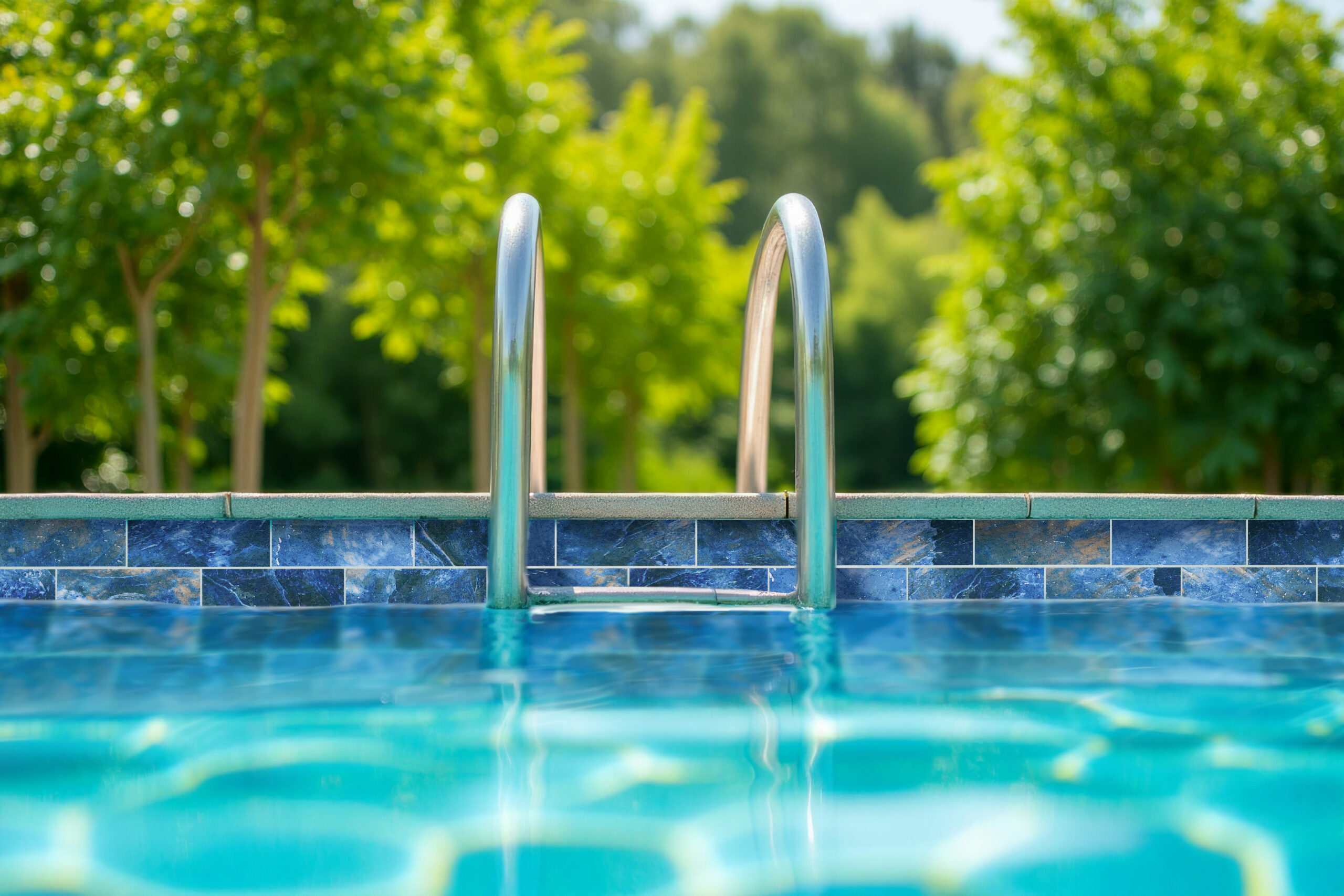
Waterline tile is the band of tile installed around the perimeter of a swimming pool where the water meets the pool wall.
In many residential pools, the waterline band is approximately six inches tall. However, its height can vary depending on the pool design, tile format, circulation system, operating water level, and applicable local requirements.
In a typical gunite or shotcrete pool, the structural concrete shell is covered with an interior finish such as plaster, quartz, pebble, or another exposed aggregate finish. This surface gives the pool its finished texture and significantly affects the water’s color and appearance.
The waterline is exposed to different conditions than the surfaces that remain underwater. The pool’s water level changes throughout the day because of evaporation, rainfall, swimmers, splash-out, and normal circulation. This repeated wet-and-dry cycle can leave minerals, sunscreen, body oils, cosmetics, and other residue along the pool wall.
A properly selected waterline tile creates a durable surface that can withstand routine brushing and cleaning more effectively than an exposed cementitious pool finish.
Is Waterline Tile Required?
Whether waterline tile is legally required depends on the type of pool and the building or health codes adopted by the local jurisdiction.
Residential pool codes do not always specifically require tile. Instead, they typically require a durable, smooth, watertight, and easily cleanable interior surface. In some specialized pool designs, another approved material or finishing method may satisfy those requirements.
Public and commercial swimming pools may be subject to more detailed regulations. Depending on the circulation system and the governing code, the pool may require a durable and cleanable finish extending above and below the normal operating water level.
Builders and designers should always confirm local requirements with the appropriate building or health department before completing the pool design.
Even when tile is not specifically required by code, it remains one of the most practical and proven ways to finish the waterline of a concrete pool.
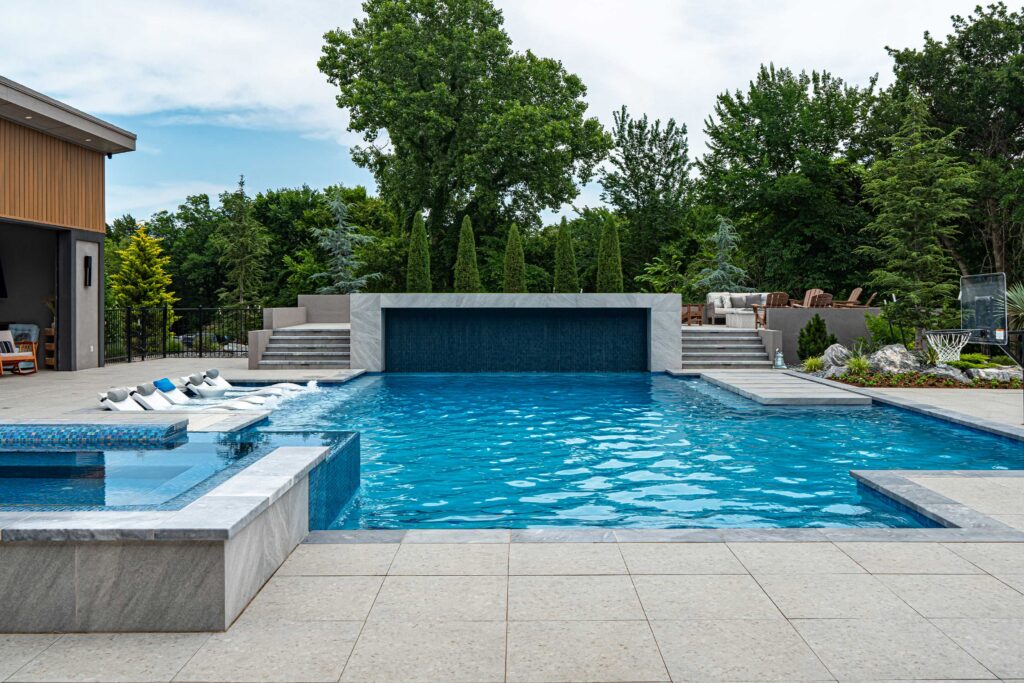
Can You Build a Concrete Pool Without Waterline Tile?
In some circumstances, yes.
A concrete pool may be designed with an alternative, approved waterline finish, a perimeter overflow system, or a fully tiled interior that does not use a separate traditional waterline band.
However, leaving a conventional plaster, quartz, or aggregate pool finish exposed at the fluctuating waterline can make routine maintenance more difficult. Mineral deposits, body oils, and surface residue may become more visible in this area. Repeated or aggressive cleaning may also affect the appearance and texture of the exposed finish over time.
Waterline tile creates a clearly defined cleaning zone and a practical transition between the pool interior and the materials installed above it. For these reasons, most concrete pool builders include it as a standard part of the pool installation.
Does Waterline Tile Prevent Staining and Calcium Buildup?
Waterline tile can make cleaning easier, but it does not make swimming pool maintenance free.
Calcium scale, mineral deposits, metal staining, oils, sunscreen, and other residue can still accumulate on tile and grout, particularly when the pool water is not properly balanced.
The advantage of pool-rated glass and porcelain tile is that these materials generally provide a more durable and cleaner surface than an exposed cementitious pool finish. Routine brushing or cleaning is less likely to change the tile’s appearance when the correct methods and products are used.
Proper water chemistry remains one of the most important defenses against scale, staining, and surface deterioration. Pool owners should regularly monitor factors such as:
- pH
- Total alkalinity
- Calcium hardness
- Sanitizer levels
- Overall water balance
A soft-bristled pool brush can help remove light residue before it becomes harder to clean. Any stronger cleaning products or methods should follow the recommendations of the tile, grout, and installation material manufacturers.
Waterline tile should therefore be viewed as a maintenance advantage, not as a replacement for balanced water chemistry and regular pool care.
How High Should Waterline Tile Be?
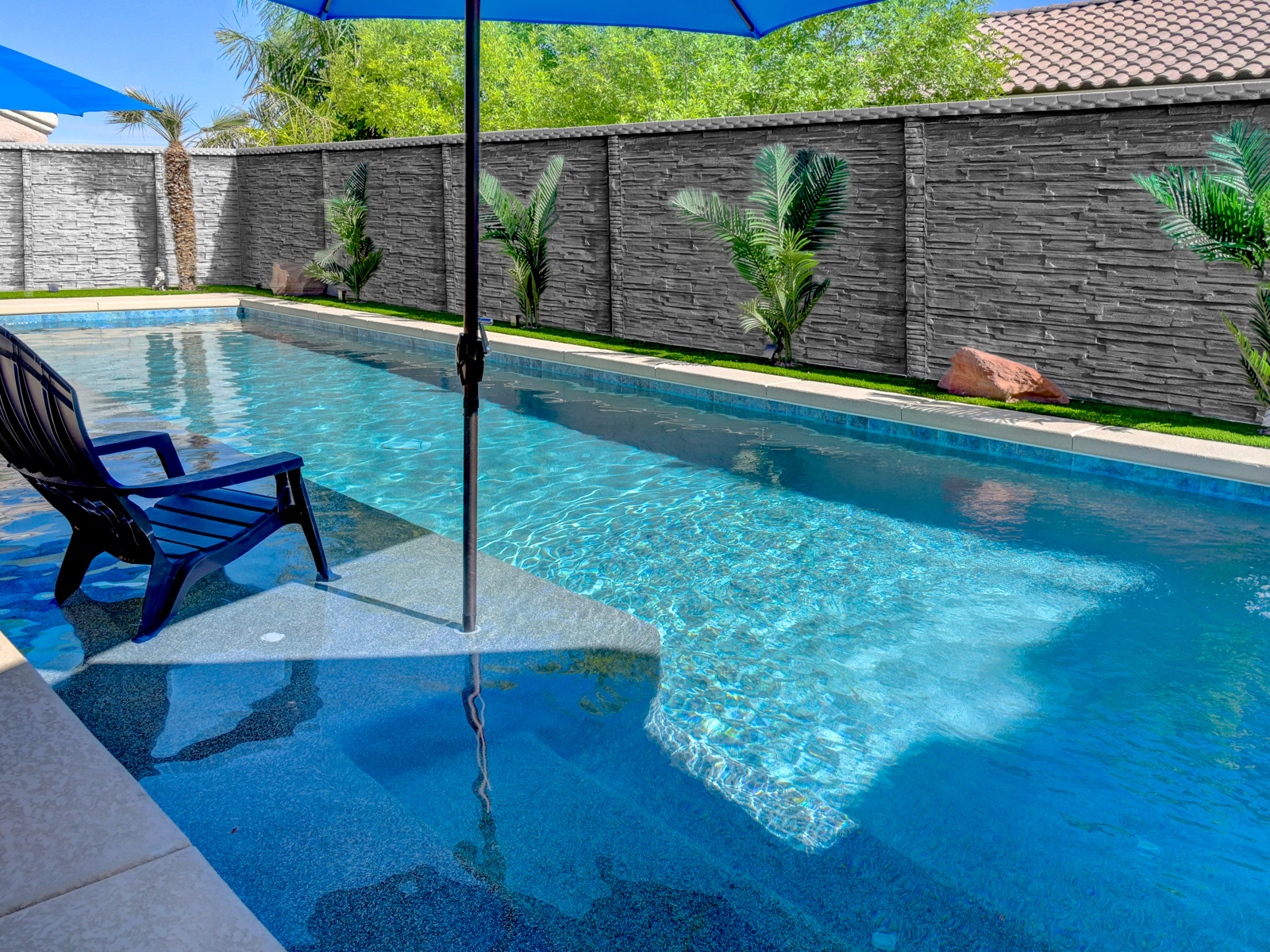
A six-inch waterline band is common in residential skimmer pools and works well with many standard tile and mosaic formats.
However, waterline tile may also be installed at heights of nine or twelve inches. A taller band can create a stronger visual feature, coordinate with raised walls, accommodate changes in water elevation, or work more effectively with a particular tile size.
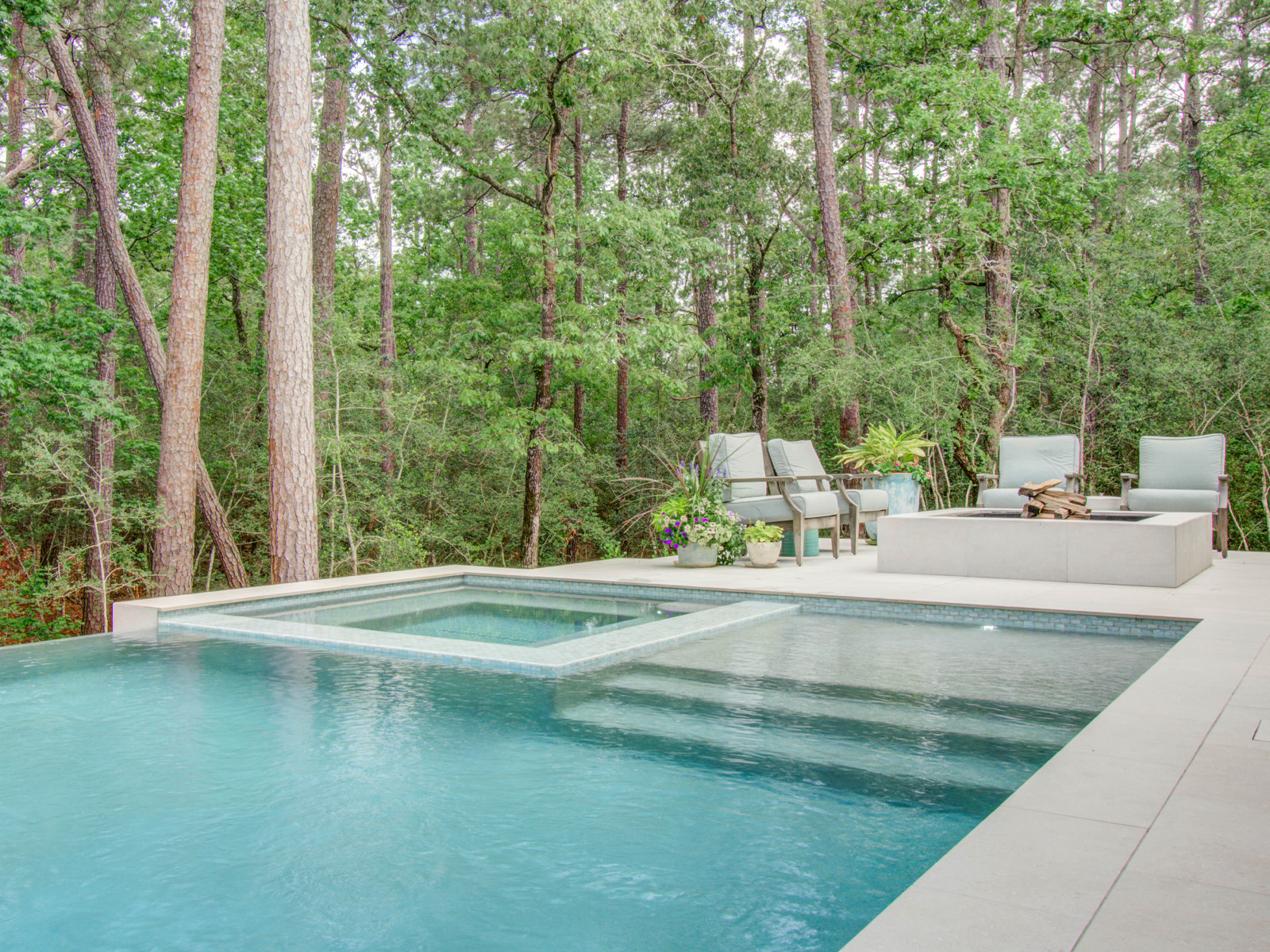
Infinity-edge, gutter, and perimeter-overflow pools require a different design approach because the operating water level interacts with an overflow edge or collection system. In these pools, the tile layout must be coordinated with the hydraulic design and the areas that will remain continuously wet.
The complete tile layout should be planned before installation. Proper planning can help prevent narrow cuts, uneven grout joints, and awkward transitions around:
- Corners
- Skimmers
- Steps
- Benches
- Swim shelves
- Raised walls
- Spillways
- Water features
The tile height should support both the pool’s technical requirements and the overall design of the outdoor space.
Waterline tile creates a clearly defined cleaning zone and a practical transition between the pool interior and the materials installed above it. For these reasons, most concrete pool builders include it as a standard part of the pool installation.
Choosing Glass or Porcelain Waterline Tile
Glass mosaics and porcelain tiles are among the most popular choices for pool waterlines. Both materials offer a wide variety of colors, finishes, textures, patterns, and sizes.
Porcelain Pool Tile
Porcelain tile is dense, durable, and available in styles ranging from traditional mosaics to larger contemporary formats. Porcelain tile has a water absorption rate of 0.5% or less, making it suitable for many wet and exterior applications when properly manufactured and specified.
Porcelain can reproduce the appearance of natural stone, handmade ceramics, concrete, or other materials while offering consistent performance and relatively simple maintenance.
Glass Pool Tile
Glass tile can bring color, reflectivity, depth, and movement to a pool. Sunlight and water interact with the glass surface, causing the tile’s appearance to change throughout the day.
Glass mosaics are available in transparent, translucent, iridescent, textured, and opaque finishes. They can be used to create a subtle waterline or a more dramatic design feature.
However, not every glass or porcelain tile is automatically appropriate for swimming-pool use. Before selecting a product, confirm that the manufacturer approves it for the intended application.
Depending on the project, the tile may need to be rated for:
- Waterline installation
- Continuous submersion
- Exterior exposure
- Freeze-and-thaw conditions
- Saltwater pools
- Spas or elevated temperatures
The appearance of the tile is important, but its suitability for the application must come first.
Can Natural Stone Be Used as Waterline Tile?
Aquabella does not recommend natural stone for pool waterlines. Natural stone varies significantly in porosity, absorption, and performance compared with manufactured pool-rated tile, so it can absorb water and react to repeated wet-and-dry cycles. Over time, this may contribute to expansion and contraction, discoloration, surface deterioration, or other performance issues, especially in areas exposed to temperature changes or freeze-and-thaw conditions.
Natural stone may also release minerals or salts that can migrate to the surface, causing staining, deposits, or visible discoloration. Sealing may help reduce absorption, but it does not eliminate these risks or make the stone waterproof. For a more durable and easier-to-maintain waterline, Aquabella recommends pool-rated porcelain or glass tile.
Proper Installation Is Just as Important as Tile Selection
Even a high-quality pool tile can fail if the installation system is not designed for a continuously wet or submerged environment.
Tile and grout should not be treated as the pool’s primary waterproofing system. The pool shell and the approved waterproofing or interior finish assembly are responsible for containing water.
A successful waterline tile installation requires:
- Proper substrate preparation
- Compatible setting materials
- Adequate mortar coverage
- Correctly placed movement joints
- Suitable grout and sealants
- Proper installation around penetrations and fittings
- Sufficient curing time before the pool is filled
Changes of plane, structural joints, steps, raised walls, spillways, and transitions between different materials require particular attention.
The installer should follow applicable industry standards and the instructions provided by the tile, mortar, grout, waterproofing, and sealant manufacturers.
The tile selection and installation system should be considered together rather than treated as separate decisions.
What About a Fully Tiled Pool?
Waterline tile does not have to stop at the traditional six-inch band.
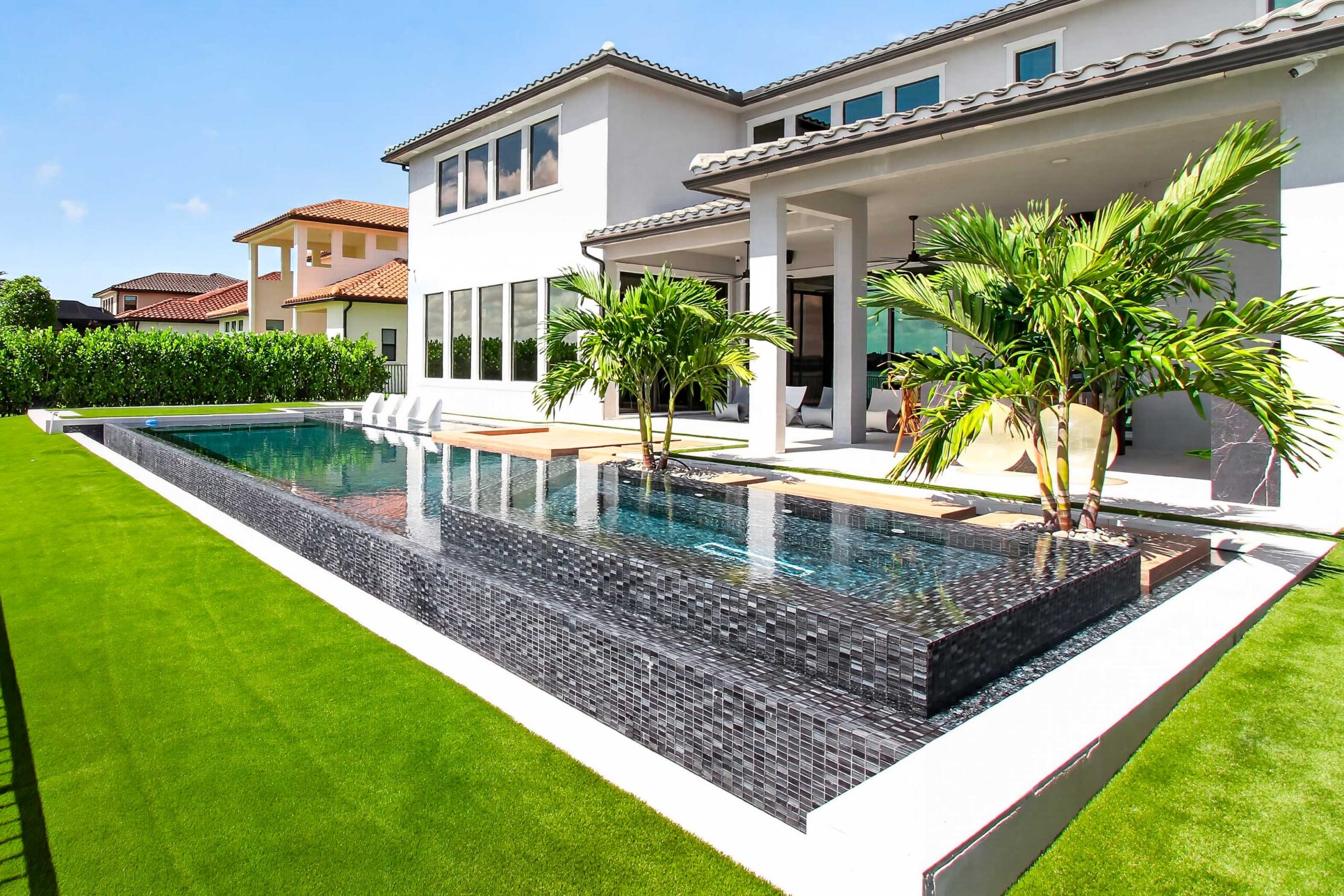
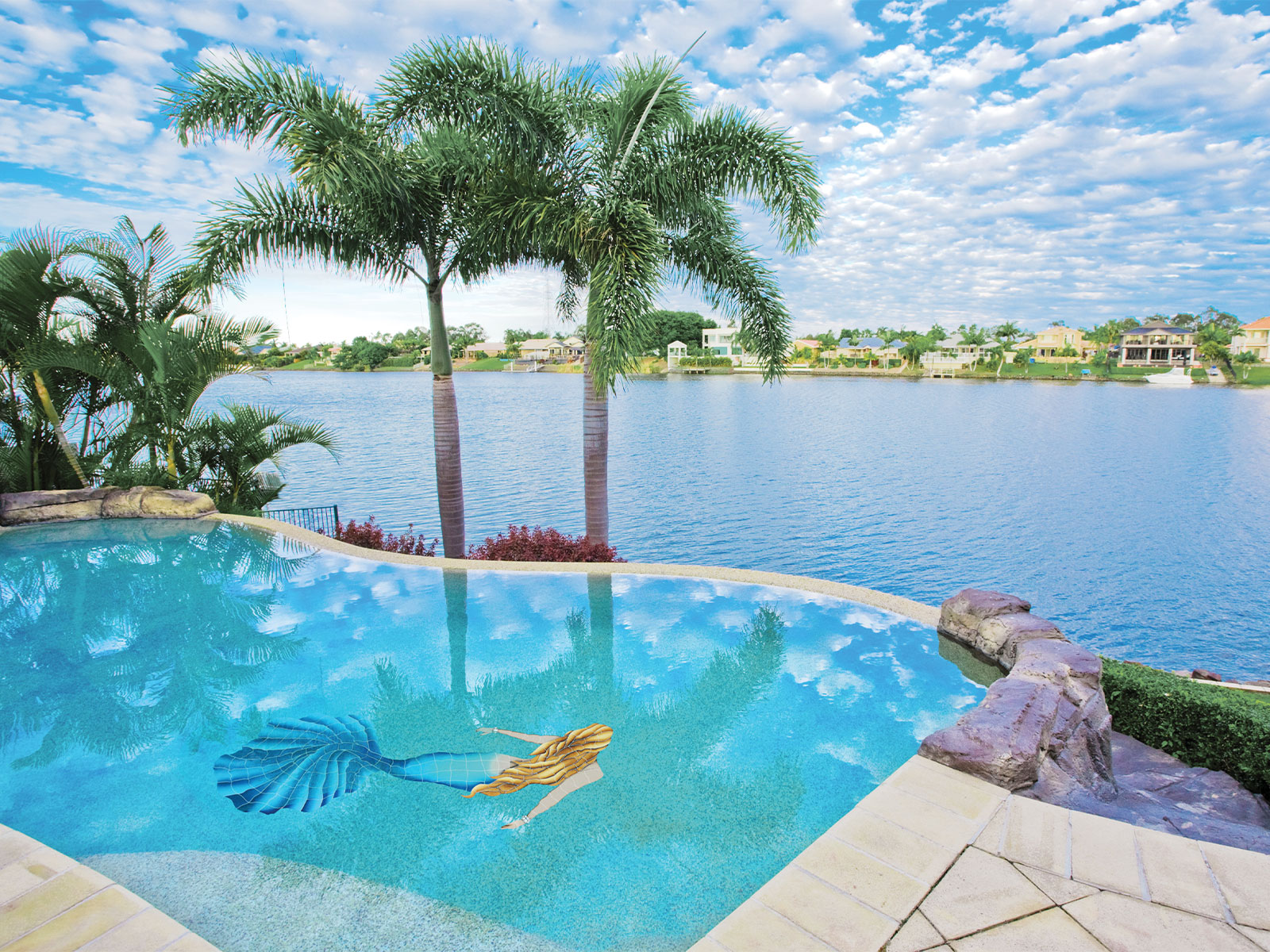
Glass mosaics or porcelain tiles can be installed throughout the pool, including the walls, floor, steps, benches, and swim shelves. This creates a fully tiled pool rather than a conventional exposed plaster, quartz, or aggregate finish.
A fully tiled pool can provide a distinctive appearance and a highly durable finished surface. It also gives designers greater control over patterns, color transitions, borders, step details, and other custom features.
However, a fully tiled pool generally requires more material, specialized installation labor, careful substrate preparation, and detailed planning. Movement, waterproofing, curing, and material compatibility become especially important because of the larger tiled area.
A fully tiled pool still requires proper water chemistry and routine cleaning. Tile can simplify some maintenance tasks, but it cannot prevent calcium scale or staining if the pool water is not properly managed.
Using Pool Tile Beyond the Waterline
Pool-rated glass and porcelain tile can also be used to connect the swimming pool with the surrounding outdoor environment.
Common applications include:
- Raised bond beams
- Exterior spa walls
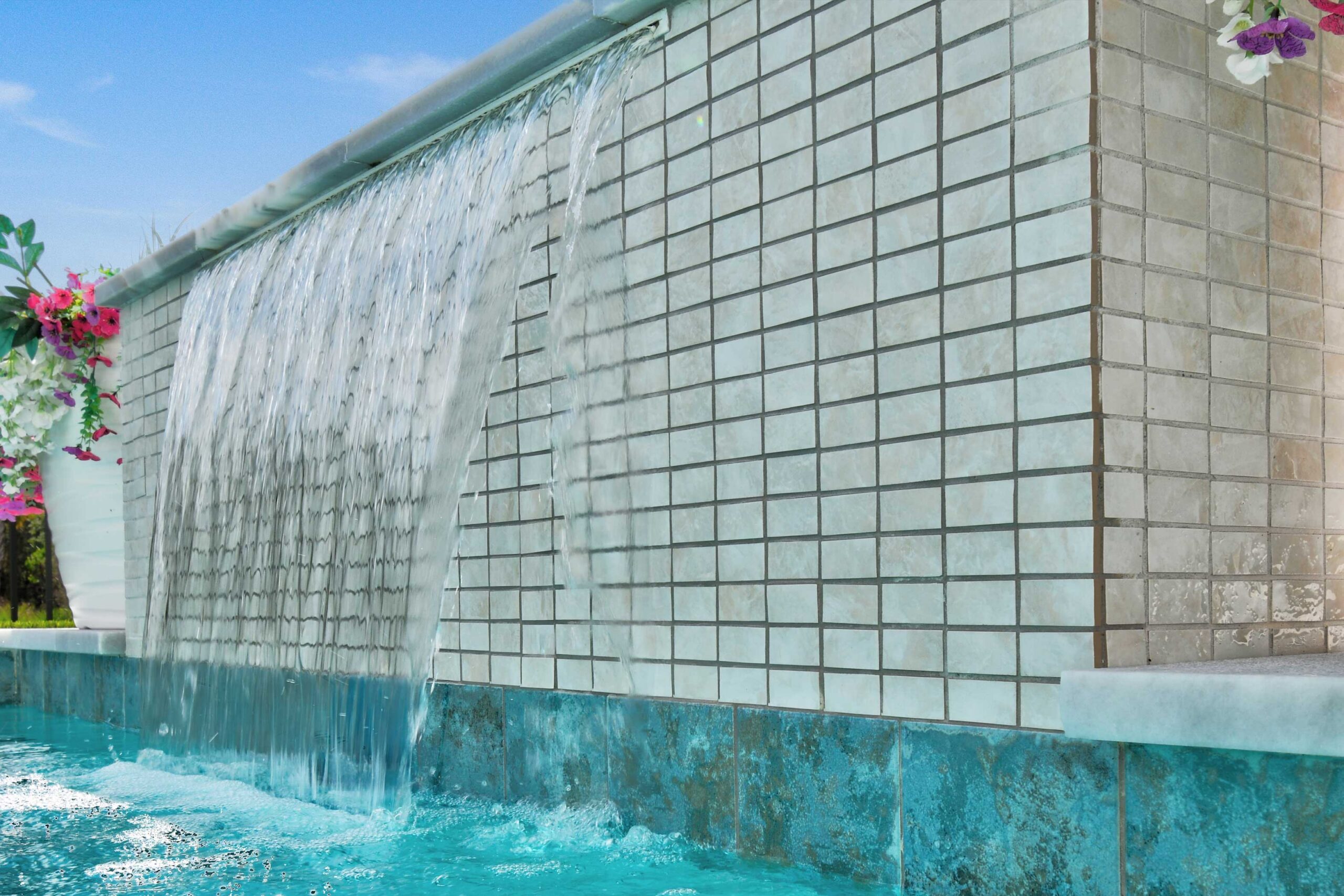
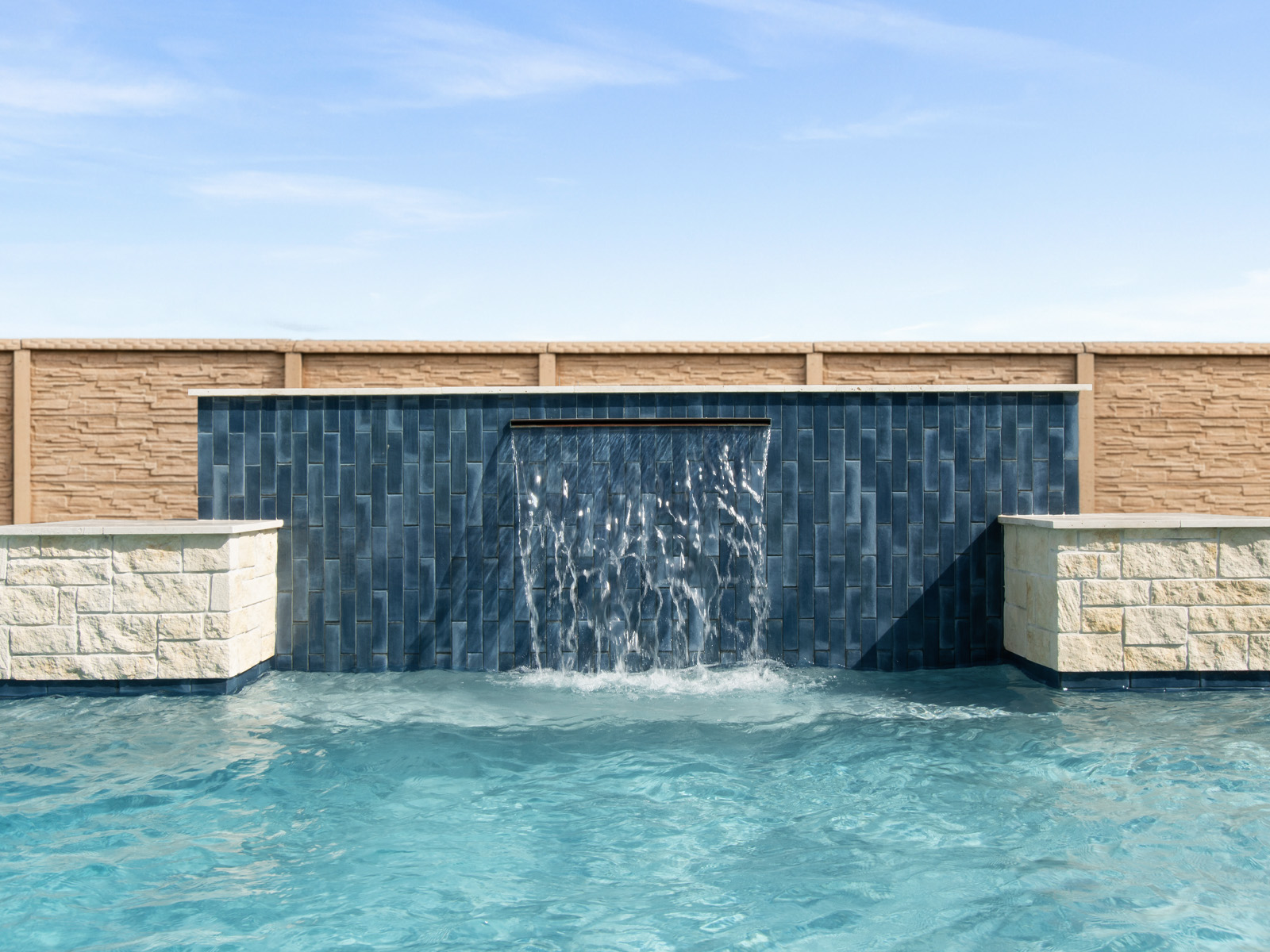
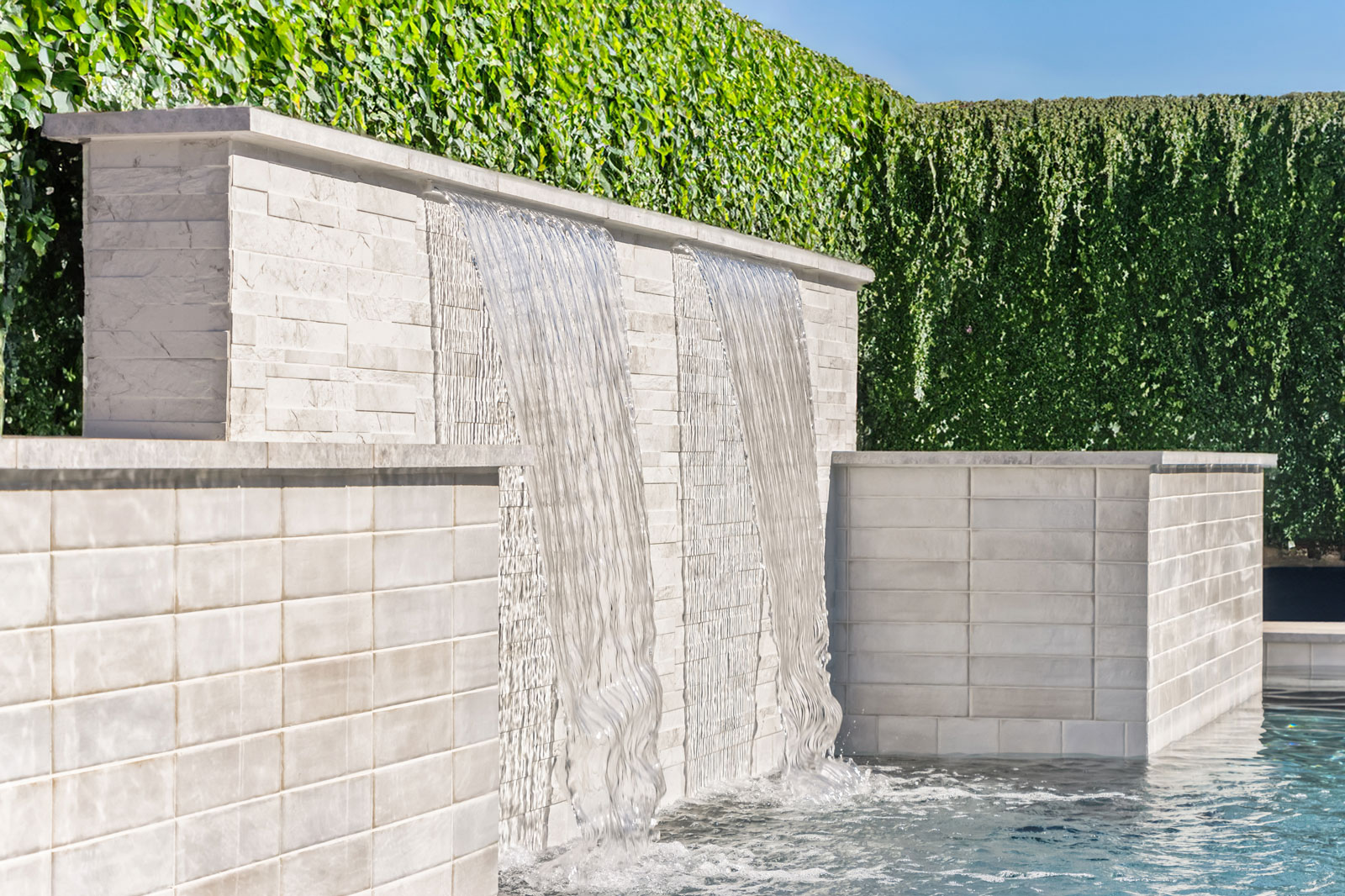
- Spillways
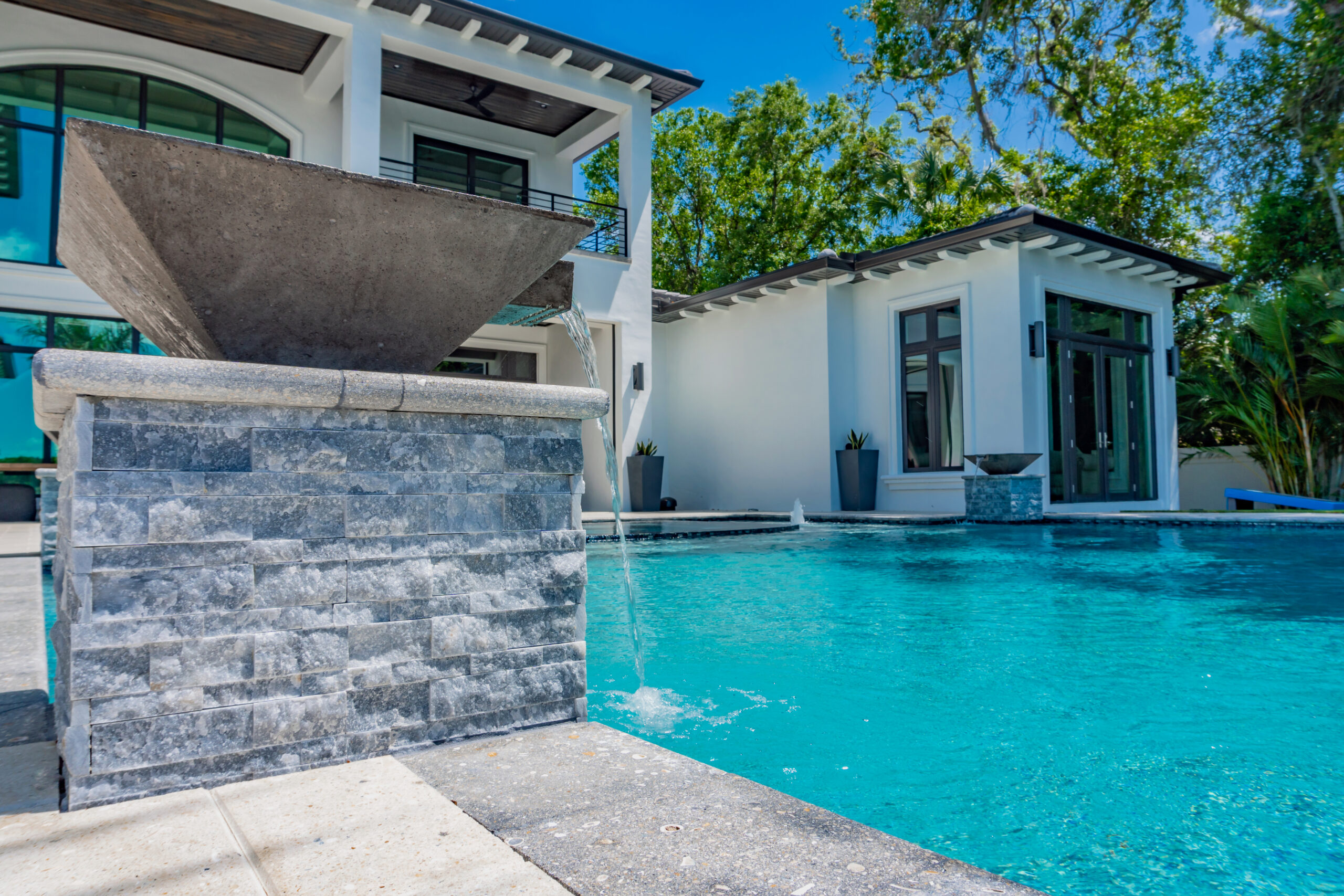
- Fountains and water features
- Swim shelves
- Steps and benches
- Bar fronts
- Outdoor kitchen backsplashes
- Decorative walls and architectural accents
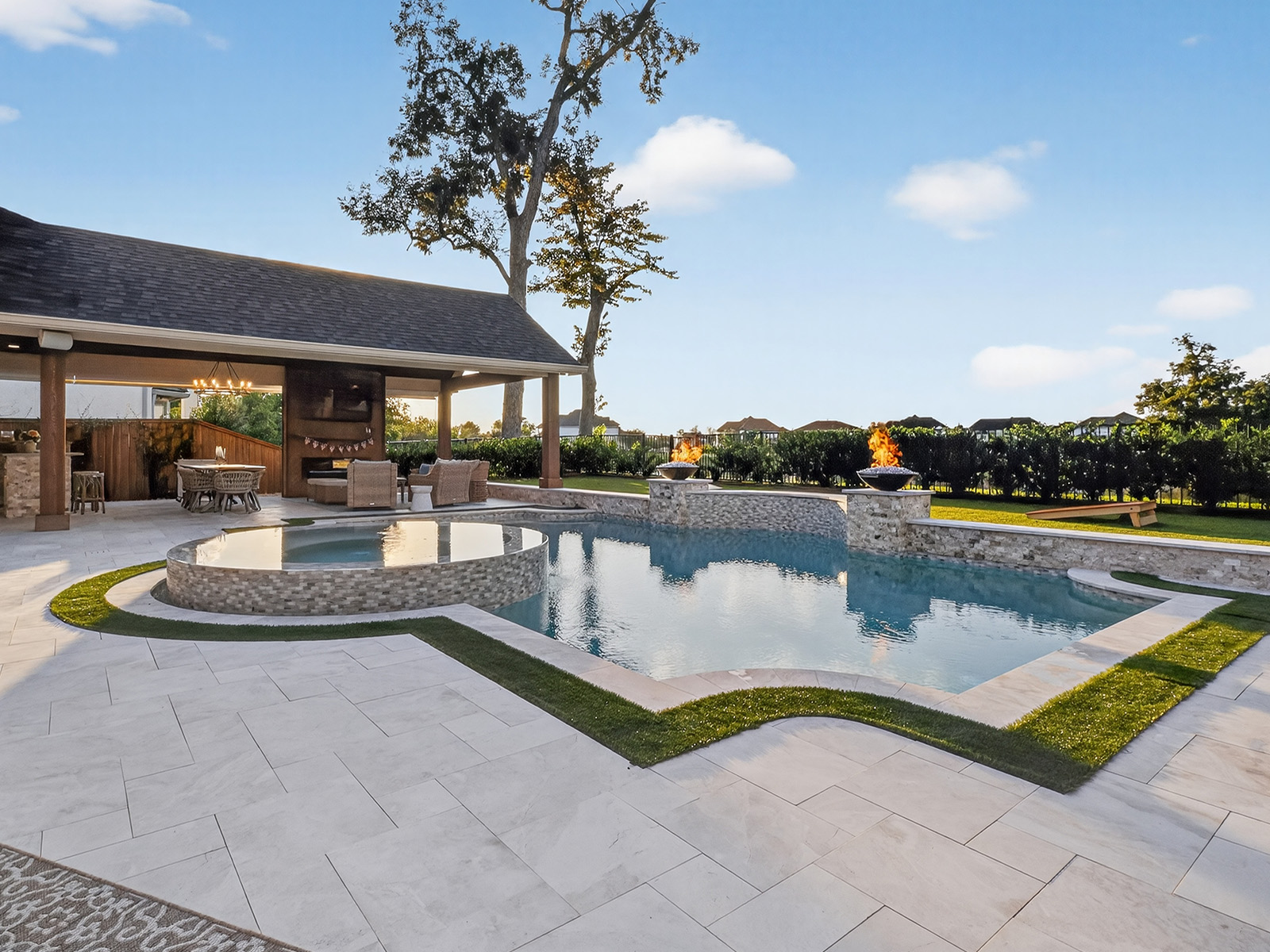
Repeating the same tile, or selecting coordinated materials, across several features can help create a more unified outdoor design.
For example, a waterline mosaic may also be used on a raised spa wall or spillway. A coordinating porcelain tile may then be incorporated into an outdoor kitchen or accent wall to connect the pool with the rest of the backyard.
Each application must still be evaluated separately. A submerged pool wall, exterior spa face, walking surface, countertop, and pool step may all have different installation, exposure, and slip-resistance requirements.
Because the waterline tile surrounds the entire pool, even a relatively small selection of tiles can have a major visual impact.
Waterline Tile Is Also an Important Design Decision
Because the waterline tile surrounds the entire pool, even a relatively small selection of tiles can have a major visual impact.
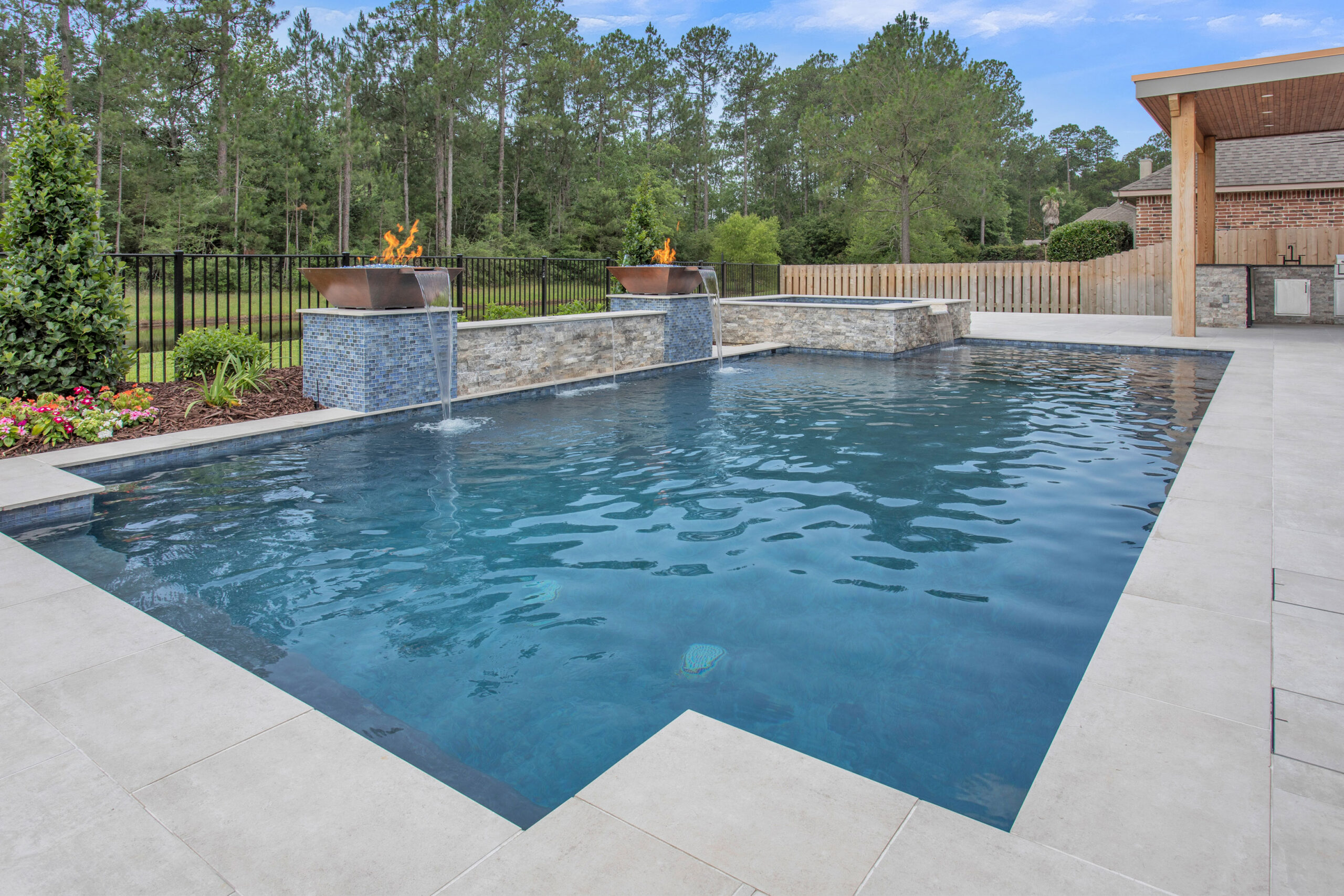
The tile can blend with the pool finish for a calm, subtle appearance, or create contrast that defines the pool’s shape. Blues and greens can reinforce the water’s color, while neutral tones can help connect the pool to the coping, pavers, architecture, or surrounding landscape.
The color of the grout can also change the final appearance. A coordinating grout can create a more continuous look, while a contrasting grout can emphasize the shape and pattern of each individual tile.
Whenever possible, tile samples should be viewed outdoors and near the other materials being considered for the project. Sunlight, shade, water, landscaping, and nearby finishes can all influence how the tile appears.
Seeing the material in the actual project environment can help homeowners and designers make a more confident selection.
The Final Answer
Do you really need waterline tile?
For the typical concrete residential pool, waterline tile is strongly recommended. It provides a durable, cleanable transition at the water’s edge, helps protect the pool’s finish, and adds an important design element around the entire pool.
For public and commercial projects, a suitable waterline finish may also be required by the governing code. Builders and designers should verify local requirements and select materials specifically approved for the intended application.
Once you decide to include waterline tile, the next step is choosing the right material, format, finish, and color for your pool.
Explore Aquabella® glass mosaics, porcelain mosaics, and porcelain pool tile for waterlines, spas, accents, and fully tiled pool installations.
About the Author
Tim Garner
Tim brings decades of industry knowledge and a practical, customer-focused approach to every project. He is known for helping customers confidently navigate product selections and find the right materials for their needs.