The White Line Every Pool Owner Notices
Few pool maintenance issues are as common—or as misunderstood—as calcium buildup along pool waterlines, tile surfaces, and decorative stone features. What often begins as a thin white ring can gradually develop into a hard, crusty deposit that detracts from a pool’s appearance and becomes increasingly difficult to remove.
For homeowners, property managers, and commercial pool operators, understanding the causes of calcium scaling and implementing preventative maintenance practices can significantly reduce restoration costs while preserving the beauty and longevity of pool finishes.
Calcium scale is far easier to prevent than it is to remove. Routine water chemistry management remains the most effective long-term solution.
What Causes Calcium Buildup?
Calcium buildup, commonly referred to as calcium scaling, occurs when dissolved calcium minerals precipitate from pool water and adhere to surfaces. The deposits most frequently appear along waterlines, tile bands, spillways, waterfalls, and natural stone features where evaporation rates are highest.
Several factors contribute to scale formation:
- Elevated calcium hardness levels
- High pH
- Excessive total alkalinity
- Water temperatures that promote mineral precipitation
- High evaporation rates
- Poorly balanced water chemistry
- Water features that increase aeration

Two Common Types of Pool Scale
Calcium Carbonate
Calcium carbonate is the most frequently encountered form of scaling.
Characteristics include:
- White or chalky appearance
- Rough texture
- Relatively easy removal
- Reaction to acidic cleaners
Calcium Silicate
Calcium silicate is considerably more difficult to remove and often develops over the years of neglected water chemistry.
Characteristics include:
- Grayish-white appearance
- Extremely hard texture
- Limited reaction to acid treatments
- Greater likelihood of requiring professional restoration
Natural stone can also experience efflorescence, a condition in which minerals migrate from behind the stone to the surface.
How Calcium Buildup Impacts Pool Surfaces
While many pool owners view scale as primarily a cosmetic concern, untreated calcium deposits can create several long-term issues:
Aesthetic Damage
Heavy scaling can make even a well-maintained pool appear neglected. White crusting is especially noticeable on darker tile and stone finishes.
Surface Deterioration
As deposits expand and contract through temperature changes, they can contribute to grout deterioration and surface wear.
Increased Maintenance Costs
The longer the scale remains in place, the harder it becomes to remove. Minor buildup may require simple brushing, while severe buildup may require professional blasting or restoration services.
Reduced Property Value
Luxury pools are often focal points of residential and commercial landscapes. Visible scale accumulation can negatively affect the property’s overall presentation.
Safe Methods for Removing Calcium Buildup
The appropriate removal method depends on the severity of the scaling and the type of surface involved.
Light Scale Deposits
Early-stage buildup can often be addressed using:
- Pool brushes
- Non-abrasive scrub pads
- Vinegar-based cleaning solutions
- Pool-approved descaling products
Regular maintenance at this stage can prevent the need for aggressive restoration later.
Moderate Scale Deposits
As scaling thickens, mechanical removal becomes more effective.
Pumice Stone Cleaning
Pumice stones are frequently used on ceramic tile surfaces to remove mineral deposits.
Important considerations include:
- Keep both the tile and the pumice stone wet.
- Avoid use on polished stone.
- Avoid use on glass tile finishes.
- Test in a small area before widespread application.
Professional Scale Removers
Commercial descaling products are formulated to dissolve calcium carbonate while minimizing damage to surrounding surfaces.
Always follow manufacturer instructions and safety recommendations.
Special Care for Natural Stone
Natural stone surfaces require a different maintenance strategy than ceramic tile.
Materials such as travertine, limestone, sandstone, and flagstone are naturally porous and more susceptible to chemical damage.
Best Practices for Stone Features
- Avoid harsh acid applications whenever possible.
- Maintain proper water chemistry.
- Seal surfaces according to manufacturer recommendations.
- Address mineral deposits promptly.
Natural stone can also experience efflorescence, a condition in which minerals migrate from behind the stone to the surface. Because efflorescence closely resembles calcium scaling, proper diagnosis is important before treatment begins.
How to Clean Calcium Buildup from Glass Mosaics
Glass pool tile is beautiful because of its shine, depth, and reflective finish, but that same finish can make calcium buildup more noticeable. White scale along the waterline can dull the surface, create a cloudy appearance, and detract from the pool’s clean, high-end look.
The safest approach is to start gently. Use a soft cloth, microfiber towel, white nylon pad, or soft nylon brush with a pool-safe tile cleaner made for calcium or mineral deposits. Avoid steel wool, metal brushes, sandpaper, pumice stones, razor blades, or aggressive scraping tools, especially on glass, iridescent, metallic, or glossy finishes. These may remove the scale, but they can also scratch or damage the tile surface.
For heavier calcium deposits, a specialty calcium remover may be needed. Always test the cleaner first in a small, hidden area and follow the manufacturer’s instructions carefully. Some acidic cleaners can help dissolve mineral buildup, but they should be used with caution around grout, metal trims, natural stone, and certain decorative glass finishes. Never assume that because a product removes calcium, it is automatically safe for every pool tile.
A good cleaning process is:
- Lower the pool water slightly so the calcium line is exposed.
- Wet the tile surface before applying the cleaner.
- Apply the cleaner according to the product instructions.
- Let it dwell only for the recommended time.
- Scrub gently with a non-abrasive pad or soft nylon brush.
- Rinse thoroughly so the cleaner does not remain on the tile or grout.
- Rebalance the pool water to help reduce future scale.
If the calcium is thick, crusty, or has been building for years, it may be better to call a professional pool tile cleaning company. Professional methods, when done correctly, can remove heavy scale more evenly and reduce the risk of damaging glass tile, grout, or surrounding finishes.
The best long-term solution is prevention. Calcium buildup usually comes from water chemistry, evaporation, and high calcium hardness or pH. Regular brushing, proper water balance, and early cleaning at the waterline can help keep glass tile looking clear, bright, and easier to maintain.
Glass pool tile is beautiful because of its shine, depth, and reflective finish, but that same finish can make calcium buildup more noticeable.
Preventing Future Calcium Buildup
Successful scale prevention begins with balanced pool water.
Maintain Proper pH
Industry guidelines generally recommend maintaining pH between:
7.4 – 7.6
When pH rises above recommended levels, calcium becomes more likely to precipitate from solution.
Monitor Calcium Hardness
Recommended ranges vary by pool finish but generally fall between:
200 – 400 ppm
When hardness levels become excessive, partial water replacement may be necessary.
Control Total Alkalinity
Recommended range:
80 – 120 ppm
Balanced alkalinity helps stabilize pH and reduces scaling potential.
Monitor Saturation Index
Many pool professionals use the Langelier Saturation Index (LSI) or Calcite Saturation Index (CSI) to determine whether water is likely to:
- Form scale
- Remain balanced
- Become corrosive
Maintaining a slightly balanced index can significantly reduce scaling risk.
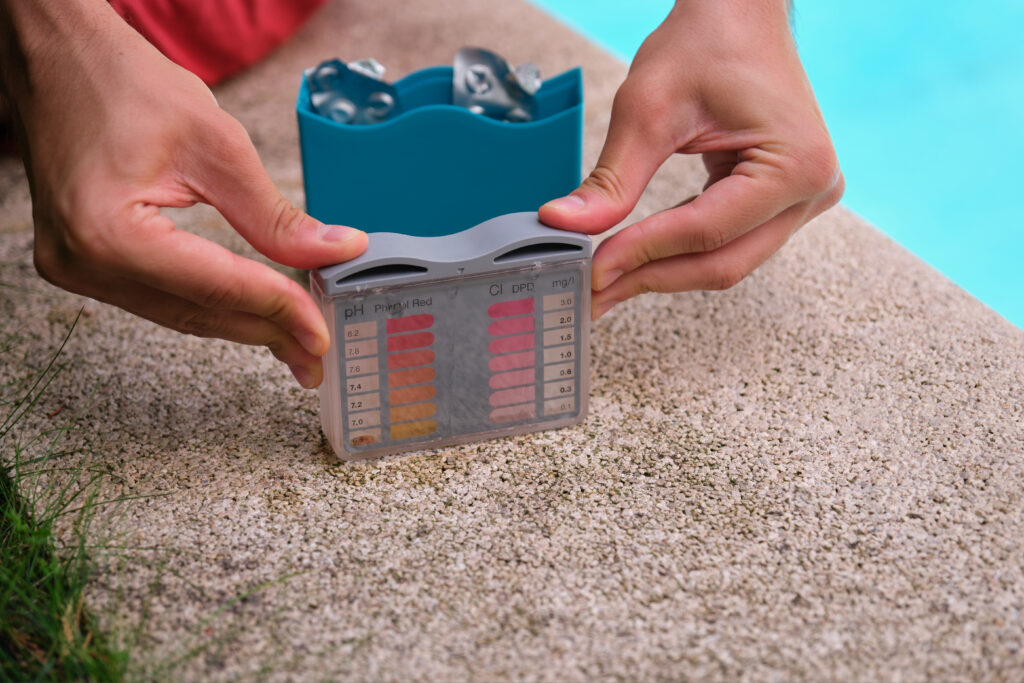
Water chemistry is not simply about water clarity—it is the primary defense against costly calcium scale formation.
Recommended Maintenance Schedule
| Weekly | Monthly | Quarterly |
Annually |
|
|
|
|
When Professional Cleaning Is Recommended?
Professional intervention may be necessary when:
- Deposits are visibly thick or hardened
- Calcium silicate is present
- Scale covers large surface areas
- Previous cleaning attempts have been unsuccessful
- Natural stone restoration is required
Professional services may include:
- Glass bead blasting
- Mineral blasting
- Soda blasting
- Advanced descaling treatments
These methods can often restore surfaces without requiring costly tile replacement.

Conclusion
Calcium buildup is one of the most common challenges facing pool owners, particularly in regions with hard water and high evaporation rates. Fortunately, scaling is largely preventable through proper water chemistry management, routine inspections, and timely cleaning.
The most effective strategy combines proactive maintenance with early intervention. By monitoring water balance, protecting stone surfaces, and addressing deposits before they harden, pool owners can preserve the appearance, performance, and value of their pools for years to come.
A well-maintained pool is more than a recreational asset: it is an investment worth protecting.
About the Author
Jeremy Jackson
Jeremy is a Product Manager focused on pool finishes, combining technical expertise with a deep understanding of outdoor design.