When it comes to finishing a swimming pool, tile selection isn’t just about aesthetics—it directly impacts durability, maintenance, and long-term performance. Two of the most popular options—glass tile and porcelain tile—each bring unique advantages and challenges. For pool builders, understanding how these materials behave (and how to install and maintain them properly) is essential.
According to the Tile Council of North America (TCNA), successful tile installation depends heavily on proper substrate preparation, movement accommodation, and installation methods—not just the tile itself.

Glass Tile: Premium Look, Precision Installation
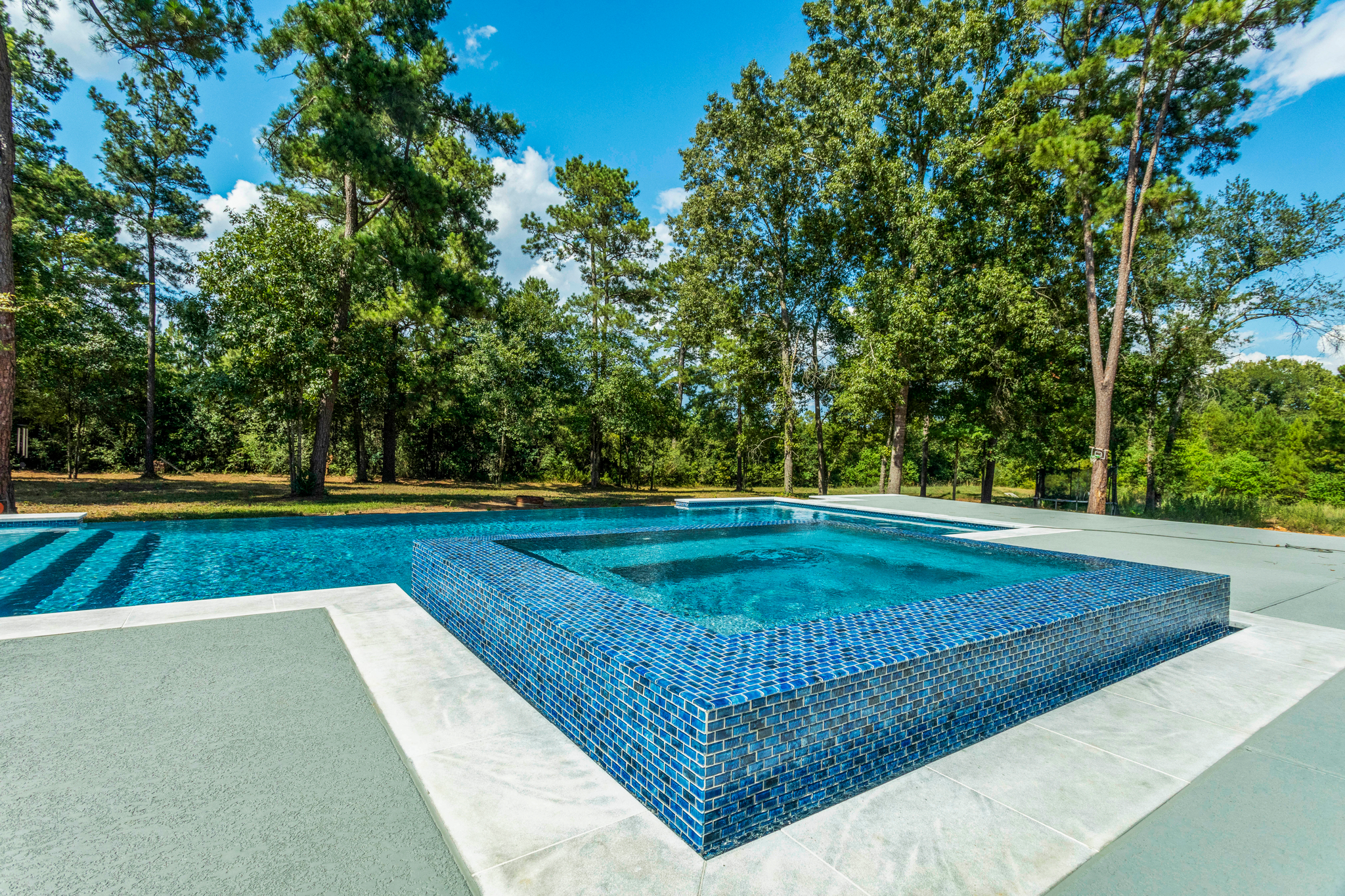
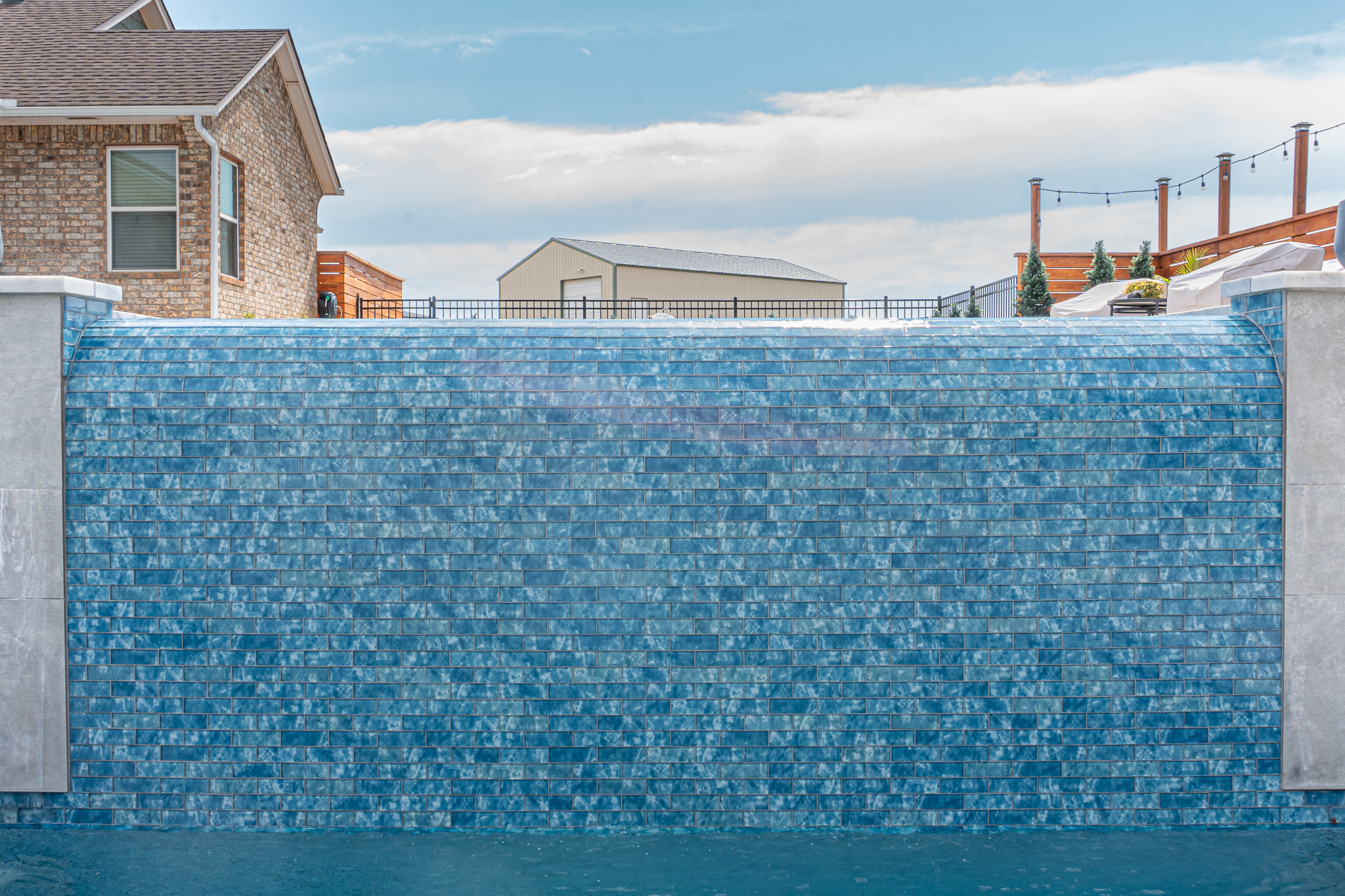
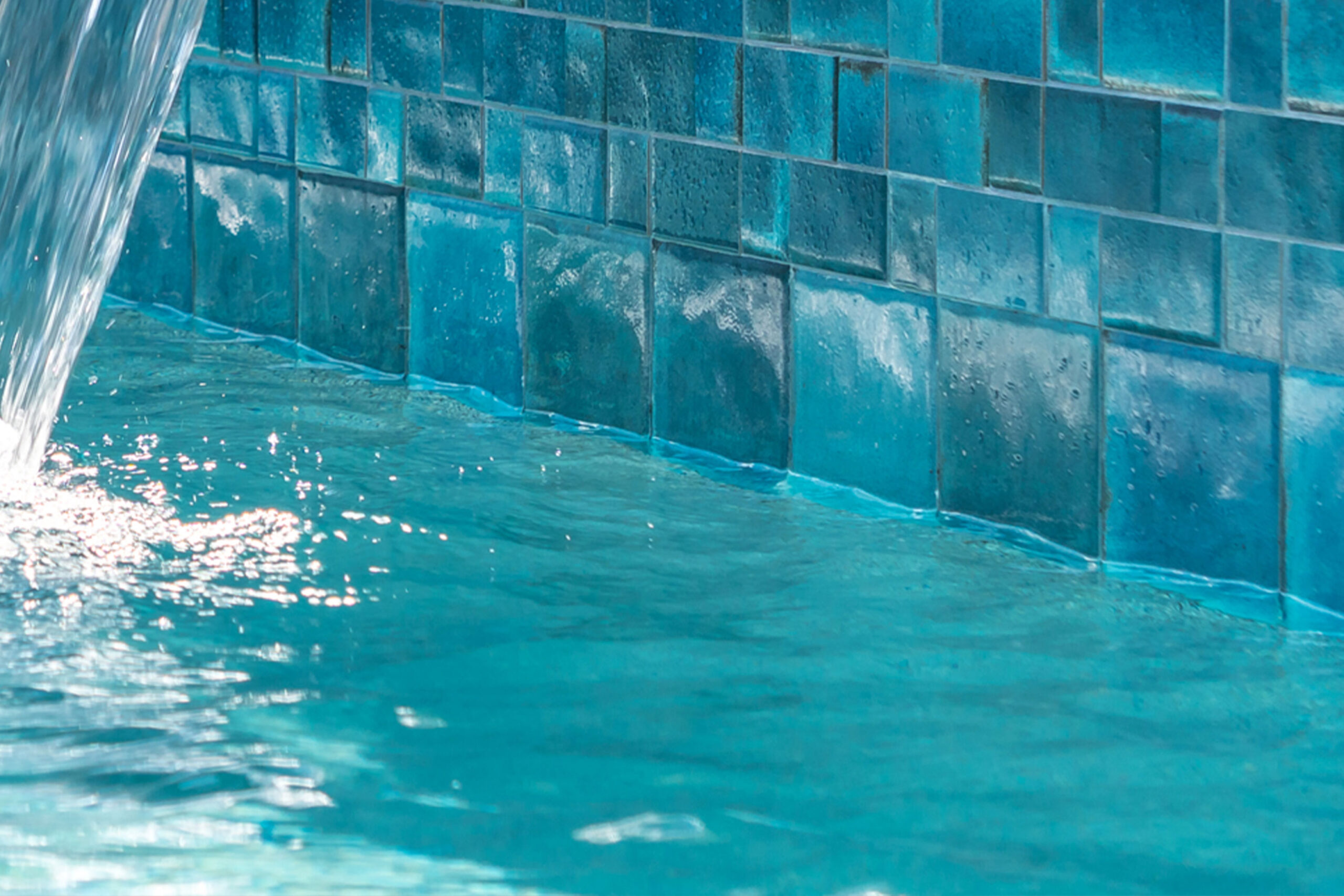
Glass tile is often the go-to choice for high-end pools thanks to its reflective quality and vibrant color depth. It performs exceptionally well in submerged environments because it is non-porous and resistant to chemical absorption.
Pros:
- Zero water absorption
- Fade-resistant color
- Luxurious, high-end finish
Cons:
- Requires perfectly prepared substrates
- More expensive material and labor
- Installation is less forgiving
Because glass tile is non-porous, bonding is the critical challenge. Standard thinsets won’t cut it—you need high-performance adhesives specifically designed for glass.
Recommended adhesives:
- TEC Super Flex or AccuColor systems
- LATICRETE Glass Tile Adhesive Mortar (e.g., 254 Platinum or Glass Tile Adhesive)
- Litokol Litoplus K55 or epoxy-based systems like Starlike
These products are engineered for strong bond strength, flexibility, and chemical resistance—essential in submerged pool conditions.
Remember, glass tile installations follow dedicated ANSI standards (A108.14, A108.15, and A108.16), which differ from those for standard ceramic and porcelain tile due to the material’s unique expansion, bonding, and visual requirements.
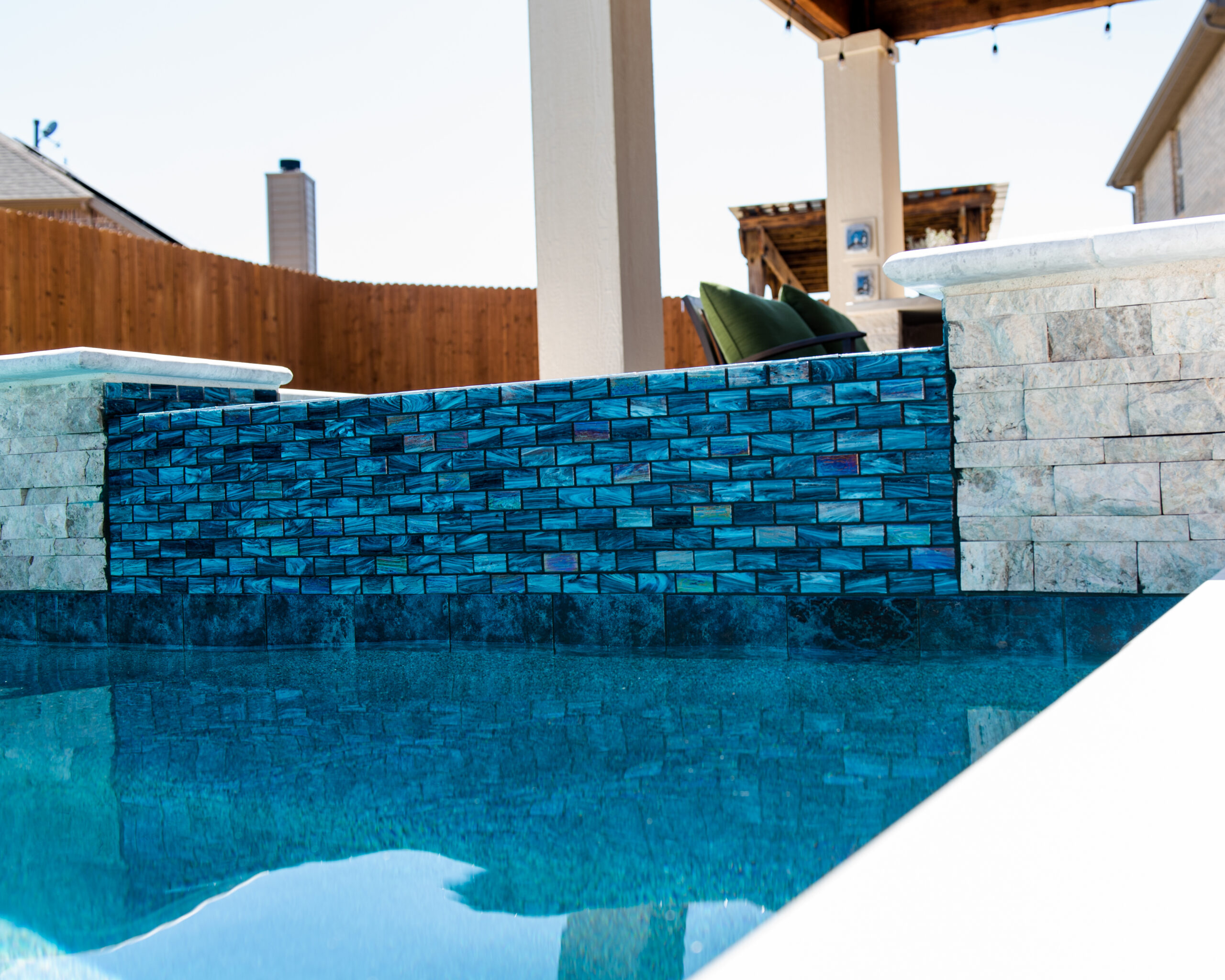
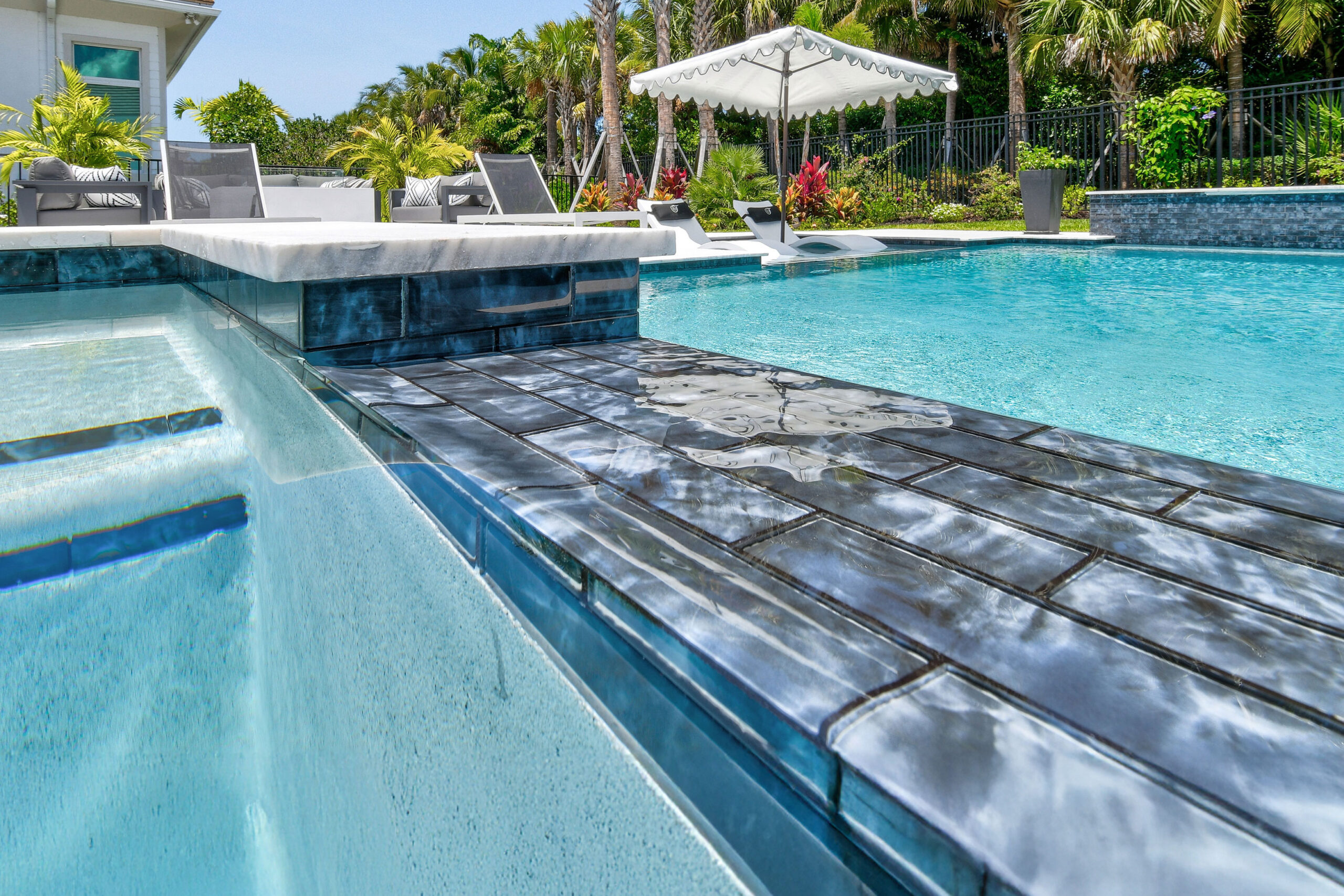
Because glass tile is non-porous, bonding is the critical challenge. Standard thinsets won’t cut it—you need high-performance adhesives specifically designed for glass.
Porcelain Tile: Durable and Builder-Friendly
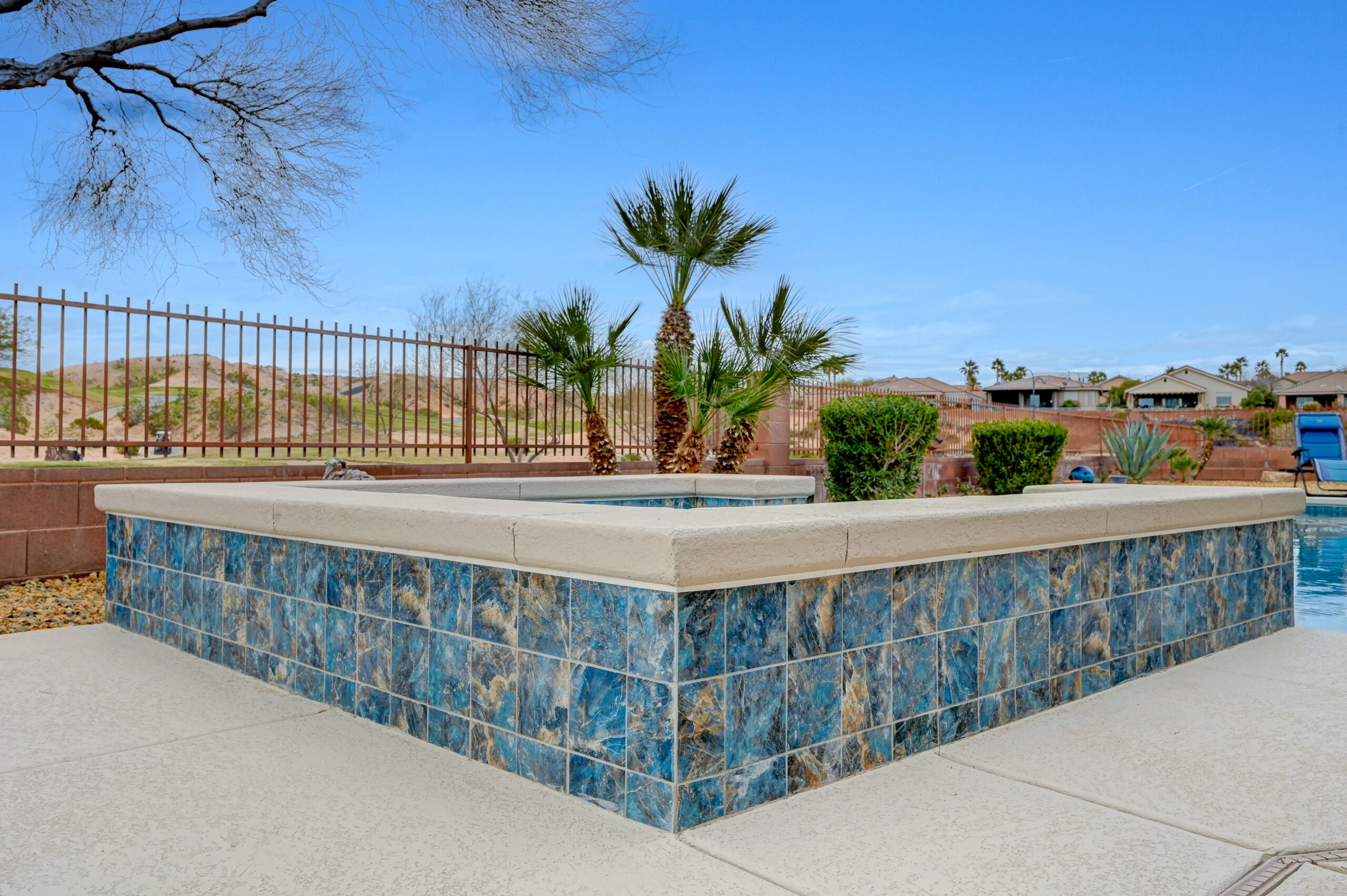
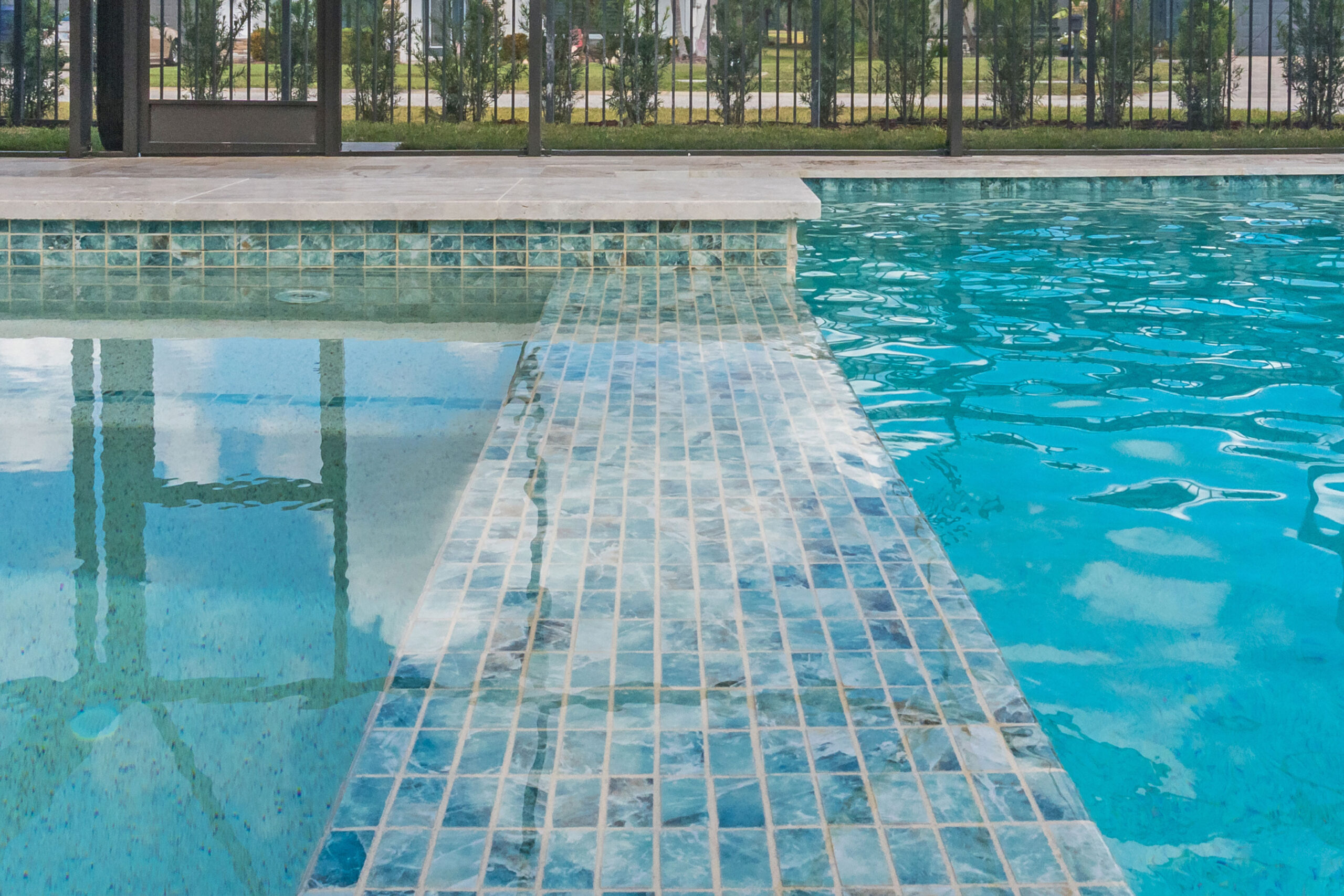
Porcelain tile is a more traditional and cost-effective option. It’s dense, durable, and easier to install compared to glass tile, making it a reliable choice for large commercial or residential pools.
Pros:
- Highly durable and impact-resistant
- Easier installation
- Lower cost
Cons:
- Less visual depth compared to glass
- Slightly higher water absorption (though still very low)
Porcelain is more forgiving during installation, but proper adhesive selection still matters—especially in freeze-thaw climates or chemically treated water. ANSI installation standards guidance consistently supports porcelain’s suitability for demanding exterior applications due to its low water absorption and durability under environmental stress.
Recommended adhesives:
- TEC Full Flex or 3N1
- LATICRETE 253 Gold or 254 Platinum
- Litokol standard cementitious mortars or enhanced systems
Porcelain tile is a more traditional and cost-effective option. It’s dense, durable, and easier to install compared to glass tile, making it a reliable choice for large commercial or residential pools.
The Adhesive Factor: Where Many Builds Fail
Regardless of tile type, adhesive failure is one of the most common causes of pool tile issues. Builders should always ensure:
- Proper substrate curing (gunite/shotcrete fully cured)
- Waterproofing membranes are compatible with the chosen mortar
- Full mortar coverage (no voids behind tile)
- Movement joints are properly installed
Cutting corners here can lead to tile delamination—especially with glass tile. Also, TCNA’s EJ171 movement joint guidelines are especially important for glass tile installations, where thermal expansion and structural movement can lead to cracking or bond failure if not properly addressed.
Calcium Scale Removal: Keeping Tile Looking New
Calcium buildup is inevitable in pools, particularly in areas with hard water, such as the Southwest U.S. Left untreated, it dulls glass tile and stains porcelain.
Effective cleaning methods:
- Use a mild acid-based cleaner (like diluted muriatic acid or specialty descalers)
- Apply with a soft brush or non-abrasive pad
- Always pre-wet surfaces to prevent damage to grout
For more severe buildup, pumice stones (for porcelain only) or professional bead blasting may be required. Avoid abrasive tools on glass tile—they can permanently scratch the surface.
Routine Maintenance Recommendations
To extend the life and appearance of pool tile:
- Brush tile lines weekly to prevent buildup
- Maintain balanced water chemistry (especially calcium hardness and pH)
- Use sequestering agents to reduce mineral deposits
- Inspect grout and movement joints annually
- Schedule periodic deep cleaning for high-end glass installations
Glass tile delivers unmatched beauty but demands precision and premium adhesives. Porcelain tile offers durability and ease of installation, making it a dependable workhorse.
Final Thoughts
For pool builders, the choice between glass and porcelain tile often comes down to budget vs. visual impact—but installation quality and material compatibility matter just as much as the tile itself. The best installation decisions come from matching the right material to the right application while adhering to recognized standards from organizations such as TCNA and ANSI.
Glass tile delivers unmatched beauty but demands precision and premium adhesives. Porcelain tile offers durability and ease of installation, making it a dependable workhorse.
In both cases, using proven systems from manufacturers like TEC, LATICRETE, and Litokol—combined with proper maintenance—will ensure a pool finish that performs as good as it looks for years to come.
About the Author
 Duff Stewart
Duff is the Branch Manager for Aquabella Las Vegas and brings hands-on expertise in pool tile installation and jobsite support. His practical experience helps builders and homeowners make confident decisions about products and installations for long-lasting pool finishes.