Choosing the right waterline tile is an opportunity to define the look and feel of your pool. While it’s a small detail, it has a big visual impact. The waterline tile plays a major role in both the appearance and maintenance of your pool. The right tile enhances the water’s color, complements surrounding materials, and helps protect the pool surface from buildup and wear.
If you’re trying to decide which waterline tile is best for your pool, this guide will help you make a confident, informed choice.
What Is Waterline Tile and Why Does It Matter?
Waterline tile is installed around the perimeter of the pool at the level where the water meets the wall. This tile band serves both functional and decorative purposes.
Functionally, waterline tile provides a strong surface that can withstand the conditions at a pool’s waterline. Tile is easier to clean than plaster or other pool finishes, which makes long-term maintenance simpler.
Aesthetically, the waterline tile helps define the pool’s look and can dramatically influence the overall design. It often becomes one of the most visible and focused-on design elements in the entire pool.
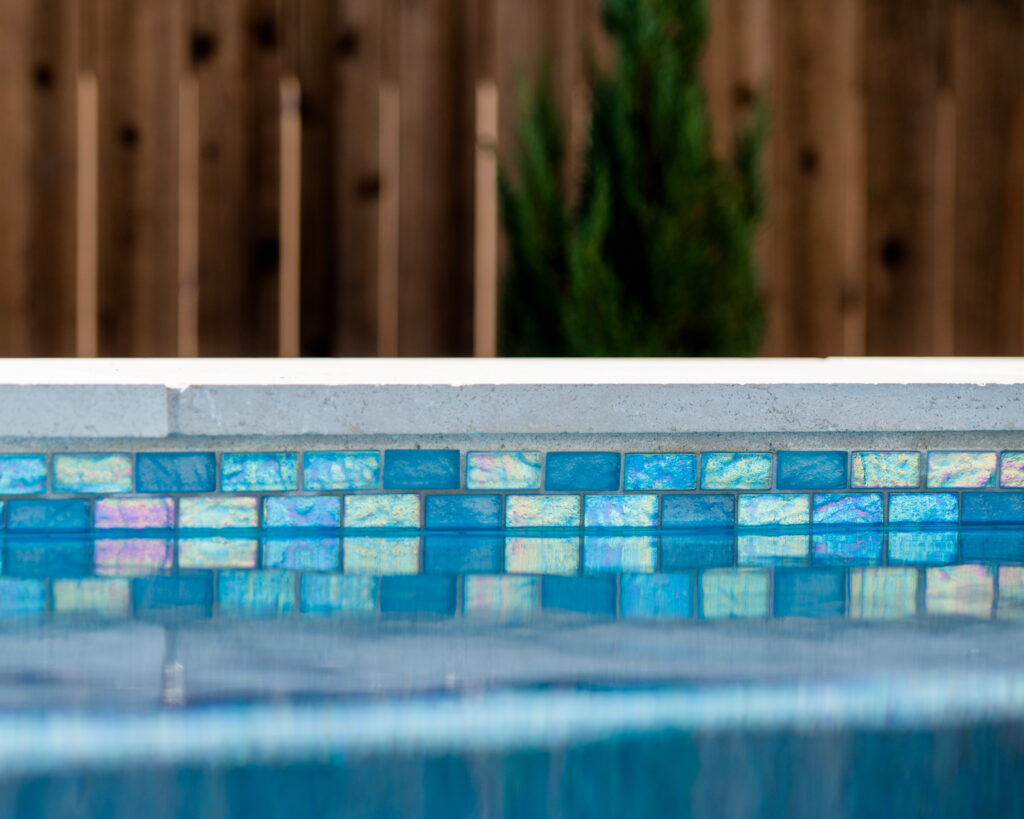
Choose Pool-Rated Tile Materials
Selecting pool-rated materials helps ensure long-term durability and easy maintenance. When selecting waterline tile, ensure it is pool-rated.
The most commonly recommended materials include:
- Porcelain tile: extremely durable, non-porous, and widely available in many styles. To pass the TCNA (Tile Council of North America) test and be classified as porcelain tile under ANSI A137.1, a tile must have a water absorption rate of 0.5% or less. If a tile absorbs more than 0.05%, it could fail.
- “High Temperature” Glass tile: popular for its vibrant color and reflective qualities. High-temperature glass is glass fired above 800 degrees Celsius (over 1,400 degrees Fahrenheit). At this temperature, the glaze and glass are fused together, and the risk of delamination is essentially zero. Glass fired at lower temperatures can cause the glaze to delaminate from the tile.
Tiles used at the waterline should also be rated for submerged use, outdoor conditions, and constant UV exposure. It’s important to ensure the tile is frost-proof to prevent cracking in the freeze-thaw cycle.
Highly porous materials, such as certain natural stones and cement tiles, are generally avoided for waterline applications because they can absorb water, stain, or deteriorate over time.
Decide on the Overall Design Direction
When choosing waterline tile, most pool designs fall into one of two aesthetic approaches.
Accent Tile for Visual Impact
Accent tiles are designed to stand out and create a focal point. This can be done with colors or with patterns.
Accent tiles can enhance the perceived color of the pool water, creating a vibrant appearance.
Neutral Tile for a Natural Look
Neutral tiles can blend with the pool’s surroundings. These options typically feature neutral tones and natural stone-inspired textures.
This approach works well for pools that aim for a more subtle, organic design that complements landscaping and architecture.
Coordinate With the Pool Interior Finish
The pool’s interior finish and waterline tile should visually complement each other. The tile color can affect how the water appears once the pool is filled.
For example:
- Darker tiles can deepen the perceived color of the water.
- Lighter tiles create a brighter, more reflective surface.
- Neutral tones often help maintain a balanced and natural look.
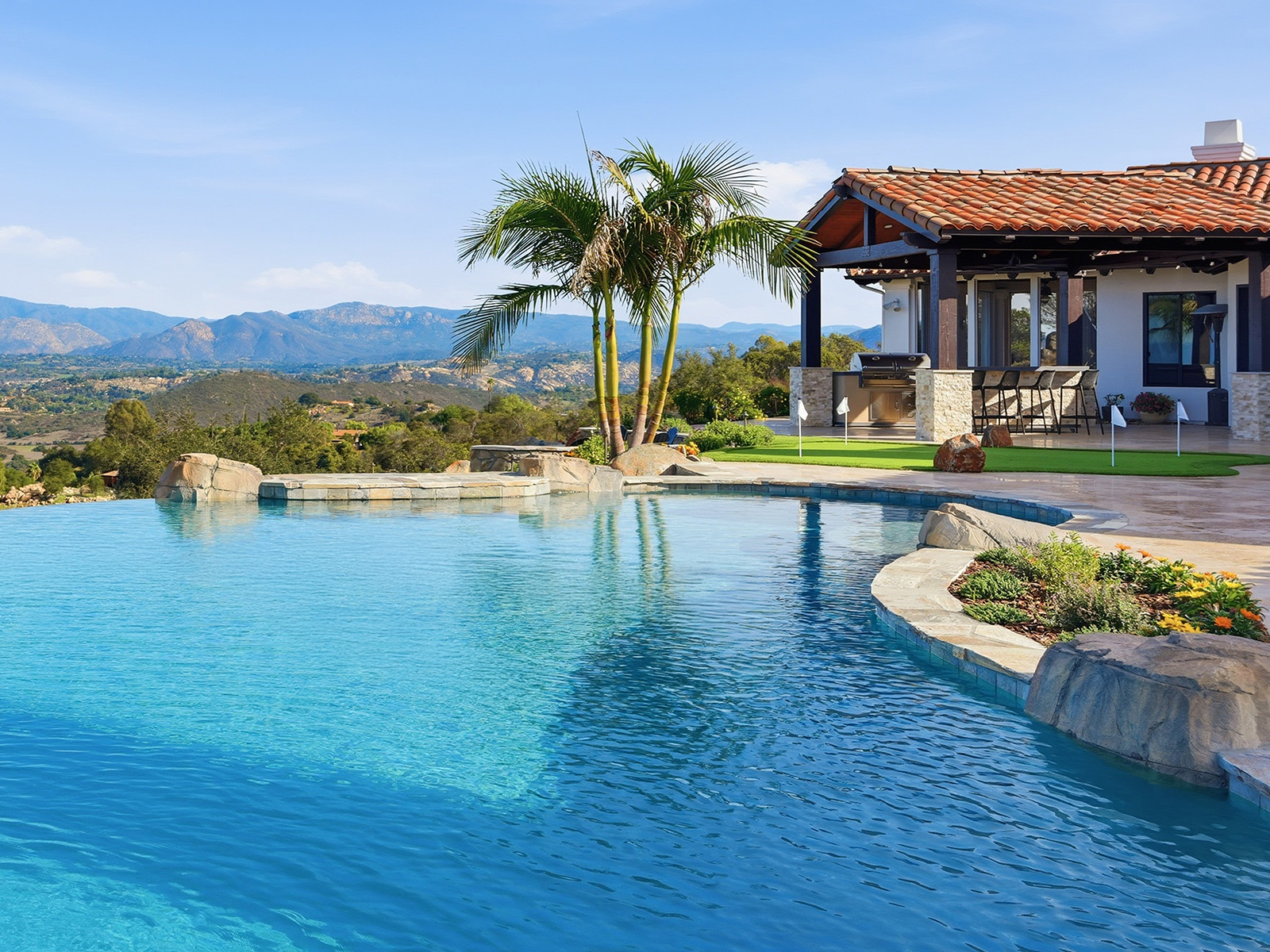
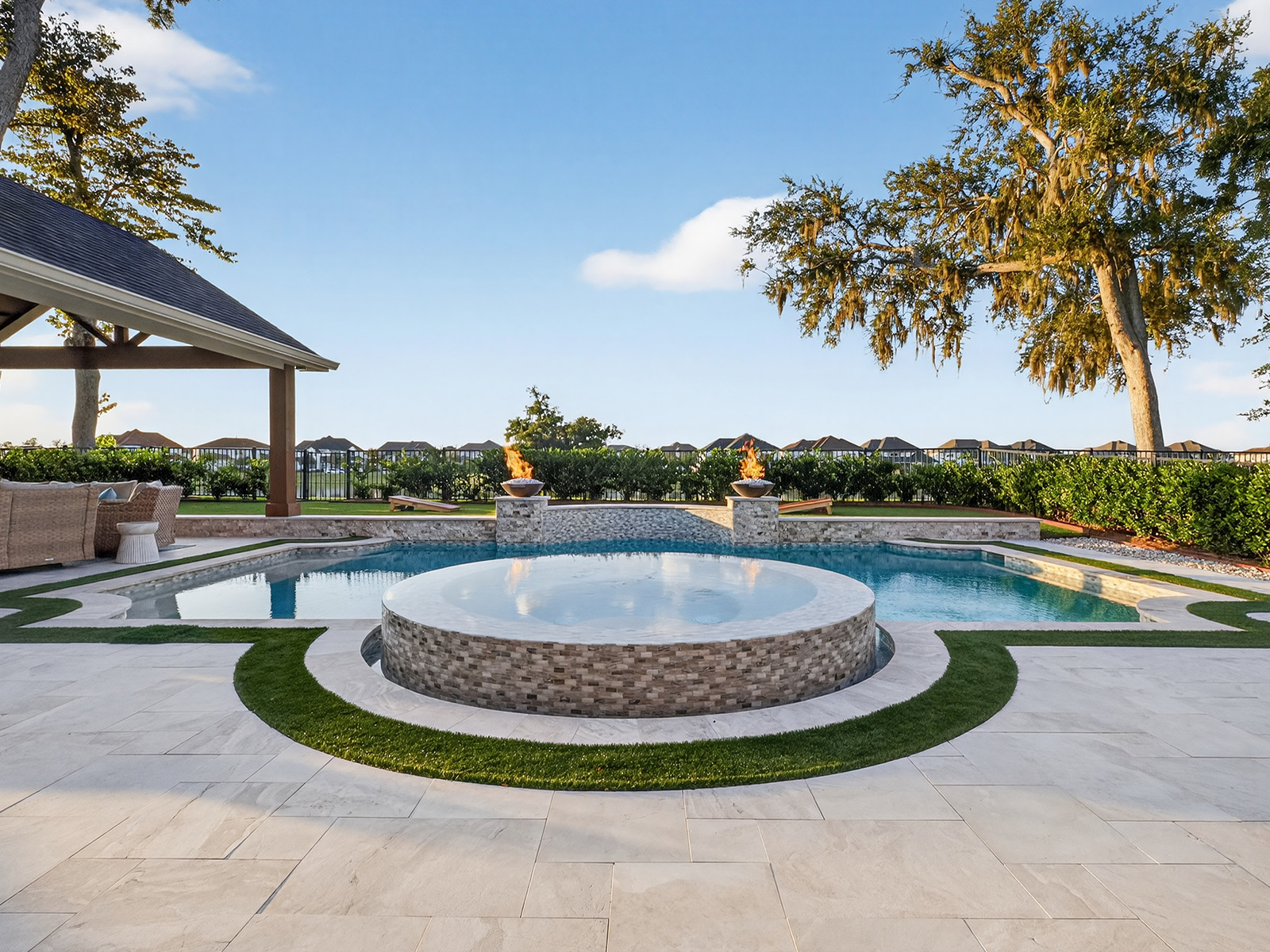
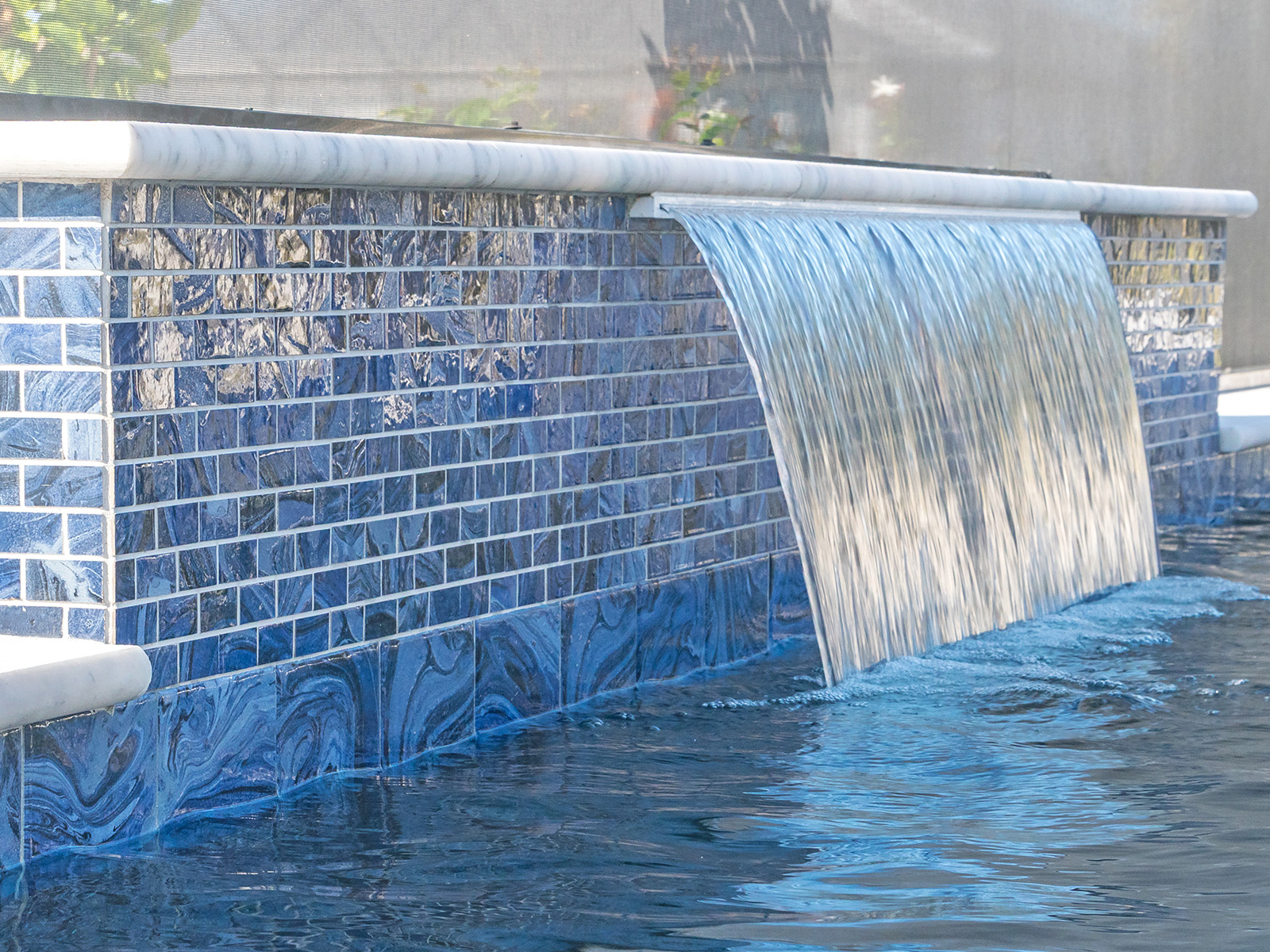
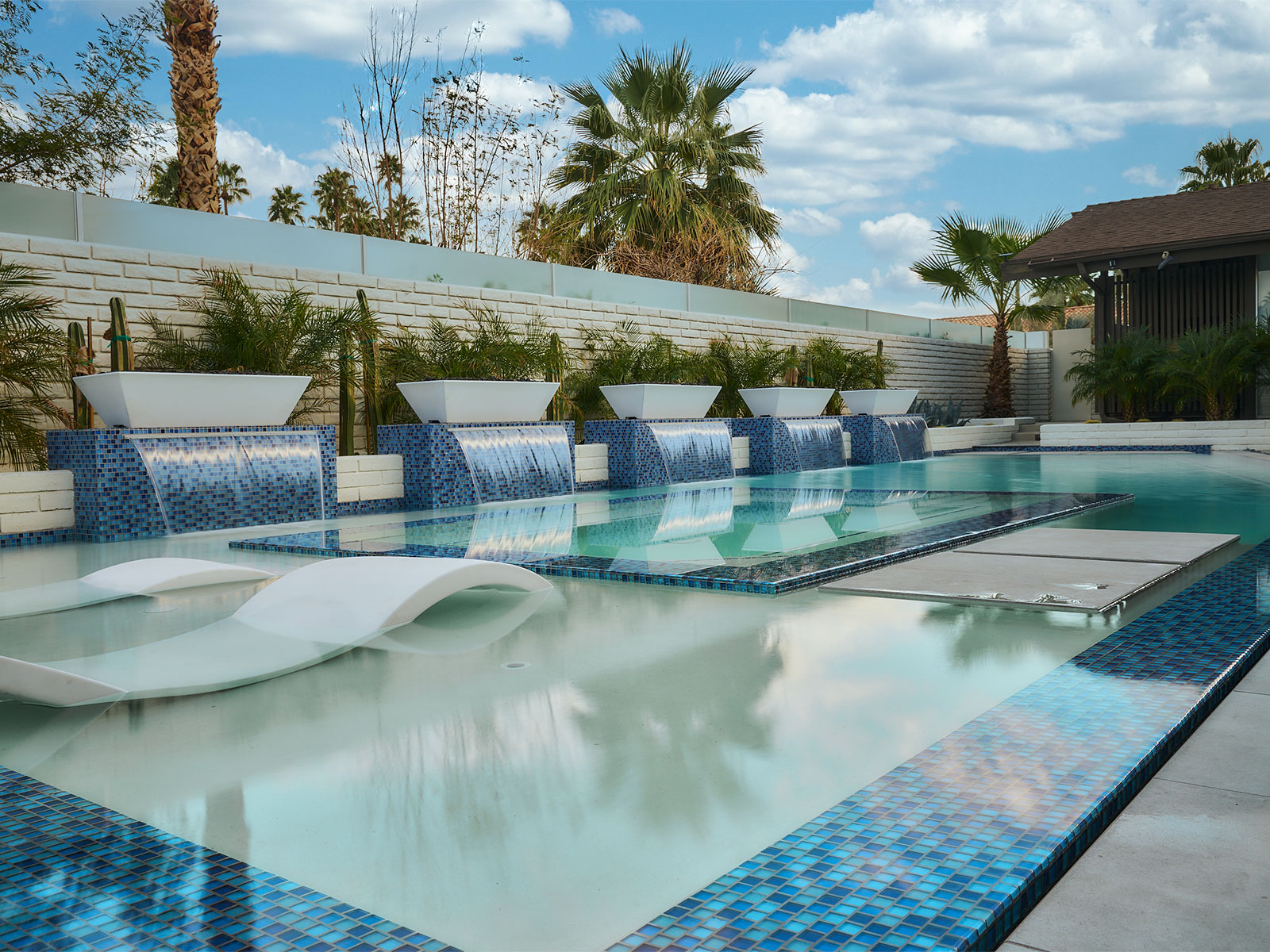
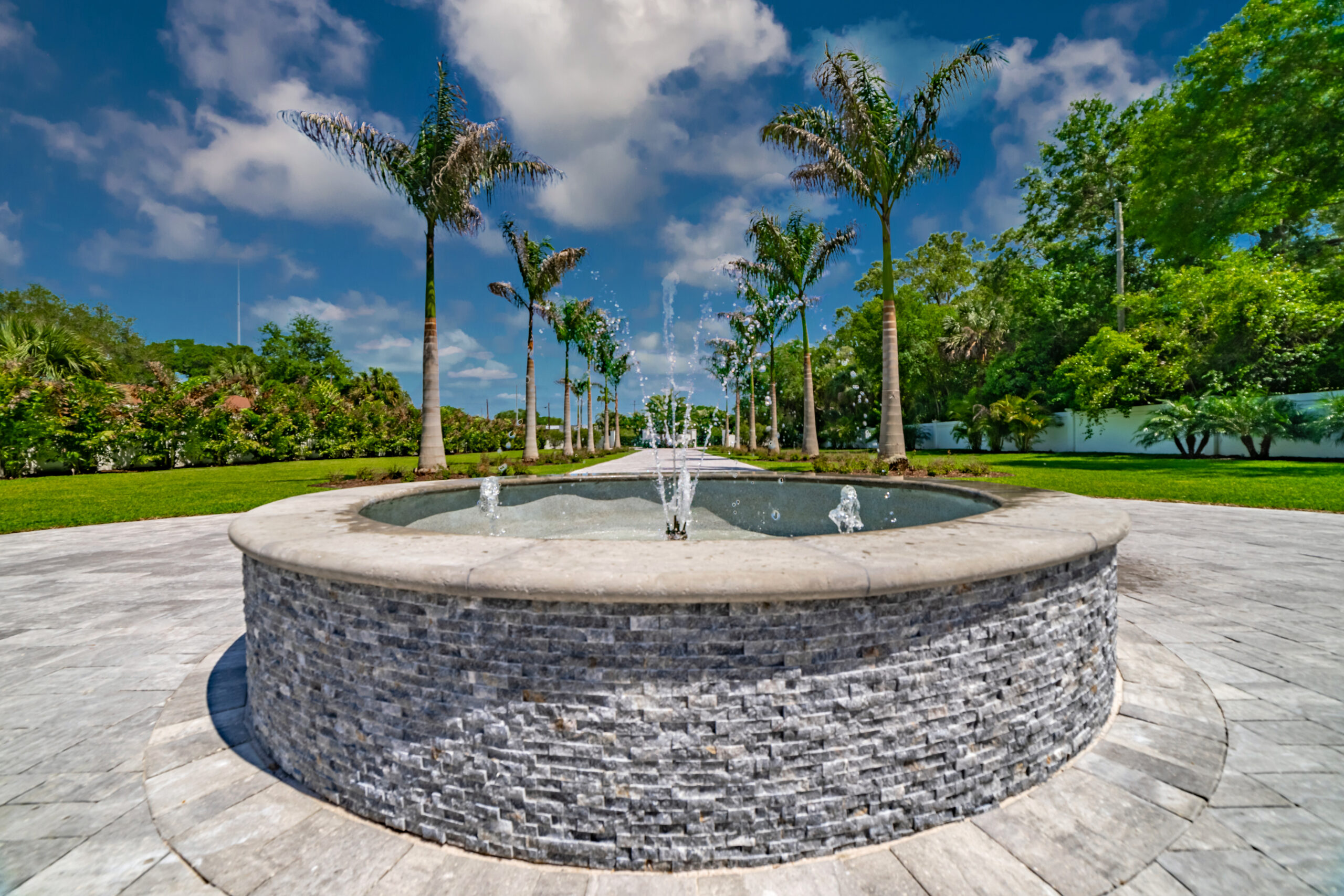
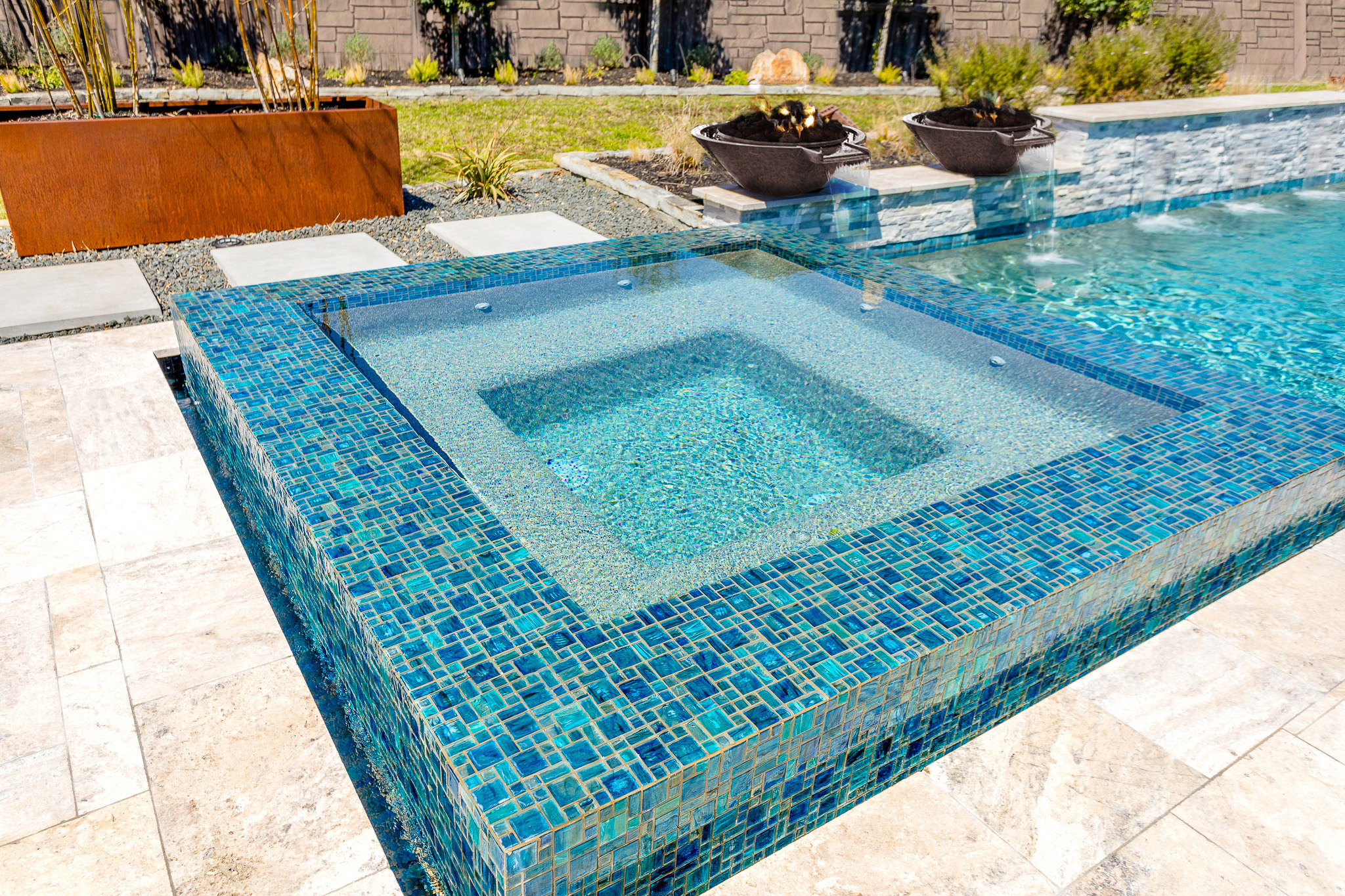
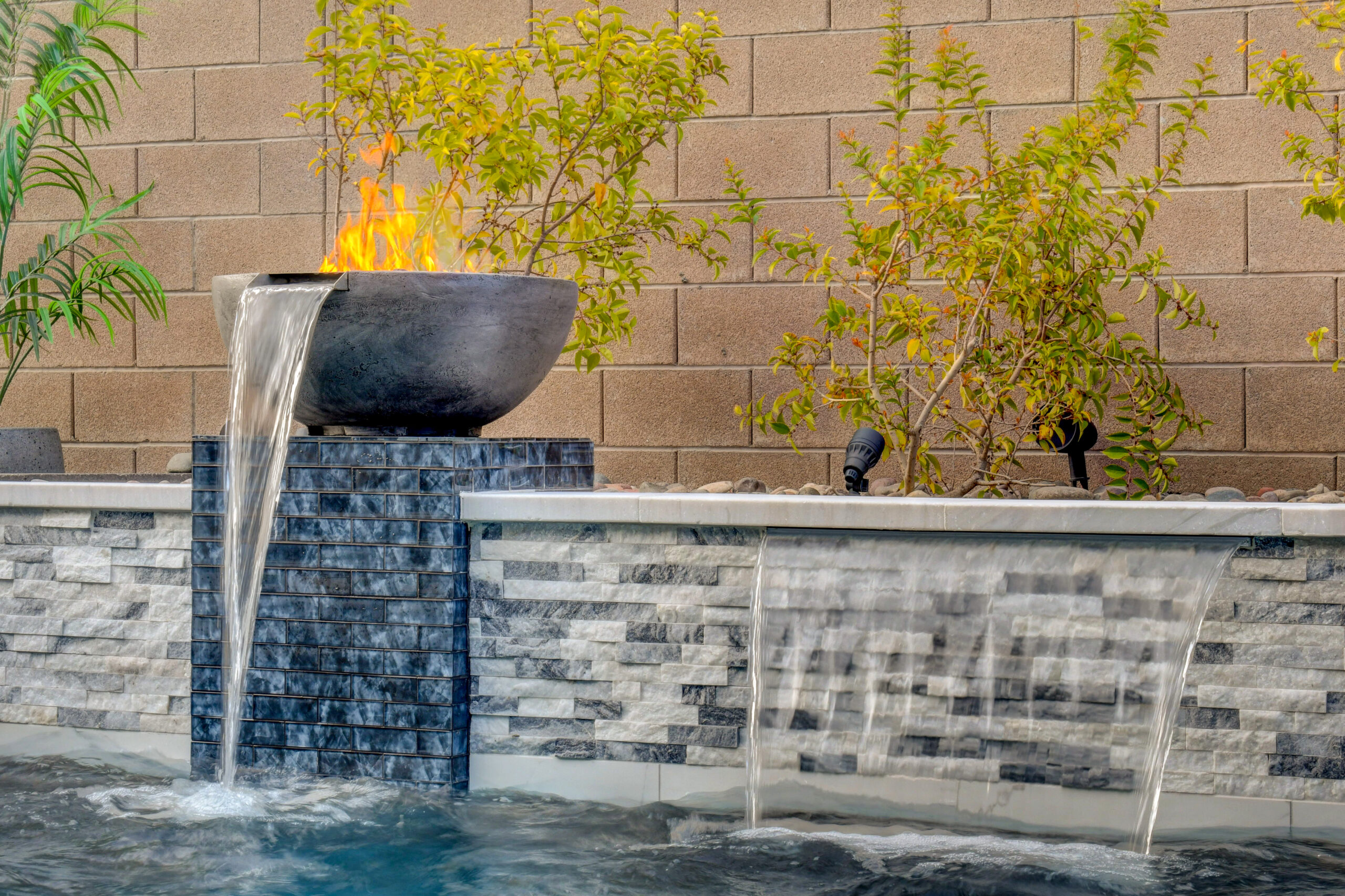
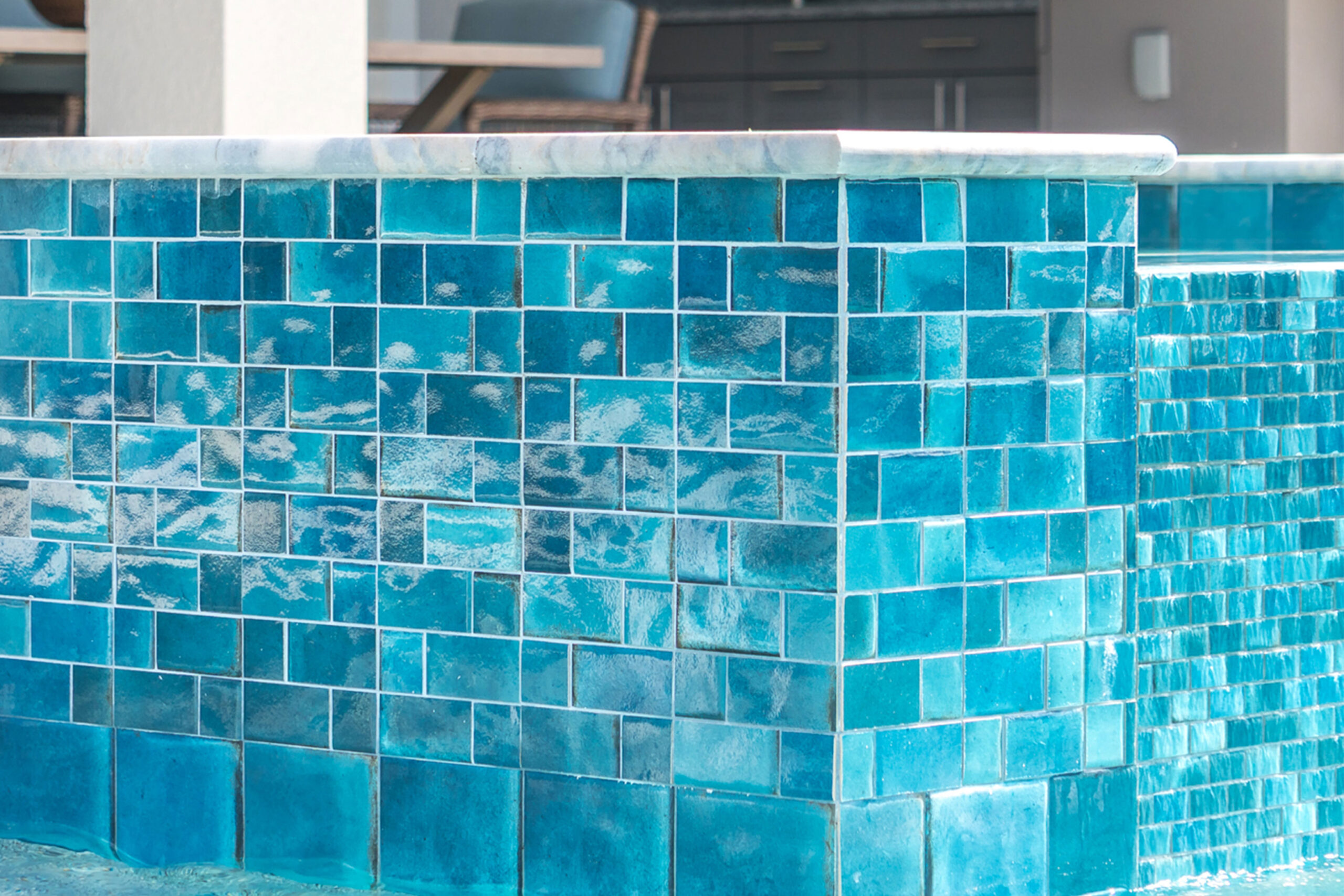
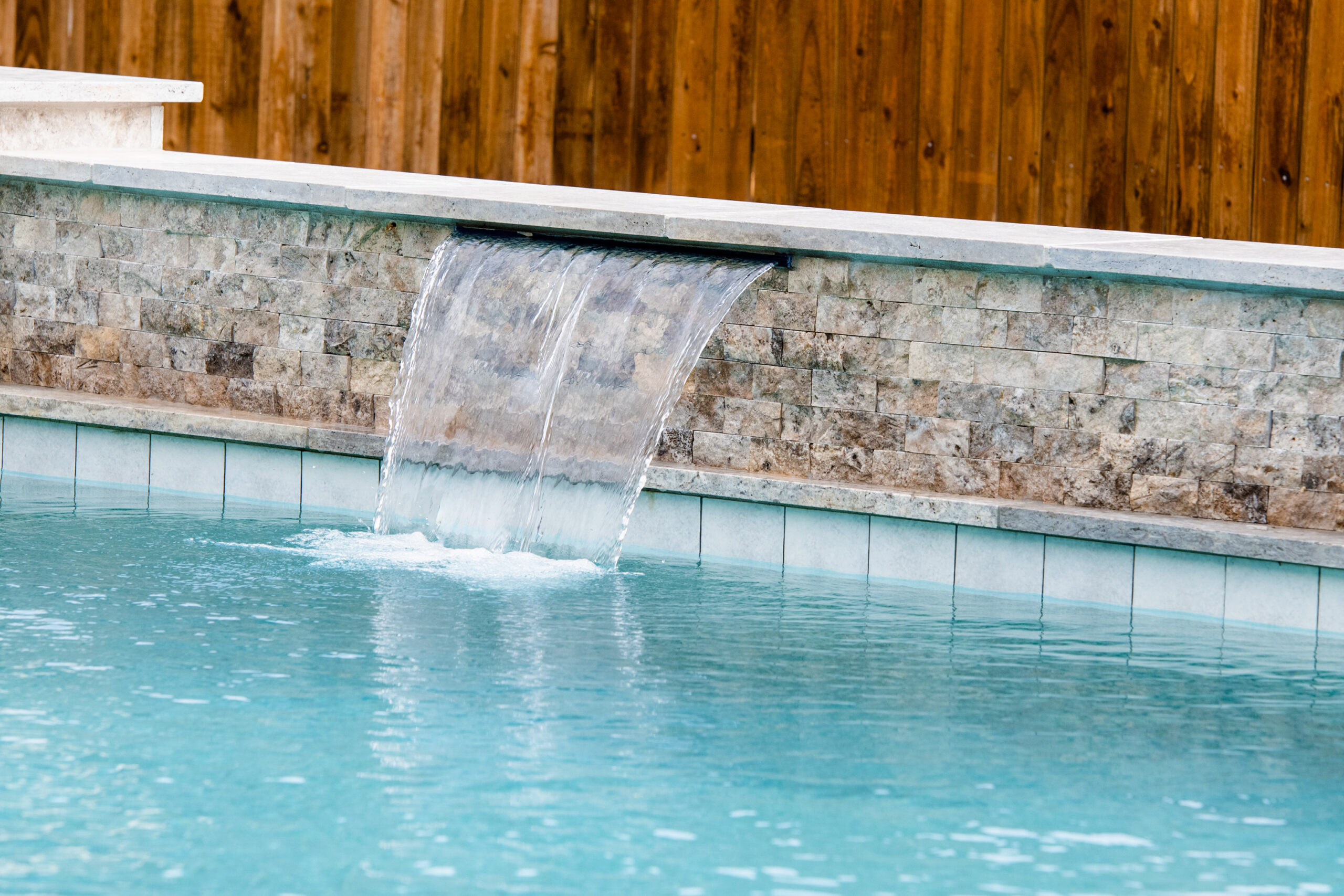
Taking samples and comparing them alongside your pool finish can help ensure the materials complement each other.
Consider the Surrounding Materials
Waterline tile should also harmonize with the materials surrounding the pool. These include:
- Pool coping
- Decking materials such as pavers or stone
- The home’s exterior finishes
- Landscaping and outdoor features
A well-coordinated palette creates a cohesive backyard design. You do not want your pool to feel like an afterthought that does not fit with the home and yard design.
Consider the Shape of Your Pool
The shape of your pool can play an important role in determining the best tile size for the waterline.
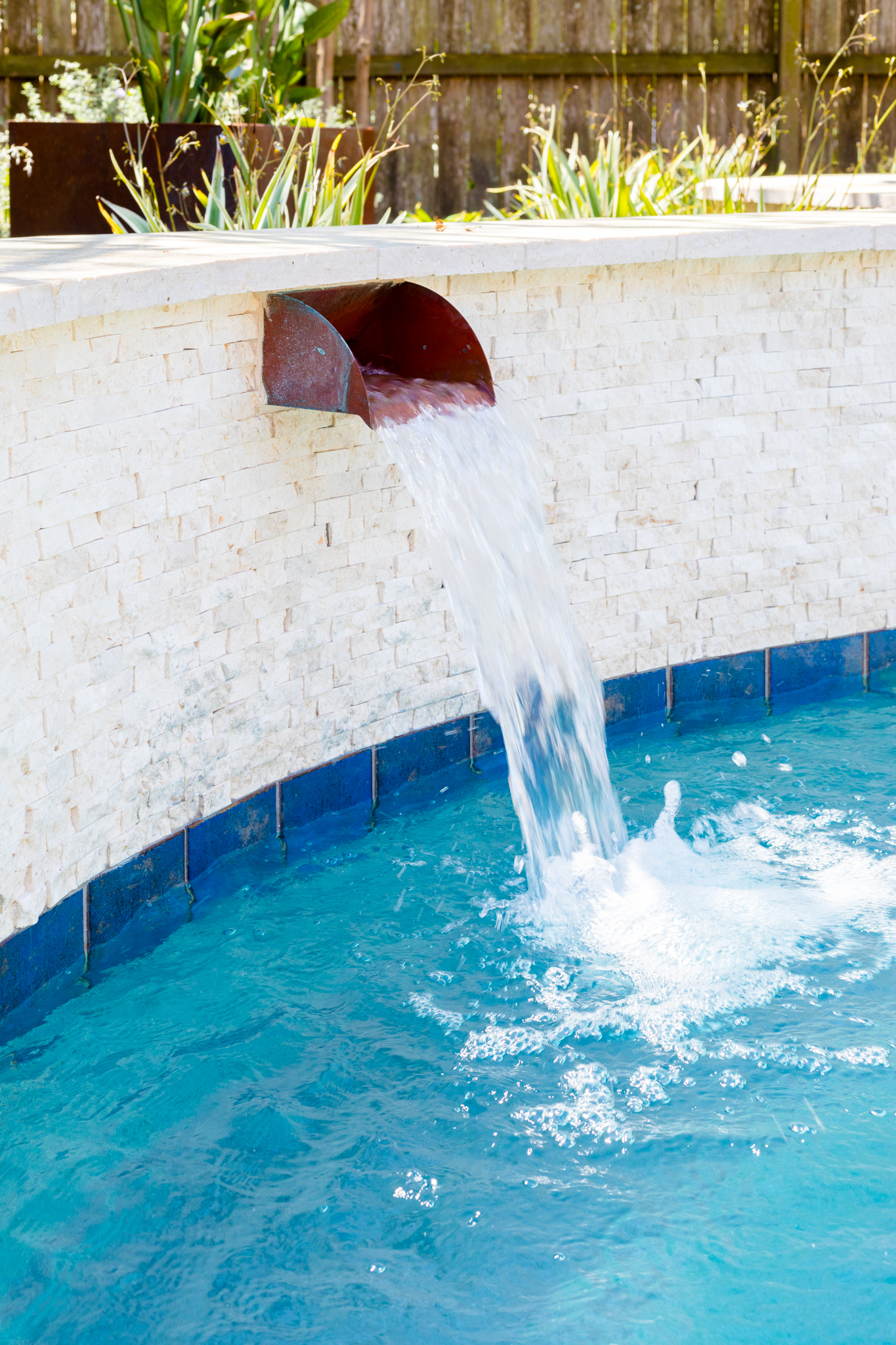
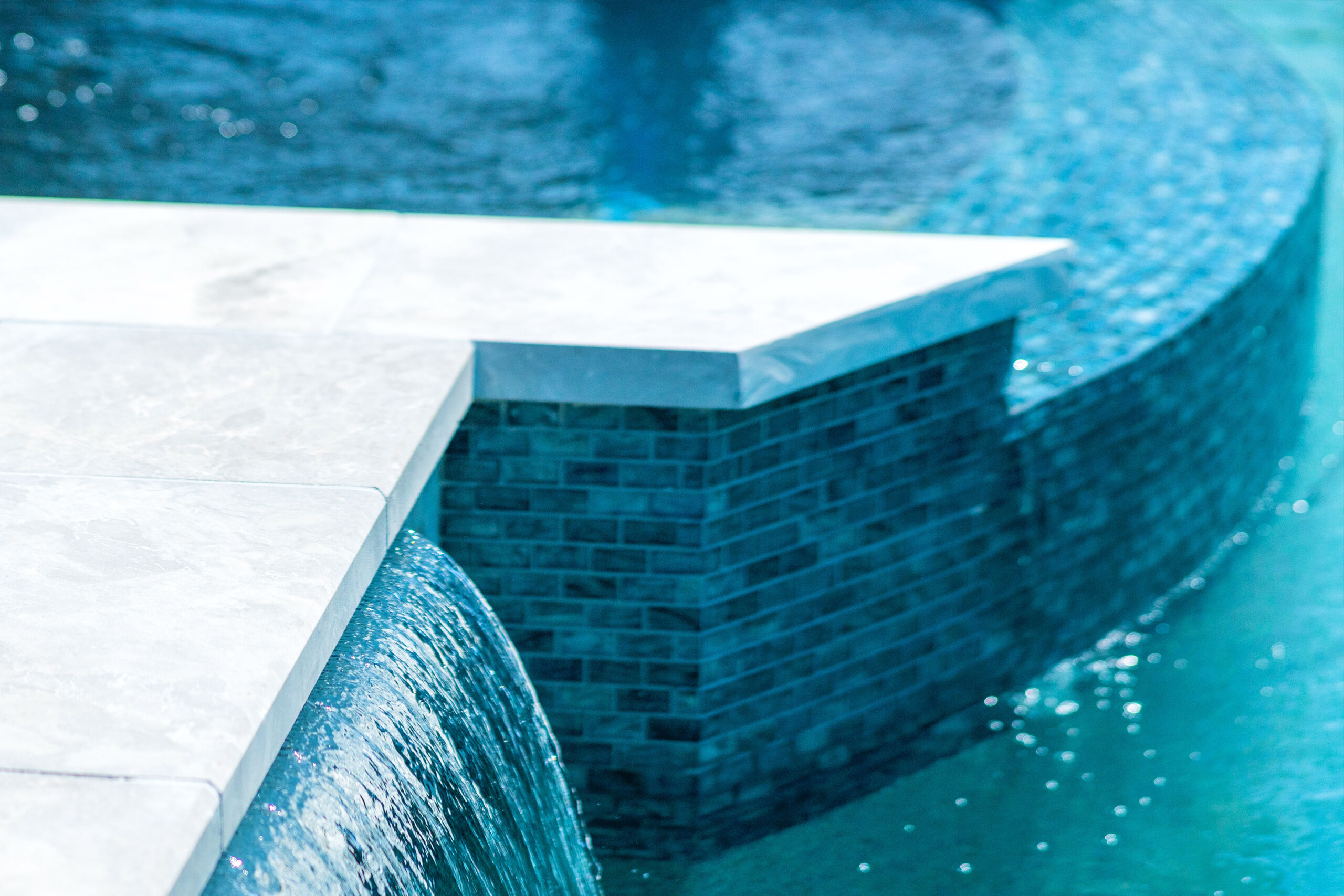
- For freeform pools with curves or irregular shapes, smaller tiles are often the better choice. Tighter curves require tiles that can easily follow the pool wall’s contour. Smaller tiles allow the tile line to bend smoothly around these curves, maintaining a clean, flowing appearance. Larger tiles, on the other hand, may not follow the curve as easily, making the pool’s edge appear uneven or segmented.
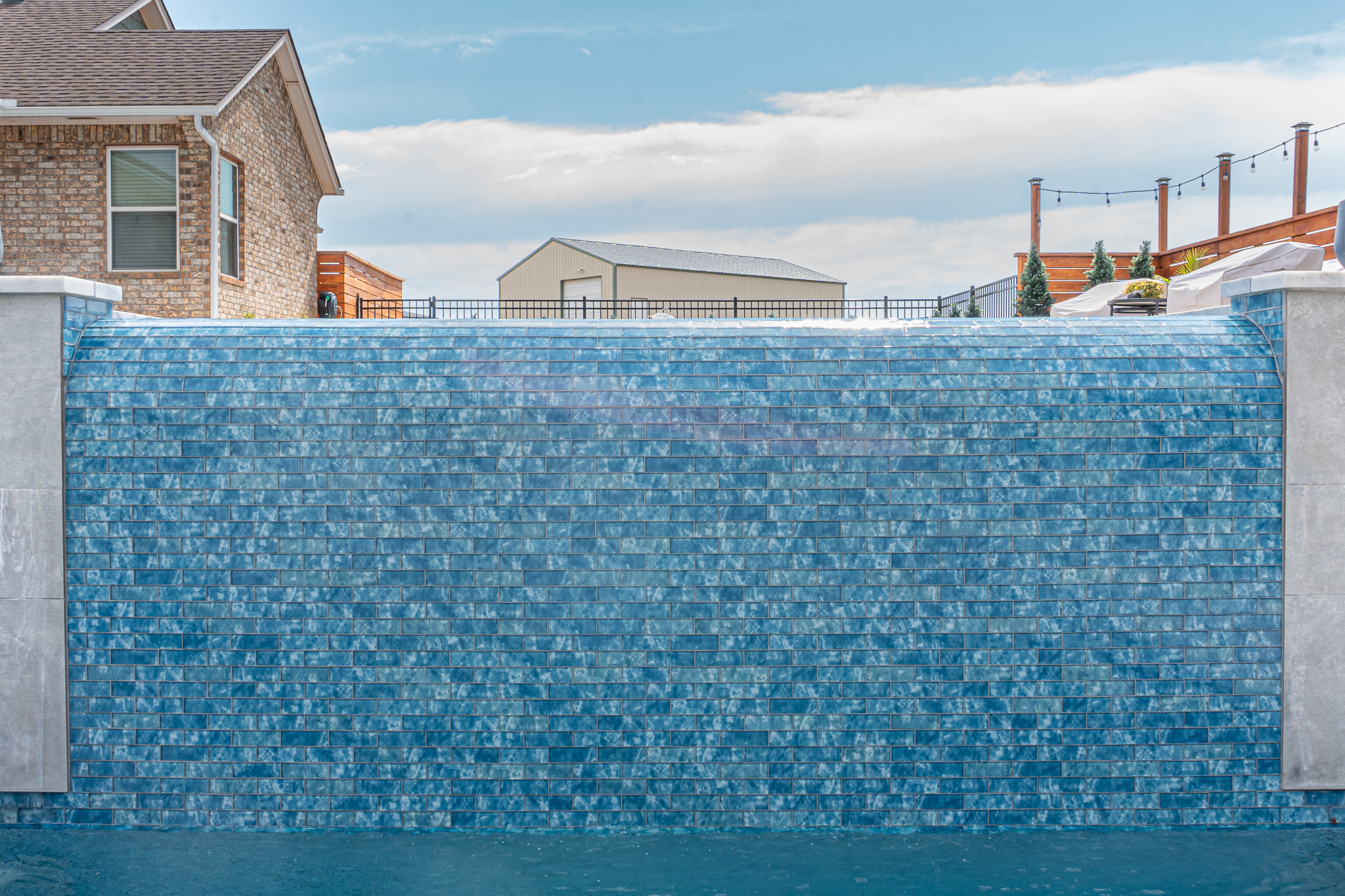
- For geometric pools with straight lines and sharp angles, you typically have more flexibility. Both large -and small-format tiles can work well, as straight edges do not require the same level of flexibility as curved surfaces. In these designs, the tile size can be chosen primarily based on the overall style and look you want to achieve.
Choosing the right tile size for your pool’s shape helps ensure the waterline looks smooth, balanced, and professionally finished.
Think About Maintenance
While all waterline tiles help simplify cleaning compared to plaster surfaces, some choices make maintenance easier than others.
When selecting tile, consider:
- Finishes that help hide calcium or scale buildup
- Colors that do not easily show water residue
- Smooth surfaces that are easy to clean
- The amount and size of the grout joints. Tile is easier to clean than grout joints.
A thoughtful selection can help keep the pool looking great with less ongoing effort.
Understand Standard vs. Premium Options
Many pool builders include a standard selection of waterline tile as part of the base pool package. These options often include traditional 6”x6” porcelain tiles in common colors.
Upgraded tiles, such as glass or porcelain mosaics or designer patterns, are typically considered upgrades and may increase the overall project cost.
The increase in the cost will be small compared to the overall project budget. We encourage you to choose the waterline tile you like most. It is a very visible part of the pool that you will enjoy for many years.
The increase in the cost will be small compared to the overall project budget. We encourage you to choose the waterline tile you like most. It is a very visible part of the pool that you will enjoy for many years.
Always Review Tile Samples in Natural Light
Before making a final decision, it’s best to examine tile samples in outdoor lighting conditions. Natural sunlight and water reflections can significantly change how a tile appears compared to indoor showroom lighting.
If possible, compare multiple samples side by side and view them near the pool area to see how they interact with the surrounding materials.
Final Thoughts
Waterline tile may only cover a small portion of a swimming pool, but its impact on the overall design is significant. The right tile can elevate the entire space, enhance the water’s color, and simplify long-term maintenance.
By choosing durable materials, coordinating with surrounding finishes, and carefully reviewing design options, homeowners can select a waterline tile that complements both their pool and their outdoor living space for years to come.
About the Author
 Brett Streadbeck
Brett Streadbeck is President and CFO of Aquabella, where he leads the company’s strategy, financial direction, and overall growth. His work focuses on aligning product, partnerships, and operations to better serve both builders and homeowners.