Pool decks are meant to be beautiful; but they also need to be safe. Wet surfaces, barefoot traffic, and slippery coping edges make slip resistance one of the most important factors when selecting decking materials.
Slip resistance is a critical performance characteristic for any pool deck surface. It refers to the ability of a material to provide adequate traction underfoot, particularly in wet, barefoot conditions.
In pool environments, this becomes especially important due to:
- Constant water exposure
- Barefoot traffic
- Transitional areas such as the pool edge (coping), where users enter and exit the water
At the coping, surfaces must achieve a careful balance between:
- Sufficient grip to prevent slipping
- Comfort for hands and bare feet
As noted by Tile Council of North America (TCNA), slip resistance should be evaluated using recognized testing methods rather than visual appearance alone. ANSI A326.3 is the primary North American standard used to measure the Dynamic Coefficient of Friction (DCOF) for hard surface flooring materials.
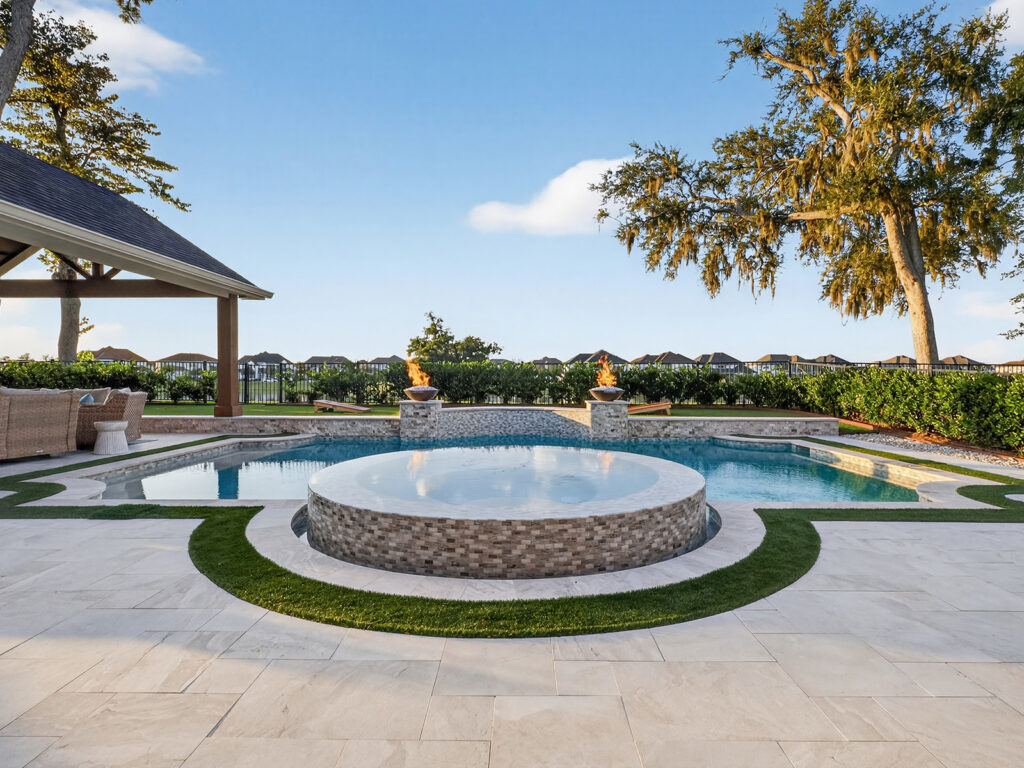
Measurement of Slip Resistance
Slip resistance is evaluated using standardized test methods that quantify surface traction under specific conditions.
Dynamic Coefficient of Friction (DCOF)
The Dynamic Coefficient of Friction (DCOF) measures the resistance to slipping while a person is in motion.
- Higher values indicate greater traction
- More relevant than static measurements for walking surfaces
ANSI A326.3 (DCOF AcuTest)
Published by Tile Council of North America
- Measures DCOF under wet conditions
- Used for laboratory and field testing of hard surface flooring materials
- Includes product classifications and usage guidance
TCNA states:
“The American National Standard A326.3 describes the test method for measuring the dynamic coefficient of friction (DCOF) of hard surface flooring materials.”
Recommended minimum:
- DCOF ≥ 0.42 for interior wet, level surfaces
Limitation
Because this test was originally developed for interior flooring, it should be used as a reference, not the only factor when selecting materials for outdoor pool environments.
DIN 51130 (Ramp Test – Reference for Surface Texture)
The DIN 51130 standard is commonly used to describe surface texture and slip resistance levels for outdoor materials.
It classifies surfaces based on ramp-test acceptance angles and is widely referenced when comparing exterior tile and paver finishes.
| Rating | Angle Range | Relative Grip Level | Typical Use |
|---|---|---|---|
| R9 | 6°–10° | Low | Indoor dry areas |
| R10 | 10°–19° | Moderate | Light outdoor use |
| R11 | 19°–27° | High | Best for pool decks |
| R12 | 27°–35° | Very High | Ramps / wet commercial areas |
| R13 | ≥35° | Extremely High | Industrial / extreme conditions |
For most residential pool decks, R11 is generally considered the preferred balance between safety and barefoot comfort.
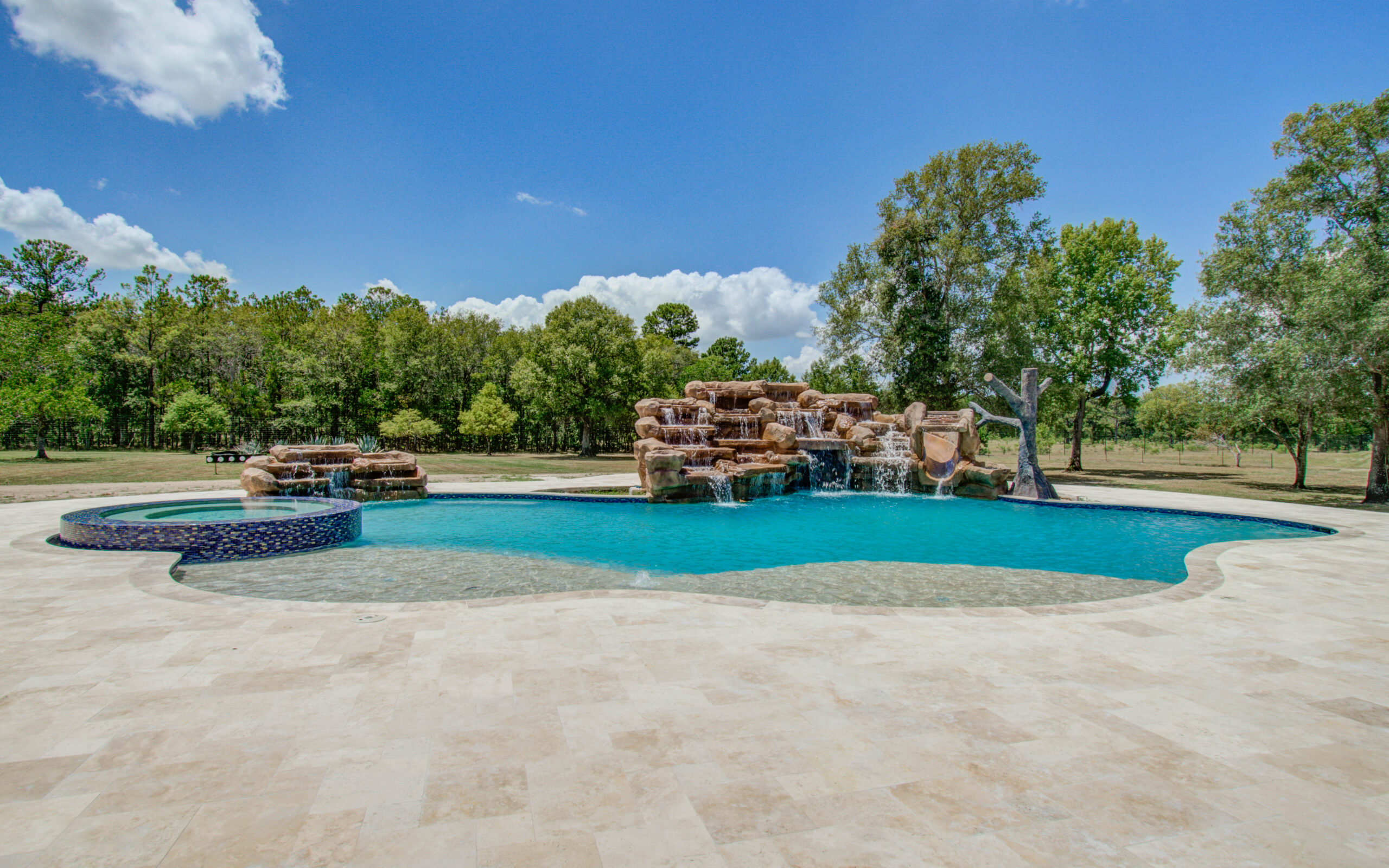
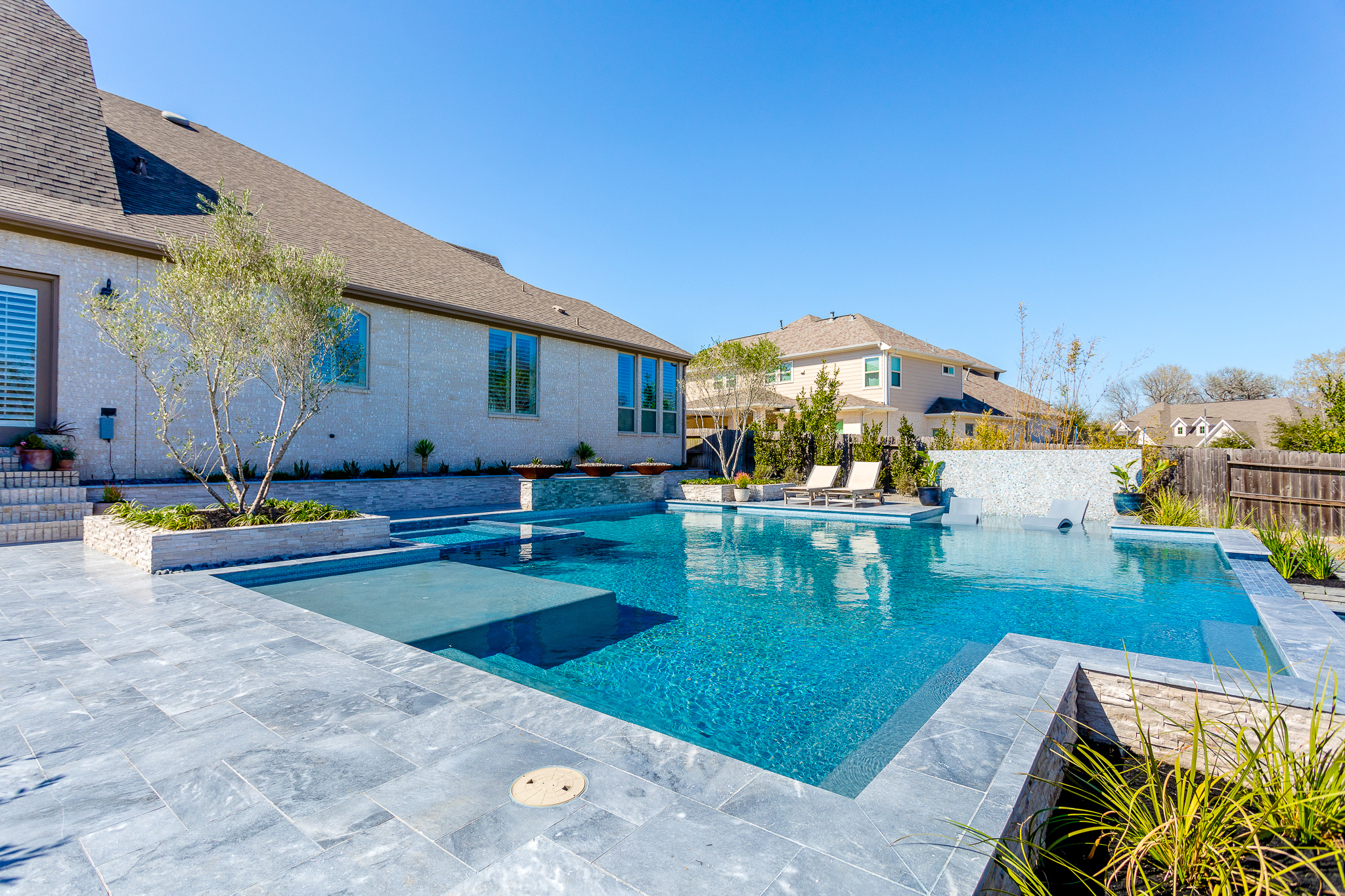
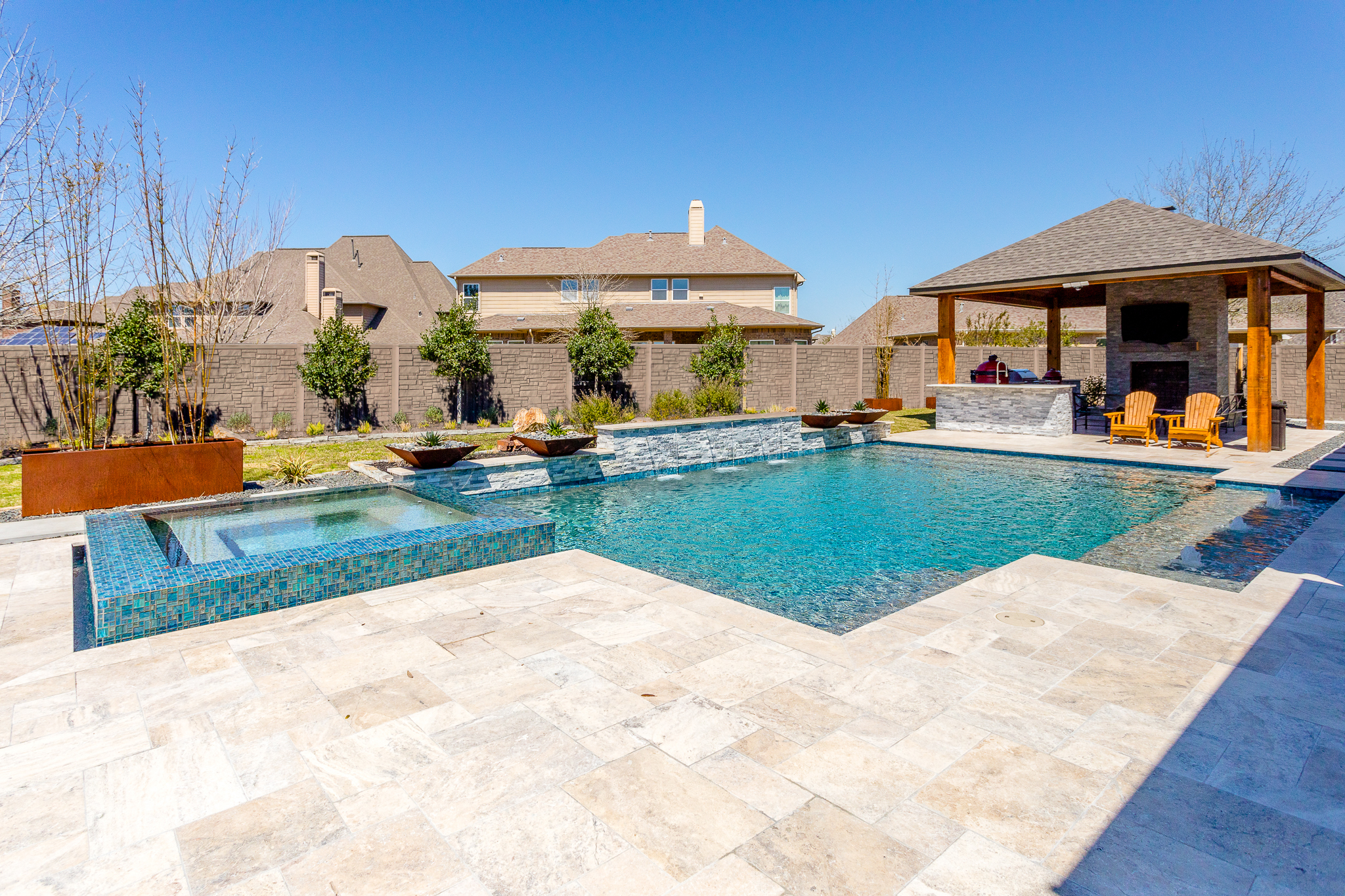
Material Systems and Performance
Porcelain Pavers
Best Overall – Consistency and Performance
Porcelain pavers are engineered materials designed specifically for outdoor use.
Technical Characteristics
- Manufactured surface texture provides consistent slip resistance
- Typically rated R11 or higher
- Very low water absorption (<0.5%)
- Maintains performance over time without surface degradation
Many premium porcelain paver systems, including outdoor 2cm pavers, are specifically manufactured with R11-rated slip resistance for wet exterior environments.
Performance Advantages
- Uniform grip across deck and coping when using matching systems
- No change in friction due to moisture absorption
- High durability in harsh environments (humidity, chemicals, UV exposure)
Application
- Ideal for climates with rain, humidity, and algae exposure
- Suitable for residential and high-traffic applications
Natural Stone Pavers
Best Natural Performance and Comfort
Travertine is a naturally porous limestone widely used in pool environments.
Why it performs well
- Open pore structure contributes to natural traction
- Surface finish significantly impacts performance:
- Tumbled / brushed: enhanced grip
- Smooth finishes: reduced traction
Performance Advantages
- Good slip resistance due to micro-texture
- Lower surface temperature under direct sunlight
- Comfortable underfoot
Natural Stone Institute notes that natural stone performance varies significantly based on finish, porosity, and maintenance.
For most residential pool decks, R11 is generally considered the preferred balance between safety and barefoot comfort.
Mixed Material Systems
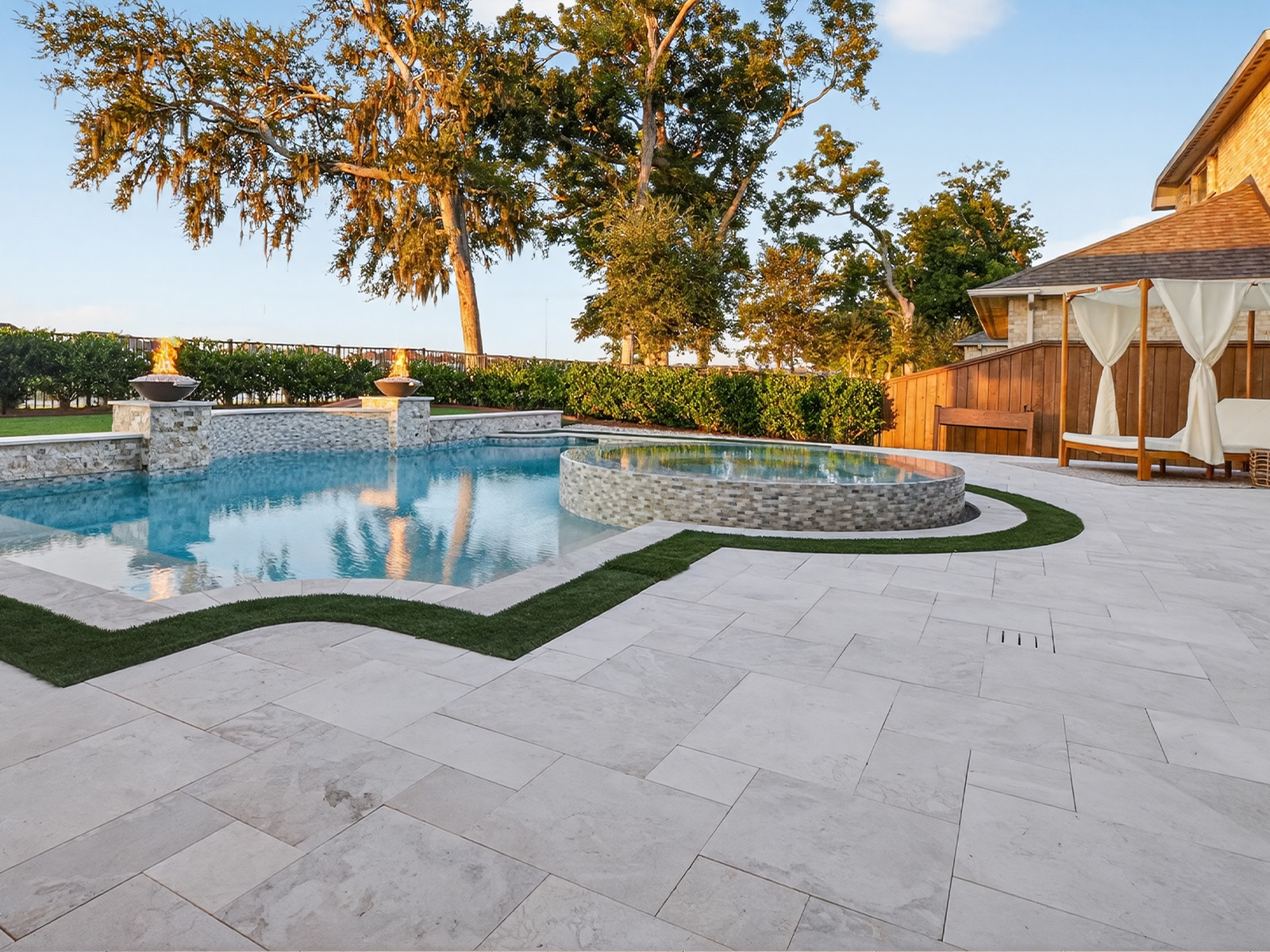
Porcelain Deck + Stone Coping
Mixed systems combine different materials for aesthetic or functional reasons.
Technical Consideration
- Each material has distinct friction characteristics
- Surface transitions must be carefully designed to maintain consistent traction
Key Principle
The coping surface should provide equal or compatible slip resistance relative to the deck to ensure a smooth and safe transition.
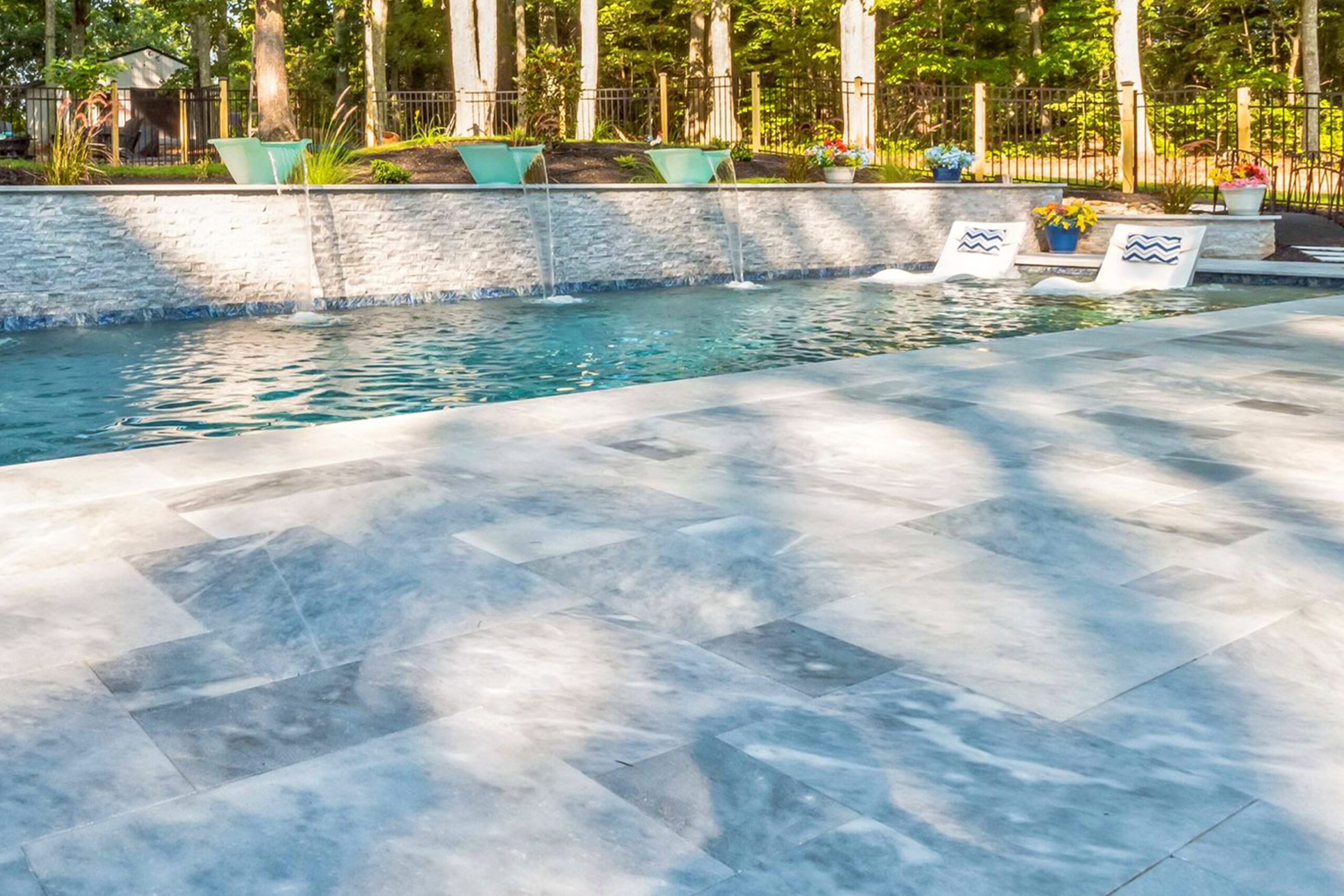
Marble and Marble-Look Finishes
Aesthetic-Focused Applications
Marble is a dense, low-porosity stone with a naturally smooth surface.
Key Benefits
- Lower inherent slip resistance compared to porous stones
- Performance depends heavily on surface treatment
Suitable Finishes
- Sandblasted
- Brushed
- Textured finishes designed for exterior use
Alternative
Marble-look porcelain offers similar aesthetics with improved slip consistency.
Sealers and Their Impact on Slip Resistance
Sealers are used to protect natural stone from staining and moisture intrusion. Their impact on slip resistance depends on the type used.
Natural Stone Institute explains that sealing does not make stone stain-proof—it makes it more stain-resistant—and that impregnating sealers act more as repellents than surface coatings.
Penetrating (Impregnating) Sealers
Surface Performance
- Penetrate below the surface
- Do not form a surface film
- Maintain original texture and appearance
Effect on Slip Resistance
- No significant change in surface traction
- Preserves natural grip
This is generally the preferred option for pool decks and coping.
Topical (Film-Forming) Sealers
Design Advantages
- Form a film on the surface
- Can create a satin or glossy finish
Effect on Slip Resistance
- May reduce traction under wet conditions
- Creates a smoother walking surface
Topical sealers can alter surface texture and may reduce traction if improperly selected for wet outdoor environments.
Natural Stone Institute explains that sealing does not make stone stain-proof—it makes it more stain-resistant—and that impregnating sealers act more as repellents than surface coatings.
Additional Considerations
- Some sealers include anti-slip additives
- Surface cleanliness plays a major role in maintaining traction
- Biological growth (algae, mildew) can significantly impact performance
Proper maintenance is just as important as material selection.
Design Considerations
A well-performing pool deck integrates material selection with thoughtful design.
Best Overall by Priority
- Best overall: Porcelain pavers
- Best natural option: Travertine
- Best luxury look: Marble-look porcelain
- Best budget option: Textured concrete
Key Factors
- Surface texture and finish
- Consistency between deck and coping
- Comfort for barefoot use
- Long-term maintenance requirements
Installation methods, movement joints, drainage, and substrate preparation should also follow established tile industry standards such as those outlined by Tile Council of North America in the TCNA Handbook.
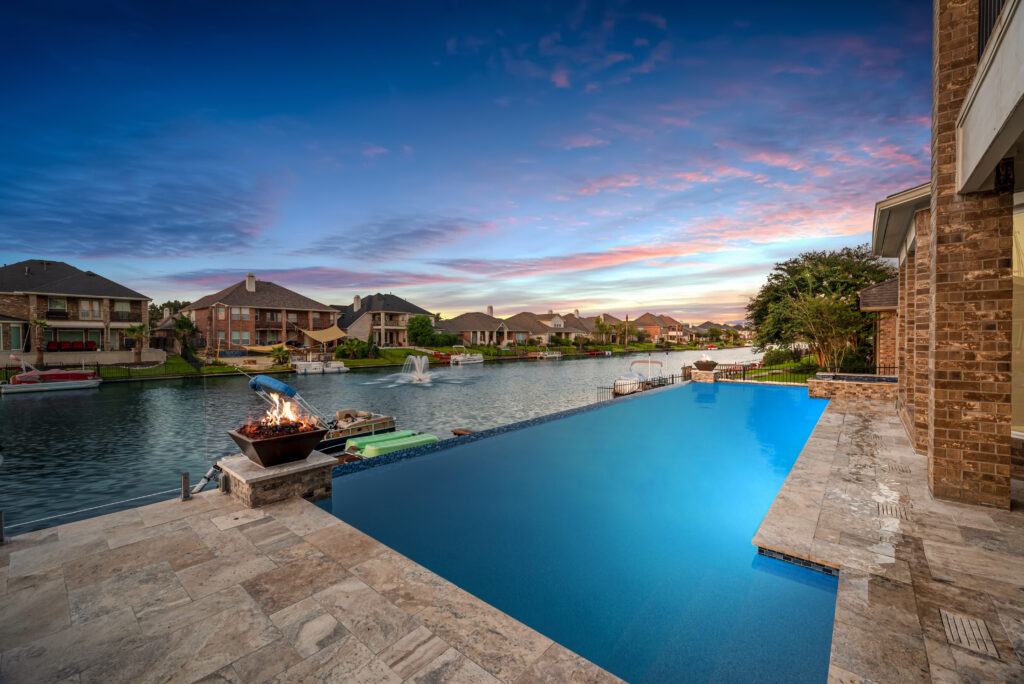
Conclusion
Slip resistance is a fundamental aspect of pool deck performance, combining material science, surface engineering, and design.
Modern materials such as porcelain pavers provide highly consistent and engineered traction, while natural stones like travertine offer inherent texture and comfort.
When properly selected and installed, these materials create outdoor environments that are:
- Comfortable underfoot
- Durable over time
- Optimized for wet conditions
Final Thought
A well-designed pool deck is not only visually appealing, but also engineered to perform.
With the right combination of materials, finishes, and protection systems, homeowners can enjoy a space that feels as good as it looks—every time they step outside.
About the Author
 Daniel Kley
Daniel brings more than 15 years of experience in business development, sales leadership, and strategic growth across the building materials industry. As Director of Sales at Aquabella, he leads national sales initiatives, strengthens partner relationships, and helps drive the brand’s continued expansion in the luxury pool and outdoor living market.