Choosing the right material for a pool deck is one of the most important decisions in any outdoor‑living project. The deck must balance beauty, slip resistance, durability, and long‑term performance in a wet, high‑traffic environment. In today’s hardscape market, two materials dominate the conversation: natural stone and 2CM porcelain pavers. Both material options offer compelling advantages, but they perform differently around pools.
This article will help break down key differences so that builders, designers, and homeowners can make confident decisions when selecting pool deck materials.
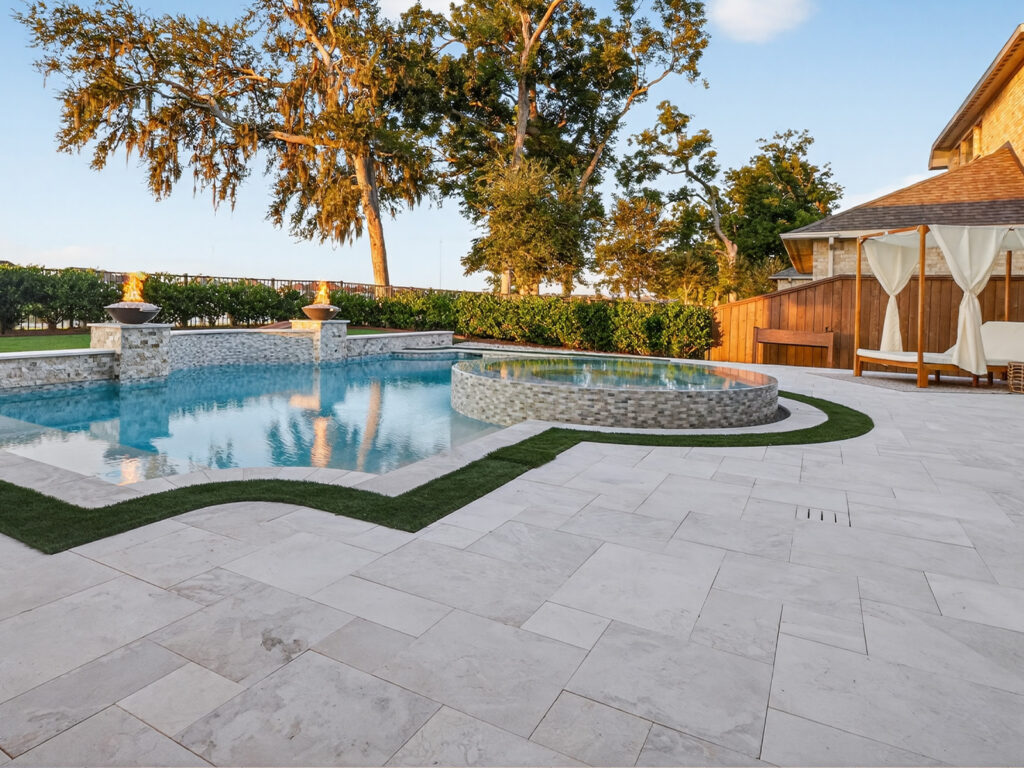
Aesthetic Differences: Natural Beauty vs. Engineered Precision
A pool deck’s visual impact sets the tone for the entire outdoor space. Aesthetics are often the first factor homeowners consider. Designers typically evaluate how well a material complements the home’s architecture, the surrounding landscape, and the overall style of the backyard. These early decisions shape the mood, warmth, and personality of the project.
Natural Stone
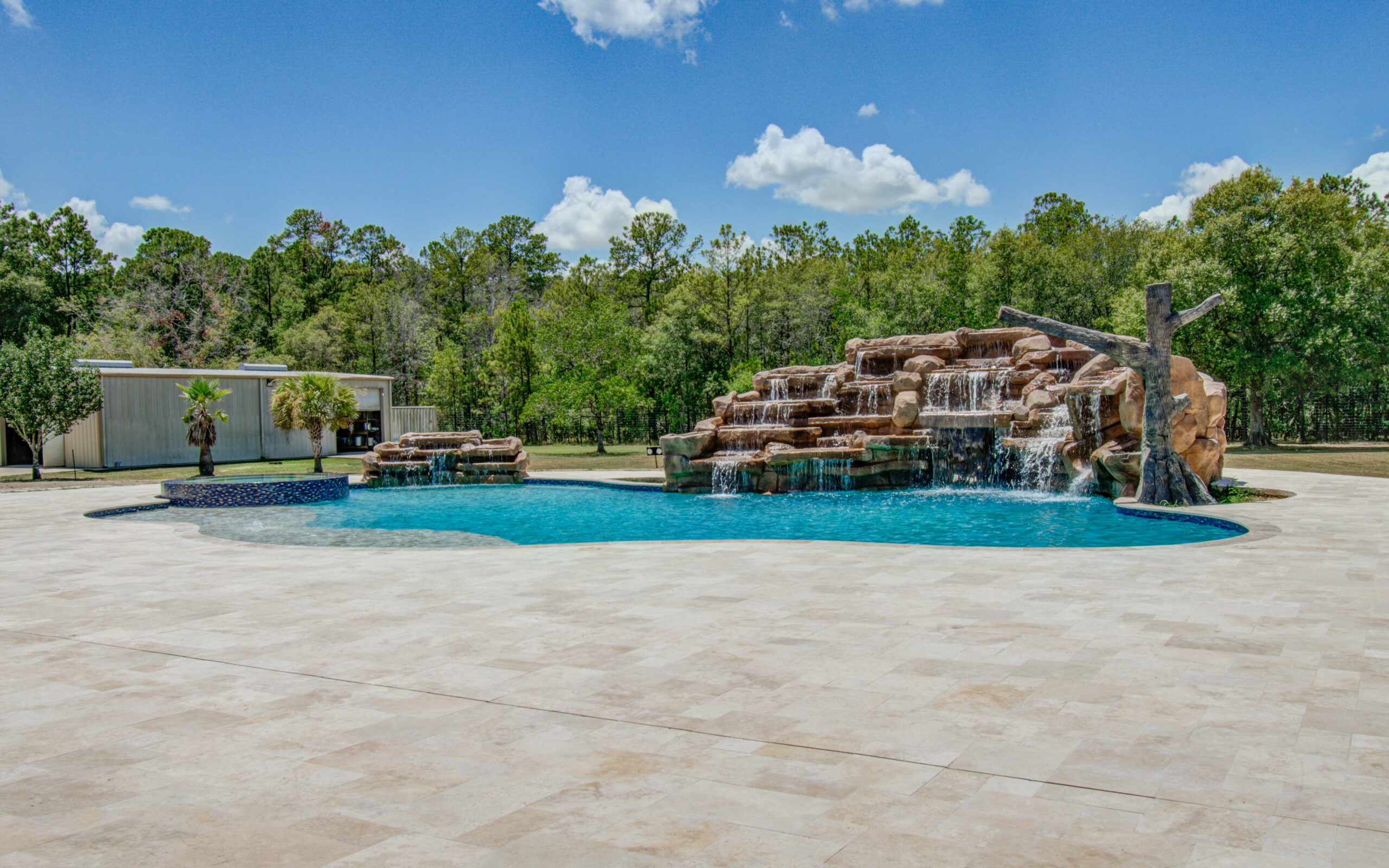
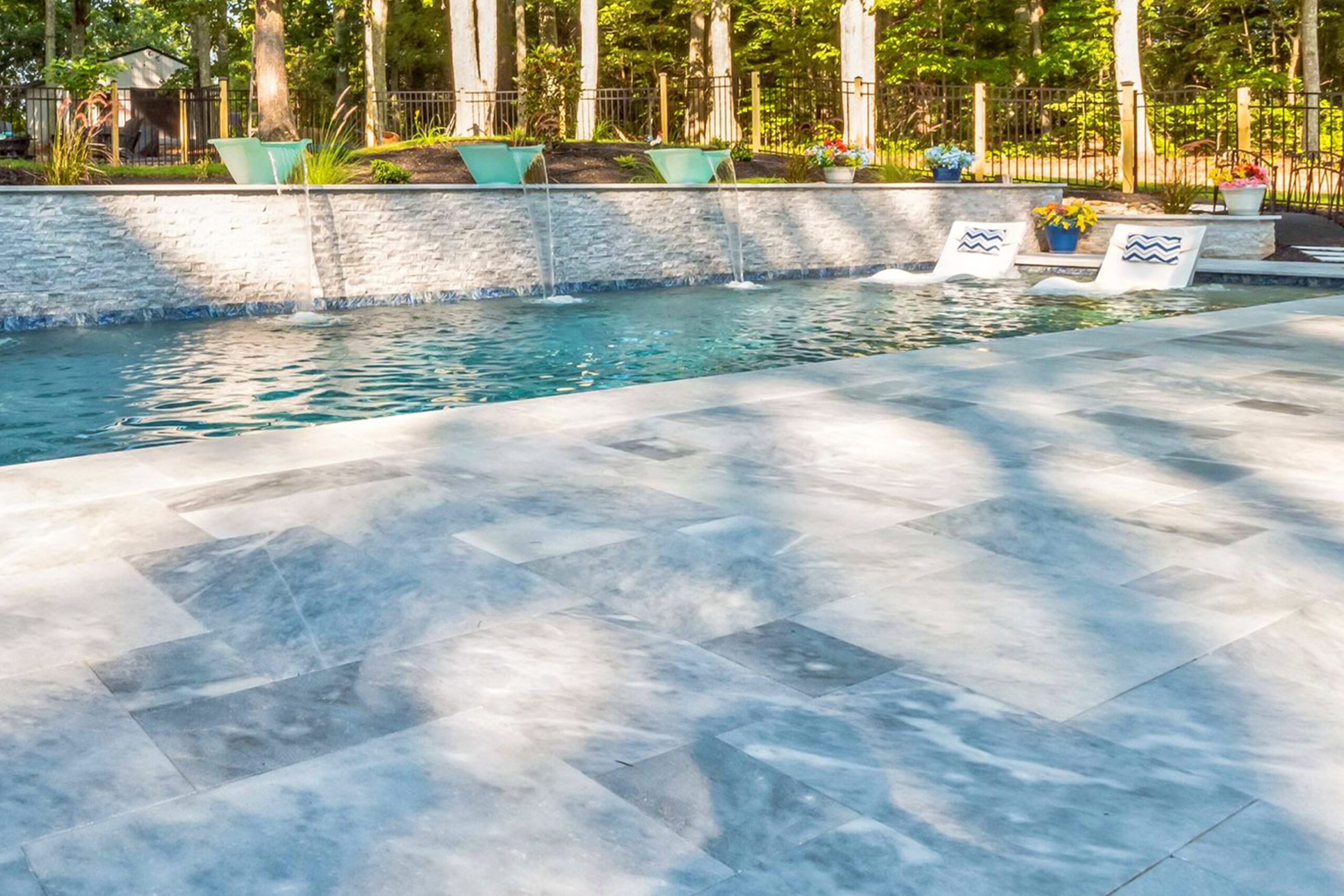
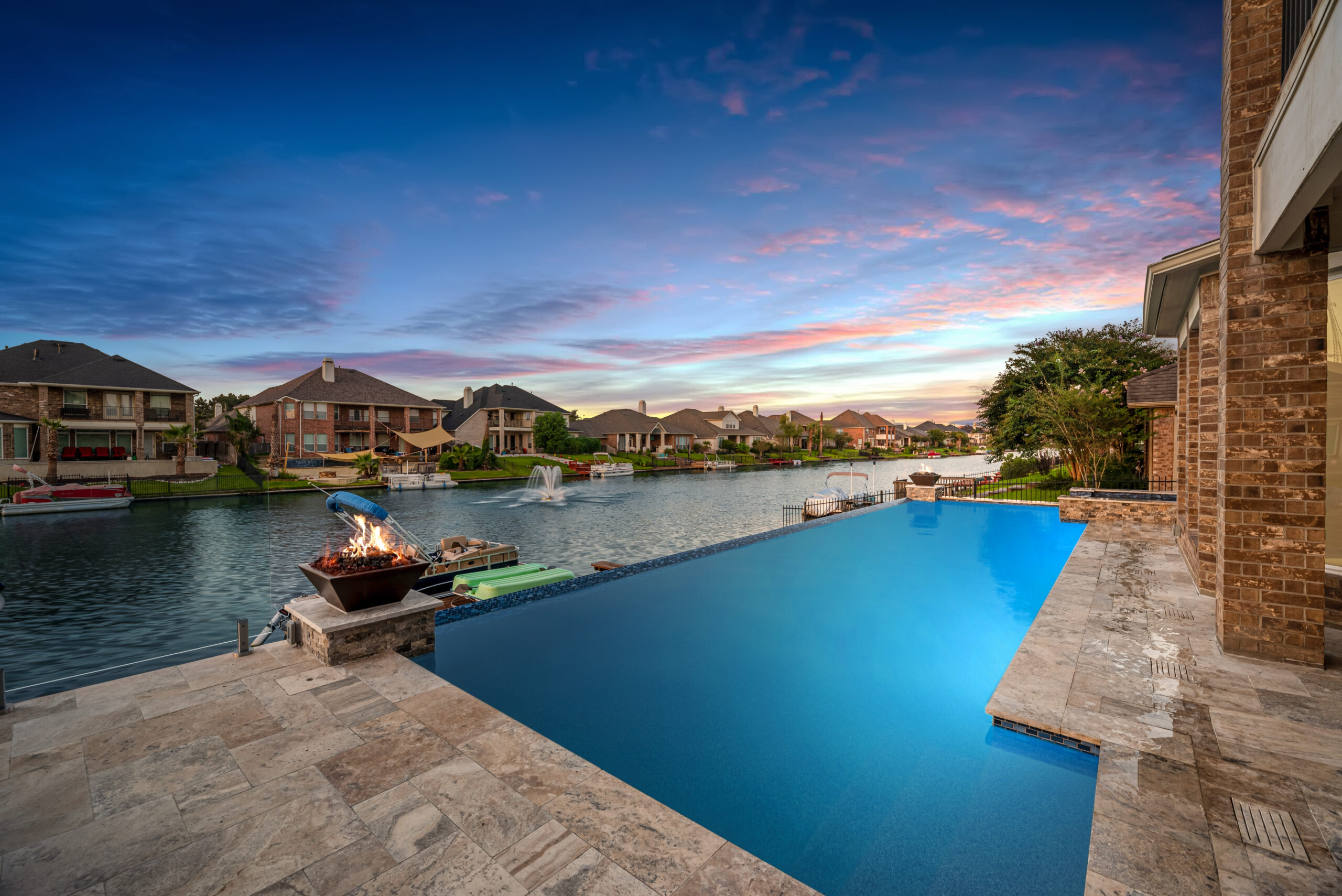
Natural stone, such as travertine, marble, limestone, and shell stone, offers a look that can’t be replicated. Every piece is unique, with natural veining, mineral deposits, and color variation that adds warmth and authenticity to outdoor spaces.
ASTM (American Society for Testing and Materials) provides standardized testing for natural stone, ensuring consistent expectations for density, strength, and long‑term performance.
ASTM standards for stone classification help define expectations for color variation, density, and performance, which is why natural stone remains a staple in luxury pool design.
Why pool builders choose natural stone:
- Organic, timeless appearance
- Natural variation ideal for luxury pool decks
- Coordinates easily with coping, ledgers, and outdoor‑living features
- Enhances high‑end backyard designs
2CM Porcelain Pavers
Porcelain pavers are engineered using advanced digital printing technology to mimic stone, wood, or concrete with remarkable realism. They offer consistent color, pattern, and texture across large areas. This is a major advantage for modern outdoor‑living designs.
Why pool builders choose porcelain pavers:
- Highly consistent shade and pattern
- Wide range of contemporary hardscape styles
- Seamless indoor‑to‑outdoor transitions
- Ideal for modern pool deck designs
Designers typically evaluate how well a material complements the home’s architecture, the surrounding landscape, and the overall style of the backyard. These early decisions shape the mood, warmth, and personality of the project.
Durability and Maintenance
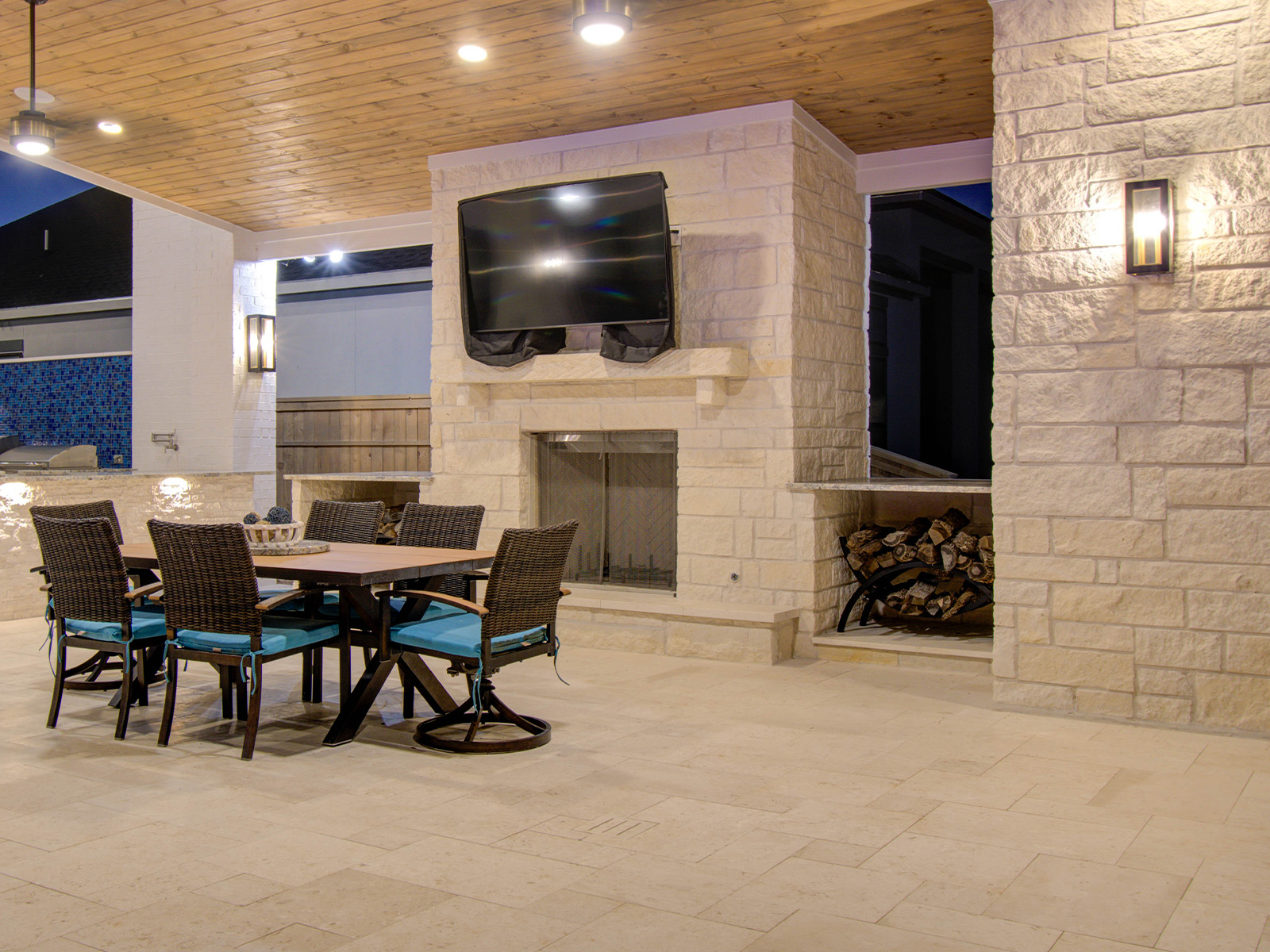
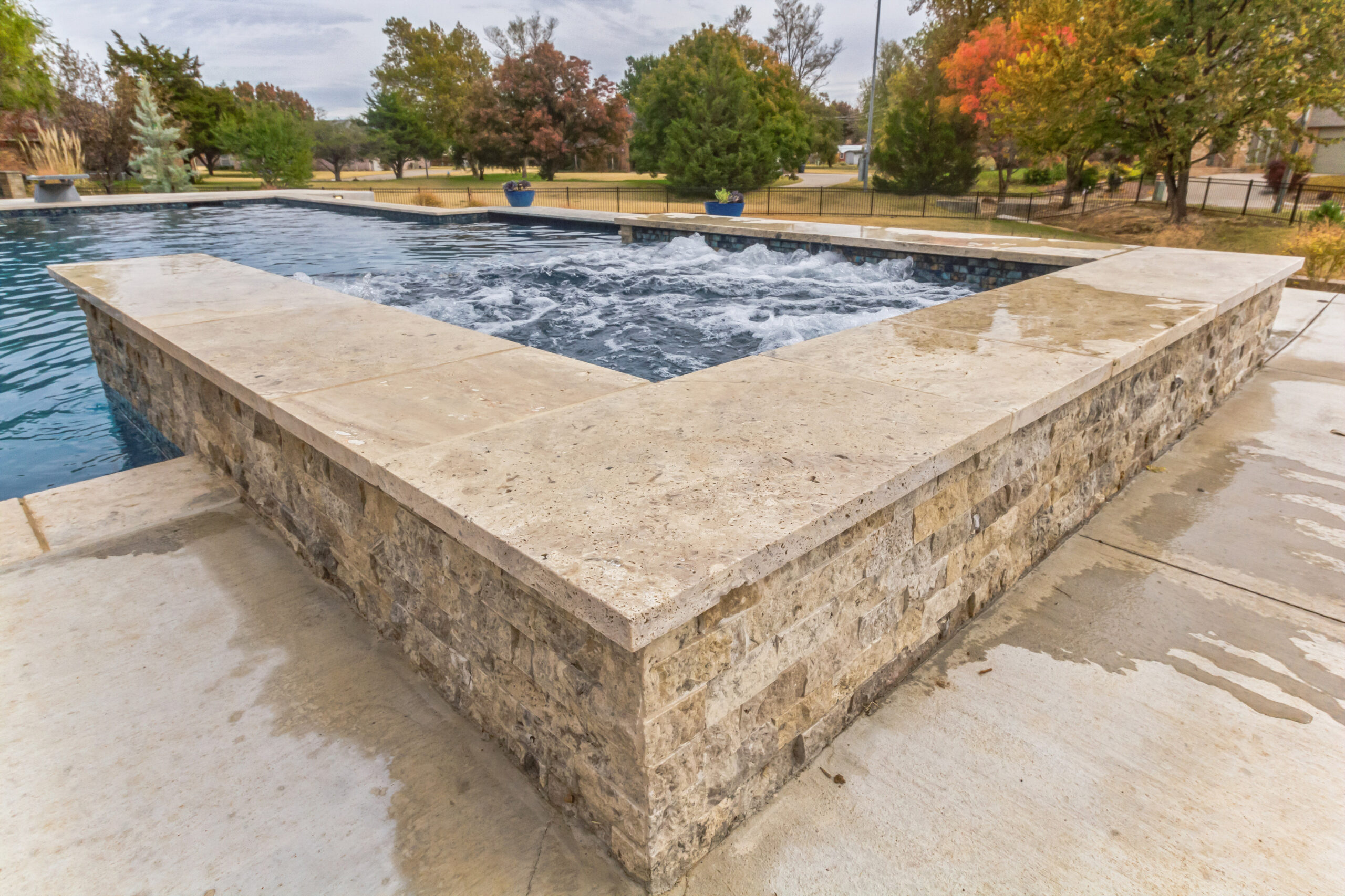
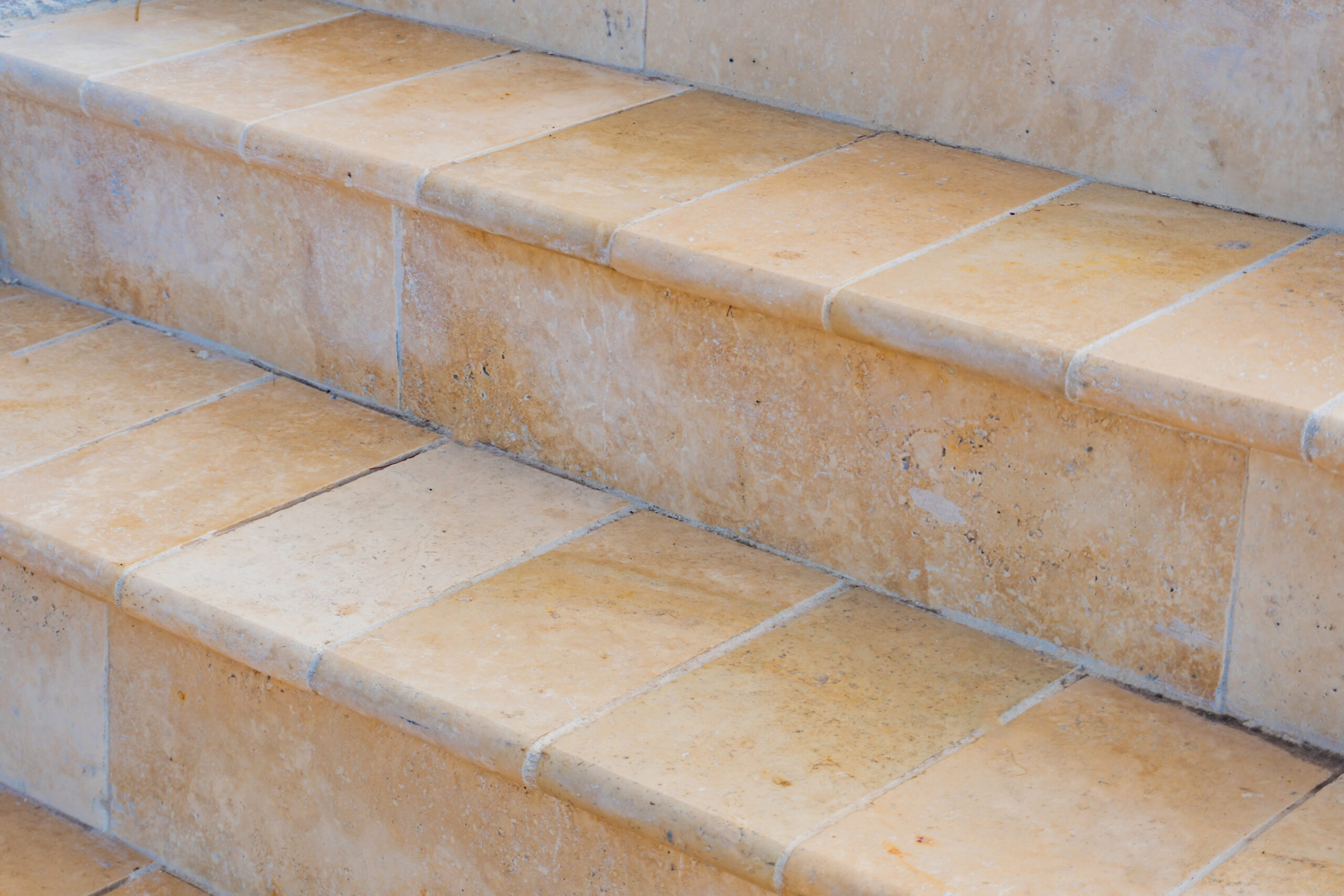
Pool decks must withstand constant exposure to water, chemicals, UV rays, and heavy foot traffic, making durability one of the most important performance factors. Material choice also affects long‑term maintenance requirements, which can significantly influence homeowner satisfaction.
TCNA (Tile Council of North America) establishes performance and installation standards for porcelain, including water absorption, slip resistance, and freeze–thaw durability. These guidelines help ensure materials perform safely and reliably in pool environments.
TCNA guidelines for porcelain’s water absorption (≤0.5%), slip resistance, and freeze‑thaw performance make it one of the most reliable materials for wet environments.
Porcelain
- Highly resistant to fading, staining, and scratching
- No sealing required
- Excellent long‑term color stability
- Ideal for saltwater pools due to chemical resistance
- Darker colors can become hotter under direct sunlight
Natural Stone
- Ages beautifully when properly maintained
- Lighter colors (like Shellstone) stay cooler underfoot
- Performance varies widely by stone type and finish
- Can be repaired or replaced more easily than porcelain
TCNA guidelines for porcelain’s water absorption (≤0.5%), slip resistance, and freeze‑thaw performance make it one of the most reliable materials for wet environments.
Cost Considerations
Cost is more than just the price of the material. It includes installation, maintenance, freight, and long‑term performance. Builders often evaluate the total cost of ownership rather than the upfront cost alone, especially for high‑use areas like pool decks.
Regional availability, installer familiarity, and project complexity can also influence overall pricing, making it important to understand how each material behaves during installation and over time.
Pricing varies by region, thickness, finish, and availability, but general trends hold:
Material |
Material Cost |
Installation Cost |
Maintenance Cost |
Long Term Value |
|
Porcelain Pavers |
Moderate | Moderate-High | Low |
Excellent |
| Natural Stone | Moderate-High | Moderate | Moderate |
Excellent |
Builders often choose porcelain for modern designs and low maintenance, while natural stone remains the go‑to for luxury, organic outdoor spaces.
ASTM standards for stone density and hardness, along with TCNA installation guidelines for porcelain, can influence labor costs, depending on the installer’s experience.
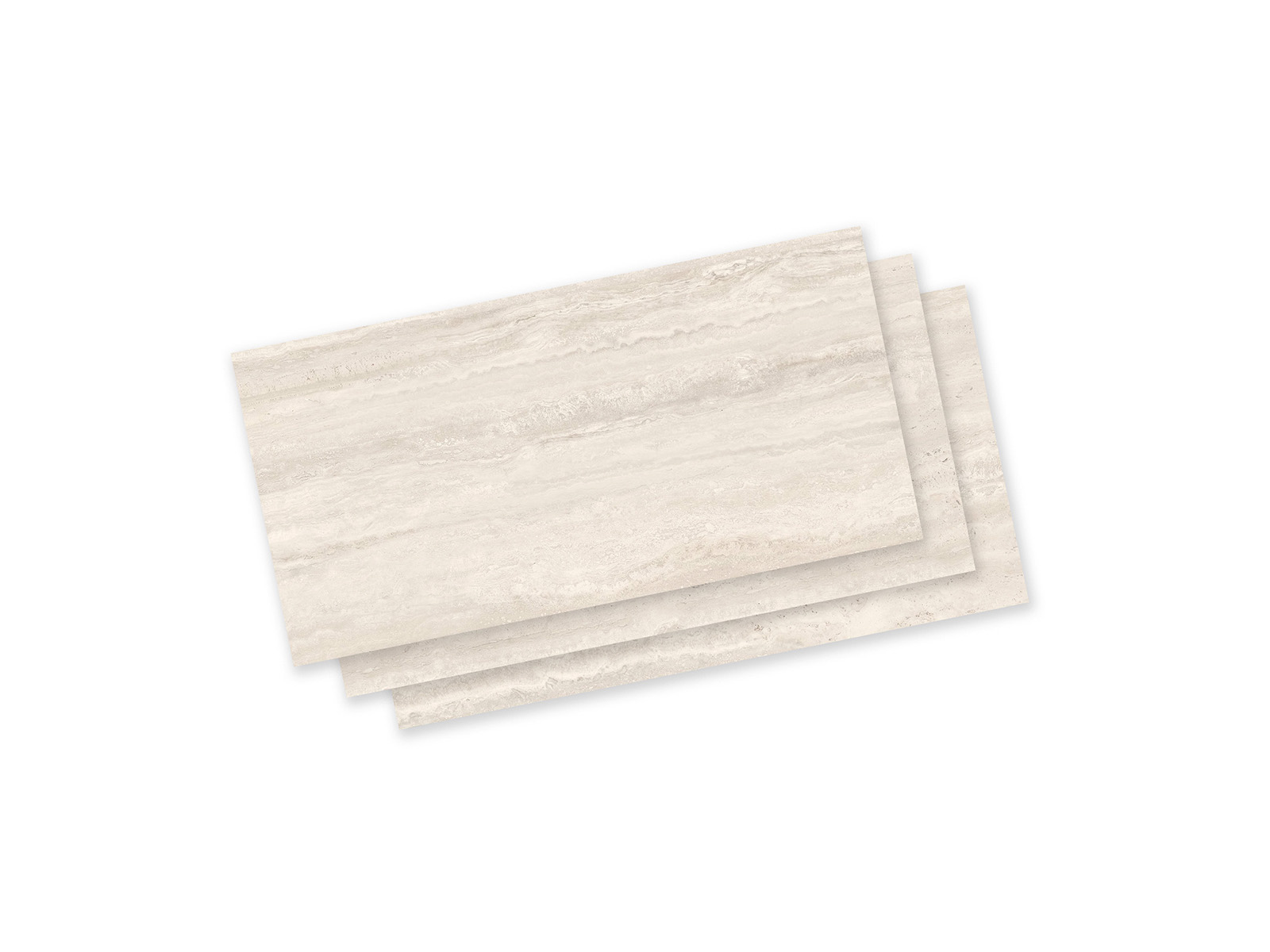
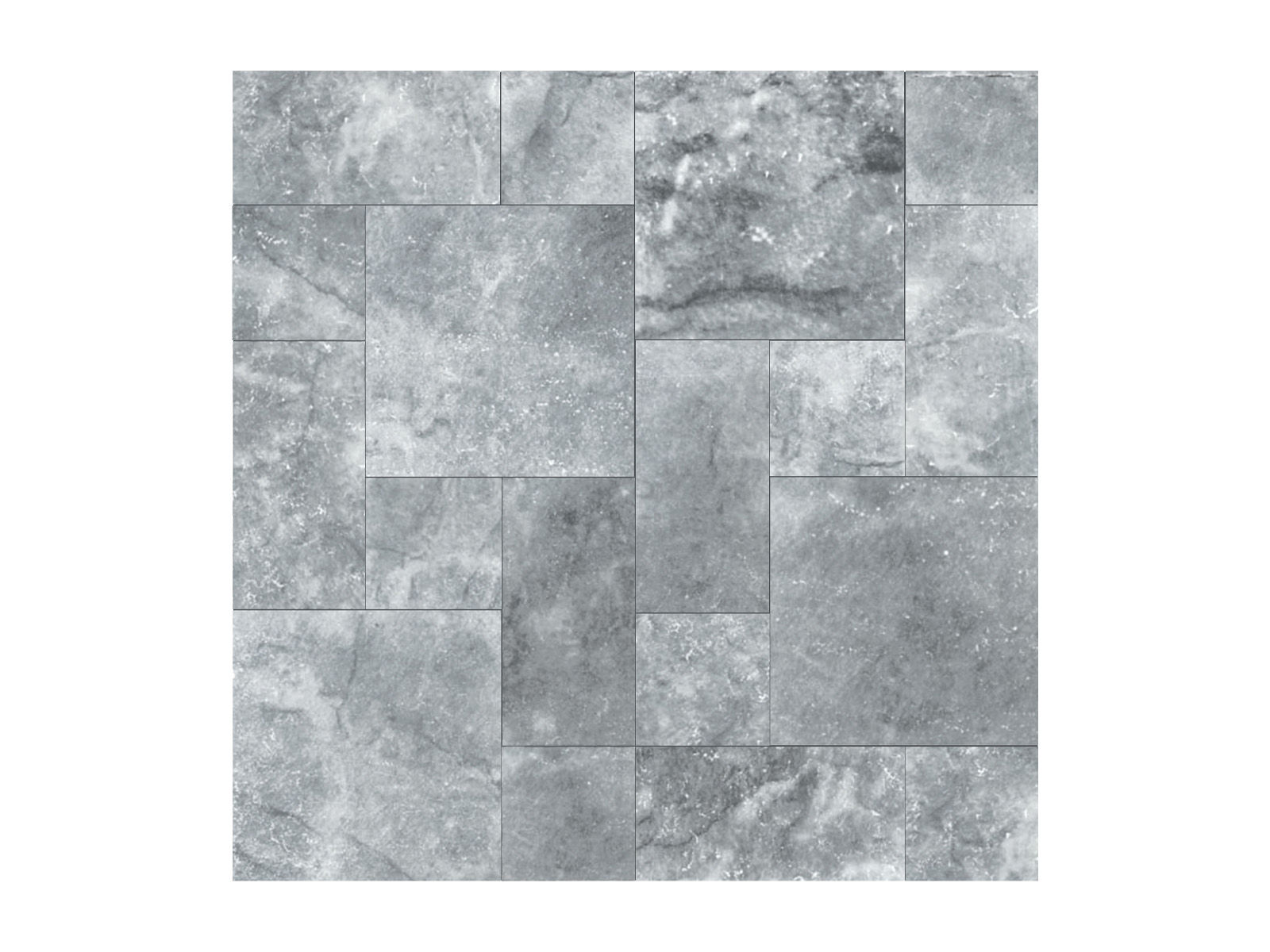
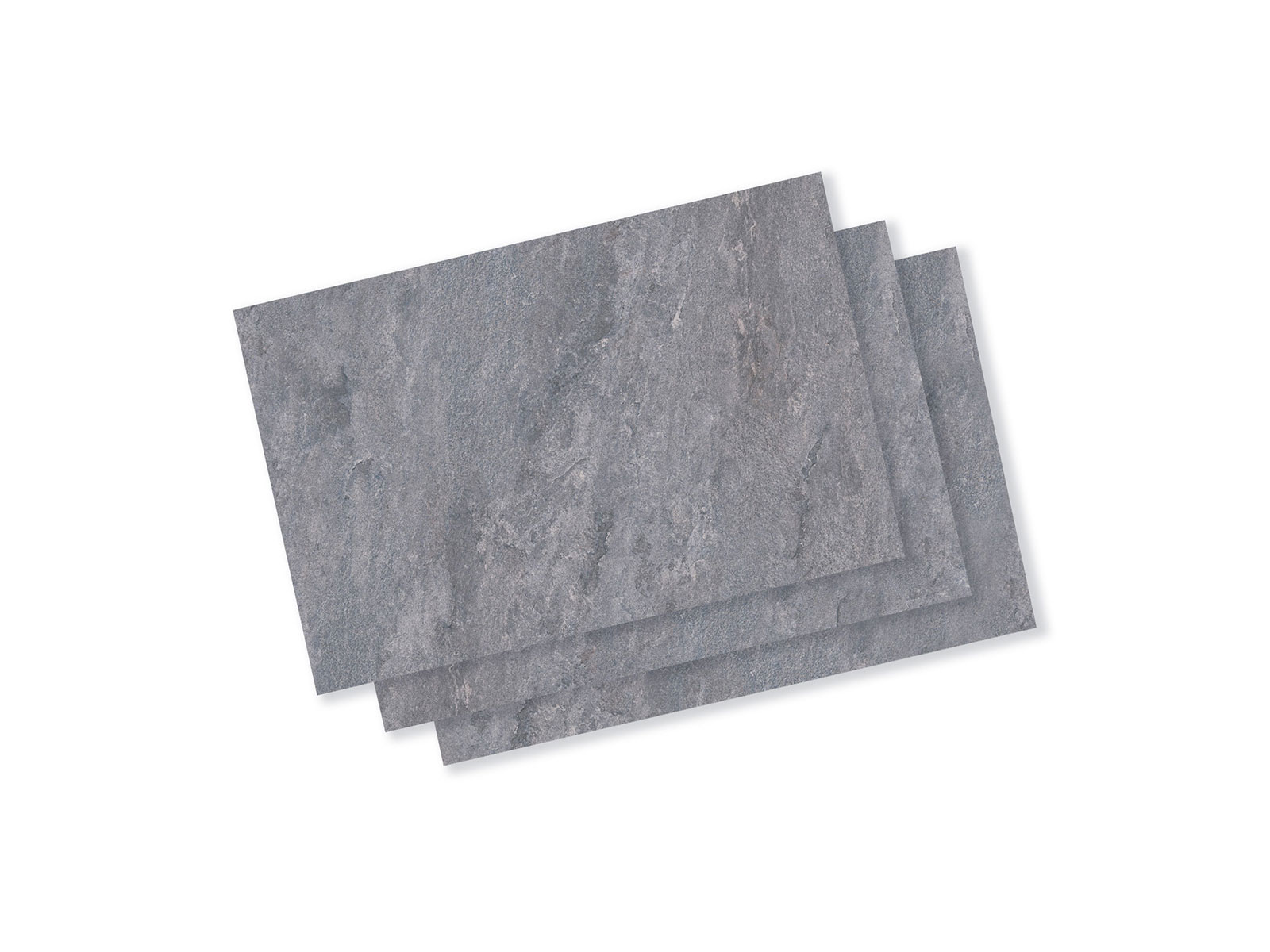
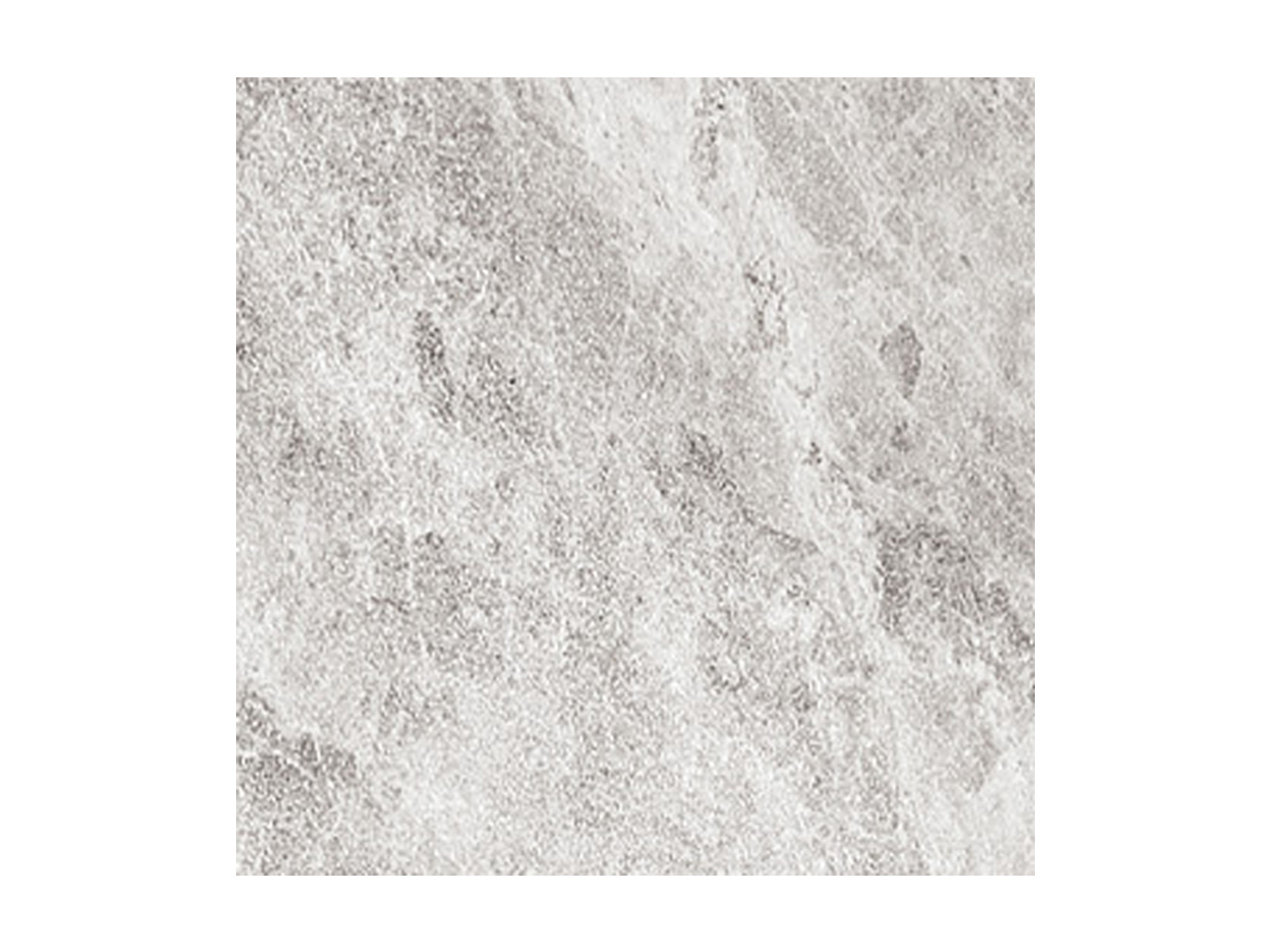
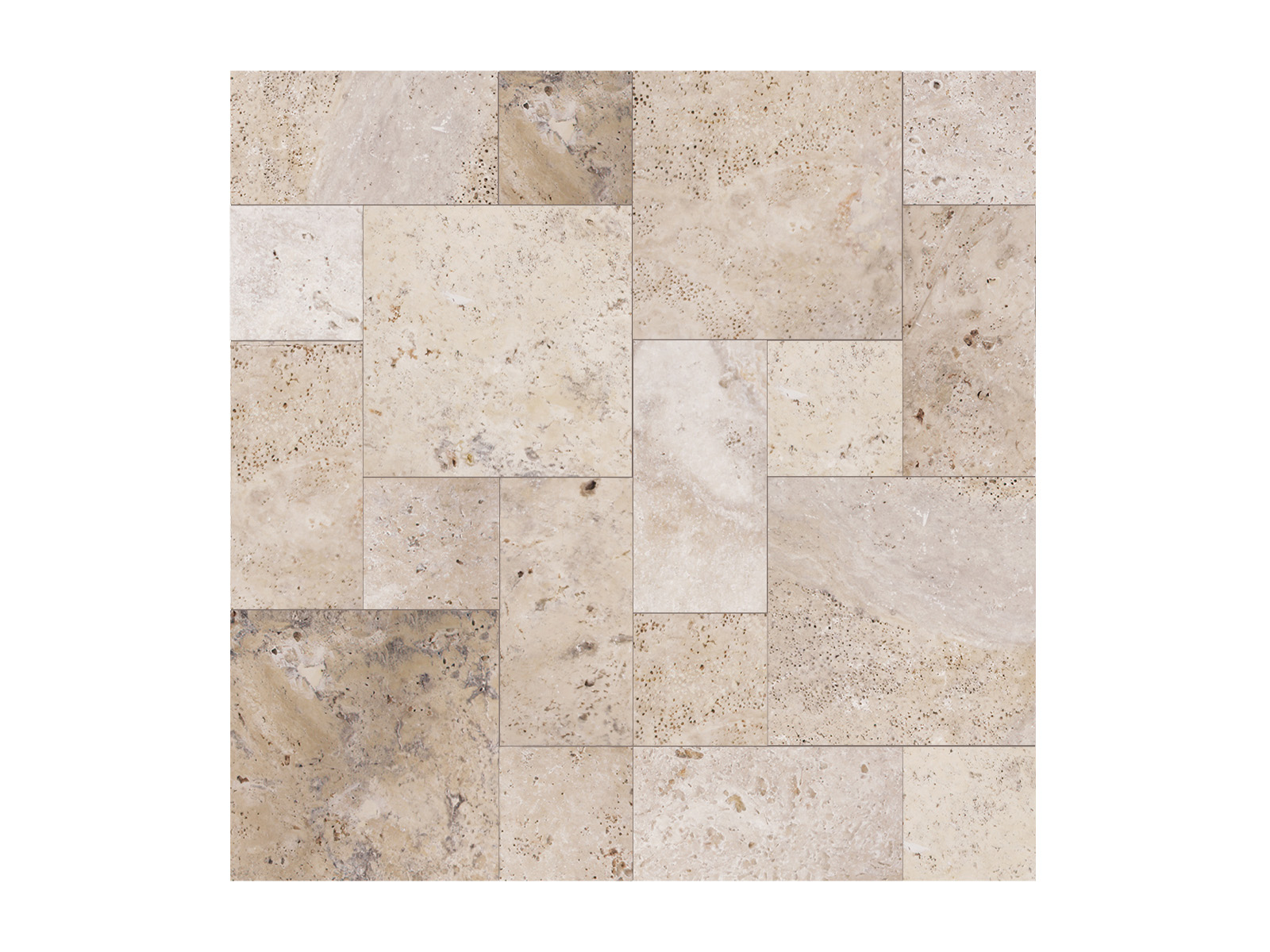
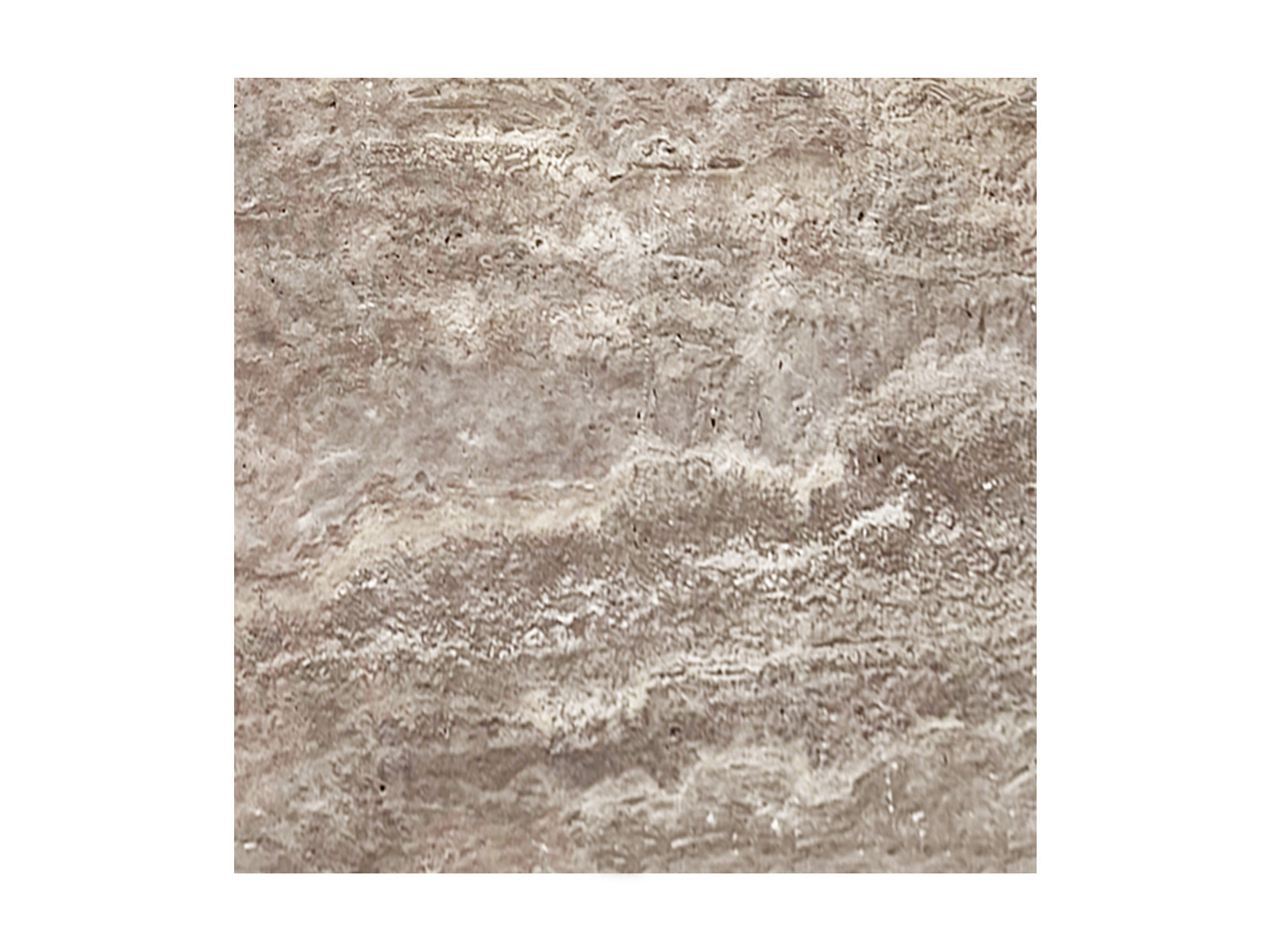
Both porcelain pavers and natural stone can create stunning, long‑lasting pool decks. The best choice depends on the homeowner’s design vision, performance expectations, and maintenance preferences. At Aquabella, we offer carefully selected collections of both materials. Each product type is selected for beauty, durability, and suitability for pool environments.
Which Material Is Right for Your Pool Deck?
Choosing between porcelain and natural stone ultimately comes down to design goals, performance expectations, and the level of maintenance the homeowner is willing to take on. Both materials can deliver exceptional results when installed correctly and paired with the right coping and outdoor‑living elements.
Builders often guide clients by focusing on lifestyle preferences — modern vs. organic, low‑maintenance vs. natural aging, and consistency vs. variation.
Choose Porcelain Pavers If You Want:
- Maximum durability with minimal maintenance
- Consistent color and pattern
- High slip resistance
- Modern or contemporary design
Choose Natural Stone If You Want:
- A timeless, organic aesthetic
- Cooler surface temperatures
- Unique variation and natural character
- A premium, high‑end look
About the Author
 Paul Golomski
Paul is the National Hardscapes Category Manager at Aquabella, bringing years of experience in outdoor materials and helping shape product selections for today’s pool and hardscape projects.