For most homeowners, choosing a pool finish starts with a small sample. But once that finish is installed, filled with water, and exposed to sunlight, landscaping, hardscape, shadows, and changes in depth, the final water color can look very different from what someone expected.
That is because the color of pool water is not determined by a single factor. It is shaped by the finish beneath the water, the material’s color and texture, the pool’s depth, the lighting throughout the day, and the surrounding environment. Pool color may vary because of water depth, landscaping, lighting conditions, mixing, and installation methods.
Understanding these relationships helps homeowners move beyond guesswork and choose a pool finish that better supports the look they want, whether that is a bright resort-style blue, a soft aqua, a natural lagoon tone, or a deep reflective blue.
The pool water is not determined by a single factor. It is shaped by the finish beneath the water, the material’s color and texture, the pool’s depth, the lighting throughout the day, and the surrounding environment.
The Physics of the “Perfect Blue”
While many homeowners assume that water is simply “blue,” the truth is much more nuanced. At its core, water is clear, and the color of the background dye in your finish is the number one determining factor for your pool’s water color. This means your pool finish acts like a backdrop, reflecting light back through the water and creating the overall hue.
Water itself also plays a role. The U.S. Geological Survey explains that water’s blue appearance is not caused by scattering, but by water molecules absorbing the red end of the visible light spectrum. WebExhibits offers a similar explanation, noting that water’s blue appearance becomes more apparent when light passes through several meters of water.
From bright Caribbean blues to deep lagoon greens, your pool’s appearance is shaped by a combination of material, pigment, lighting, depth, and environment. However, the interior finish dictates the base of your color:
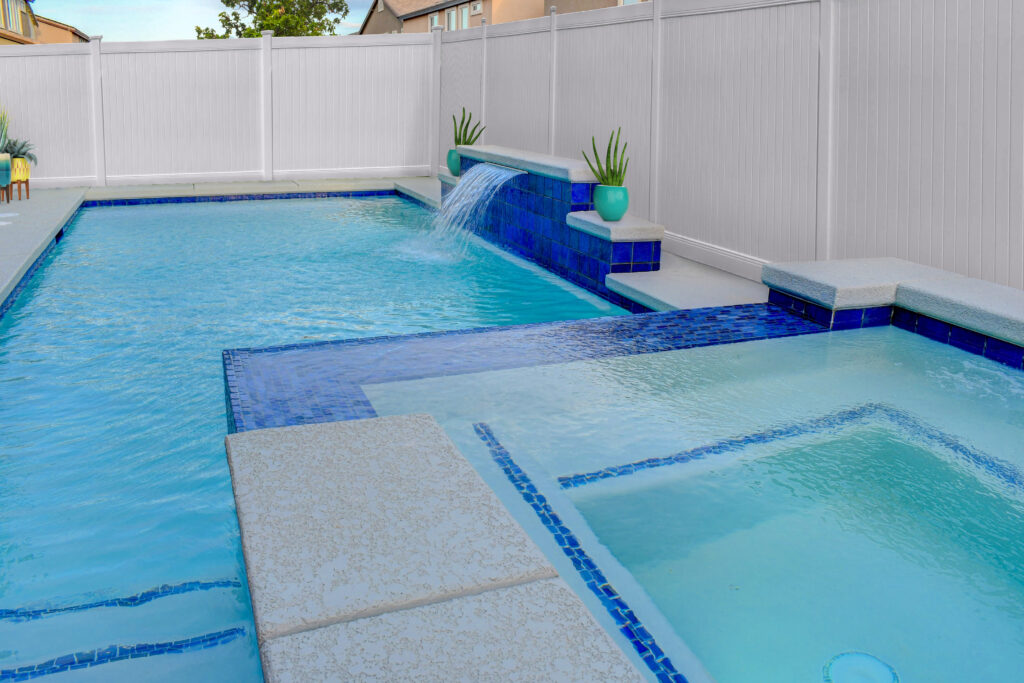
- White and Light Blue Finishes: These surfaces reflect the most light back through the water. Rather than amplifying “natural blue scatter,” they help create a crisp, vibrant blue because water absorbs warmer wavelengths, such as red, more readily, making blue tones more visible.
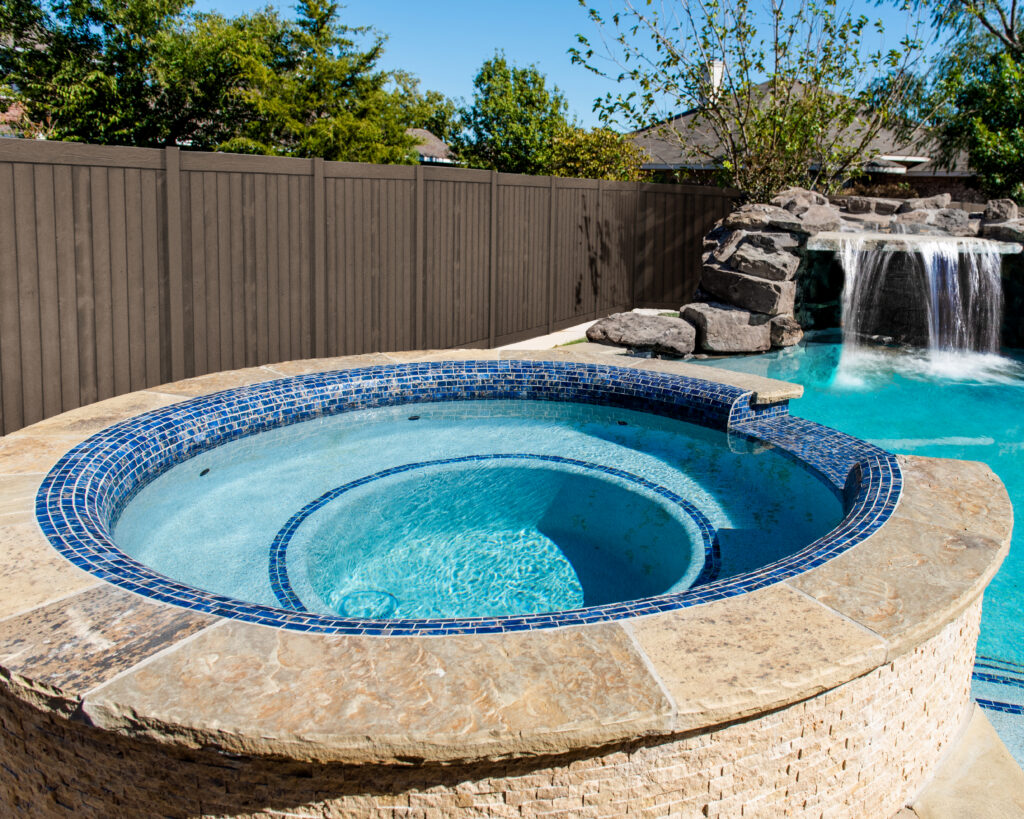
- Tan, Sand, and Brown Finishes: These finishes introduce yellow or earth-toned undertones. When those warm reflections meet the water’s natural blue appearance, the result is a spectrum of teals and emerald greens. These are perfect for “lagoon” style designs.
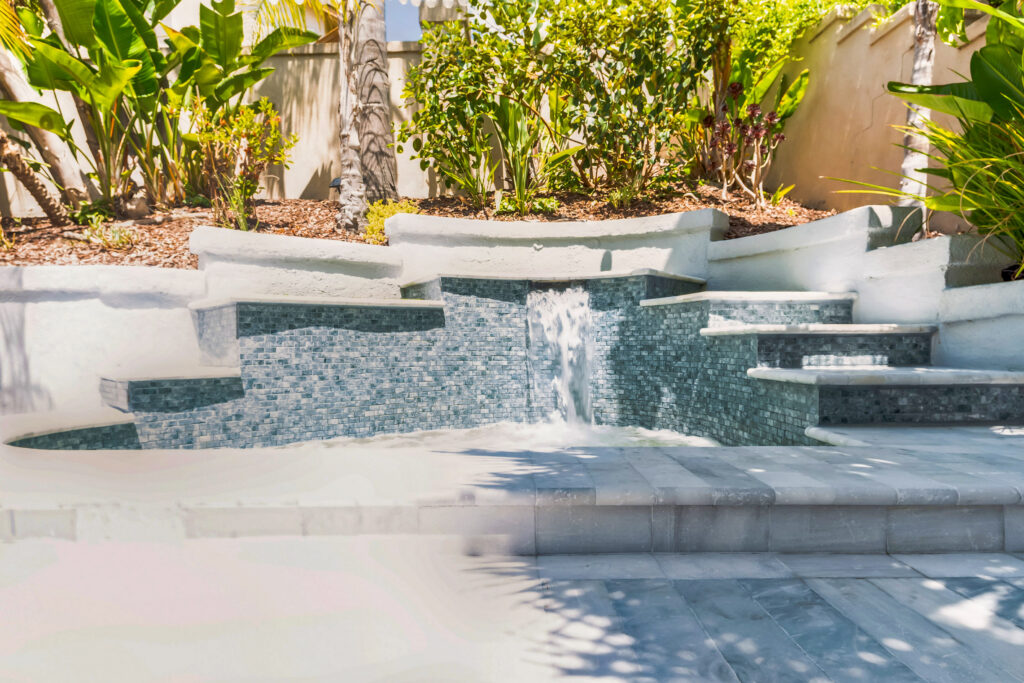
- Grey and Charcoal Finishes: These serve as neutral bases that deepen the perceived depth of the water. Darker finishes absorb more light rather than reflecting it, turning the pool into a mirror that reflects the sky and surrounding landscape, creating a deep navy or “lake-like” aesthetic.
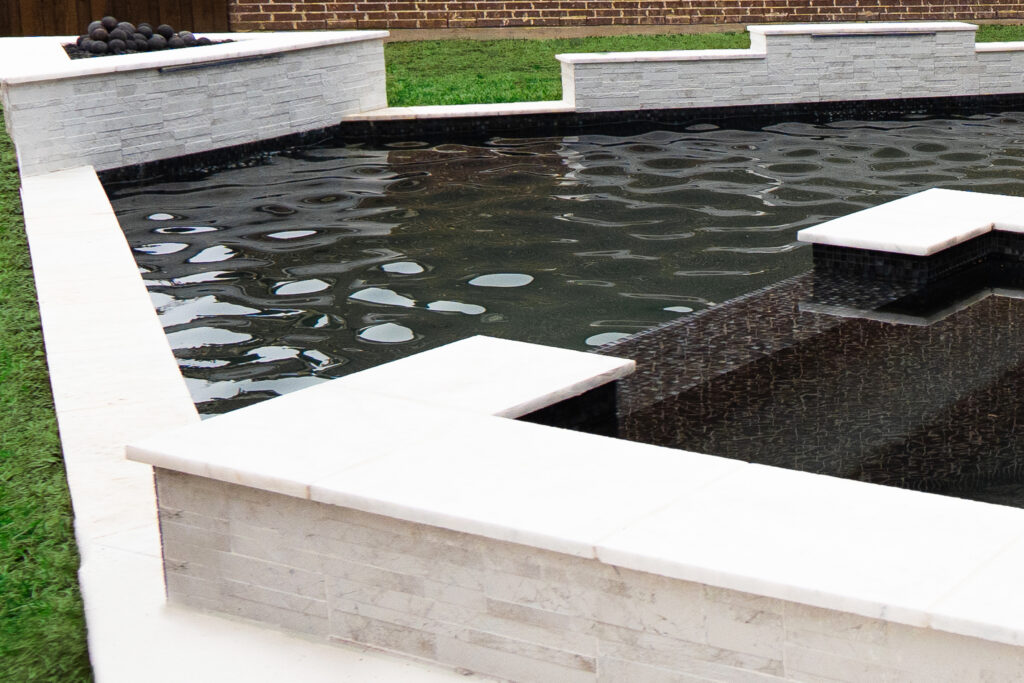
The main takeaway is that white, blue, black, or gray pigments generally produce blue water, while green, tan, or brown pigments shift water toward green hues. SGM also organizes pool water appearances into light blue, teal/green, medium blue, gray, dark blue, and black categories, reinforcing how finish selection drives the overall color direction.
Material Selection: Texture and Iridescence
The material itself, like smooth plaster, textured aggregate, or glass tile, can add a layer of complexity to the visual output.
The Role of Aggregate and Plaster
The National Plasterers Council notes that the texture and condition of a cementitious finish can affect its appearance, especially when discoloration, hydration issues, or improper start-up procedures affect the surface. Universal White Cement also notes that aggregate size, color, and texture can vary from samples and photos to the finished pool.
Conversely, exposed aggregate finishes using quartz or pebbles create a multicolored floor. The different colors of the stones catch light at various angles. Instead of a flat blue, the water appears to shimmer as light hits the stone’s different facets. SGM notes that pebble texture can create shimmer and natural depth variation, while quartz can create sparkle and strong light reflection.
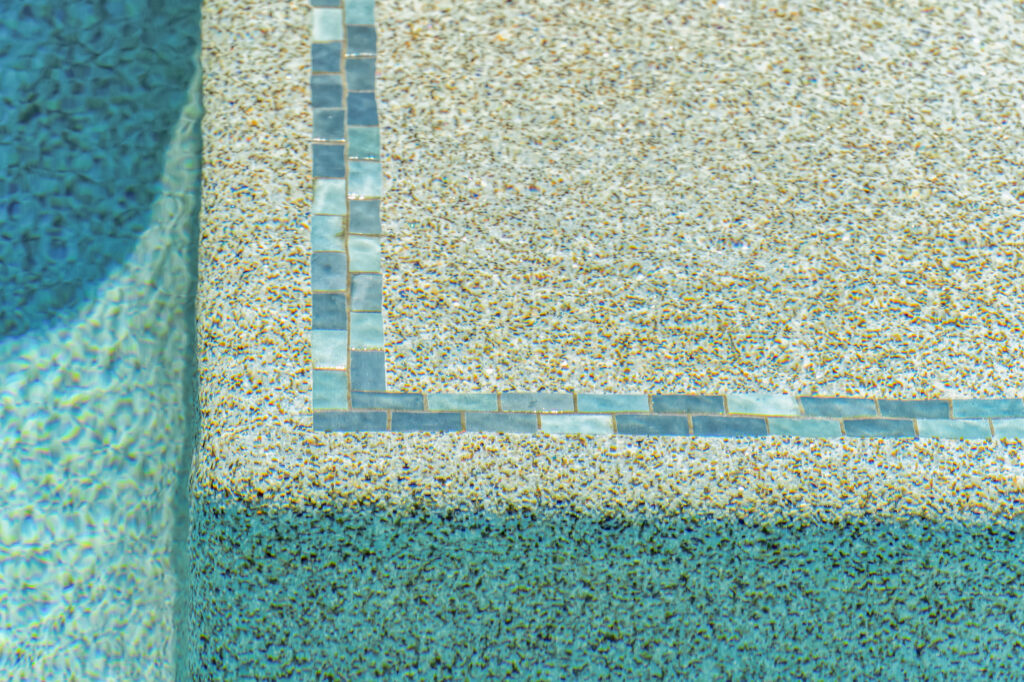
Universal White Cement’s Commercial Quartz Series also supports this idea, using quartz and ultra-white marble sand, with its Ultra Blue version blended with rounded blue color quartz.
The Superiority of Glass Tile
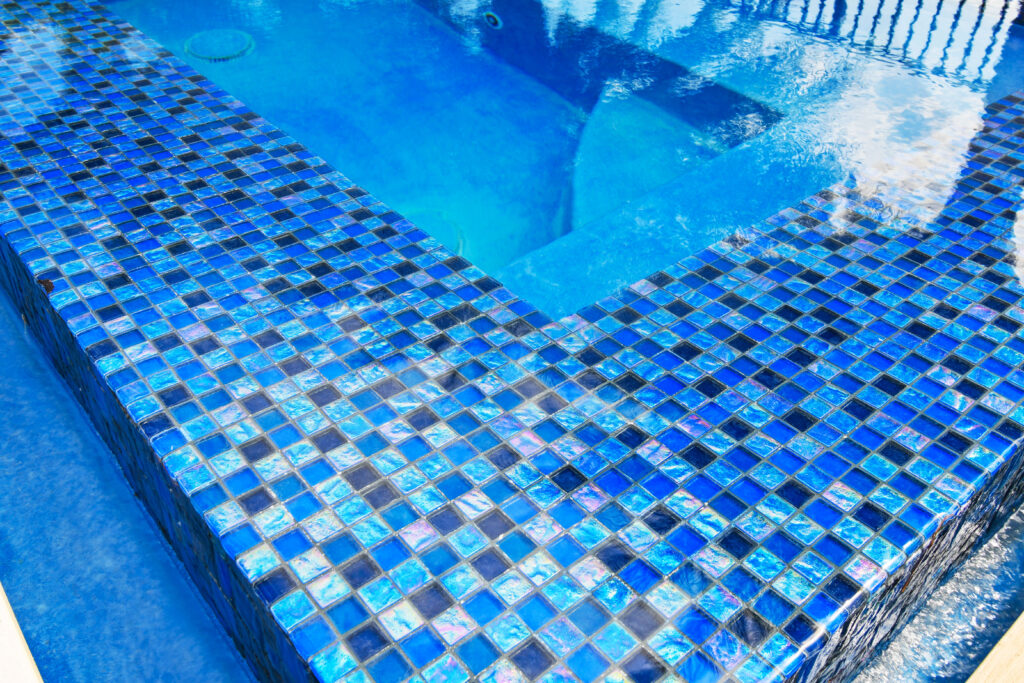
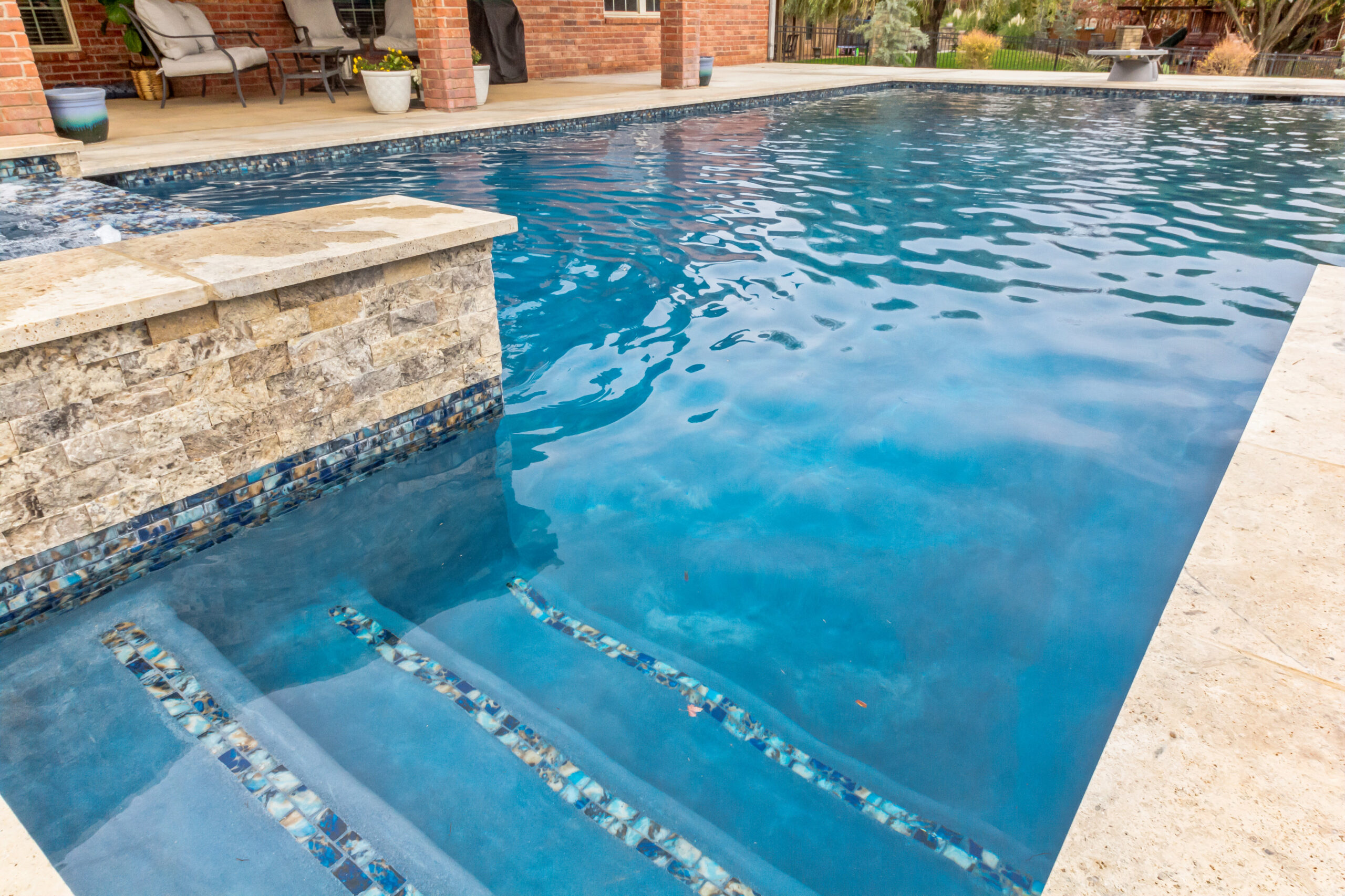
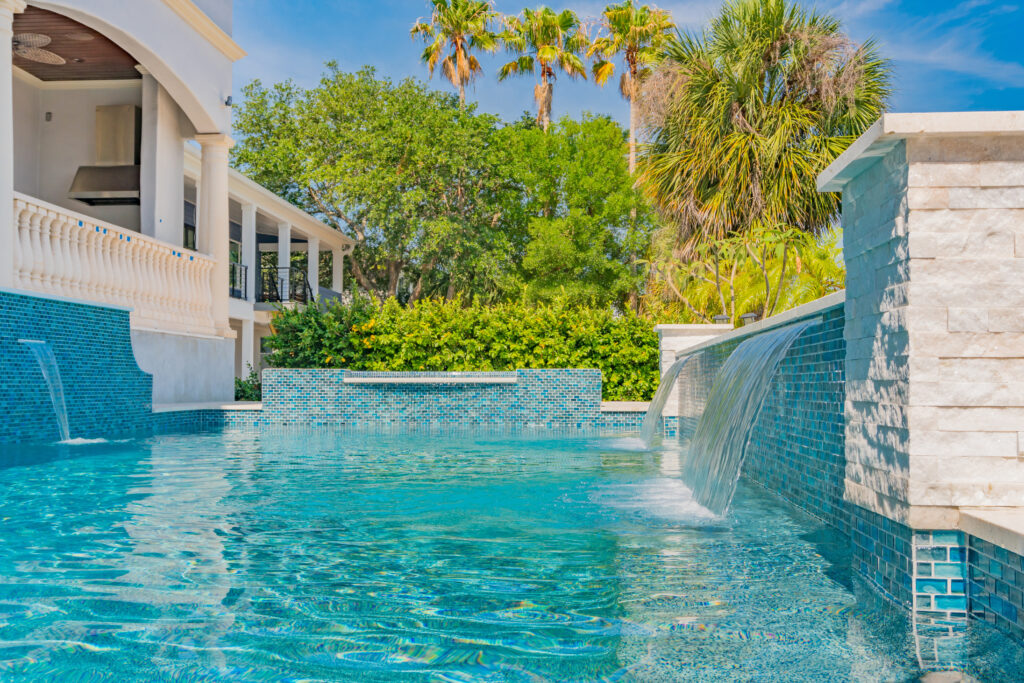
For the highest-tier builds, glass tile remains one of the strongest options for color vibrancy. Unlike opaque finishes, glass tile allows light to pass through, reflect off the surface, and then bounce back through the water. When working with glass tile, you are no longer just reflecting light; you are strategically manipulating it.
This enhances the vibrancy of the watercolor more than many traditional finishes do, because glass-based and glass-enhanced materials can create brilliant, jewel-like water effects. Universal White Cement also includes glass pebble collections and Pebble Radiance glass options in its Finest Finish product lines, supporting the use of glass to enhance visual effects.
Texture and Material are subtle but important
It’s not just about the pigment you pick because the actual texture of the finish changes how light plays off the pool floor. The more polished the finish, the sleeker and more uniform the surface will be. That can provide a consistent color reflection throughout the pool, creating a clean, modern look.
In contrast, textured finishes and additives, such as shells, quartz accents, pebble blends, and glass elements, create luster that enhances the water’s visual depth, subtly shifting the perceived color as the sun moves throughout the day. SGM also notes that pebble, quartz, and blended aggregates can create shimmer, sparkle, and natural-looking water color variation.
Pigments are another important part of the finish system. Universal White Cement offers liquid and powder pigments designed to create custom swimming pool interiors, with liquid pigments used primarily in plaster and quartz finishes and powder pigments used primarily in pebble finishes.
For the highest-tier builds, glass tile remains one of the strongest options for color vibrancy. Unlike opaque finishes, glass tile allows light to pass through, reflect off the surface, and then bounce back through the water. When working with glass tile, you are no longer just reflecting light; you are strategically manipulating it.

Environmental and Structural Factors
While the finish is the primary driver of pool color, professional builds often fail when the contractor does not account for the pool’s depth and the backyard environment. These factors can betray your chosen color once the pool is filled.
Universal White Cement lists lighting, material color, water depth, and the surrounding environment as the four major factors that affect a swimming pool’s color reflection. SGM also notes that pool color may vary because of water depth, landscaping, lighting conditions, mixing, and installation methods.
Why One Color Is an Illusion
It’s common to see a big shift in water color between a tanning ledge and the deep end. It’s a classic expectation vs. reality moment, but it’s actually just physics doing its thing. It all comes down to how water depth affects light absorption.
Think of the pool as a giant liquid prism. As light travels through the water, it filters more strongly with increasing depth. Deeper water appears more saturated because light travels farther through the water, intensifying the color effect from the finish below. The USGS also explains that water appears blue because red wavelengths are absorbed as light passes through the water.
That’s why a pool can look like a light sky blue in two feet of water but transform into a deeper blue by the time you reach the deep end. It’s the same material, but the water is changing how the eye perceives the finish.
Sunlight and Reflection
Sunlight is the engine of pool color. The environment acts as its filter, and the pool itself is a massive, horizontal mirror that reflects everything around it.
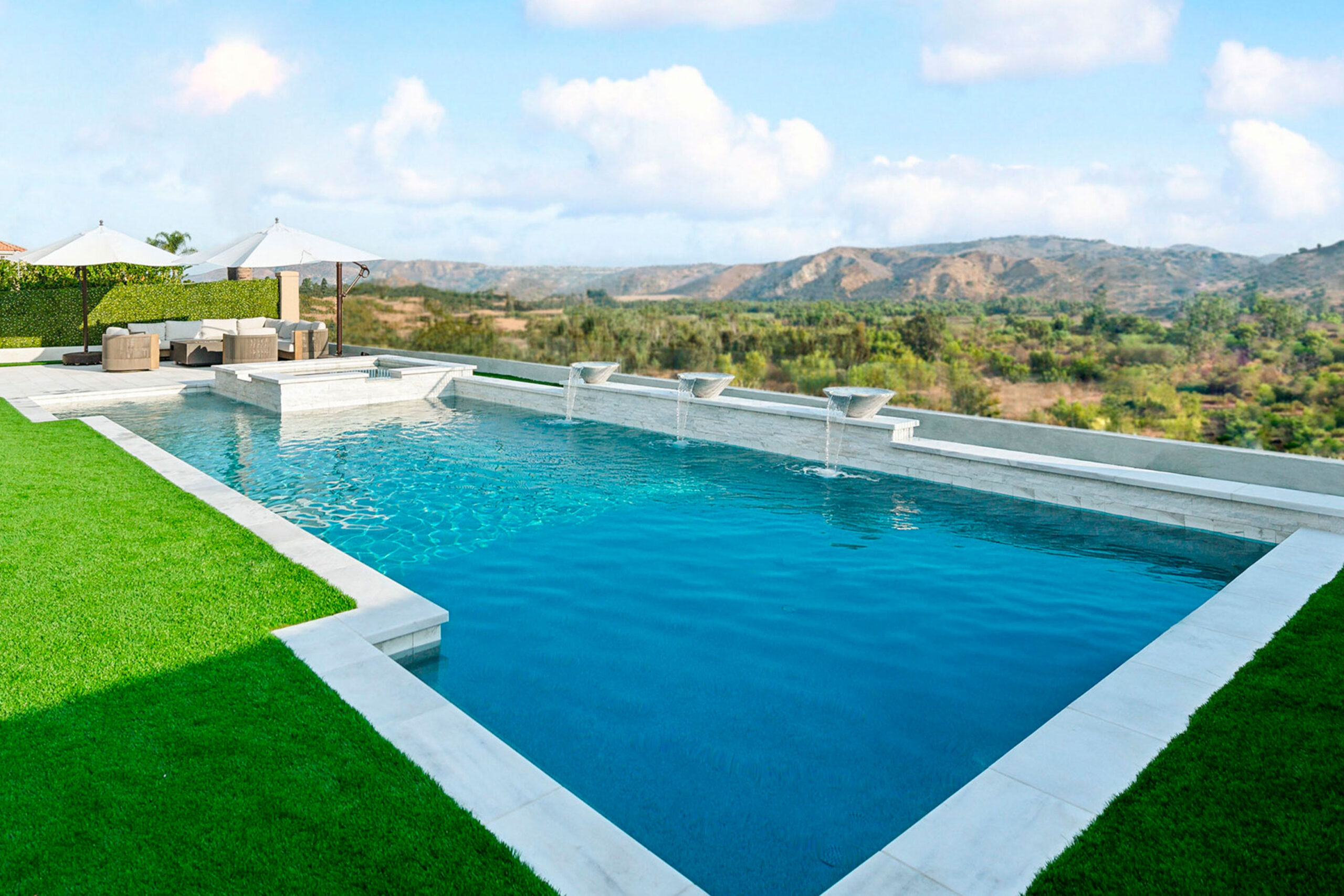
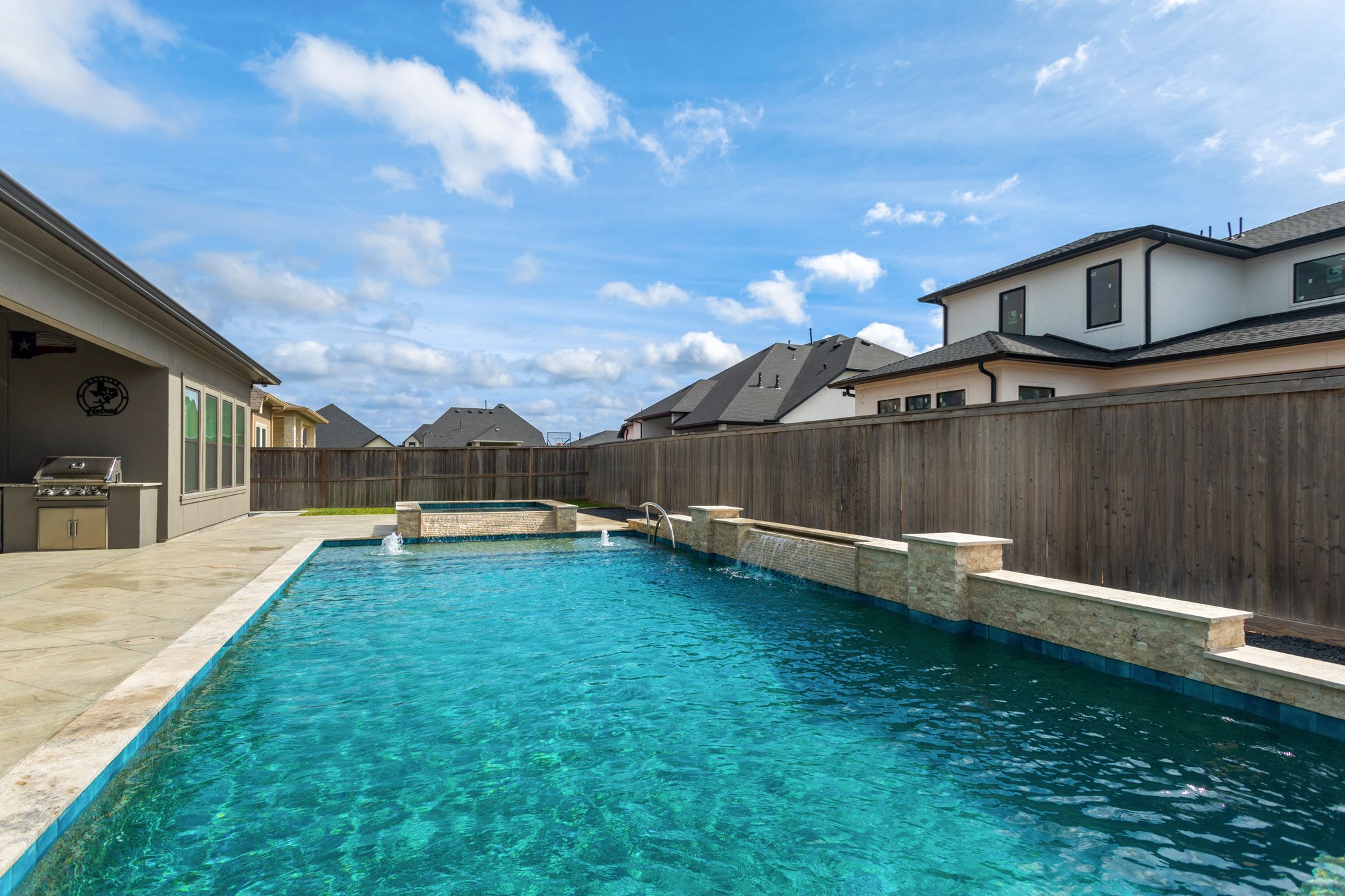
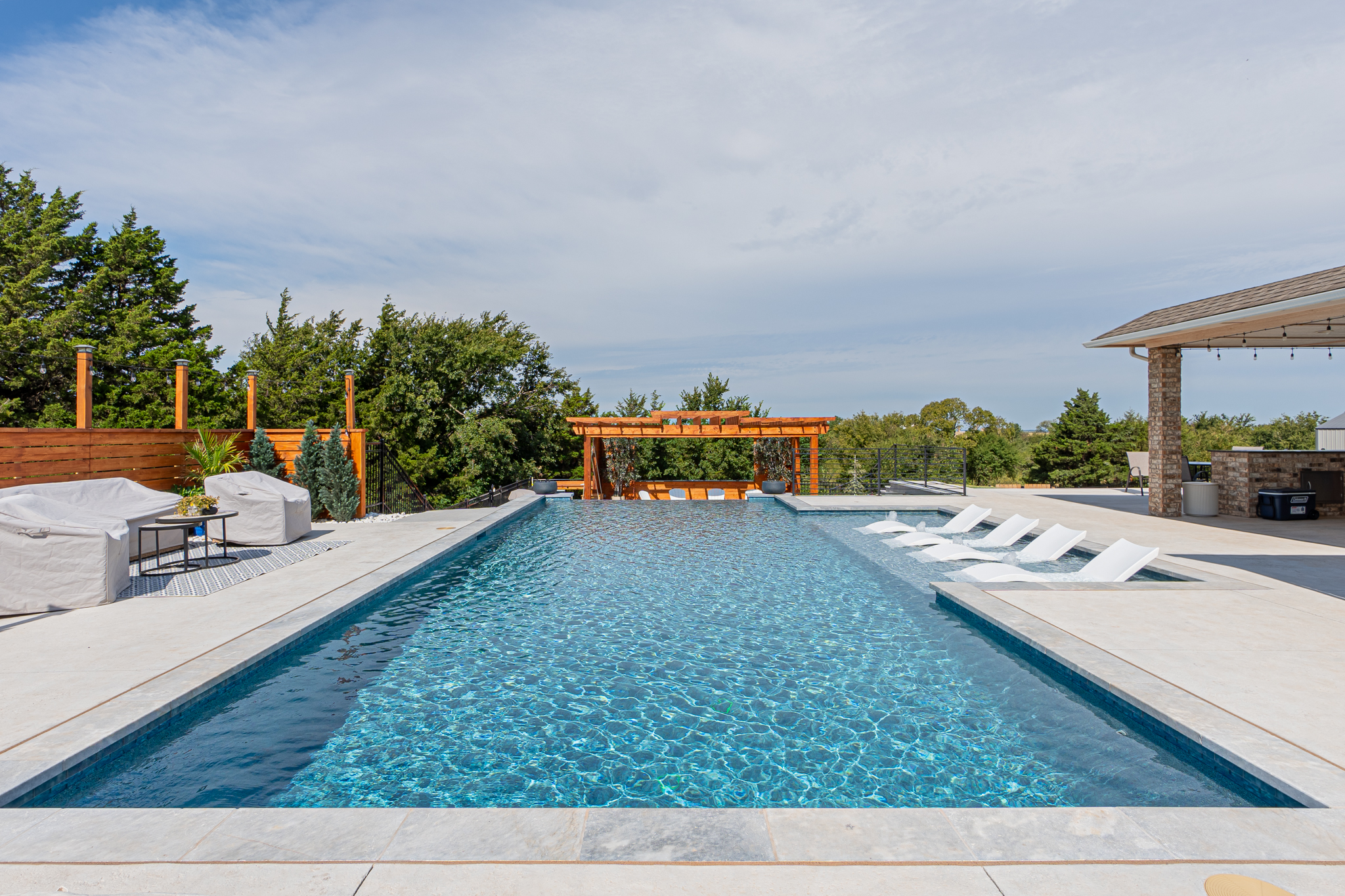
- Foliage as a factor: A pool carved into a wooded landscape or surrounded by tall trees can appear greener. This is caused by sunlight reflecting off the colors in the leaves and then bouncing onto the water’s surface. CL Industries notes that landscaping, shadows, and nearby objects can all affect how pool water appears.
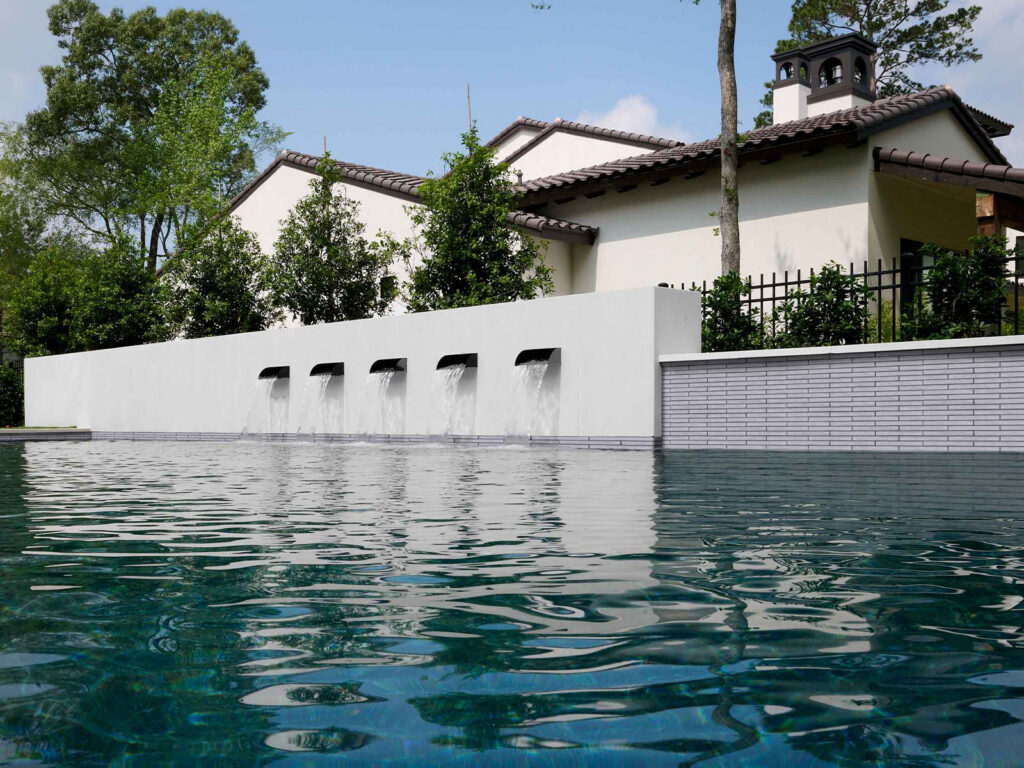
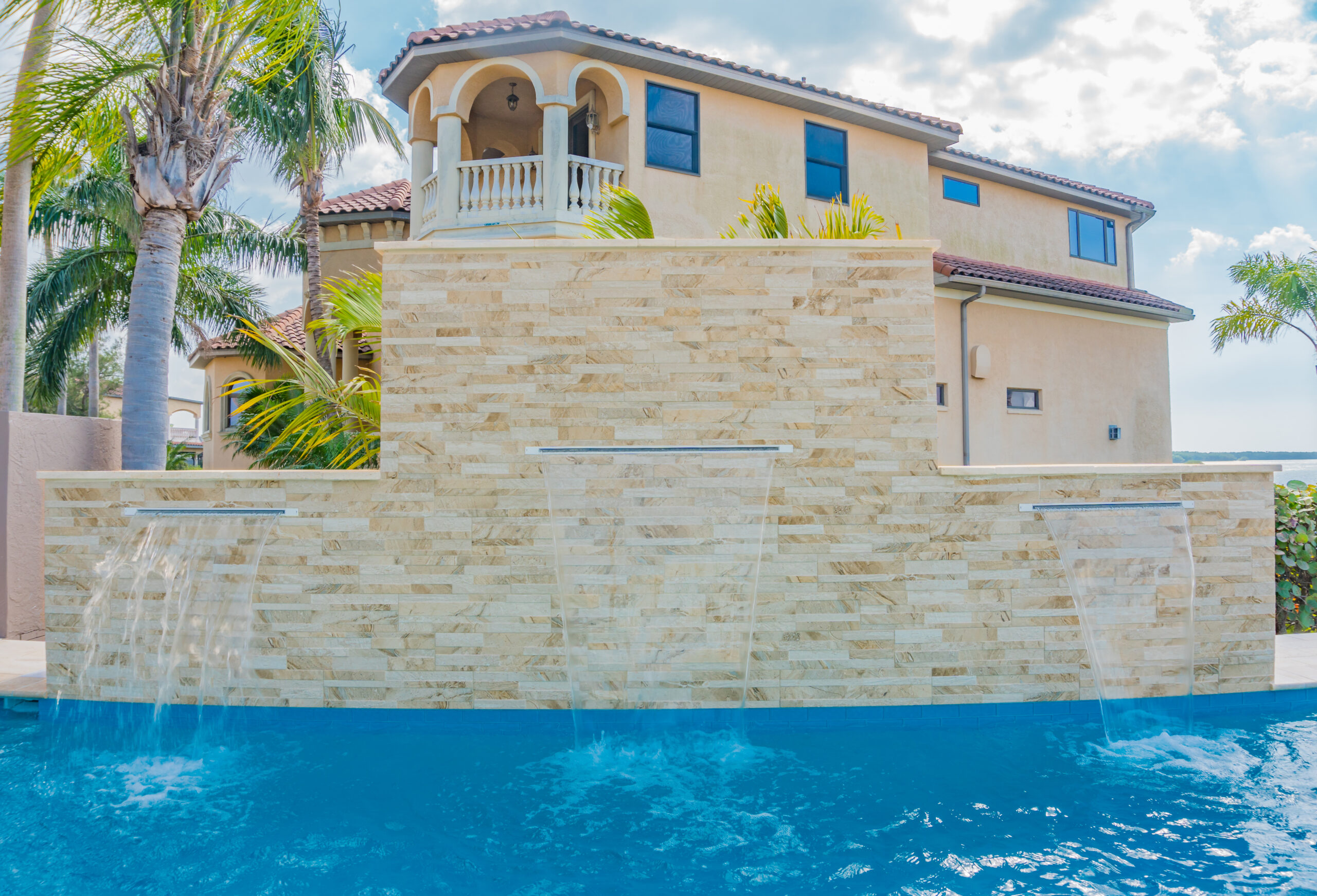
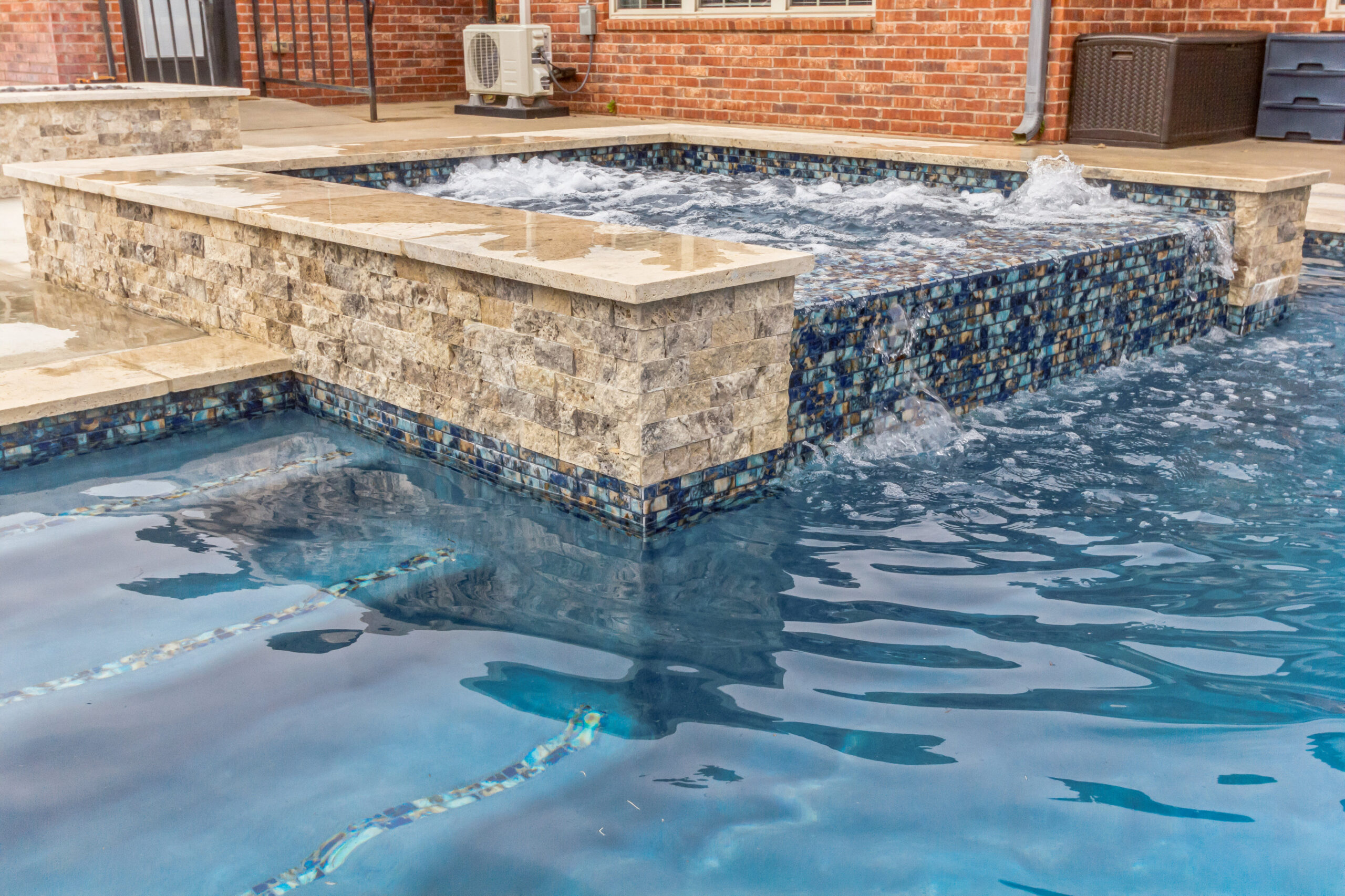
- The frame matters: The color of the immediate perimeter acts as a secondary filter. For example, a warm-toned travertine or red brick can cast warm reflections onto the water, which can “warm up” a cool blue finish or make teals look more vibrant. Universal White Cement also notes that surrounding reflections from hardscape and landscape can change the pool’s water color throughout the day.
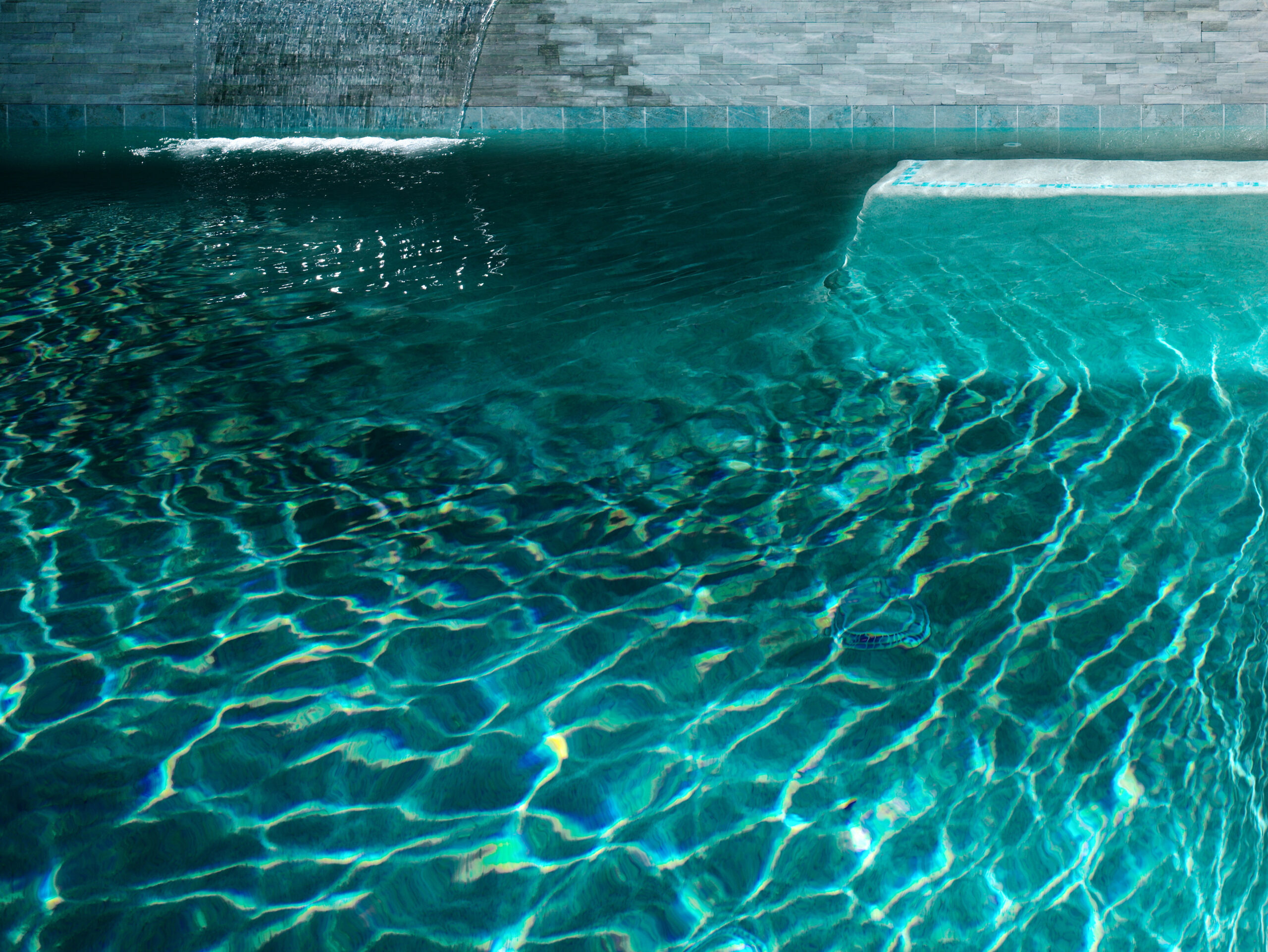
Compare these two images below:
- Sunlight quality: The more direct the sunlight, the lighter your pool water will be. At high noon, the glow of the finish is most apparent because the sunlight is directly overhead. In contrast, when the sun is setting or when skies are heavily overcast, the water can often appear darker and flatter. SGM also notes that direct sunlight intensifies finish colors and creates the most vibrant appearance of the water.
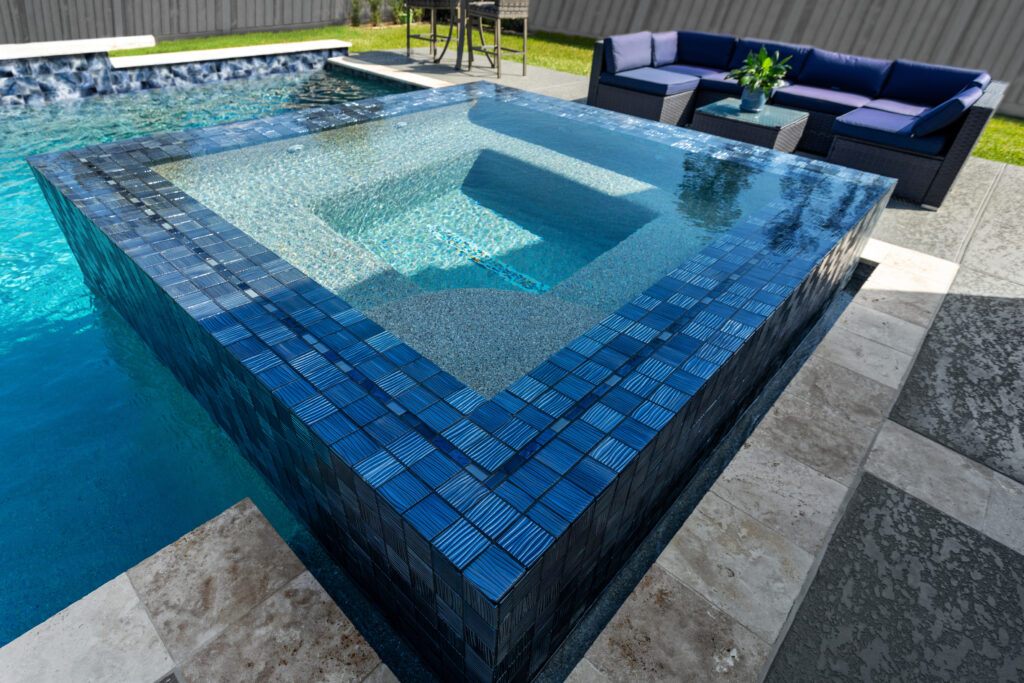
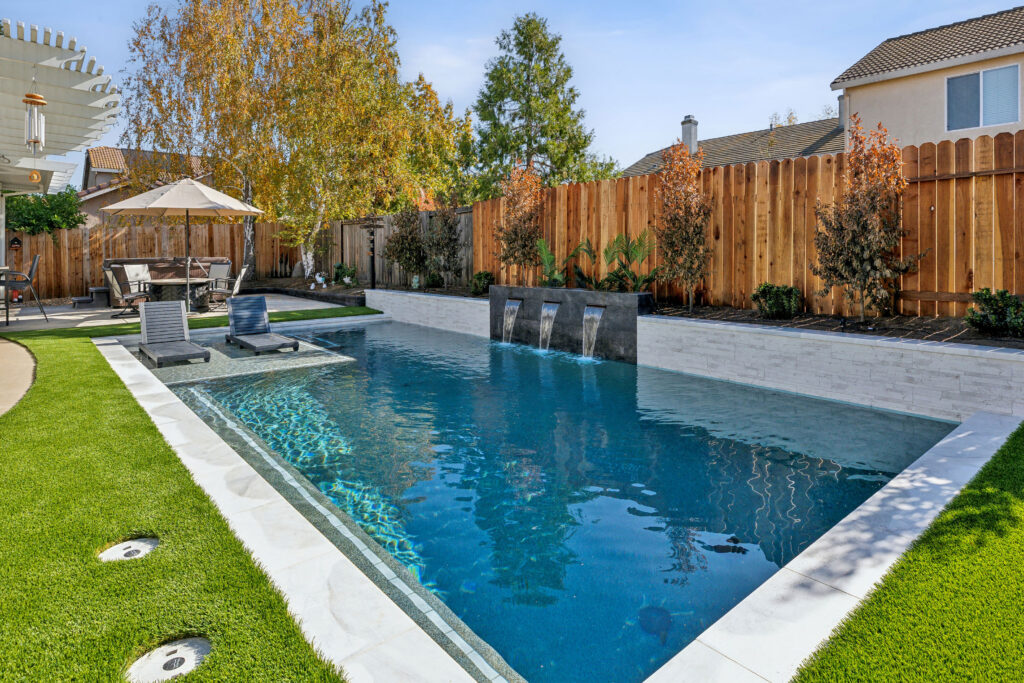
- Water movement: The state of the water surface acts as the final finish on the pool’s appearance. Calm water creates a deep mirror-like reflection of the sky and surroundings. Strategically adding water-surface agitation, such as jets or waterfalls, breaks up those reflections and makes the water appear lighter and more dynamic. CL Industries notes that water features and wind can make the surface of moving pool water appear more translucent.
How to Engineer Your Perfect Water Color
Pool water color isn’t just about the water; it’s about what lies beneath it. Mastering pool aesthetics requires mindfulness of the build’s structural depth and the backyard environment, ensuring the finished product is as durable as it is beautiful.
As the National Plasterers Council, CL Industries, Universal White Cement, and SGM emphasize, the finish color is the dominant factor, but it works in tandem with sunlight, depth, surroundings, water movement, and texture to create the final look.
Because of these variables, the exact color of the pool water cannot be guaranteed. Universal White Cement states that actual aggregate size, color, and texture can vary from samples and photos, and that sun angle, sky, water clarity, pool depth, hardscape, landscape, and surrounding reflections can all change water color throughout the day. SGM provides a similar reminder that color can vary due to water depth, landscaping, lighting, mixing, installation methods, and monitor calibration.
By understanding these relationships, you can move beyond guesswork and intentionally craft the exact pool aesthetic you want, whether that’s a sparkling blue lagoon or a tranquil, natural retreat.