Choosing pool tile can feel like a design decision: pick a color, choose a pattern, compare a few prices, and move on. While all of that matters, not all tile is created equal.
Experienced pool builders know that selecting the tile is only one part of the equation. The shape of the pool, the material used, grout joints, product availability, installation method, setting materials, and the installer’s skill can all affect the finished result and whether a project eventually turns into a callback.
Here are some of the things pool builders wish homeowners understood before choosing their pool tile.
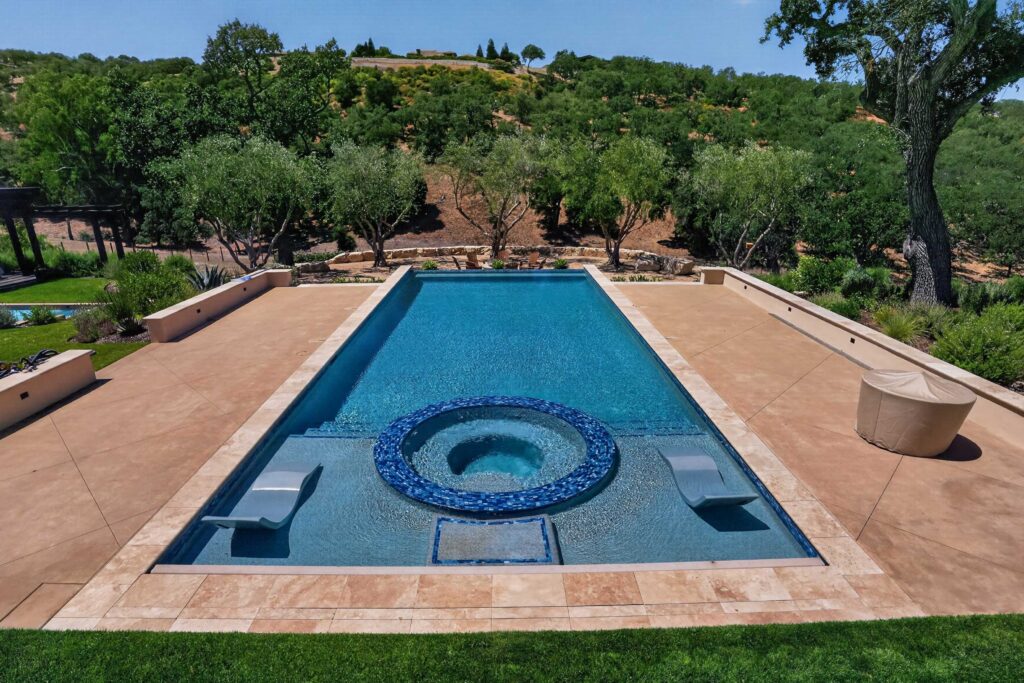
Not Every Tile Is Right for Every Pool
A tile that looks beautiful in a showroom is not always the right choice for every pool.
Pool shape alone can influence whether a tile is practical for a particular project. A material that works beautifully across long, straight runs may be much more difficult to install on a freeform pool with tight radii, multiple curves, or complicated transitions.
Pool environments also expose materials to constant water, chemicals, sunlight, temperature changes, and movement. The tile, setting materials, grout, and installation system all need to be appropriate for those conditions. Where the tile will be installed matters too. A waterline, raised spa, spillway, submerged application, and water feature do not necessarily create the same installation conditions.
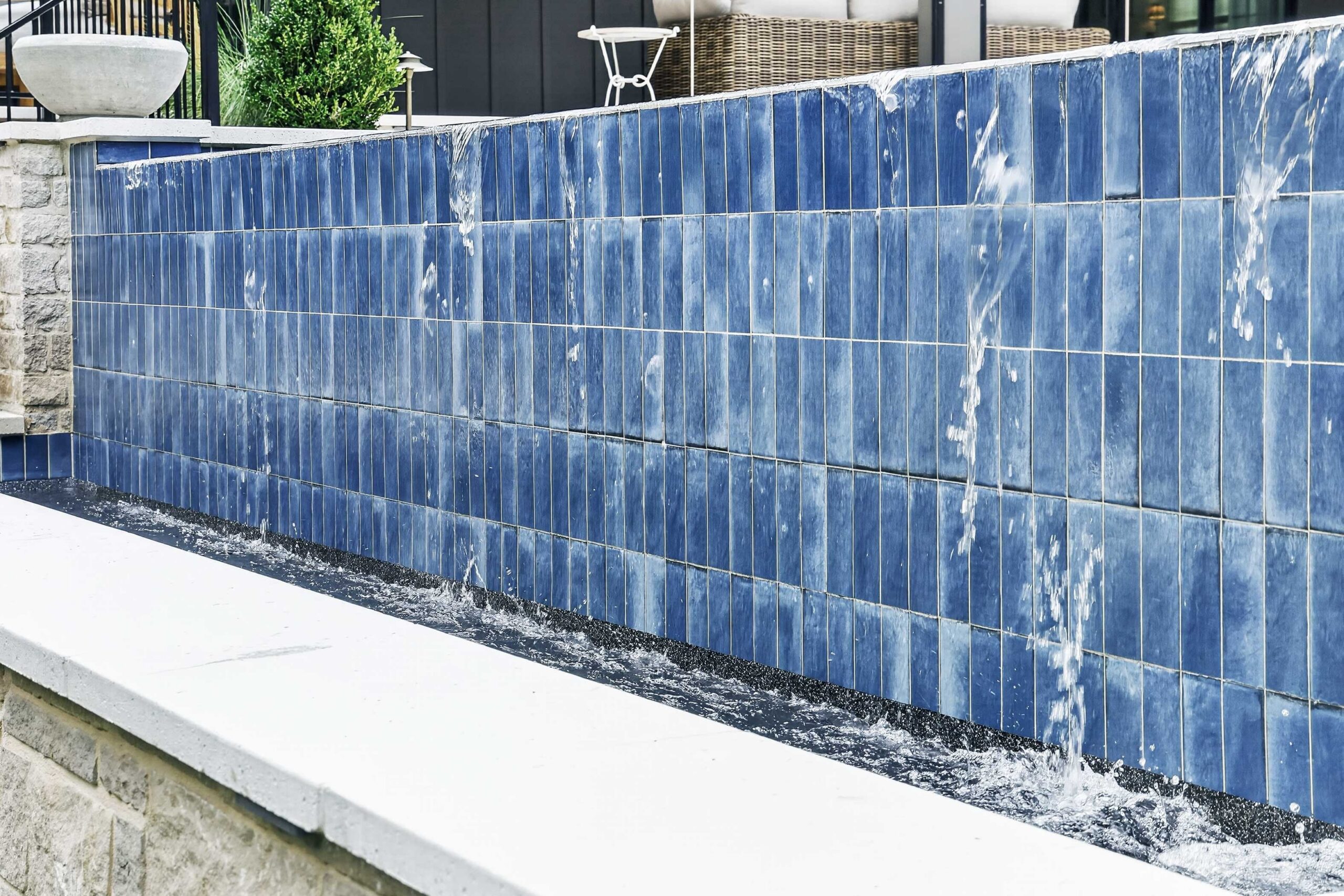
This becomes especially important with specialty materials, large-format tile, glass mosaics, natural stone, or tile used around water features. Manufacturers may have specific installation requirements, substrate requirements, joint recommendations, setting material requirements, and curing instructions. The Ceramic Tile Education Foundation’s guidance on glass tile installation is a good example of why material type, substrate preparation, setting materials, and manufacturer requirements should all be considered before installation begins. Aquabella also provides installation guides for porcelain tile, glass tile, mosaics, and hardscapes so the selected product and installation system can be reviewed before work begins.
Those details should be reviewed before the tile is purchased, not after the installer discovers an issue on the job.
The right question is not simply, “Do you like this tile?”
It is, “Is this tile appropriate for this application, this pool design, and this installation method?”
Curves and Cuts Change the Job
A tile sample does not show you what happens when that material has to follow a radius, wrap a raised spa, finish around steps, or meet a water feature.
Pools are rarely just four straight walls. Curves, corners, transitions, niches, spillways, benches, steps, and other details require cuts and layout decisions. Some materials are easier to cut and fit cleanly than others. Large format pieces can require considerably more planning, while small mosaics may be more flexible but still demand careful alignment.
The difference can be substantial.
A straightforward rectangular pool may allow an installer to work efficiently through long, repetitive runs. A freeform pool with several radii and intricate features requires more measuring, cutting, fitting, adjustment, and visual checking.
The selected tile can also affect how those details are handled. A pattern that looks simple on a sample board may become much more complicated when it has to turn a corner or maintain alignment through a curve.
That labor is not waste. It is part of producing a finished installation that looks intentional.
Pool shape, installation method, materials, and workmanship can matter just as much as color and design. The best tile decisions are made before construction, not after a problem appears on the job.
Grout Joints Are Not Just Empty Space
Homeowners sometimes assume that the narrower the grout joint, the more luxurious the finished tile will look. But grout joints serve functional purposes as well as aesthetic ones.
They help accommodate normal dimensional differences in tile and allow an installer to maintain a consistent layout across the installation.
Trying to force a tile into an unrealistically tight joint can cause problems, particularly when individual pieces have slight dimensional variations. Changing joint widths throughout an installation can also make an otherwise attractive tile look uneven. Proper planning, layout, and spacing help maintain a more consistent finished appearance.
Movement joints are another consideration and are not the same as ordinary grout joints. Pool assemblies experience movement caused by changes in temperature, moisture, and the structure itself. Certain transitions, changes of plane, and larger tiled areas require movement accommodation rather than simply filling every space with rigid grout. The Tile Council of North America explains why movement joints are needed and why their placement depends on the specific installation conditions, including exposure to moisture, direct sunlight, and exterior temperature changes.
This deserves particular attention with glass tile. Glass can react to temperature changes and movement differently from other tile materials, making proper substrate preparation, setting materials, movement accommodation, and installation methods especially important. The Ceramic Tile Education Foundation’s glass tile installation guidance also emphasizes the importance of selecting appropriate materials and accommodating movement when working with glass.
Grout is also part of the finished design. Its color can change how clearly individual pieces, joints, and patterns are perceived once the installation is complete. A coordinating grout can create a more blended appearance, while greater contrast can emphasize the tile’s shape and layout. Before making a final choice, homeowners, builders, and designers can use the Aquabella Grout Match Finder to compare curated grout colors with a selected Aquabella tile and explore different visual effects before installation. Final technical suitability should still be confirmed with the grout manufacturer and professional installer.
Industry installation standards cover much more than simply getting tile onto a wall. The TCNA Handbook for Ceramic, Glass, and Stone Tile Installation addresses product selection, wet-area installations, mortar and grout requirements, substrate preparation, grout joint sizes and patterns, and workmanship.
In other words, a grout line is part of the installation system. It is not merely a color choice.

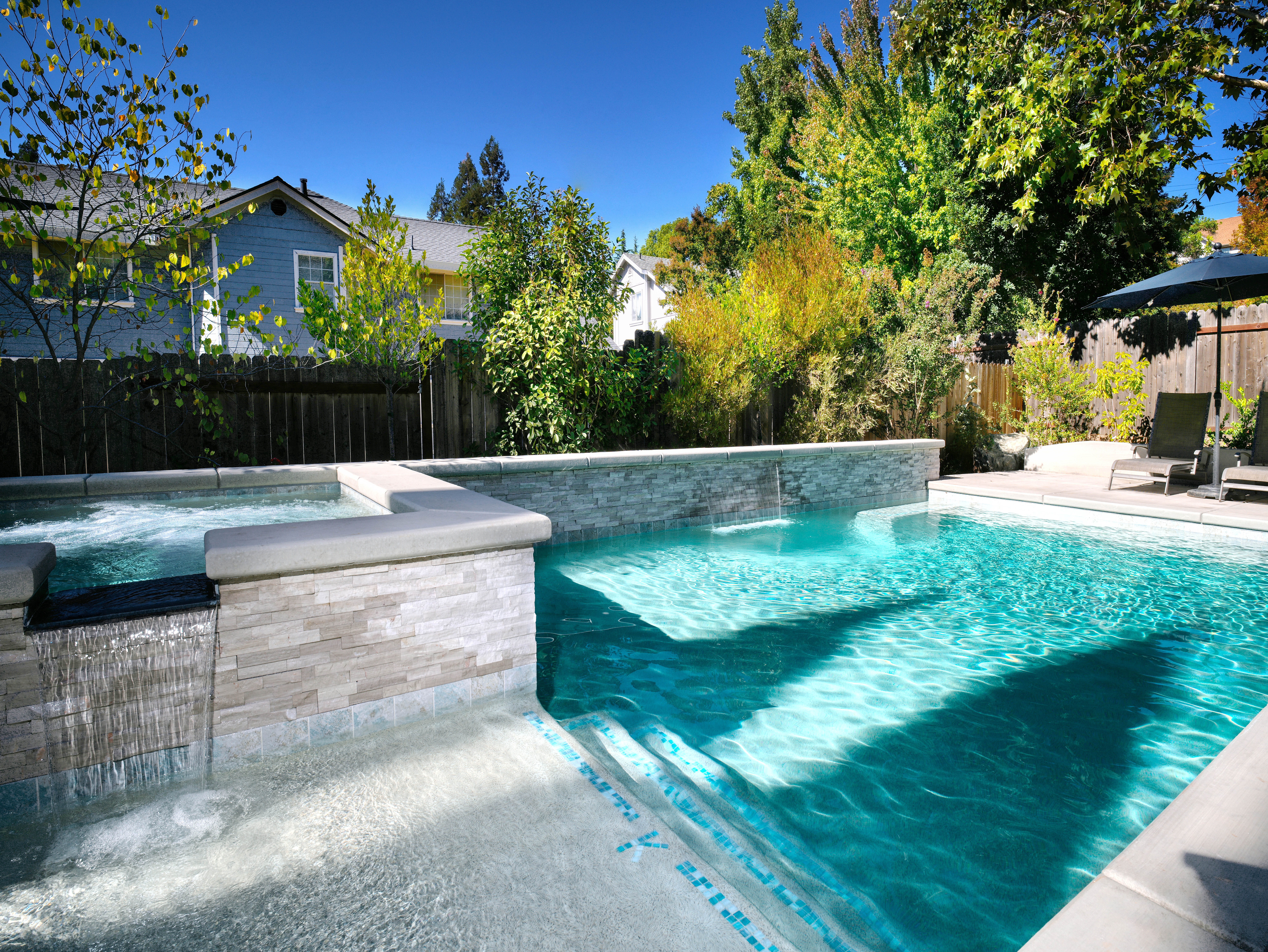
Your Tile May Not Be Sitting in a Warehouse
One of the most frustrating homeowner expectations is that tile can be selected today and installed next week.
Sometimes it can.
Sometimes it cannot.
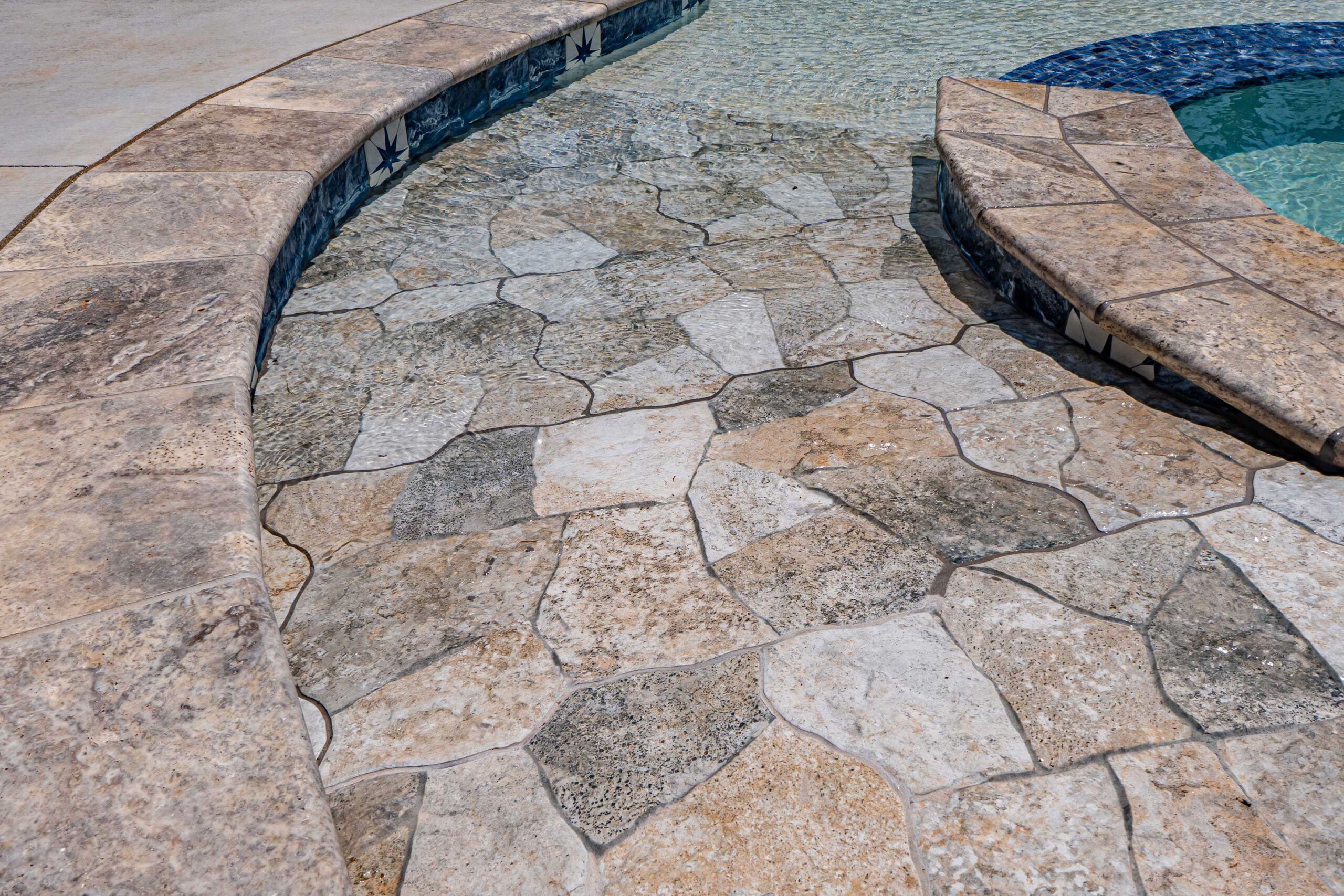
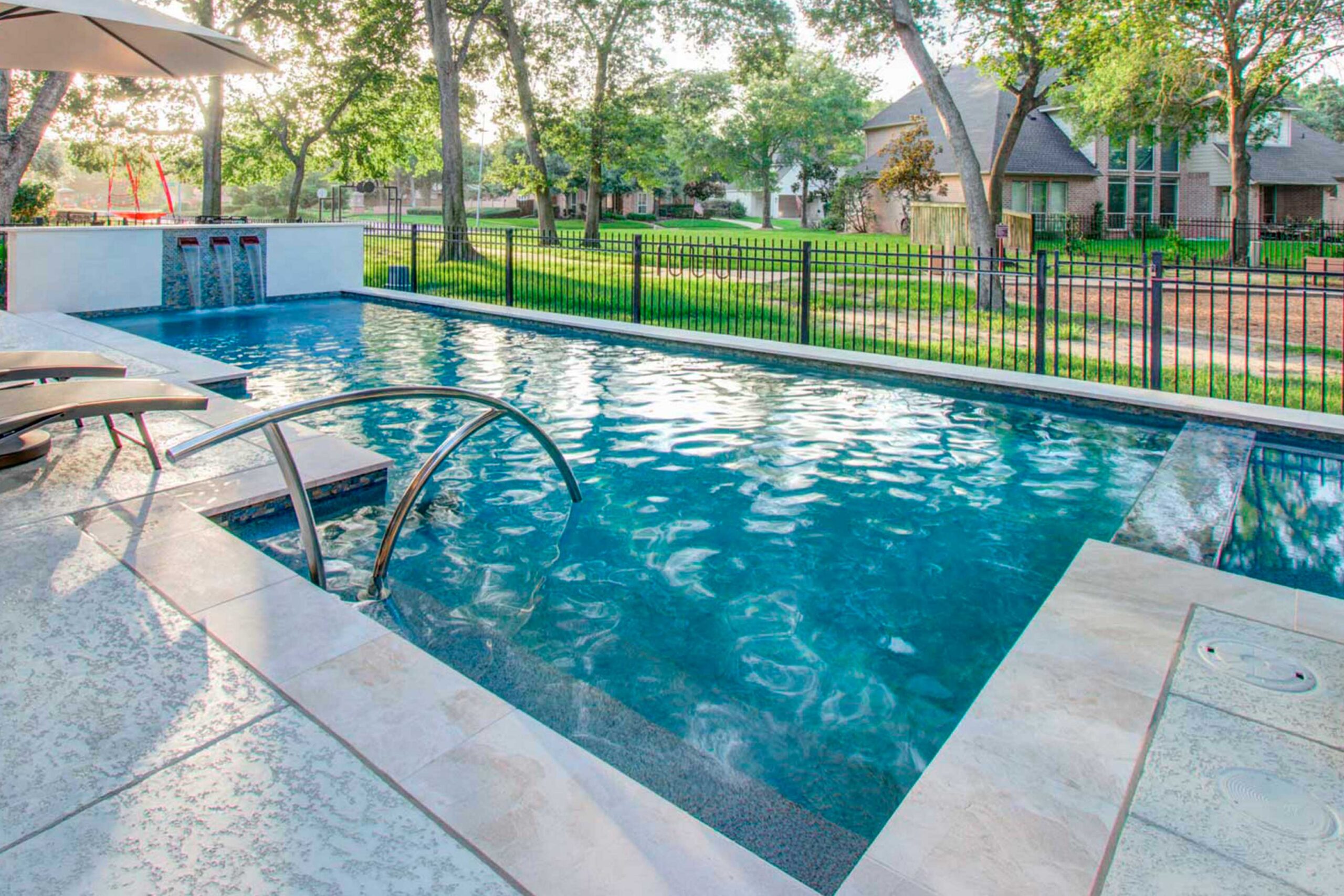
Some tiles are regularly stocked and readily available. Other products may be special order, imported, produced in batches, or temporarily unavailable. Certain sizes or colors within the same series may also have different availability.
That is why experienced builders want tile selections finalized early.
If the material arrives late, the installation schedule may be delayed even if the rest of the pool is ready. If the wrong quantity was ordered, pieces are damaged during transportation, or additional material is needed after installation has started, the project may have to wait for replacement material.
For pool professionals, Aquabella Pro Access provides a dedicated professional area for working with Aquabella resources and project materials. Homeowners working with a builder or designer can ask whether their professional uses Pro Access when coordinating Aquabella product selections.
Production lots can matter too. Tiles manufactured at different times may have differences in shade, tone, texture, or appearance.
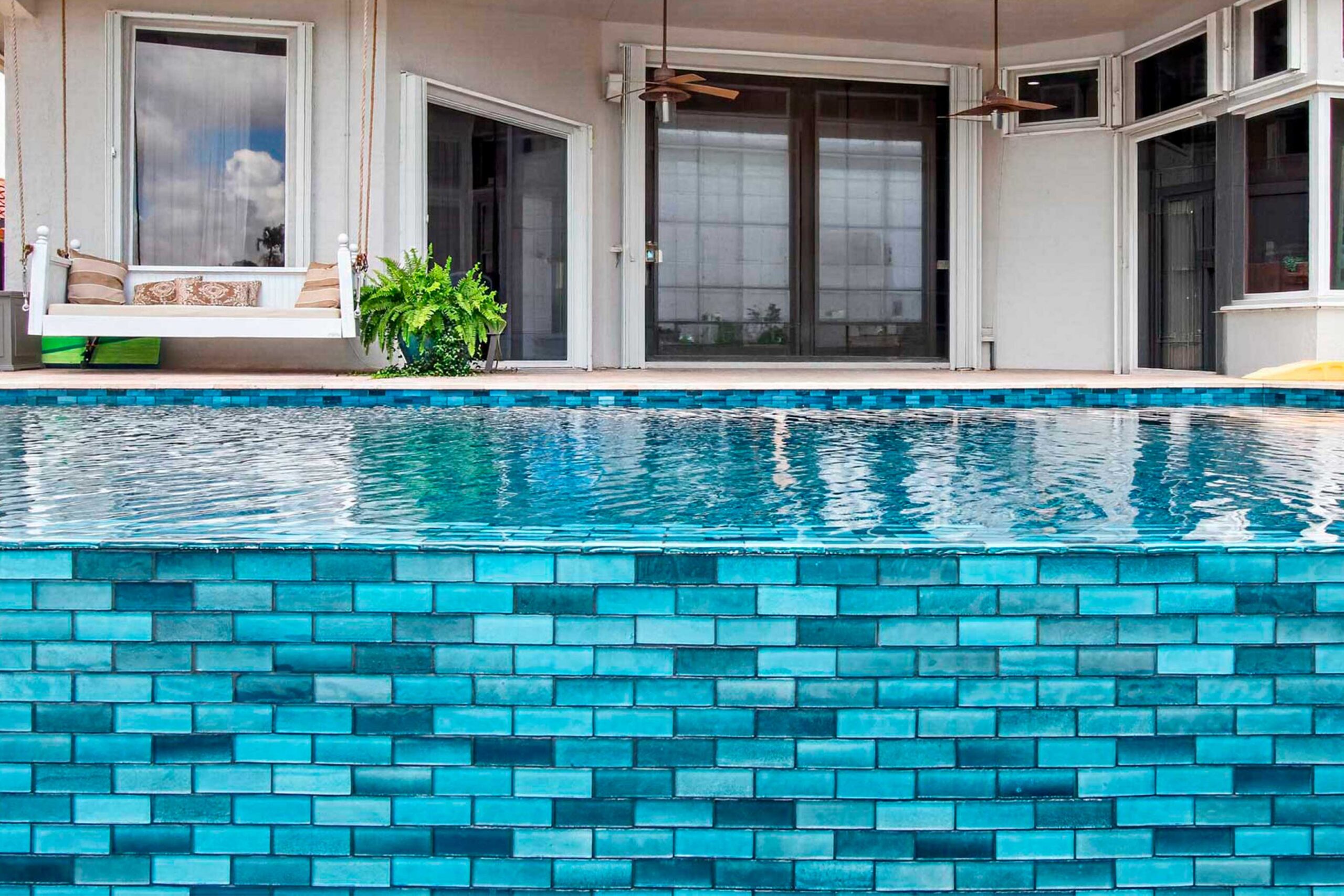
Some variation within a tile is completely normal and expected. Depending on the material and manufacturing process, differences in shade, tone, texture, pattern, or slight dimensions may occur from piece to piece. This can be especially noticeable with glass, natural stone, handmade materials, and products intentionally designed with variation. Aquabella’s Shade Variation guide explains the V1 through V4 classifications and what homeowners can expect from products with different levels of variation.
For products with visible variation, homeowners should understand what that variation will look like before the tile is installed.
Lead time is therefore part of the tile decision. A beautiful tile that cannot arrive when the project needs it can create more scheduling problems than another material that is available and appropriate for the project.
Installation Quality Matters as Much as the Tile
Even excellent tile can produce a disappointing result if the installation is poor.
Proper substrate preparation, waterproofing where required, bonding materials, layout, spacing, mortar coverage, grout installation, movement accommodation, curing, and jobsite conditions all matter. Industry guidance from the Tile Council of North America addresses these components as parts of the complete tile installation rather than treating the tile itself as the entire system. Builders and installers working with Aquabella products can also review the appropriate Aquabella Installation Guides before work begins.
This is where callbacks often begin.
A homeowner may see a loose tile, cracked grout, discoloration, or another visible problem and assume the tile itself was defective. Sometimes the underlying issue is installation, movement, moisture, insufficient mortar coverage, substrate preparation, or another part of the assembly. The Ceramic Tile Education Foundation explains why proper mortar coverage matters and how insufficient coverage can lead to failures, even when an installation may look good on the surface.
That is why investigating the entire installation matters.
The visible failure is not necessarily the original cause.
Good installers also understand that different products can require different techniques. Installing a porcelain waterline tile is not automatically the same as installing translucent glass mosaics, large-format material, natural stone, or tile around a complex water feature.
The tile matters, but so does the person installing it.
The visible problem is not always the original cause. The entire tile installation works as a system.
The Lowest Price Is Not the Whole Decision
Price matters. Every project has a budget.
But comparing tile proposals solely by the bottom line can hide important differences.
One contractor may be pricing a straightforward installation with readily available material. Another may be accounting for more cuts, a more complicated layout, specialty-setting materials, additional surface preparation, specific grout requirements, longer installation time, or a more experienced tile crew.
Those differences can affect both the appearance and the long term performance of the finished pool.
The better comparison is not simply, “Who is cheapest?”
It is, “What exactly is included in each price and installation?”
Ask what material is being used. Ask about preparation. Ask about grout. Ask about setting materials. Ask how complicated details will be handled. Ask whether the selected tile creates additional labor or installation requirements.
The goal is not to spend the most.
It is to understand what you are buying and whether it is right for your project.
Choose Tile With the Finished Pool in Mind
The best tile decision happens when homeowners look beyond the sample board.
Consider how the tile will interact with the pool’s shape, curves, coping, interior finish, water features, grout color, surrounding hardscapes, maintenance expectations, and the surrounding architecture. Aquabella Moodboards allow homeowners and professionals to explore tiles, pavers, finishes, and other materials together, rather than making each selection separately.
It can also help to see those materials in completed projects. The Aquabella Pool Gallery shows Aquabella products in finished environments where scale, water, sunlight, and surrounding materials become part of the overall appearance.
Also, remember that a small sample cannot reproduce every condition of the completed pool. The final installation will be viewed across a much larger area, beside other materials, outdoors, under changing light, and eventually with water in the pool.
Whenever possible, request physical Aquabella samples to evaluate the actual color, texture, finish, and variation before making the final selection. Aquabella currently offers complimentary first-tile sample orders of up to 3 samples, subject to the program terms.
Most importantly, understand that tile is part of a system. The material, pool design, availability, preparation, installation technique, setting materials, grout, and workmanship all contribute to the final result.
Taking the time to make those decisions before construction can prevent one of the most frustrating kinds of pool problems: the one that looked like a bargain at the beginning and became a callback later.