A backyard is more than an outdoor space; it is an extension of the home. The design of the paving plays an important role in how that space looks and feels. Beyond choosing a color or material, the size and arrangement of the pavers can help a patio feel calmer, more open, more formal, or more lively.
Before selecting your pavers, consider the experience you want to create. Is your backyard a quiet retreat, a gathering place for family and friends, or a space that connects the home to the pool? The right layout helps bring that vision together.
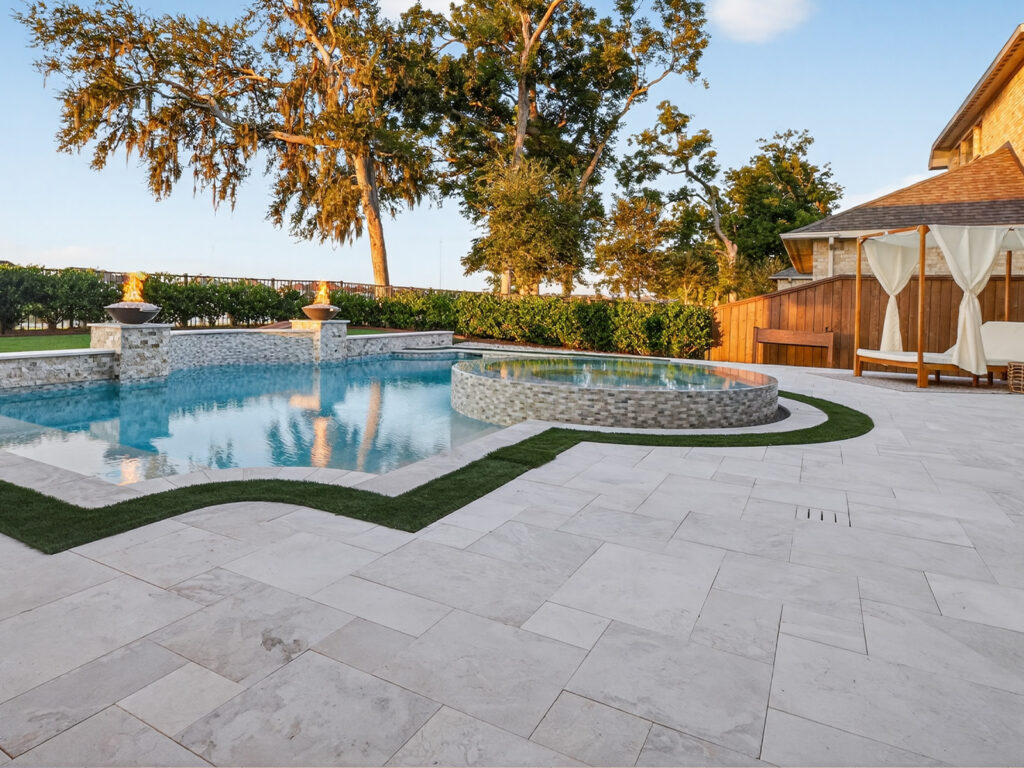
Paver Sizes: Creating Scale and Balance
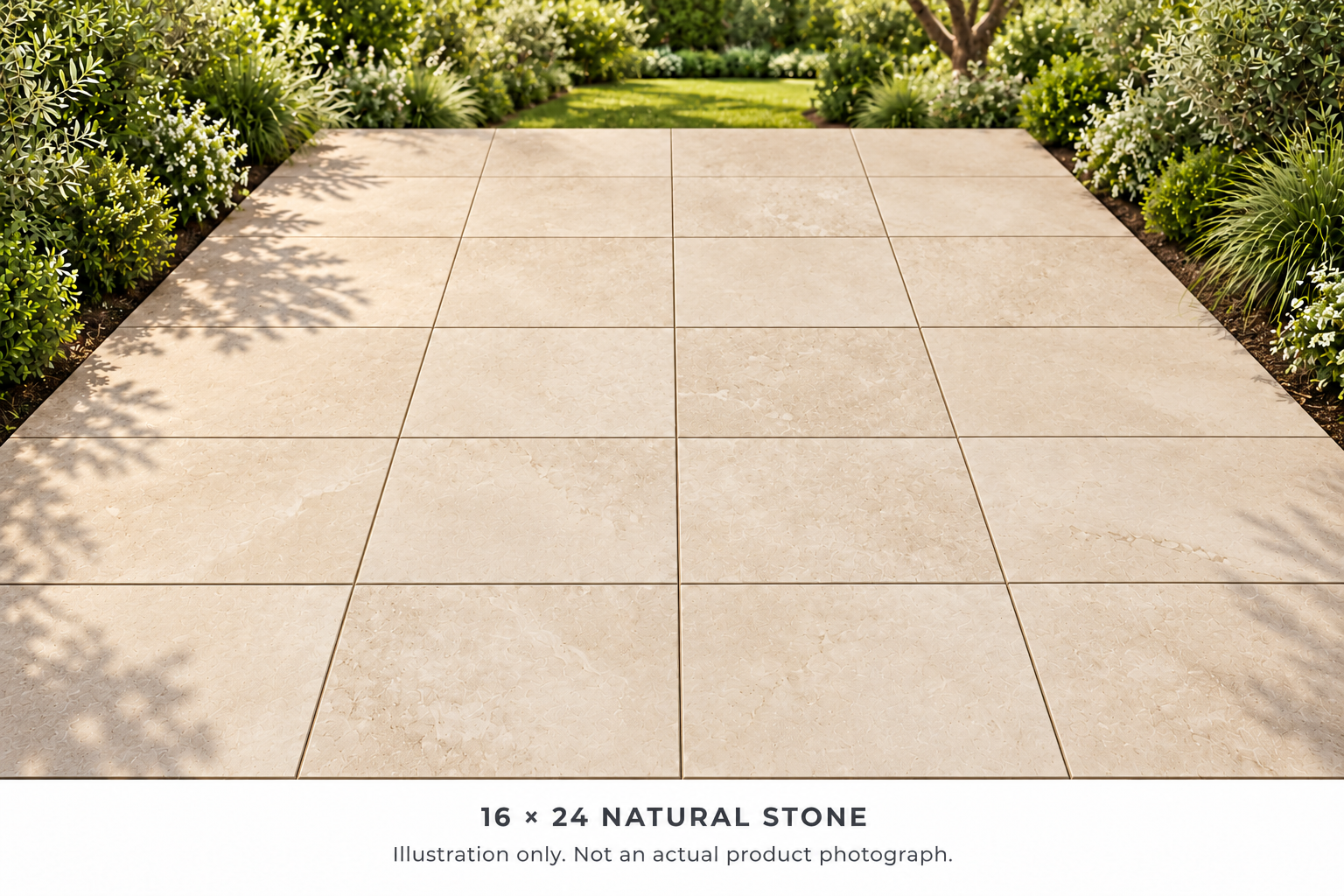
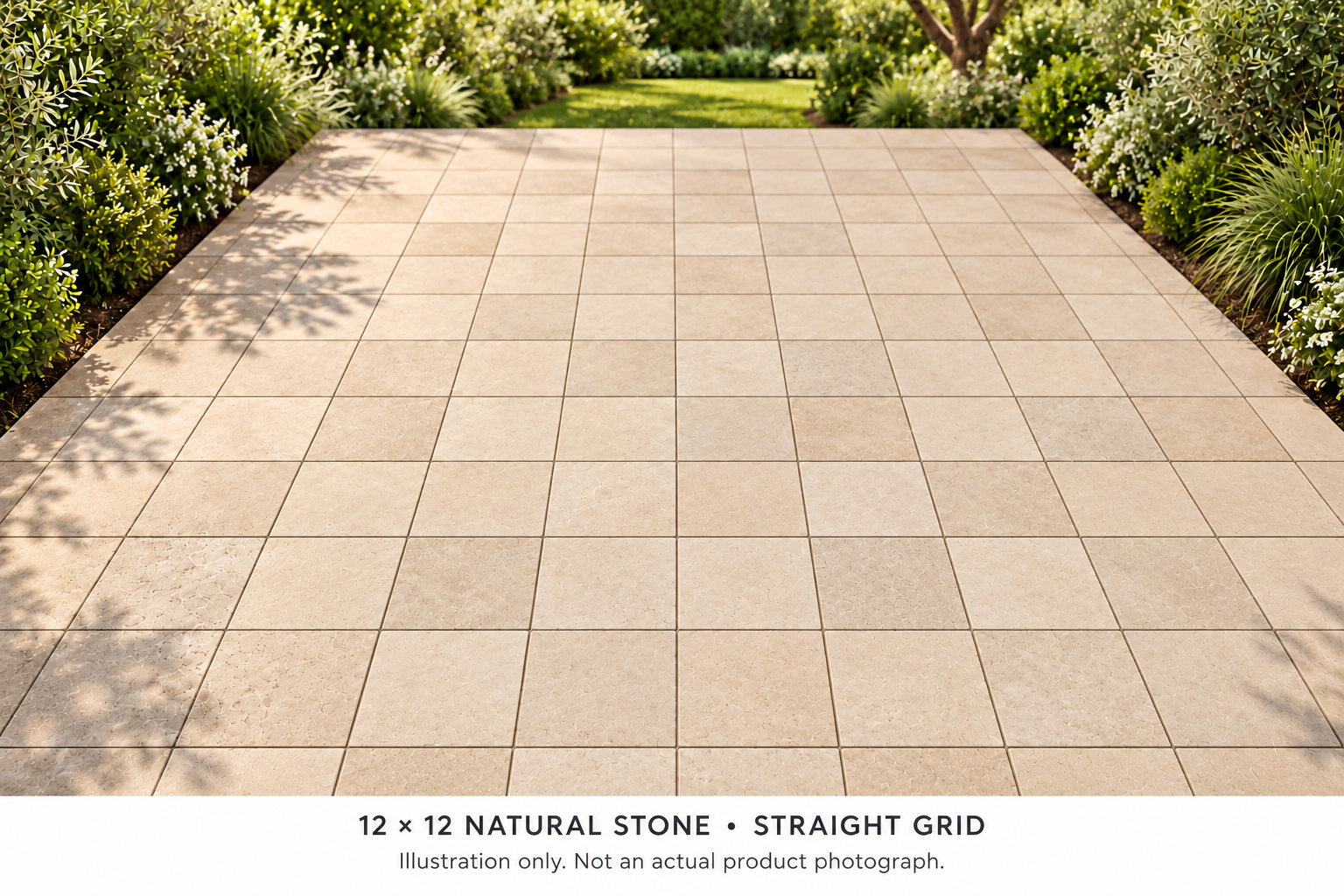
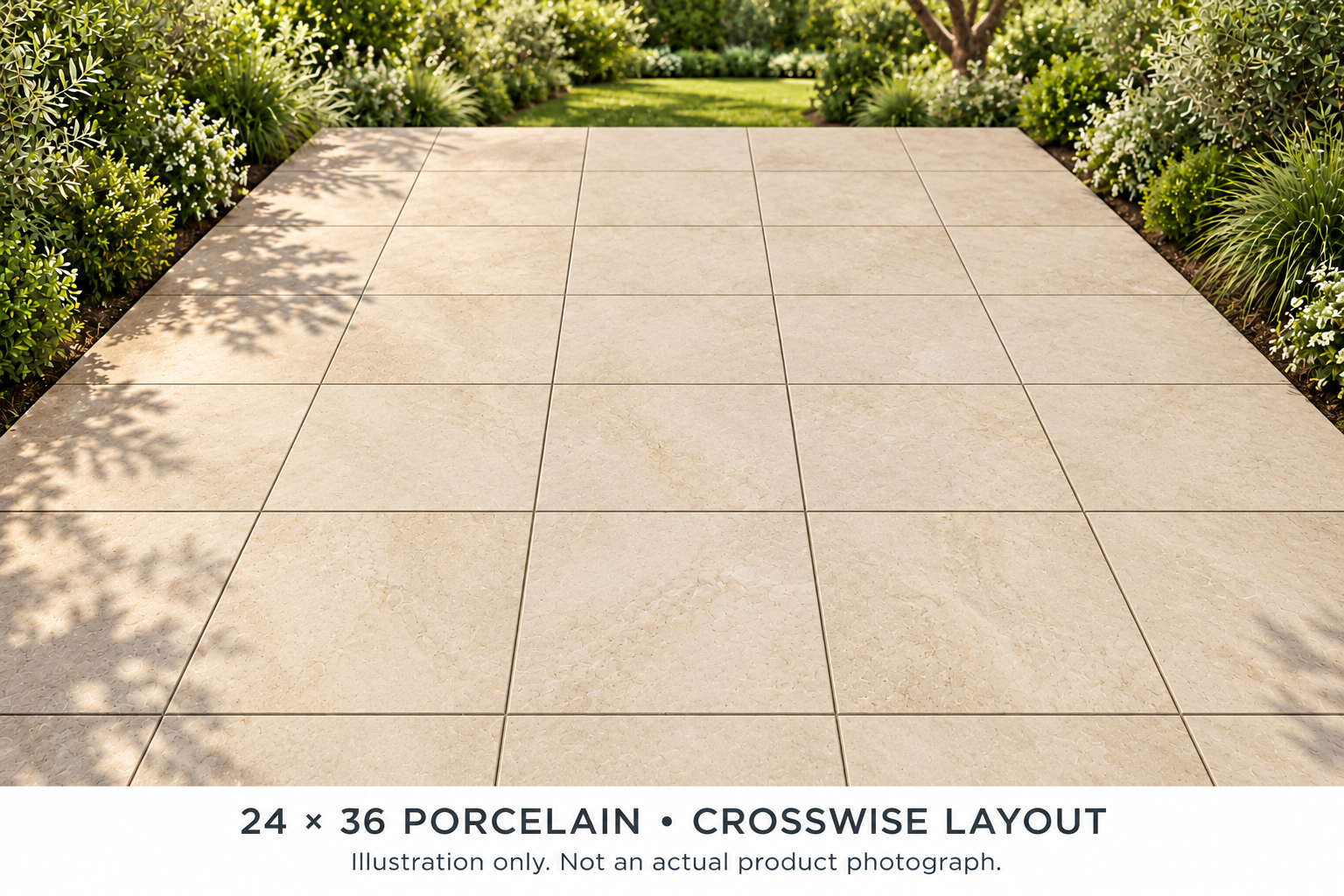
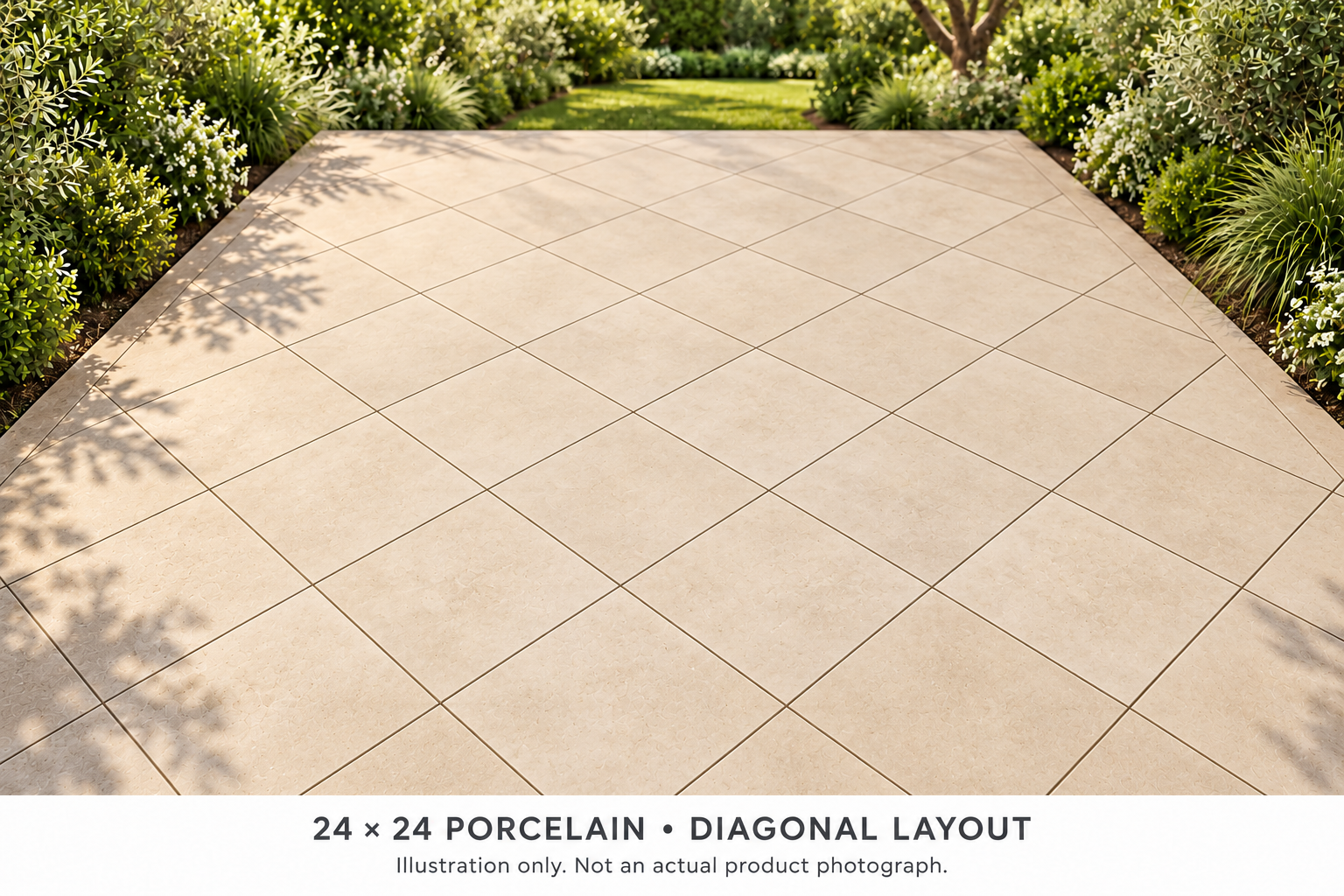
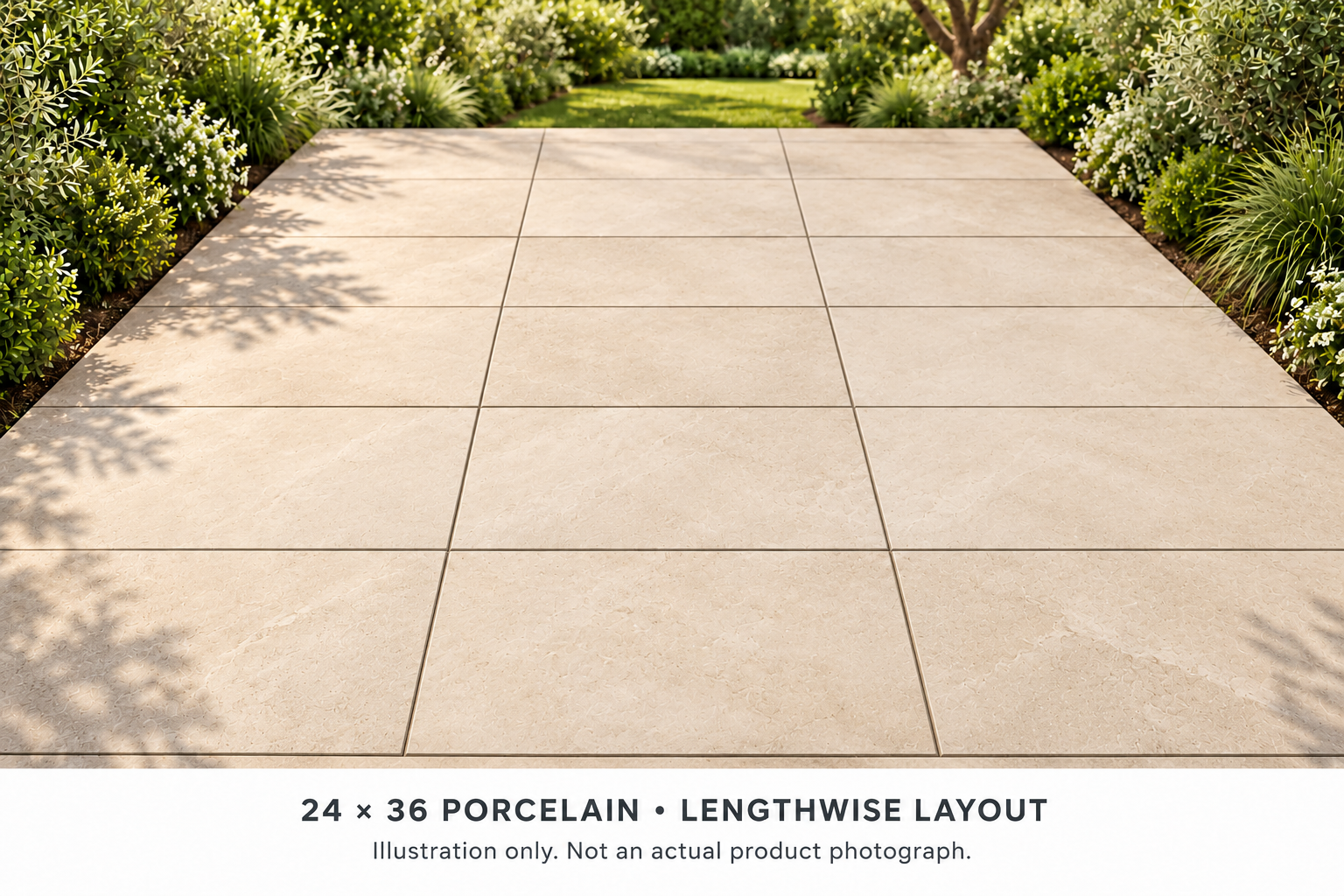
The size of a paver influences how the eye reads a space. Larger units generally create fewer joints across the same area, while smaller units introduce more repeated detail. Neither is automatically the better choice for a small backyard. The shape of the area and the direction of the layout also affect its perceived proportions. The goal is to choose a size that works with your space and the feeling you want to create.
Before deciding, ask your installer to show how the proposed size fits around your patio edges, steps, and other features. A layout that looks attractive in a photograph may feel different when it requires frequent cuts in your own backyard.
Smaller pavers can bring texture and character to traditional gardens, intimate seating areas, or decorative pathways. Larger formats can offer a simpler background for furniture, planting, and architectural details. The goal is to choose a scale that supports the whole setting.
Running Lines: Guiding the Eye
The direction of a paving pattern can influence the proportions you notice first. Lines running lengthwise can emphasize depth, but they may also make a narrow yard feel narrower. A crosswise arrangement can draw attention to its width instead.
Consider the view from the back door, a favorite seating area, or the entrance to the pool deck. Which direction would you like the eye to travel?
Straight, repeated lines tend to create an organized appearance. Diagonal layouts or changes in direction can introduce movement and visual interest. The most effective choice is one that works with the yard’s shape and the features you want to highlight.
Paver size sets the rhythm, while pattern guides the eye. Together, they shape how your outdoor space feels, not just how it looks.
Mixed Paver Sizes: Adding Rhythm and Movement
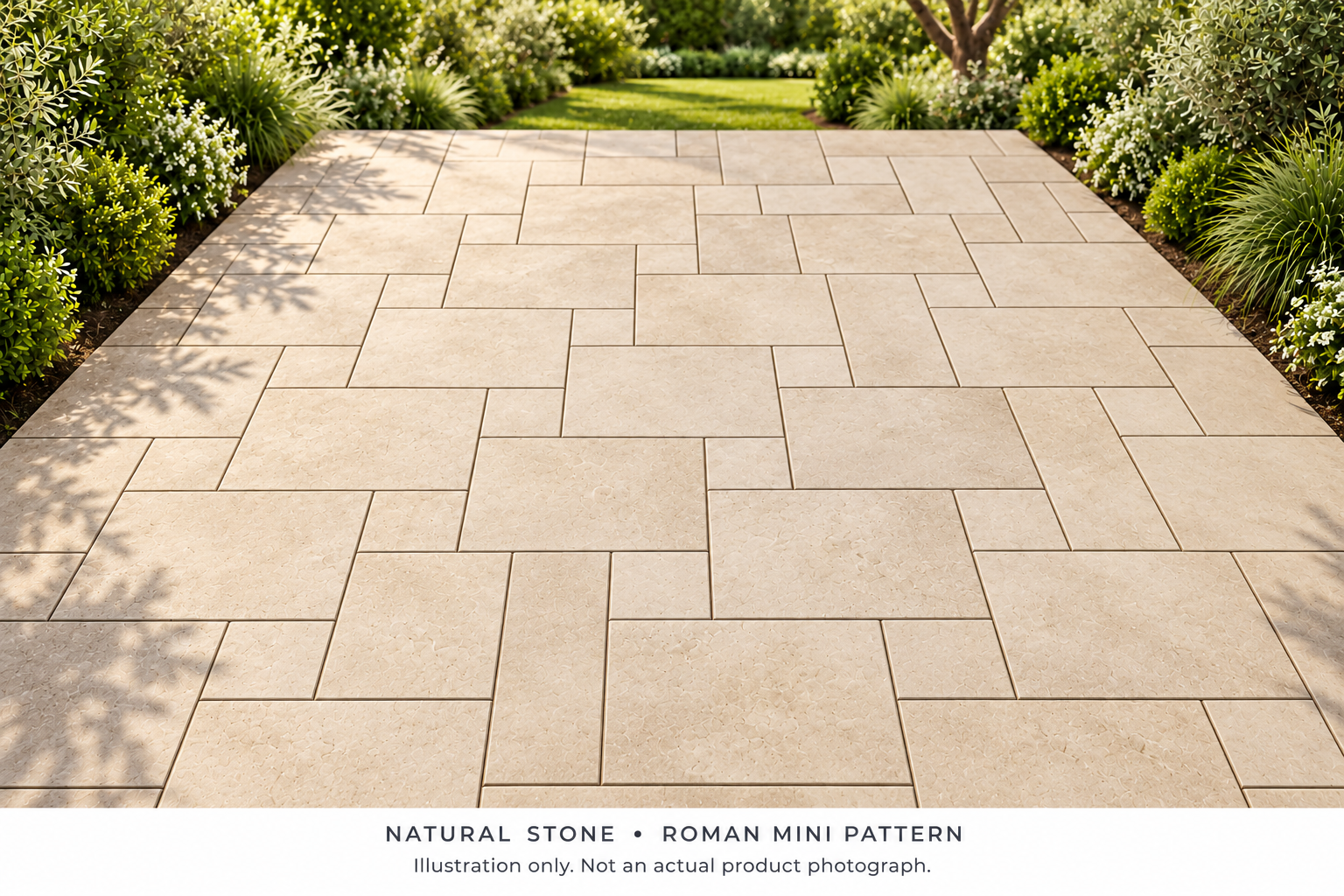
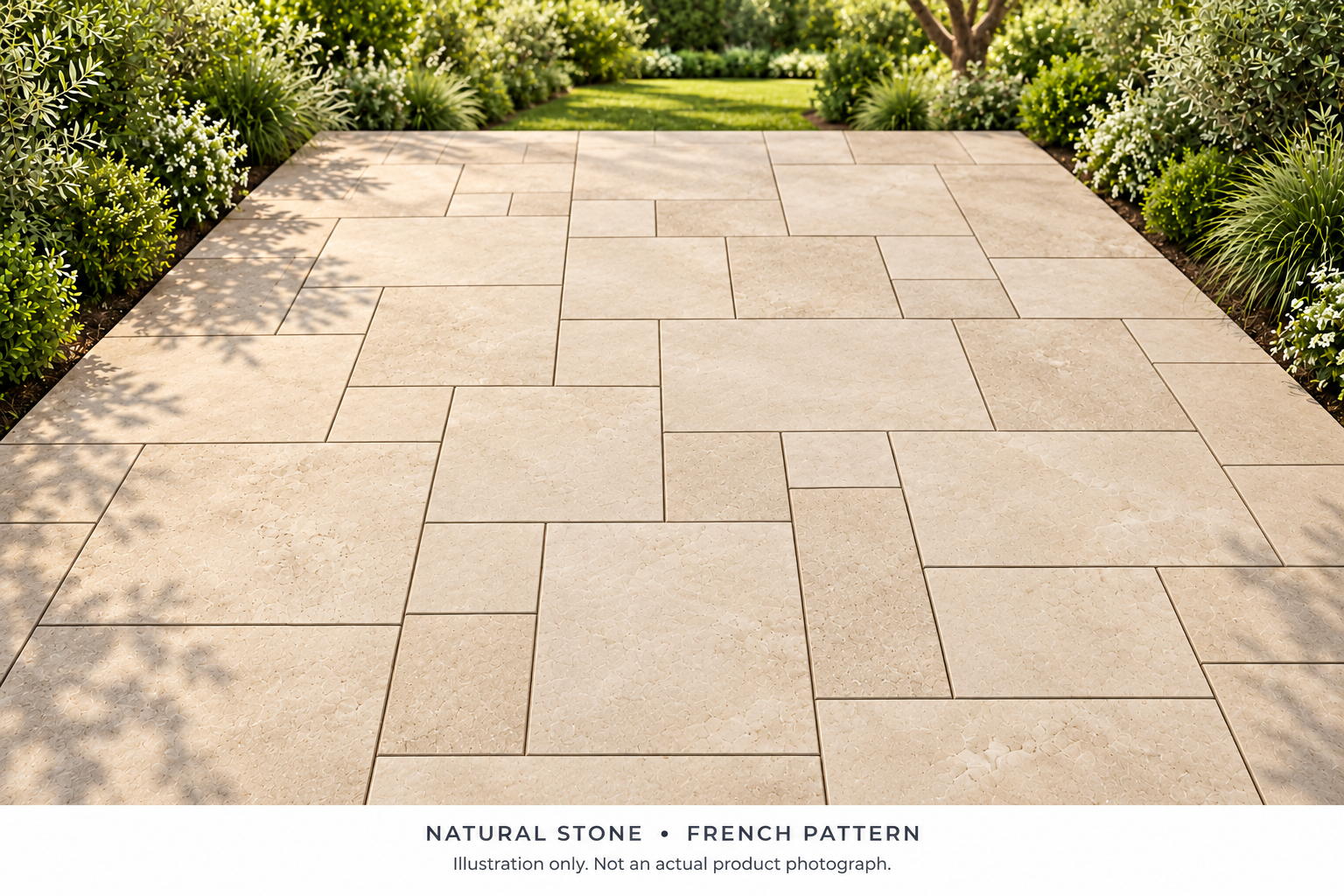
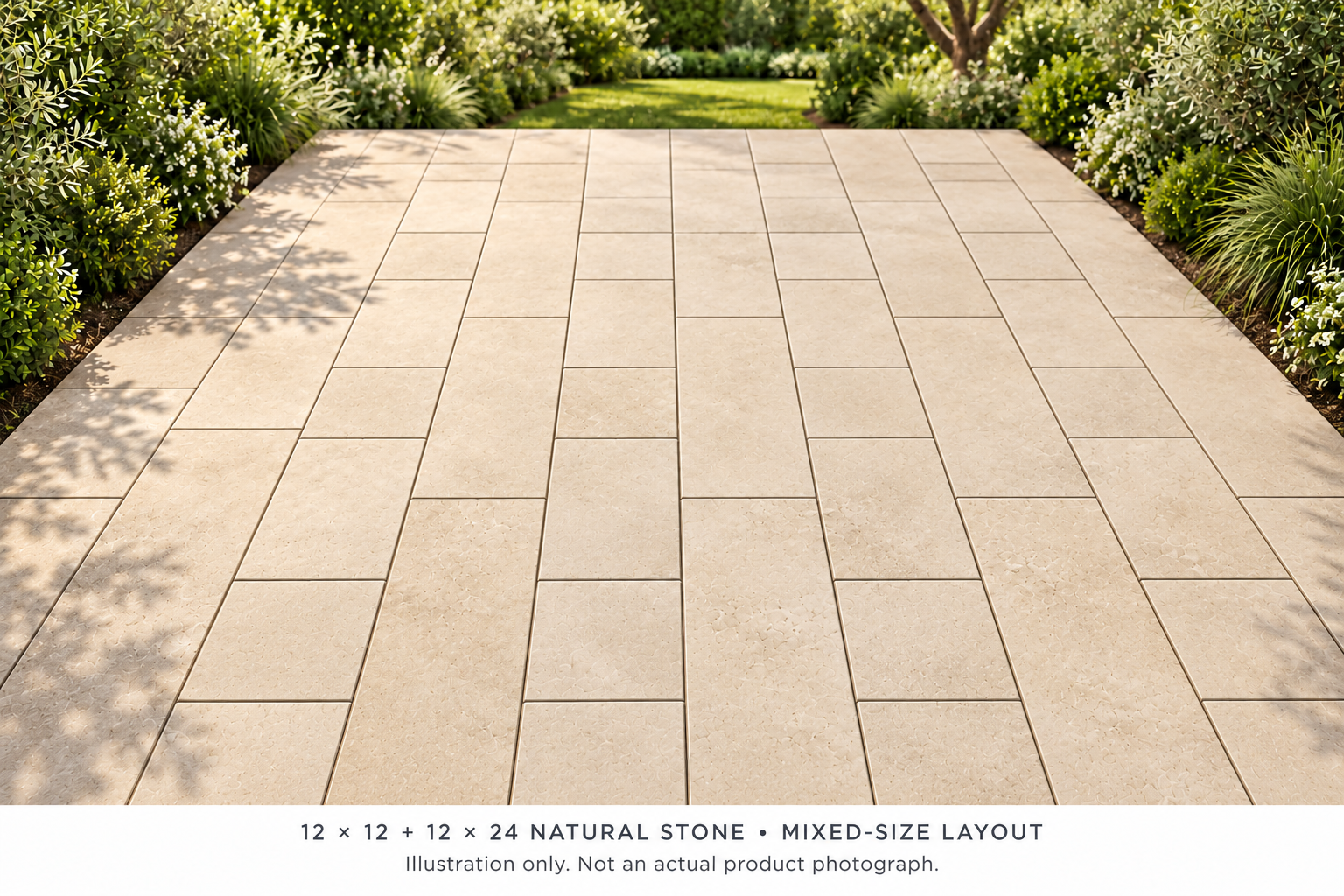
Using mixed paver sizes can create a more varied surface. Instead of repeating a single unit, a combination of squares and rectangles introduces a rhythm that changes as the eye moves across the yard.
A carefully planned modular pattern can make a space feel relaxed and welcoming. The most successful layouts balance variation with repetition. A limited selection of sizes, repeated in a deliberate arrangement, provides visual interest while maintaining a sense of order.
If this style appeals to you, look for products with sizes designed to work together. Your installer should confirm that the dimensions, thicknesses, and required joint spacing are suitable for the proposed pattern. Not every combination of pavers will fit together as neatly as it appears on paper.
Borders: Defining Space and Creating Formality
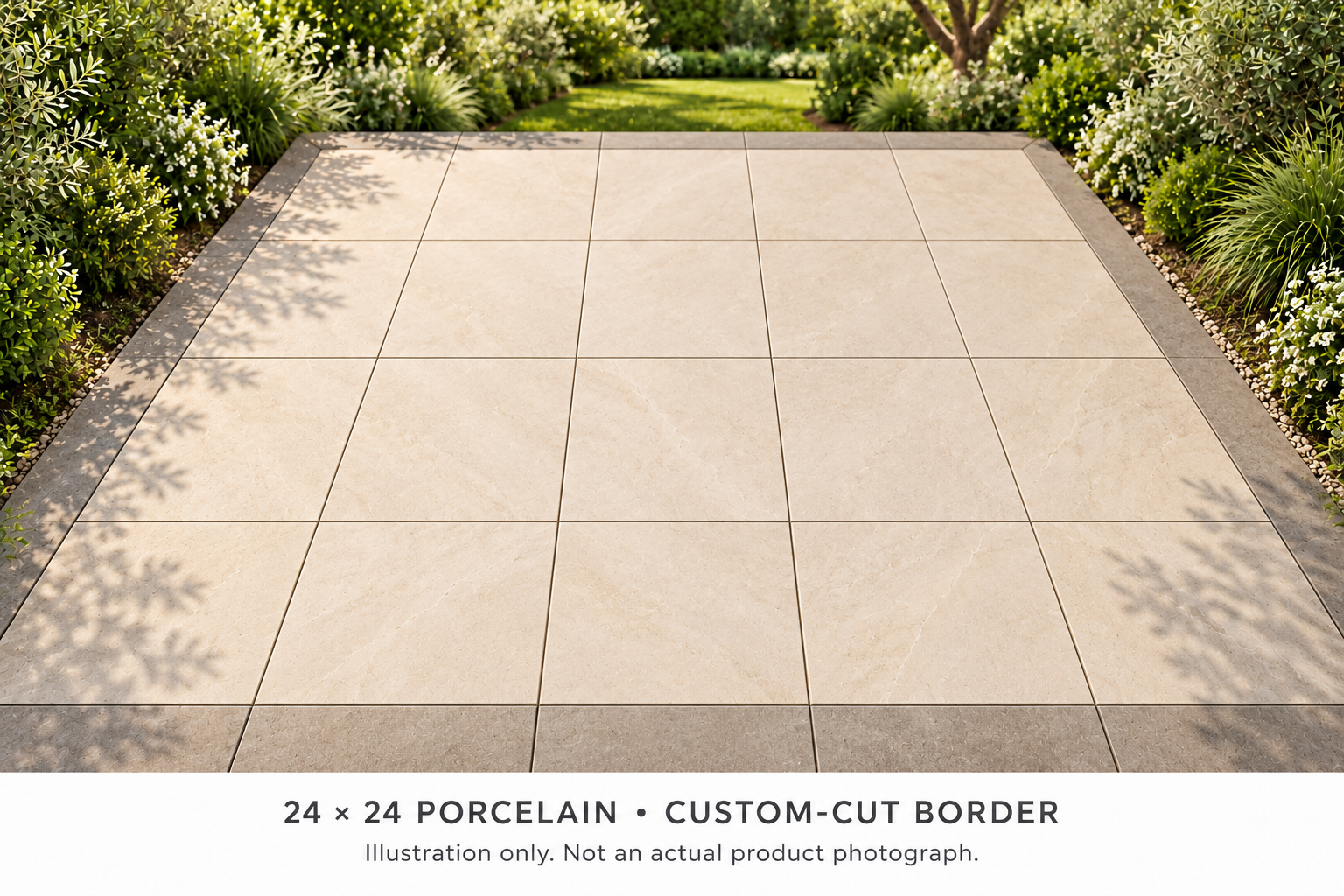
Borders give a paving design a clear edge. A contrasting border around a patio, walkway, or pool deck can frame the area much like a picture frame defines an image. This can make the outdoor space feel intentional, finished, and organized.
Straight borders and symmetrical layouts often create a more formal atmosphere. A darker border around lighter pavers strengthens the outline of a patio, while a similar color can create softer definition.
Borders also influence how connected a space feels. A strong, contrasting frame can make a seating area feel like its own outdoor room. A border that blends with the main paving can create a more continuous appearance. In smaller yards, limiting unnecessary divisions may help the overall design feel less fragmented.
When choosing a border, consider how it relates to the home, pool coping, and surrounding surfaces. Repeating a complementary tone can help these elements feel connected.
Cuts: The Importance of Precision and Detail
Paver cuts are often overlooked during product selection, but they have a major impact on the finished appearance. Clean, carefully planned cuts around walls, planting beds, steps, and drains help an installation feel thoughtfully designed.
Balanced cuts at prominent edges can support a formal look. Well-aligned joints reinforce the pattern’s geometry, while carefully planned curves and transitions can soften a rigid layout.
Discuss these details before installation begins. Ask where cuts will fall, how the pattern will meet important features, and whether adjusting the starting point could avoid awkwardly narrow pieces.
Visual balance should work in tandem with proper installation. Before finalizing your layout, review Aquabella’s hardscape installation instructions, available under “Instructions and Other Documents” on the porcelain pavers product page, with your installer. Confirm the requirements for your selected material and installation system, including joint spacing, drainage, movement accommodation, and support. A beautiful pattern is most successful when these practical details are planned with it.
Combining the Elements to Create Different Moods
These paving decisions work best when they are considered together.
For a calm backyard, consider a simple pattern, a restrained color palette, subtle borders, and balanced cuts. Reducing competing details allows the landscaping and outdoor furnishings to become part of the experience.
For a more open feel, consider which dimension to emphasize and how the paving connects one area to another. A continuous layout with fewer visual interruptions may help the yard feel more cohesive.
For a formal backyard, symmetrical geometry, defined borders, and precise alignment establish structure and order. These elements can echo the home’s lines or frame a central feature.
For a more lively setting, mixed sizes, diagonal arrangements, or a carefully placed change in pattern can add movement. Keeping some elements consistent, such as color or border treatment, helps the design remain balanced.
You do not need to use every technique. Choosing a few that support the same goal often creates a more comfortable and convincing result.
Choosing Pavers for Your Backyard
Paving is more than a practical surface for walking or placing outdoor furniture. It is a design tool that shapes how a backyard is experienced.
As you compare products, look beyond an individual piece. Consider how its size, color, texture, and available formats will work across the entire patio or pool deck. If you are considering natural stone, the Natural Stone Institute’s homeowner resources offer additional information on stone types, care, and design inspiration. Bring photographs and approximate dimensions when discussing options, and ask your installer to review the layout before you finalize your order.
The way your backyard feels also goes beyond its appearance. Sun exposure, your region, and the material you choose are worth considering alongside size and pattern. Use Aquabella’s Surface Comfort Match to explore natural stone and porcelain options with those conditions in mind, then discuss your favorites with your installer.
Explore Aquabella® porcelain pavers for a clean, contemporary direction, or consider the warm tones and available formats of Ivory natural stone pavers. Once you have narrowed your choices, use the sample request option on the product page to see your favorites in person. Viewing samples alongside your home, pool tile, and outdoor furnishings can help you compare colors and textures in your own setting. Pair those samples with a layout plan to understand how the finished surface could come together.
A thoughtful choice of paver and pattern can turn an ordinary backyard into a space that feels more inviting—and more like your own.
About the Author
 Michelle Velasquez
 is a sales representative at Aquabella® focused on materials for outdoor living. Her work centers on pool tile, natural stone, and hardscape products for patios and pool environments.