Today’s outdoor kitchens are much more than the standalone barbecues of the past. They are functional cooking and entertaining spaces that must withstand food spills, grease splatter, pizza sauce, and constant exposure to the elements.
One of the most important but often overlooked aspects of outdoor kitchen design is the selection and management of materials used in splash zones. These are the areas surrounding sinks, grills, barbecues and food preparation surfaces where water, grease and debris tend to accumulate.
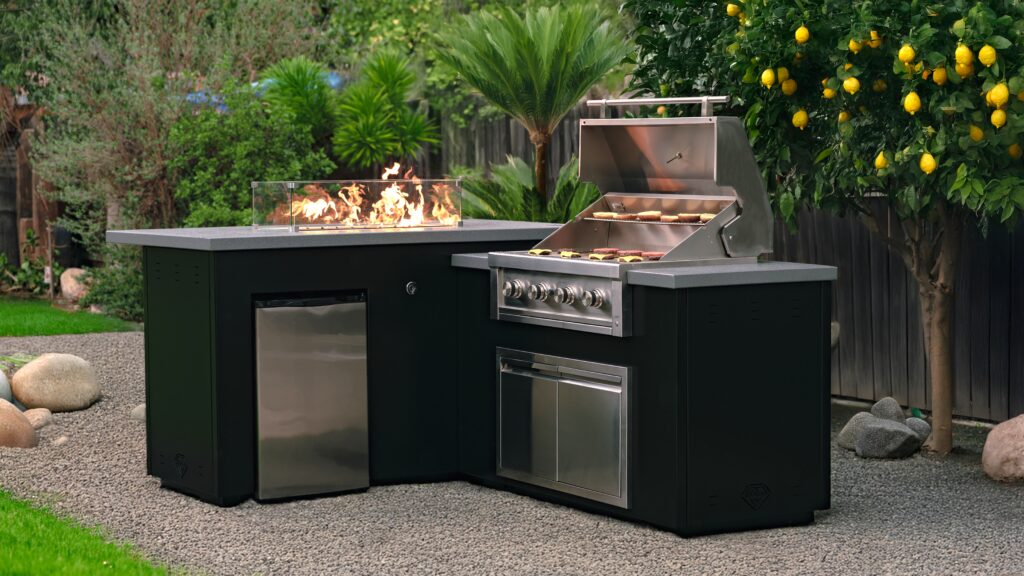
Choosing Tile for Outdoor Splash Zones
Tile is one of the most popular materials for outdoor kitchens because it is durable, attractive, and easy to clean. Porcelain tile is dense, nonporous, and generally resistant to stains and temperature changes, making it a suitable choice for splash zones.
Porcelain tile is also available in many styles that resemble natural stone, concrete, or wood. Large format porcelain tile can create a cleaner appearance with fewer grout lines, making outdoor kitchen surfaces easier to maintain.
Ceramic tile can also be used, but it is typically more porous and may chip or crack in extreme temperatures. Any material selected should be rated for exterior applications and, when necessary, for freeze-and-thaw conditions.
Grout Selection and Maintenance
The grout between tiles also deserves special attention. Traditional cement-based grout can absorb stains, particularly in areas exposed to grease and food debris. Choosing a high-performance, stain-resistant grout can help reduce maintenance.
In certain applications, grout lines can be sealed to help protect them against water, oil and common stains. However, sealing grout does not make it completely stain-proof or waterproof, so regular cleaning is still important.
For areas frequently exposed to grease, food and moisture, epoxy grout can provide greater stain resistance and easier maintenance than traditional cement-based grout. Reducing unnecessary grout joints around sinks and grills can also make the outdoor kitchen easier to clean.
Using Natural Stone Outdoors
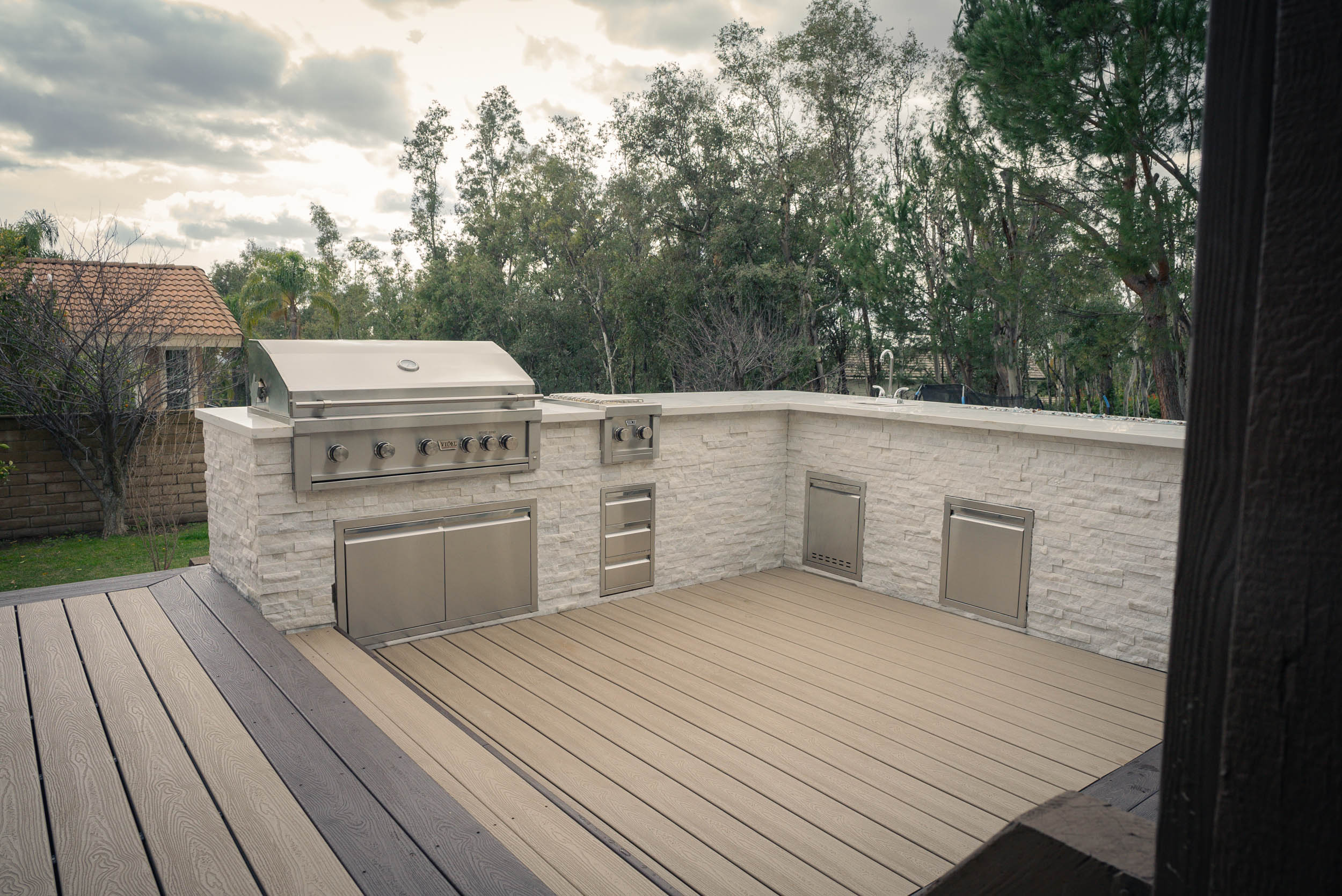
Natural stone is another popular option for outdoor kitchens. Materials such as granite, slate, quartzite, and certain types of limestone can provide a beautiful aesthetic and a durable surface.
Stone can be extremely durable when the correct material is selected and installed properly. However, many natural stones are porous and require maintenance to reduce their susceptibility to grease stains and discoloration.
For this reason, stone surfaces in splash zones often require sealing. Aquabella offers natural stone care products designed to protect, clean, and maintain stone, tile, and hardscape surfaces.
Some stone selections can also be difficult to clean. Harsh cleansers may break down sealants over time and, in some cases, damage the stone. The safest approach is to follow established natural stone care and cleaning recommendations using a mild cleaner, water, and a soft cloth or brush.
Some natural stones may also have difficulty withstanding direct sunlight or freeze-and-thaw conditions. Selecting a stone with the appropriate properties for the environment is essential.
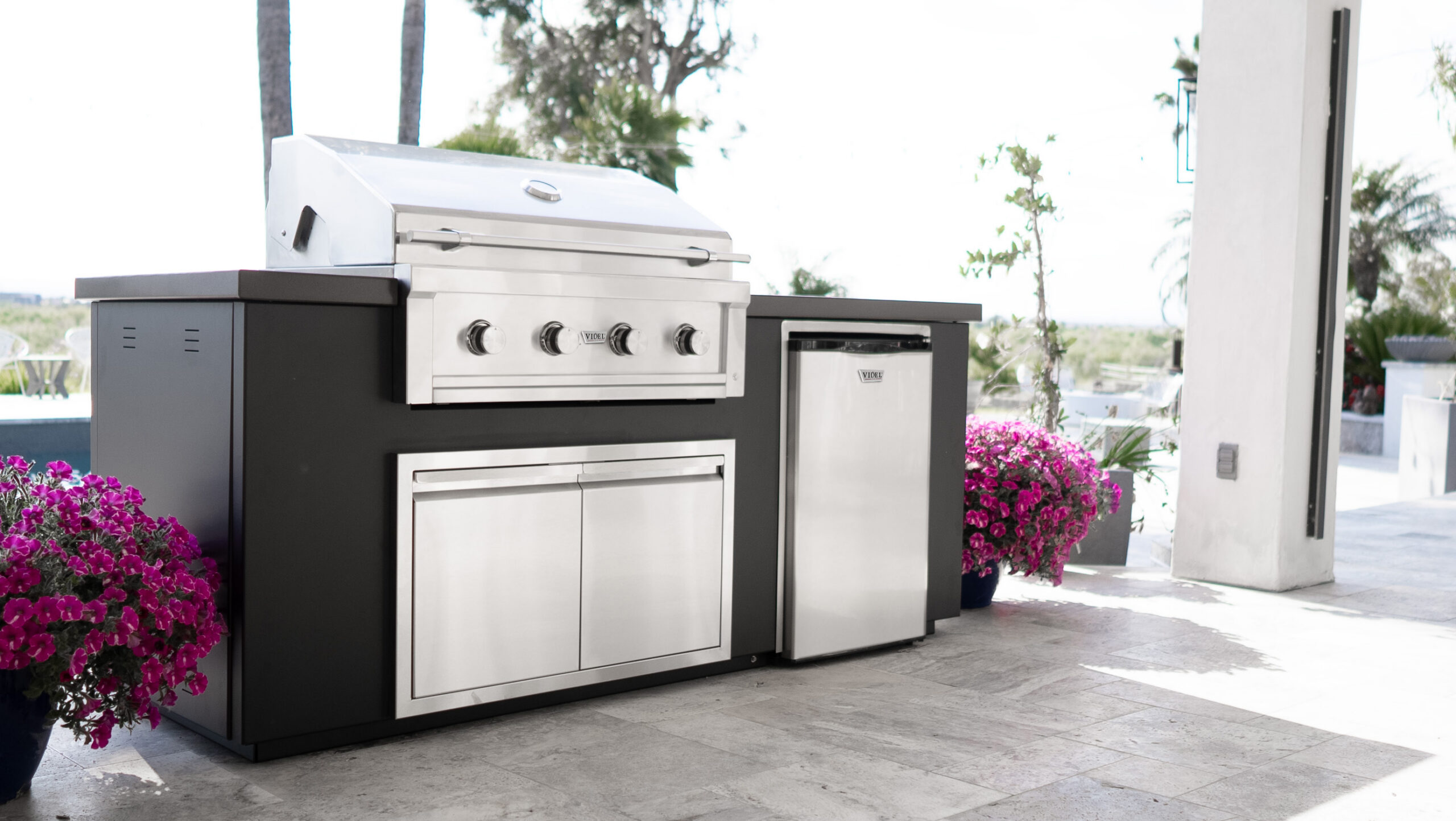
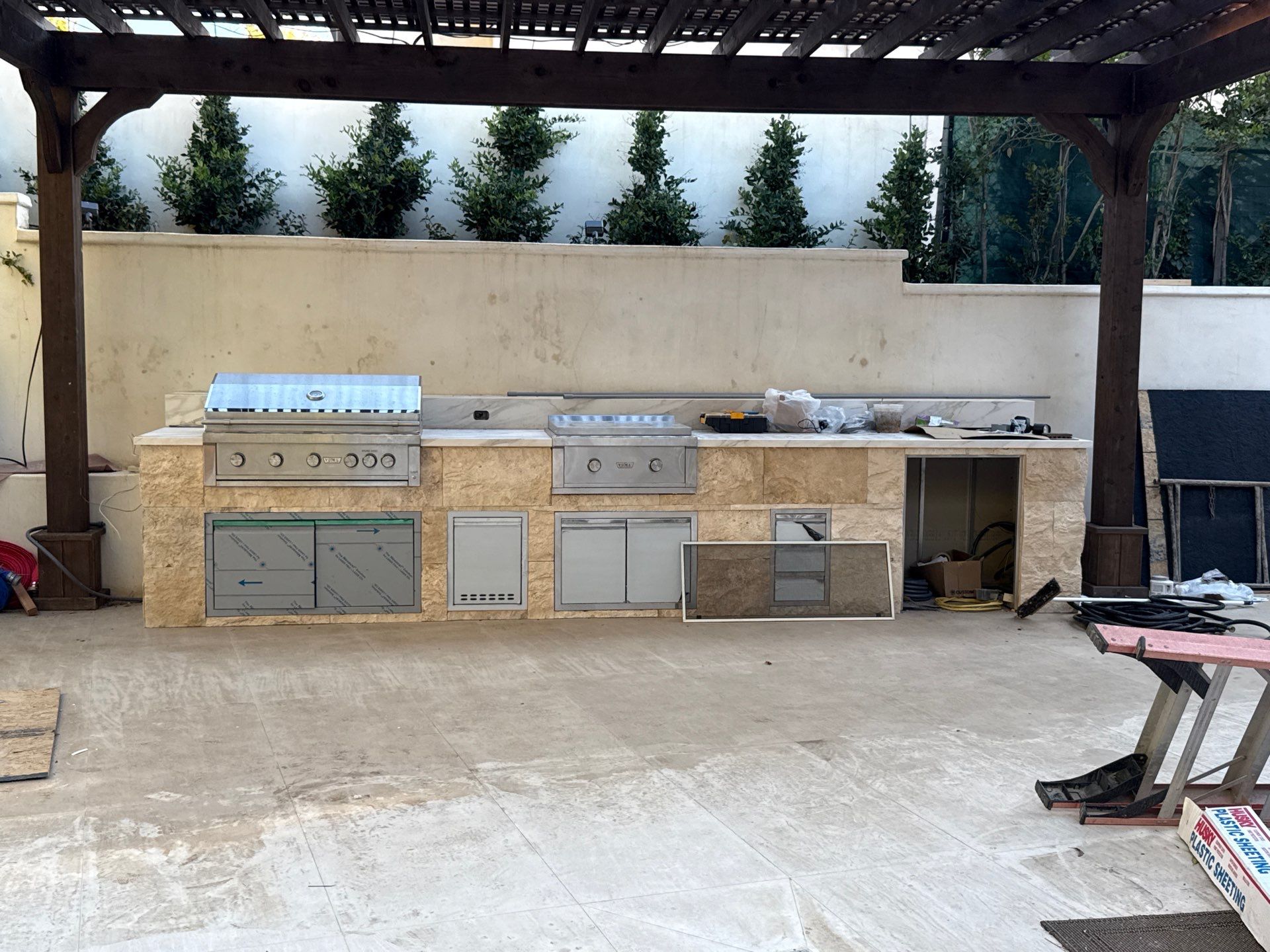

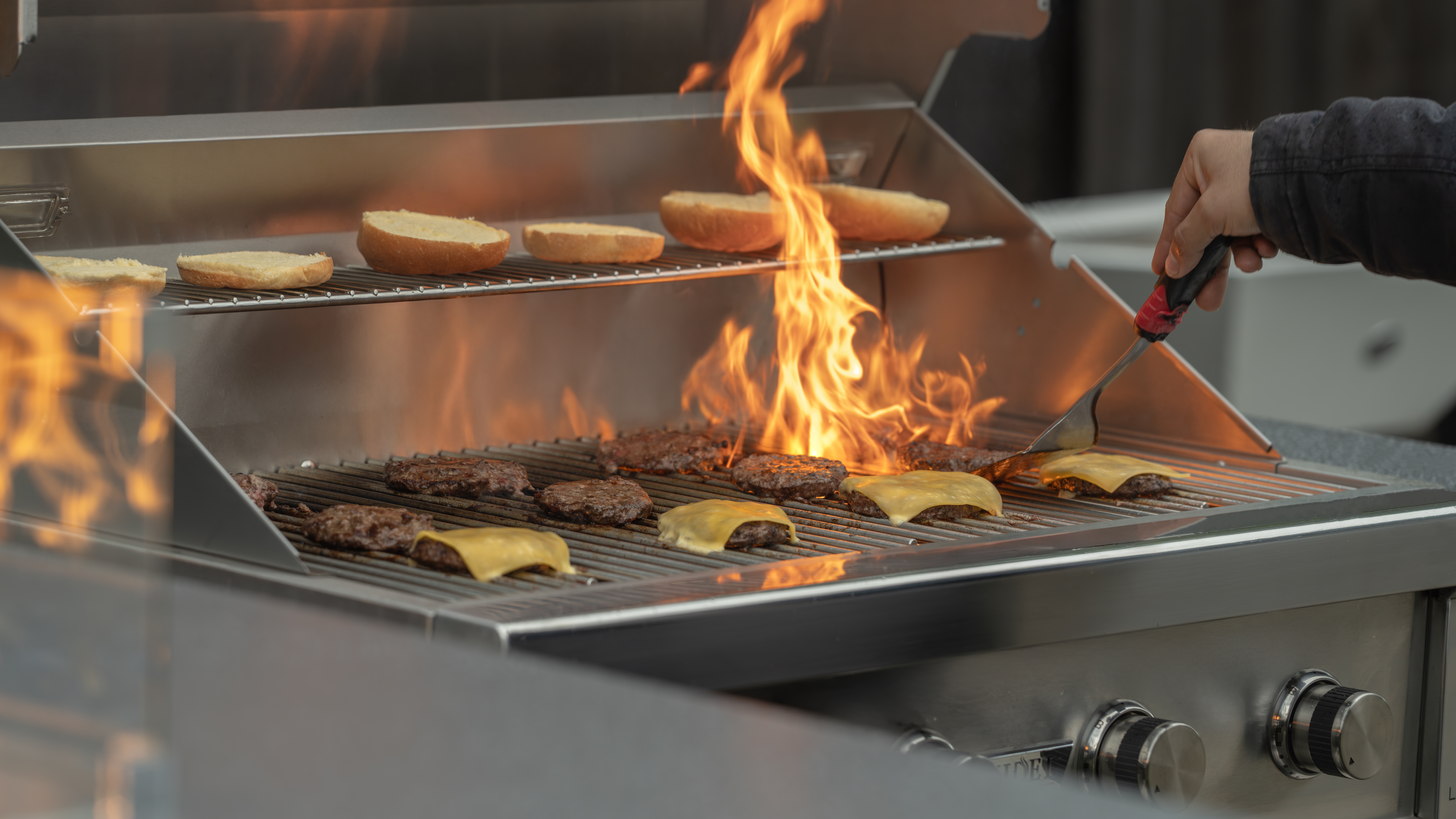
Managing Grease Around Cooking Areas
Grease is one of the biggest challenges in an outdoor kitchen, especially around grills and outdoor cooking appliances. Unlike many other stains, grease can leave behind a sticky residue that attracts dirt and dust.
Regular maintenance and cleaning can help control this buildup. Keeping grills, trays and surrounding surfaces clean also supports a safer cooking space. The National Fire Protection Association provides additional guidance for maintaining and safely operating outdoor grills.
Selecting Surfaces That Are Easy to Clean
A smooth, nonporous surface is generally easier to clean than a heavily textured one. While textured finishes can provide visual interest and slip resistance, excessive texture can trap grease and food particles.
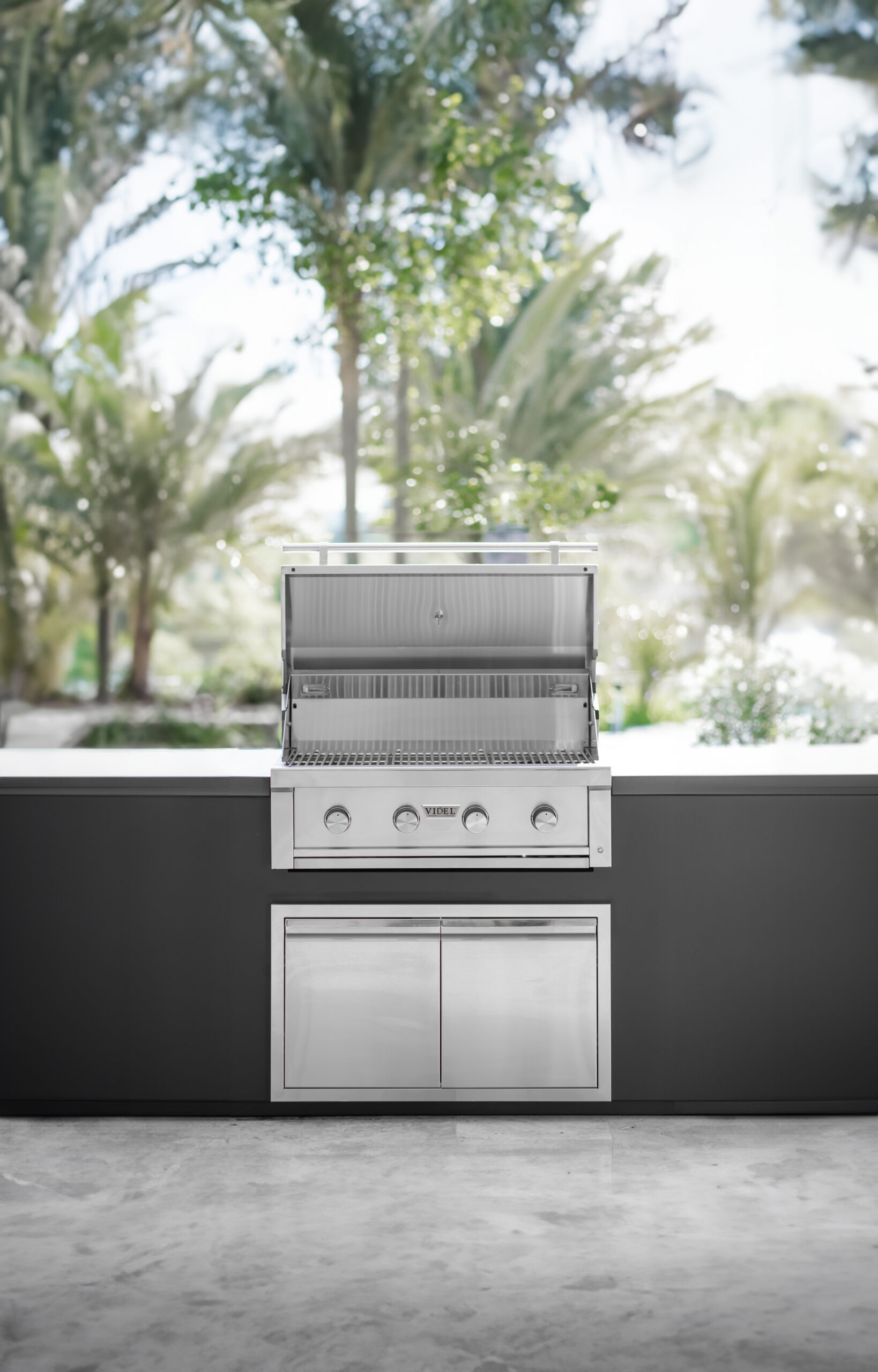
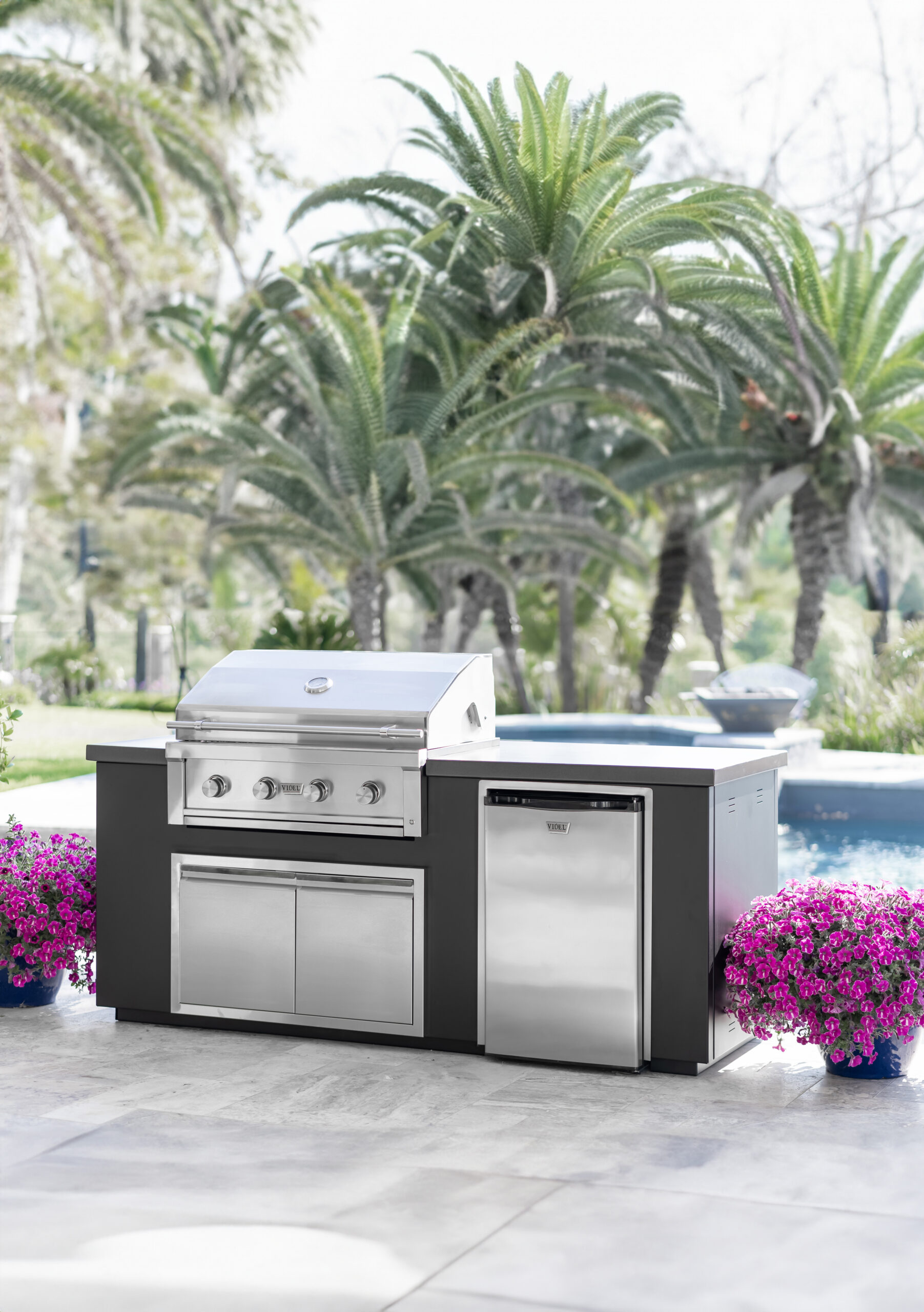
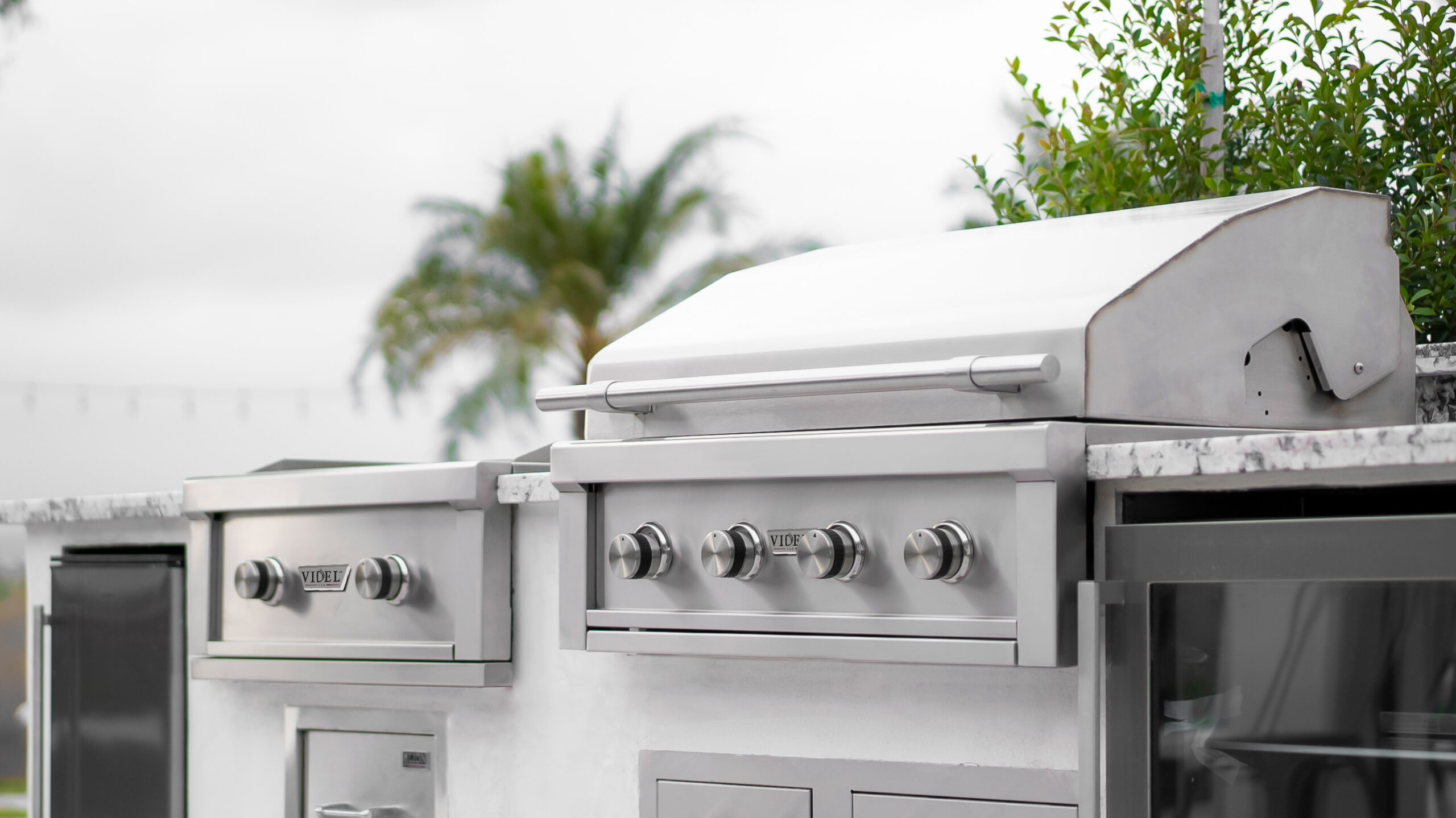
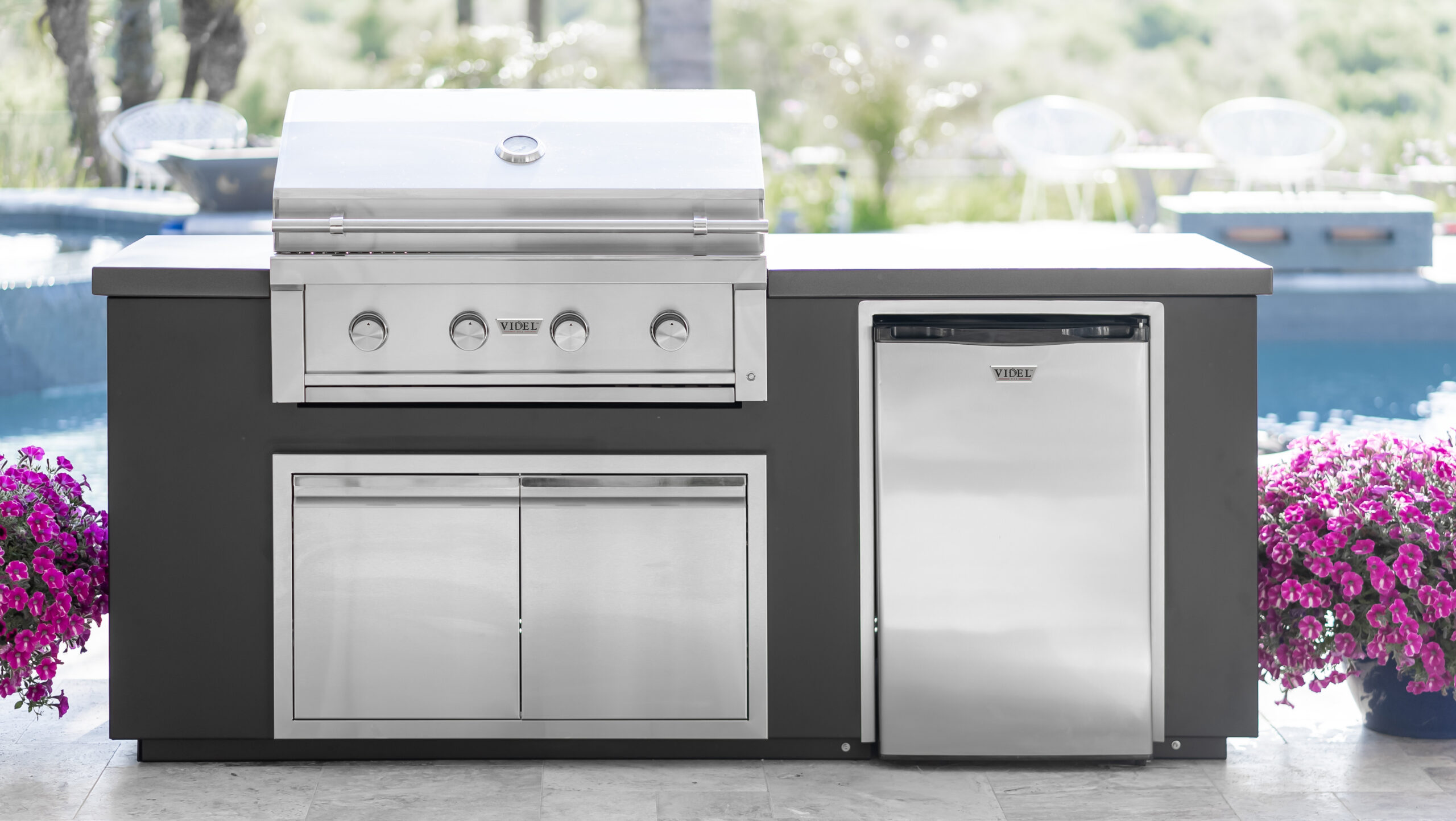
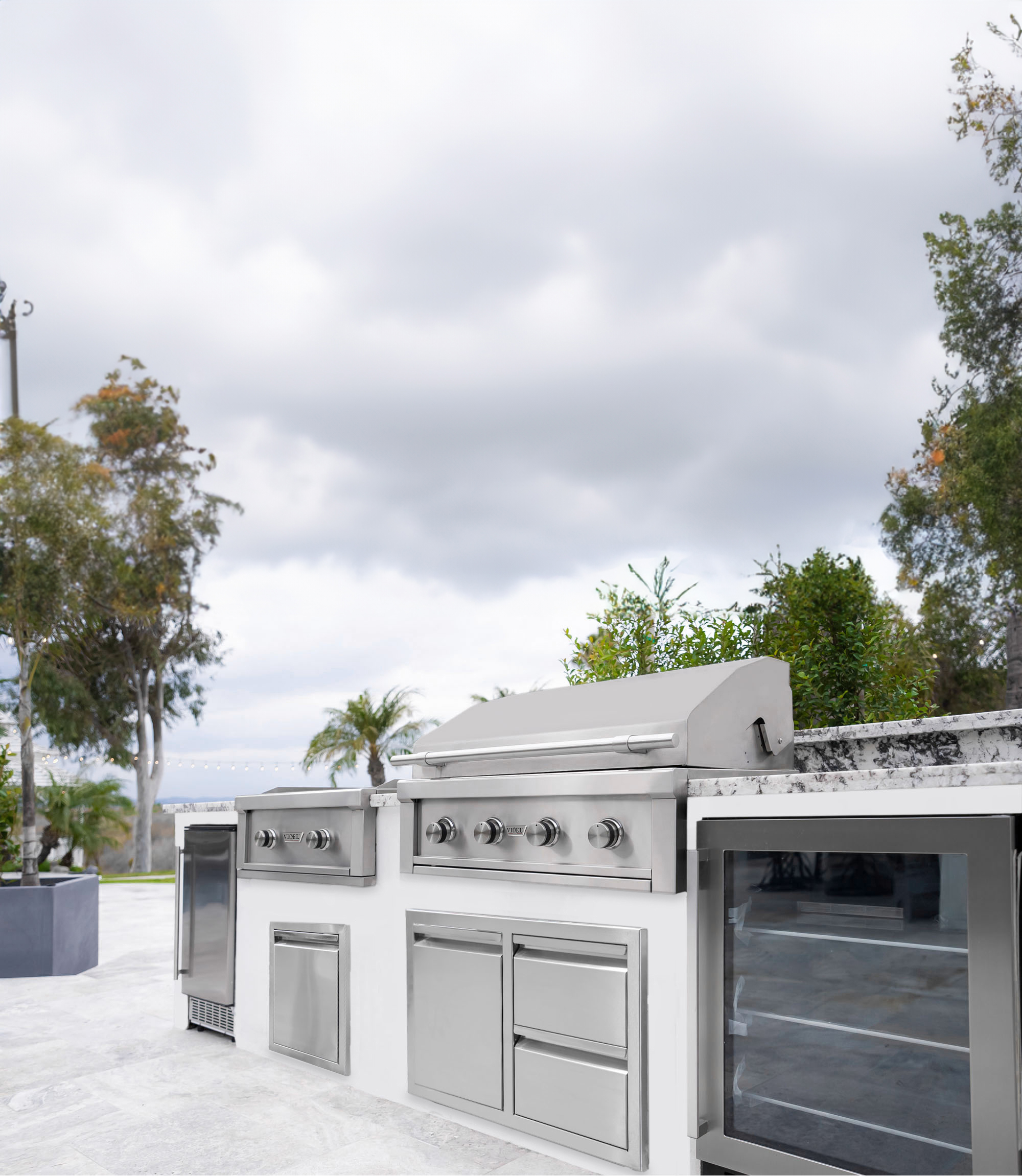
Surfaces immediately surrounding a grill should be easy to wipe down without absorbing grease. Stainless steel, properly sealed stone, and porcelain tile typically provide the easiest maintenance around grills and splash zones.

Planning for Proper Drainage
Drainage is another essential part of outdoor kitchen design. Unlike an indoor kitchen, an outdoor kitchen is exposed to rain, sprinklers, washing, and other sources of water.
If water is allowed to collect on countertops or remain in areas of the kitchen, it can lead to staining, mold, algae, slippery surfaces, and long-term damage. The patio or hardscape surrounding the kitchen should be designed to direct water away from the structure.
Proper slope is essential when installing decking. In some situations, channel drains, trenches, or sump pumps may also be appropriate. Drainage should be planned before the kitchen is installed because correcting poor drainage afterward can be expensive and disruptive.
The location of drains also matters. Water should not be directed toward another area where it could create additional problems. Dirty or grey water containing cleaning products, grease, or food debris should be managed appropriately. Cooking oil and grease should never be poured into a drain, as explained in the EPA’s drainage and septic care guidance.
All plumbing and drainage plans should comply with applicable local requirements and relevant sanitary drainage codes. Because codes vary by location, homeowners and contractors should always verify requirements with their local building department.
Construction Details That Improve Performance
Construction details can make a significant difference in the performance of an outdoor kitchen. Properly sealed joints, mitered edges, bullnosed edges, and well-designed material transitions all contribute to durability.
Countertops should be installed with proper drainage and overhangs. Backsplashes and walls should also be designed to minimize areas where moisture can become trapped.
In areas with extreme heat or cold, material selection can affect the comfort and performance of the space. Dense materials such as natural stone and some types of tile can absorb and retain heat from the sun or nearby cooking equipment. This can help surfaces remain warm after the sun goes down, but it can also cause them to remain hot after exposure to direct sunlight or high cooking temperatures.
In climates with significant temperature swings, intense heat or freeze-and-thaw cycles, the material’s ability to expand and contract without cracking is just as important as its ability to retain heat.
Natural stone brings timeless character and lasting beauty to outdoor kitchens, creating a distinctive space designed for cooking, entertaining, and enjoying the outdoors.
Creating a Splash Zone That Lasts
A successful outdoor kitchen splash zone begins with materials that can handle everything the environment throws at them. Tile and stone can provide durability and visual appeal, but their long-term performance depends on proper installation, sealing, and maintenance. Outdoor kitchens can also be coordinated with surrounding patios, pool decks, and entertainment areas. Porcelain pavers provide a durable, stain-resistant surface that can help create a cohesive transition throughout the outdoor living space.
The right surfaces should resist grease, tolerate temperature changes, shed water effectively, and remain easy to clean after an event or a busy day. Outdoor kitchens are exposed to rain, sun, heat, spills, grease, and constant use. Planning for these conditions helps ensure the kitchen looks and performs beautifully not only on installation day, but for years to come.
When durability, temperature performance, drainage and easy cleaning are considered together, the splash zone becomes more than a protective barrier. It becomes an essential part of a functional and beautiful outdoor kitchen that homeowners can enjoy for many years.
About the Author
Nate Turner
Nate is Aquabella’s Sales Representative in Las Vegas, bringing firsthand experience from the pool builder and contractor side of the industry. He understands what professionals need in the field and helps customers find the right solutions for every project.