A pool deck in a freeze-thaw climate must survive a cycle that repeats every winter: water enters the pavement system, temperatures fall below freezing, and the ground and hardscape move. According to the Federal Highway Administration guidance on frost-susceptible soils, frost heave develops when frost-susceptible soil, subfreezing temperatures, and a source of water occur together. When the hardscape assembly cannot drain or accommodate that movement, the result can be heaving, settlement, cracked pavers, displaced coping, failed joints and, eventually, expensive reconstruction.
The most durable pool hardscapes therefore begin below the finished surface.
A durable pool hardscape in a freeze-thaw climate depends just as much on the base, drainage, and movement joints below the surface as it does on the material you see above it.
The Base: Build for Water and Movement
The base is the foundation of the entire pool deck. A beautiful paver or natural stone surface cannot compensate for a poorly prepared subgrade.
For conventional interlocking pavers, the assembly generally consists of:
Finished pavers → bedding layer → compacted aggregate base → suitable subgrade.
The exact depth should be determined by soil conditions, drainage, climate, and site loading rather than using a one-size-fits-all number. In freeze-thaw regions, excavation should remove unsuitable or highly compressible material, and aggregate should be installed and compacted in controlled lifts. The base type and thickness should follow the project design and the recommendations for the selected pavement system.
One important issue around pools is backfill. Pool construction often leaves disturbed or relatively loose soil around the shell. If that material is allowed to settle beneath the hardscape, even an excellent paver installation can eventually move with it. In difficult areas, additional excavation, engineered fill, flowable fill, or a concrete-supported system may be warranted. CMHA specifically identifies a concrete base as an option around pools when backfill soils or an aggregate base cannot be adequately compacted.
The objective is not simply to create a hard base. The objective is to create a stable base that can carry the finished surface while managing water and movement throughout the pavement system. The proper assembly will vary based on the surface material and installation method, so always follow the applicable manufacturer recommendations and Aquabella installation guides for the specific system being installed.
Drainage: The Most Important Freeze-Thaw Detail
Water is the enemy when it has nowhere to go.
The finished pool deck should be deliberately graded so that rainwater, splash-out, and snowmelt do not remain against the pool coping or migrate toward the house. CMHA guidance for interlocking concrete pavements specifically addresses pool decks and the importance of surface and subsurface drainage as part of the overall pavement system. Water entering the bedding or base needs a reliable path toward an appropriate drainage point rather than being allowed to remain trapped within the assembly.
Depending on the site, drainage can include:
- Positive surface slope toward approved drains
- Linear channel drains
- Area drains
- Perforated drainage pipe where appropriate
- Free-draining aggregate
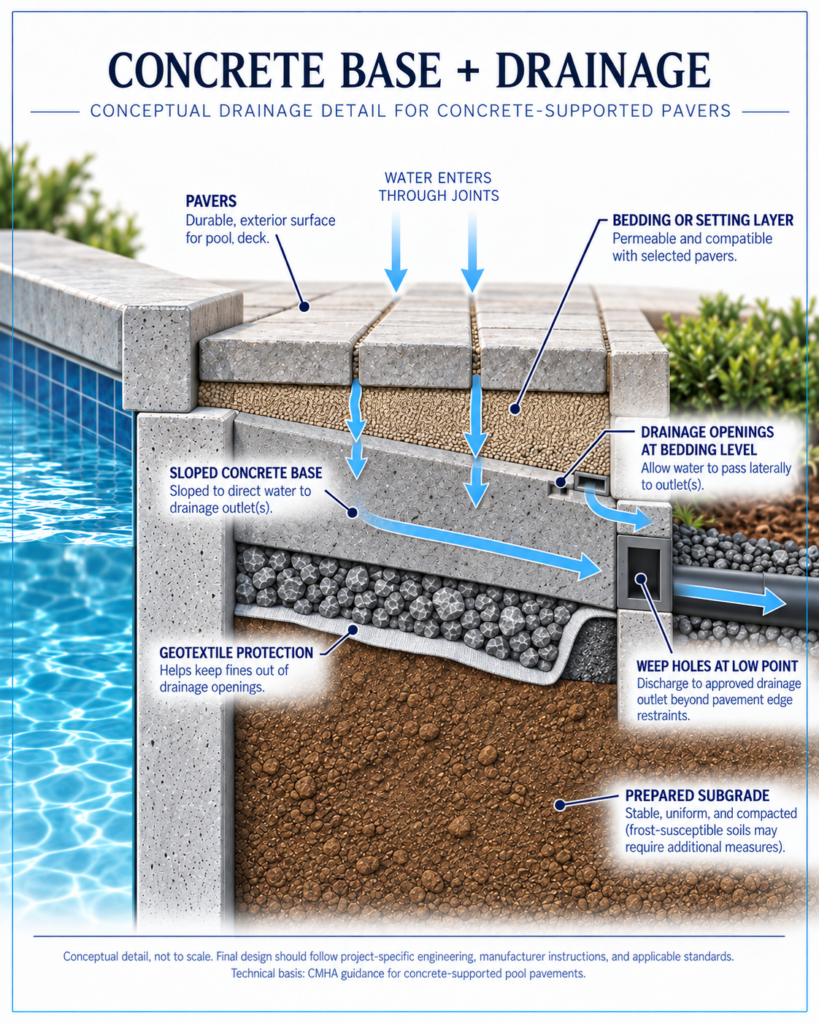
- Drainage outlets or weep holes through concrete supported assemblies
- Geotextile to prevent loss or migration of bedding and base material
Where a concrete base is used beneath pavers, the drainage detail becomes particularly important. Water that enters the bedding layer needs a path out. Otherwise, it can remain trapped between the pavers and slab and become a problem during freezing conditions. CMHA guidance notes that drains should provide openings at the bedding level and that vertical weep holes through concrete bases may be needed at low elevations. Geotextile is used over drainage openings to help prevent bedding material from washing out.
The rule is simple: do not just give water a way onto the deck. Give it a way out of the entire assembly.
Joints: Let the Pool and Deck Move Independently
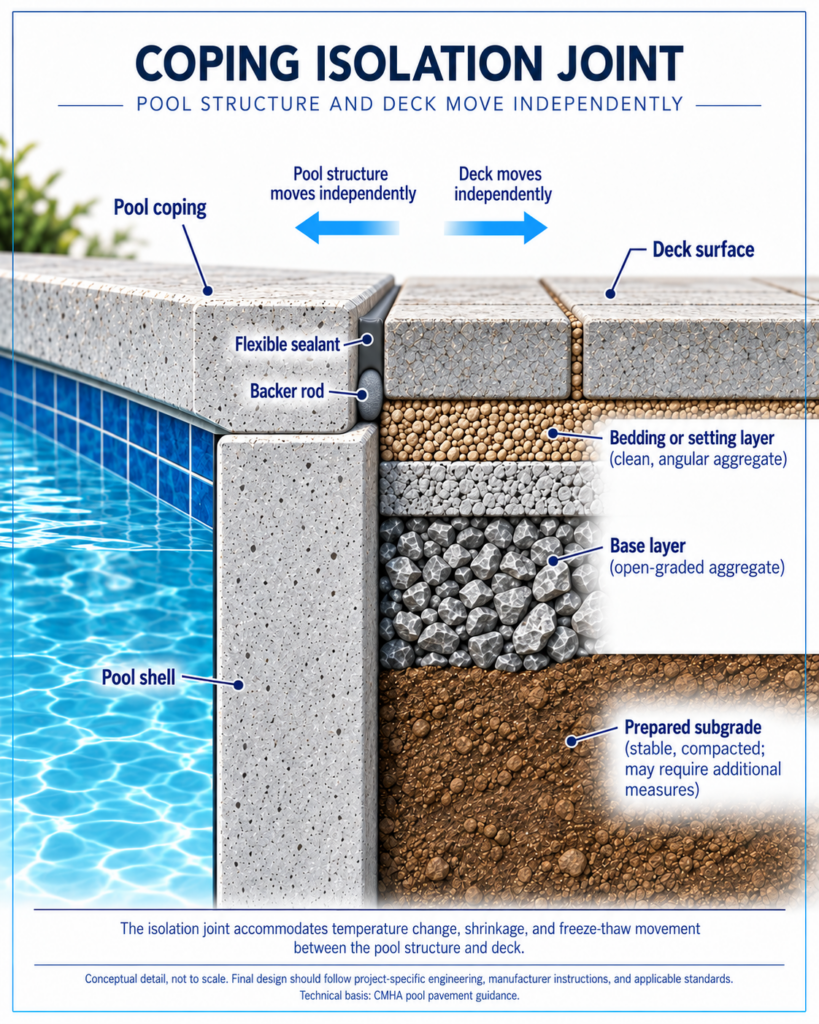
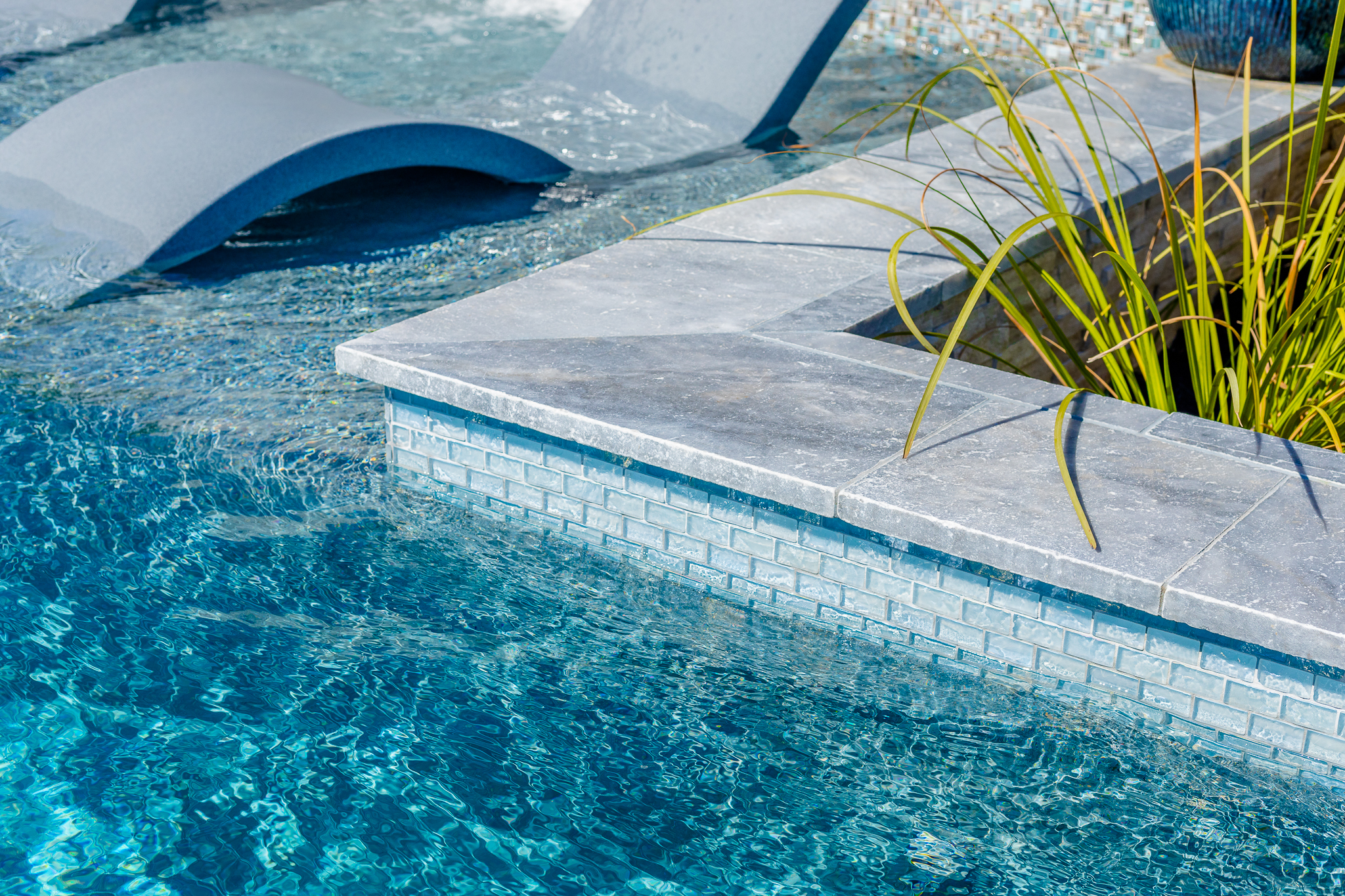
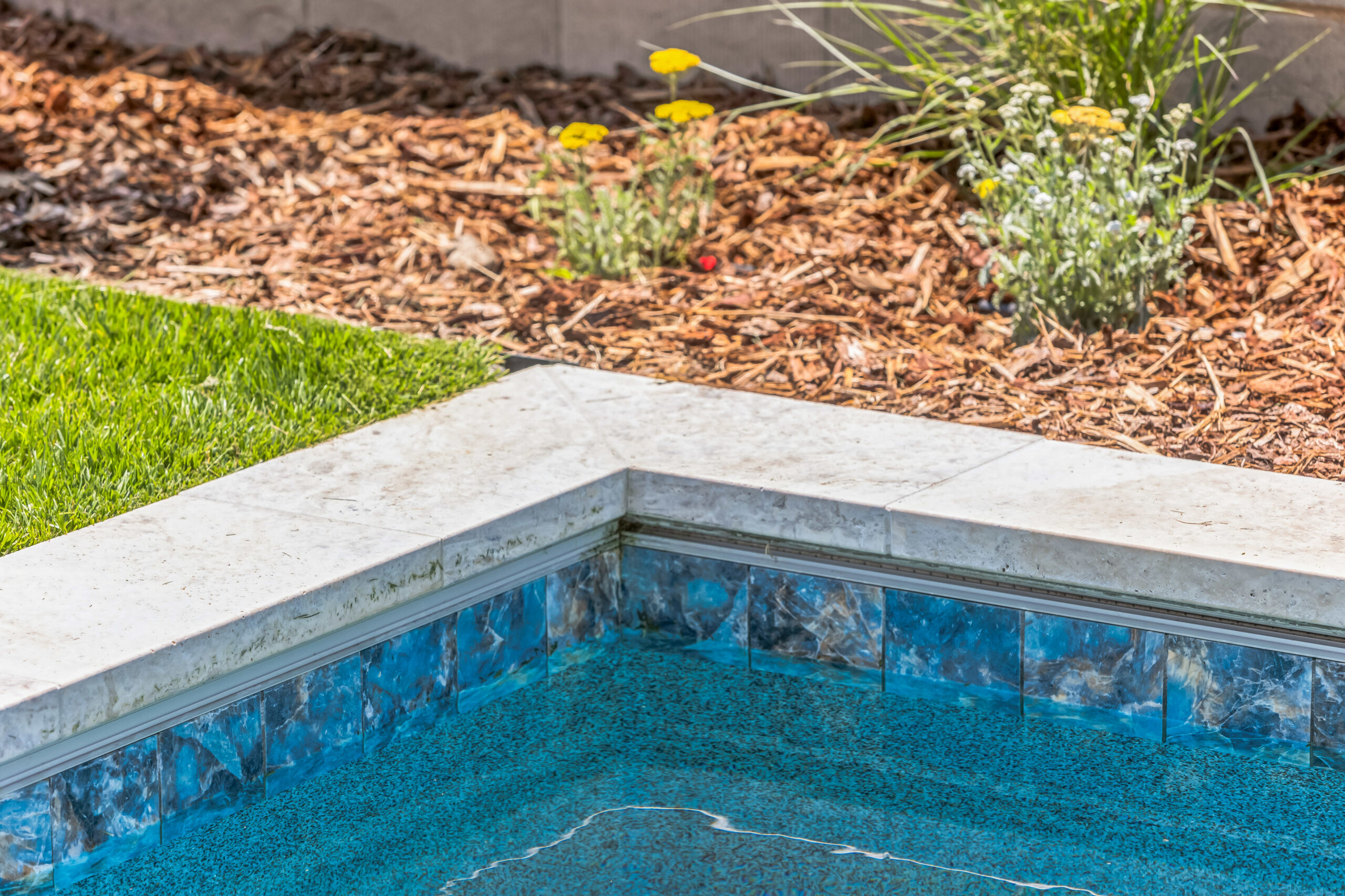
One of the most critical details is the joint between the pool coping and the surrounding deck. The pool shell, coping, and surrounding hardscape are distinct structural elements and can move differently as temperatures change, concrete shrinks, and surrounding soils shift seasonally. They therefore should not be rigidly locked together. CMHA guidance for pool deck installations calls for a compatible flexible sealant and backer rod between the pavers and pool coping to accommodate this movement.
A flexible isolation joint with backer rod and a compatible sealant is typically used between the coping and the deck. Technical guidance for pool paver installations specifically calls for a flexible sealed joint at this transition so the pool structure and adjacent pavement can move independently.
The same principle applies to existing concrete slabs. Movement joints in the underlying structure need to remain functional through the finished hardscape. Covering a full-depth movement joint with rigid material can defeat its purpose.
Field paver joints have a different job. Their purpose is to help interlock individual units while allowing the pavement to behave as a flexible system. Joint material should therefore be selected for the specific drainage and exposure conditions.
Where water is concentrated or channelized, ordinary joint sand can wash out. CMHA guidance recommends joint stabilization in conditions where concentrated water flow or heavy rainfall can erode the joints, and cautions against loose sand in joints directly exposed to channelized water flow.
Material Selection: Not All “Stone” Performs the Same
The surface material should be selected based on more than appearance.
For freeze-thaw pool decks, consider:
Water absorption: Lower absorption generally reduces the amount of water available within the material during freezing conditions.
Freeze-thaw suitability: Specify products that are intended or tested for exterior freeze-thaw exposure rather than assuming that anything marketed for outdoor use will perform the same in every climate.
Slip resistance: The surface should be appropriate for wet use, with texture, drainage, and expected contaminants considered together.
Surface temperature: Color, solar reflectance, texture, and exposure all affect how hot a surface can become in direct sun.
Chemical exposure: Pool chemicals, salt, acidic cleaners, and deicing products can affect certain materials and finishes.
Repairability: Individual pavers can generally be removed and replaced, which can be a significant advantage when localized settlement or damage occurs.
Concrete pavers manufactured to ASTM C936/C936M follow product requirements for solid interlocking concrete paving units. Freeze-thaw and deicing salt resistance can also be evaluated using ASTM C1645.
Interlocking concrete pavers can provide a durable and repairable pool deck when the base, drainage, bedding, edge restraints, and joints are designed as a complete system. Individual units can generally be removed and reset if localized settlement occurs. Concrete paving units manufactured to ASTM C936/C936M are subject to established physical and performance requirements for interlocking concrete pavers used in paved surfaces.
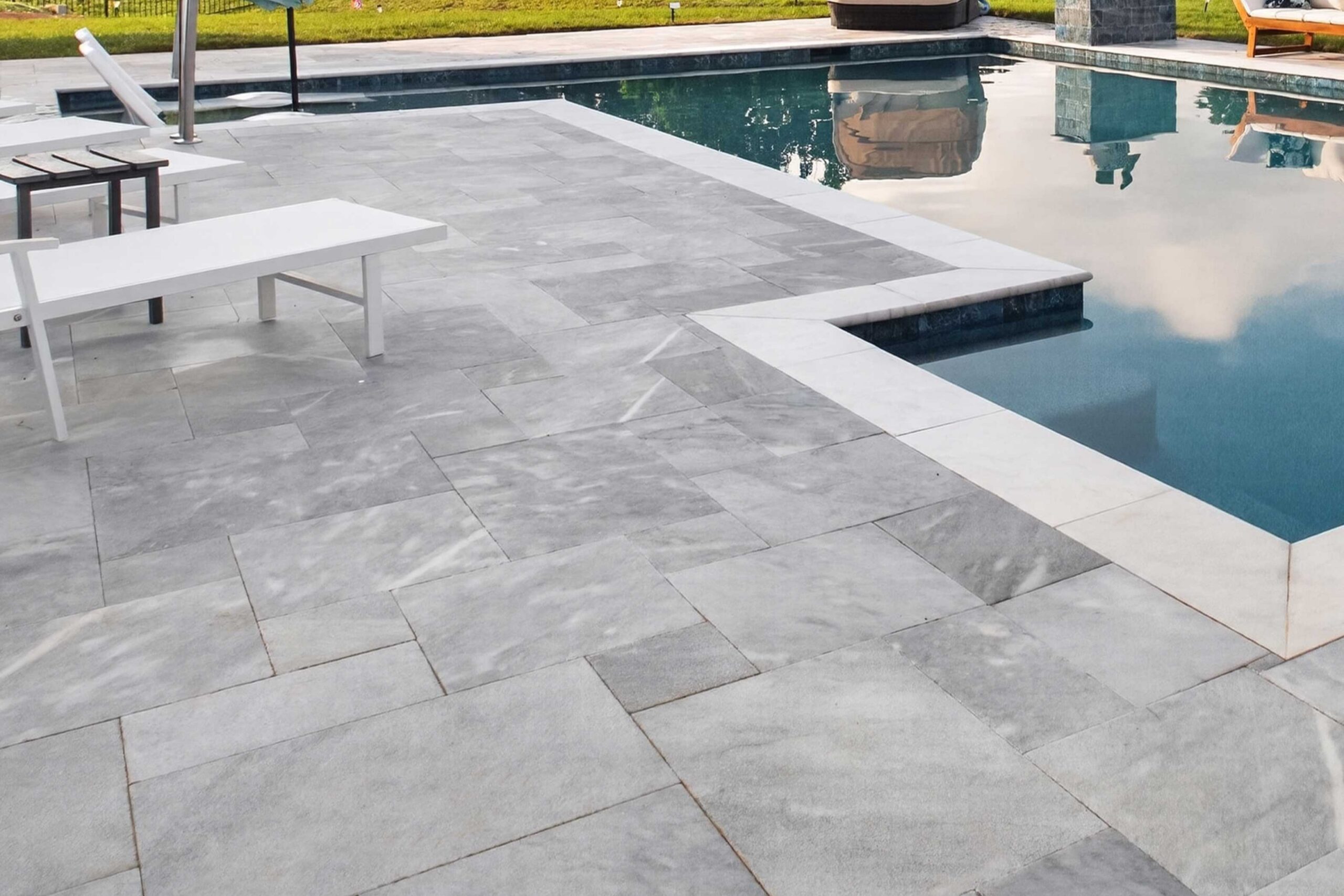
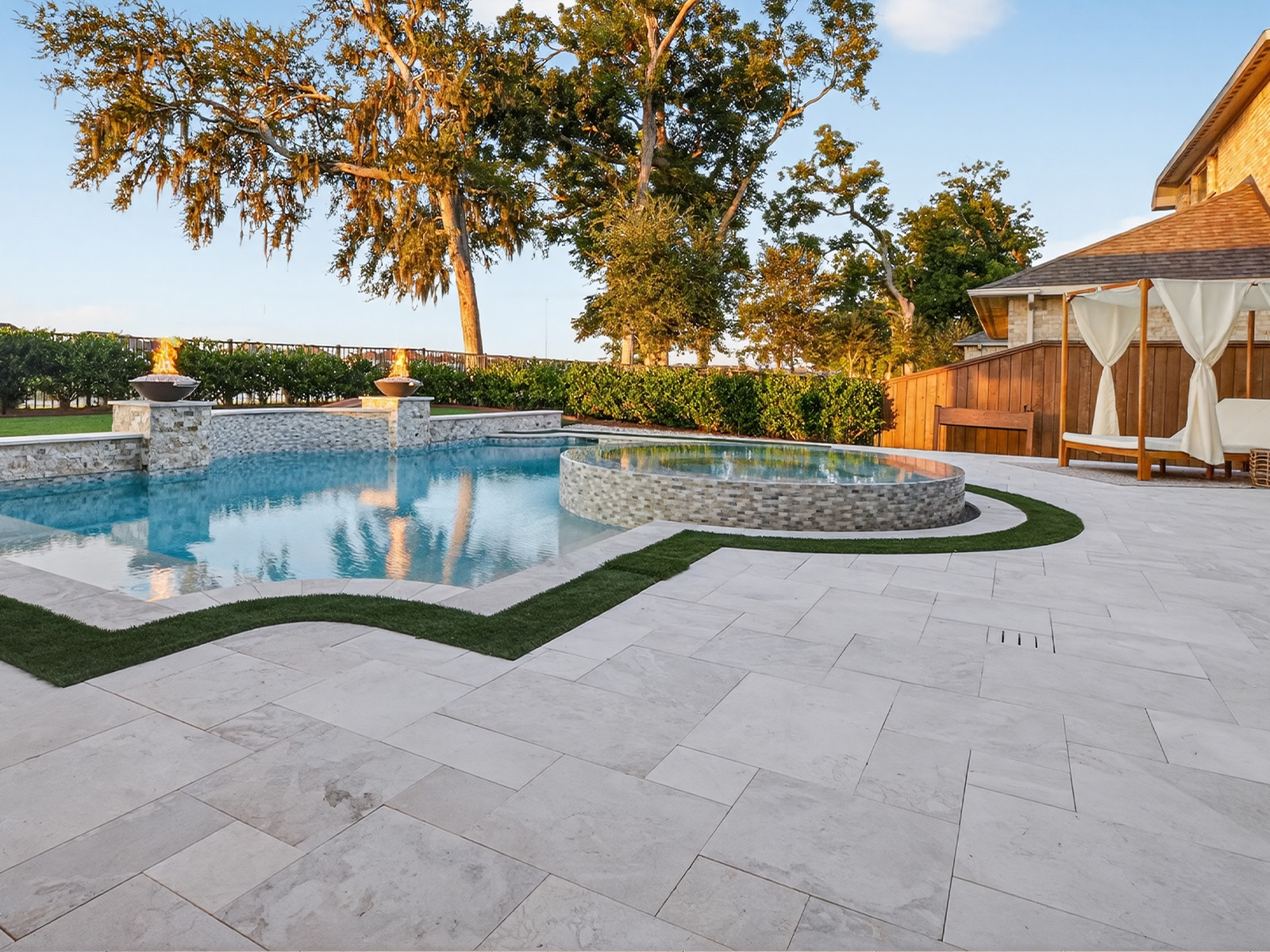
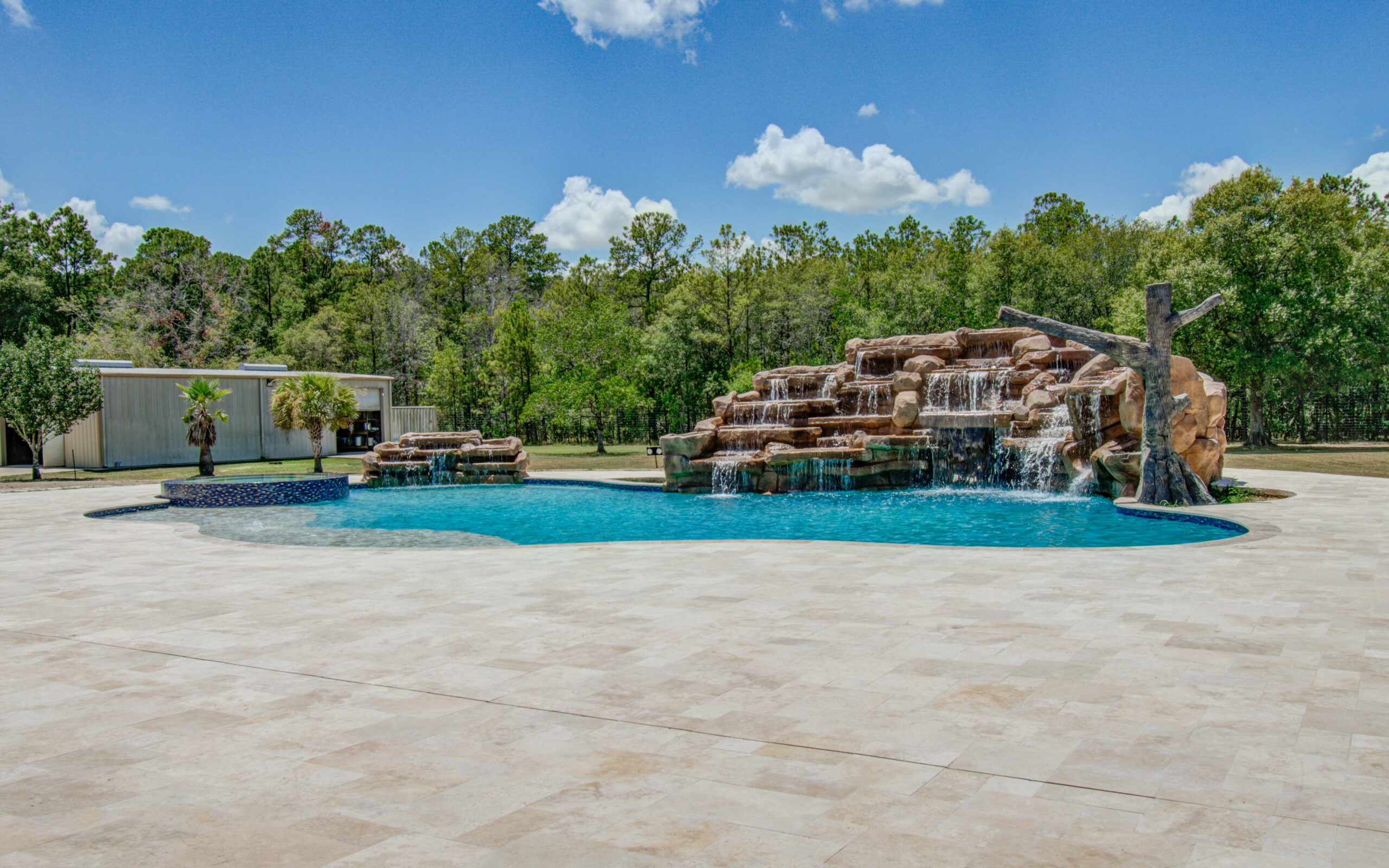
Natural stone pavers can also work well around pools, but the specific stone, finish, thickness, and installation method matter. Natural stone is not a single performance category. Different stones can vary substantially in absorption, density, strength, and resistance to environmental exposure, so the material should be selected for the specific climate and application rather than based on appearance alone.
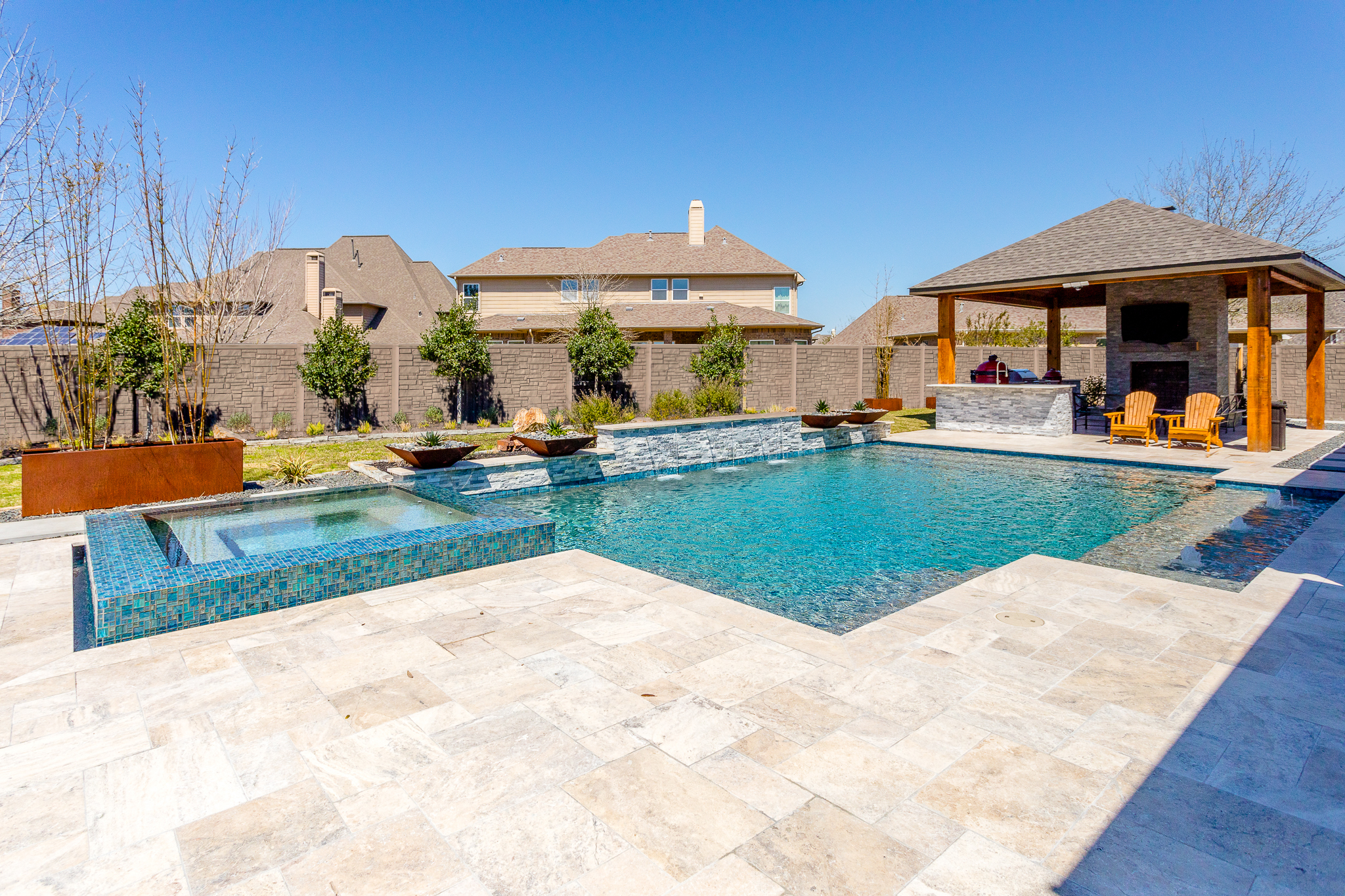
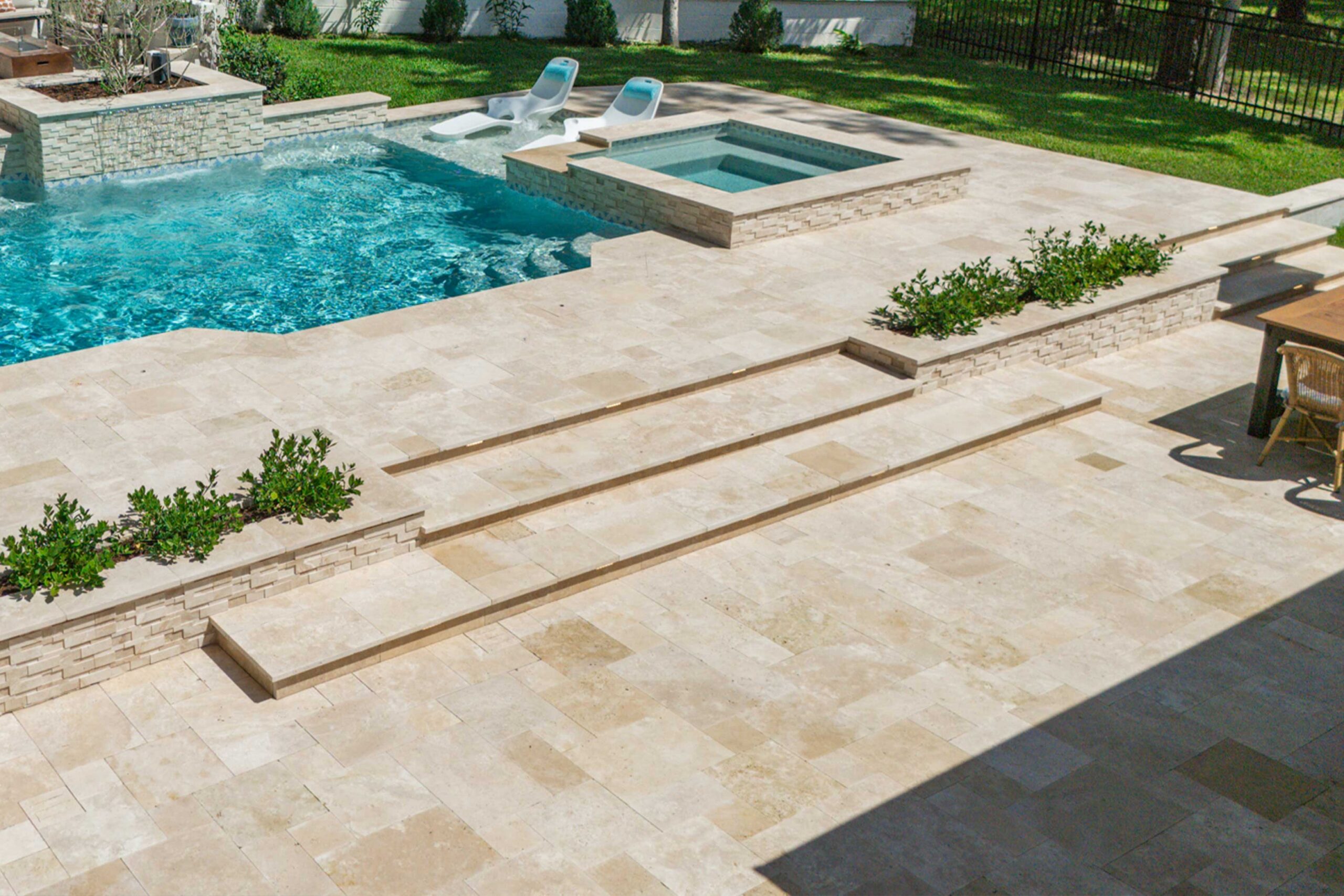
Natural stone, including travertine and limestone. Beautiful, but product selection matters. These stones vary significantly in absorption and performance. Wide varieties have a successful history of exterior use, but the number of limestone varieties with a proven history in exterior paving in freeze-thaw environments is more limited. Verify the specific stone, finish, thickness, and installation method for the climate. Calcareous stones such as limestone and travertine are also sensitive to acidic cleaners. Sealing may be appropriate for some stones and exposures, but the maintenance schedule should follow the stone supplier’s and sealer manufacturer’s recommendations rather than a universal annual schedule.
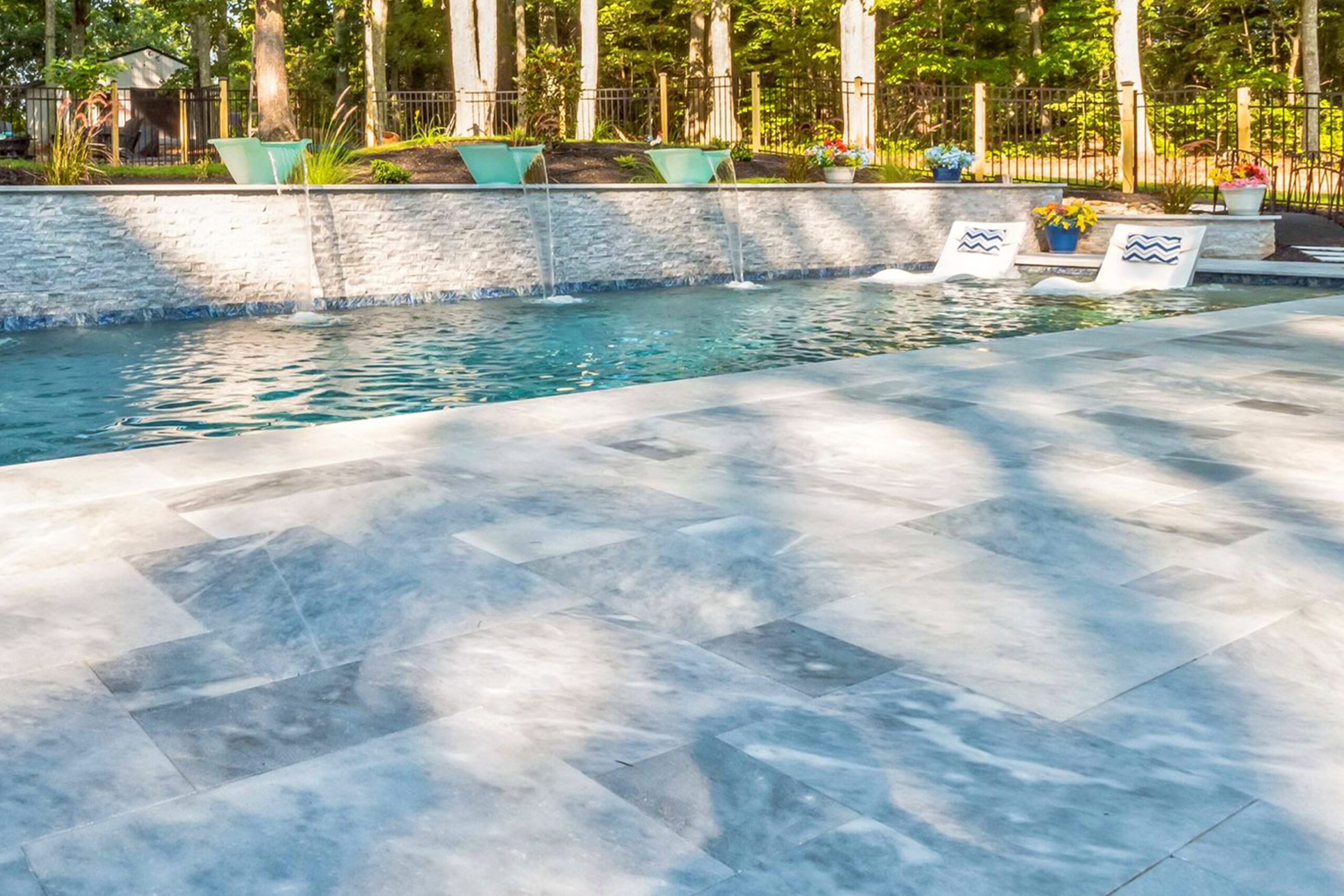
2CM porcelain pavers are another strong option for pool decks, particularly where low water absorption, dimensional consistency and low maintenance are priorities. Aquabella® 2CM Porcelain Pavers are designed for exterior applications and feature frost and chemical resistance, as well as an R11 slip-resistant surface. As with any exterior paving material, the product must be installed using a system appropriate for the project conditions and climate.
In freezing climates, exterior porcelain should be selected specifically for repeated freeze-thaw exposure rather than assuming that all porcelain products are appropriate for exterior use. ASTM C1026 provides a recognized test method for evaluating the resistance of ceramic and glass tile to repeated freeze-thaw cycling and is intended to help determine suitability for outdoor service in geographic areas subjected to freezing.
The most important goal is not simply keeping water off the deck, but giving water a reliable path out of the entire assembly before freezing temperatures can turn trapped moisture into movement and damage.
Flexible vs. Rigid Systems
There are essentially two approaches to a paver pool deck:
Flexible system:
Compacted aggregate base + bedding material + interlocking pavers.
Rigid system:
Concrete base + appropriate bedding or setting system + pavers or tile.
Neither is automatically better. The important thing is that the entire assembly is designed as a system.
Flexible interlocking pavers have a major advantage in freeze-thaw climates. Individual units can accommodate small amounts of movement without necessarily cracking. If settlement occurs, the affected area can also be removed, the base corrected, and the pavers reset.
Rigid systems can provide excellent support where soil conditions make conventional aggregate compaction difficult, but they require careful attention to drainage and structural movement. CMHA specifically identifies concrete bases as an option around pools where the underlying backfill or aggregate cannot be adequately compacted.
The Details That Separate a Long Life Deck From a Failure
A freeze-thaw-resistant pool hardscape is not a special product. It is a chain of details:
Stable subgrade → properly designed base → positive drainage → correct bedding or setting system → freeze-thaw suitable surface material → properly restrained edges → flexible movement joints → appropriate joint material.
If one link is neglected, the weakest part of the system often determines its lifespan.
The most expensive mistake is focusing on the visible material while treating the base and drainage as commodities. An expensive surface installed over a poorly drained or unstable base can fail sooner than a more economical material installed over a properly designed foundation.
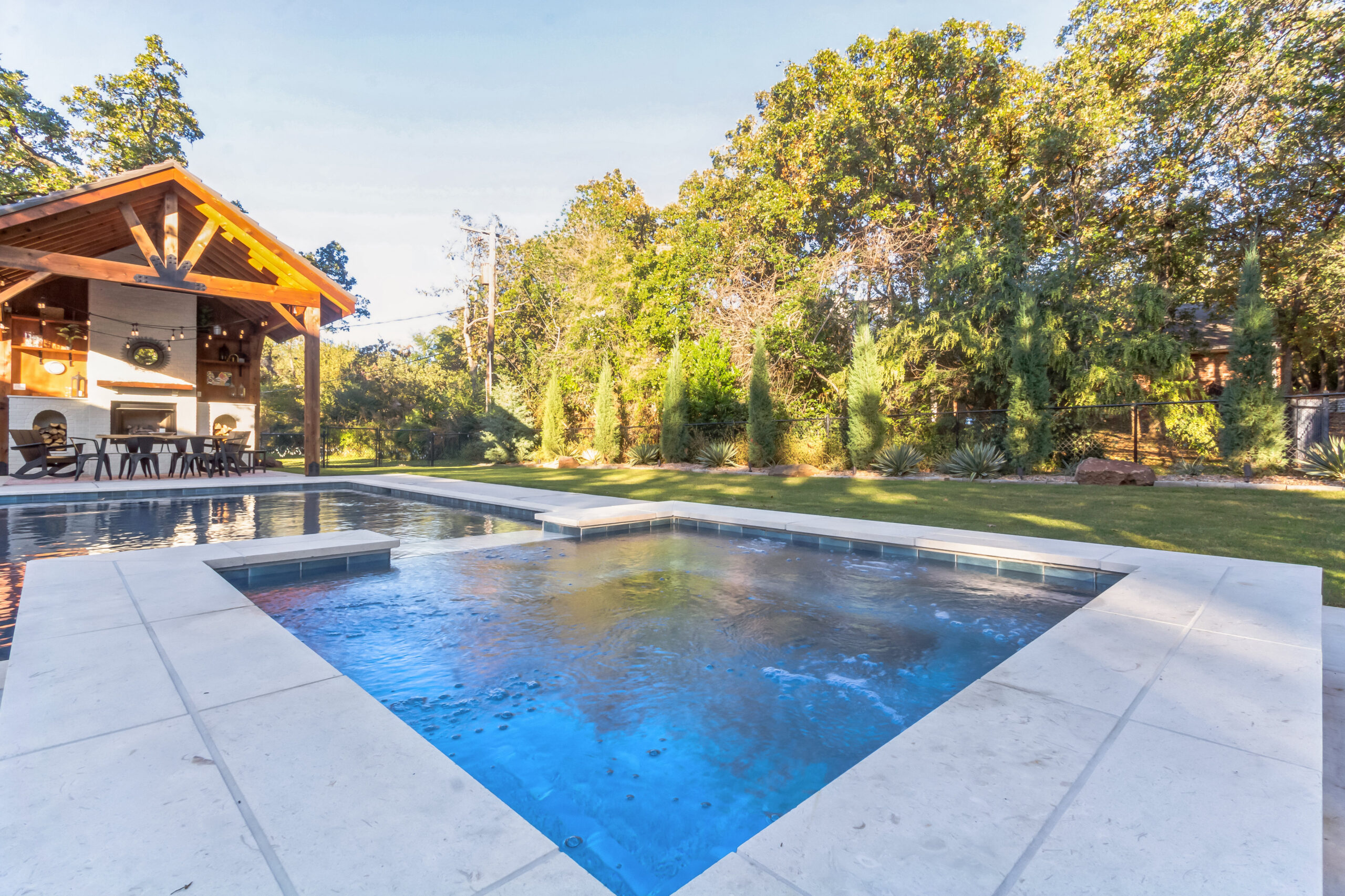
Bottom Line
For pool hardscapes in freeze-thaw climates, water management and accommodation of movement should drive the design.
Choose a surface suitable for freeze-thaw exposure, but give at least as much attention to what is underneath it. Build a stable base, provide positive drainage through the surface and underlying assembly, keep the pool structure independent from the surrounding deck, and select joint materials appropriate to the amount and direction of water they will encounter.
When done correctly, the hardscape does not fight winter. It is designed to move, drain, and recover from it.
About the Author
Scott Moyer
Scott is the Branch Manager for Aquabella® in Philadelphia, bringing decades of experience in the pool and tile industry. Before joining Aquabella, Scott built his career with US Pool Tile and other leading distributors, giving him extensive knowledge of pool tile, hardscapes, distribution, and the needs of builders and contractors.