You selected the perfect pool tile. You reviewed the sample, compared colors, and pictured exactly how it would look in your finished pool.
Then it was installed, water was added, and suddenly the color looked different.
That does not necessarily mean the tile changed or that something went wrong. Pool tile is viewed in a unique environment where water, sunlight, depth, grout, surrounding materials, and even the materials behind certain tile types can influence what your eyes see.
Understanding these factors can help set realistic expectations when choosing tile and explain why a pool may look different throughout the day, from one area to another, or even from the original sample.
Water, light, and depth can dramatically change how pool tile appears, making the same tile look lighter, darker, cooler, or more reflective depending on the conditions
First, Understand the Tile Itself
Some tiles are intentionally designed to include differences in color, tone, texture, or pattern from piece to piece. This is known as shade variation, and it is an important part of understanding how a finished installation will look. Aquabella® has a separate guide explaining shade variation, including the V1 through V4 classifications and what customers can expect from products at each level.
Because shade variation deserves its own explanation, this article focuses on what happens after tile enters the pool environment.
Even when every piece comes from the same product and approved production lot, the finished installation can look different from the original sample because the conditions surrounding the tile have changed.
Production Lots Can Also Affect Appearance
Shade variation within a product is not exactly the same as variation between production runs. Tiles produced at different times may have differences in overall shade, tone, or appearance. The Ceramic Tile Education Foundation explains why shade and production information should be reviewed before installation and recommends opening several cartons and blending material throughout the installation rather than installing one carton at a time.
This is especially important when additional tile is purchased later for an expansion, repair, or renovation.
Whenever possible, material for a single project should be reviewed before installation so differences can be identified while adjustments are still possible.
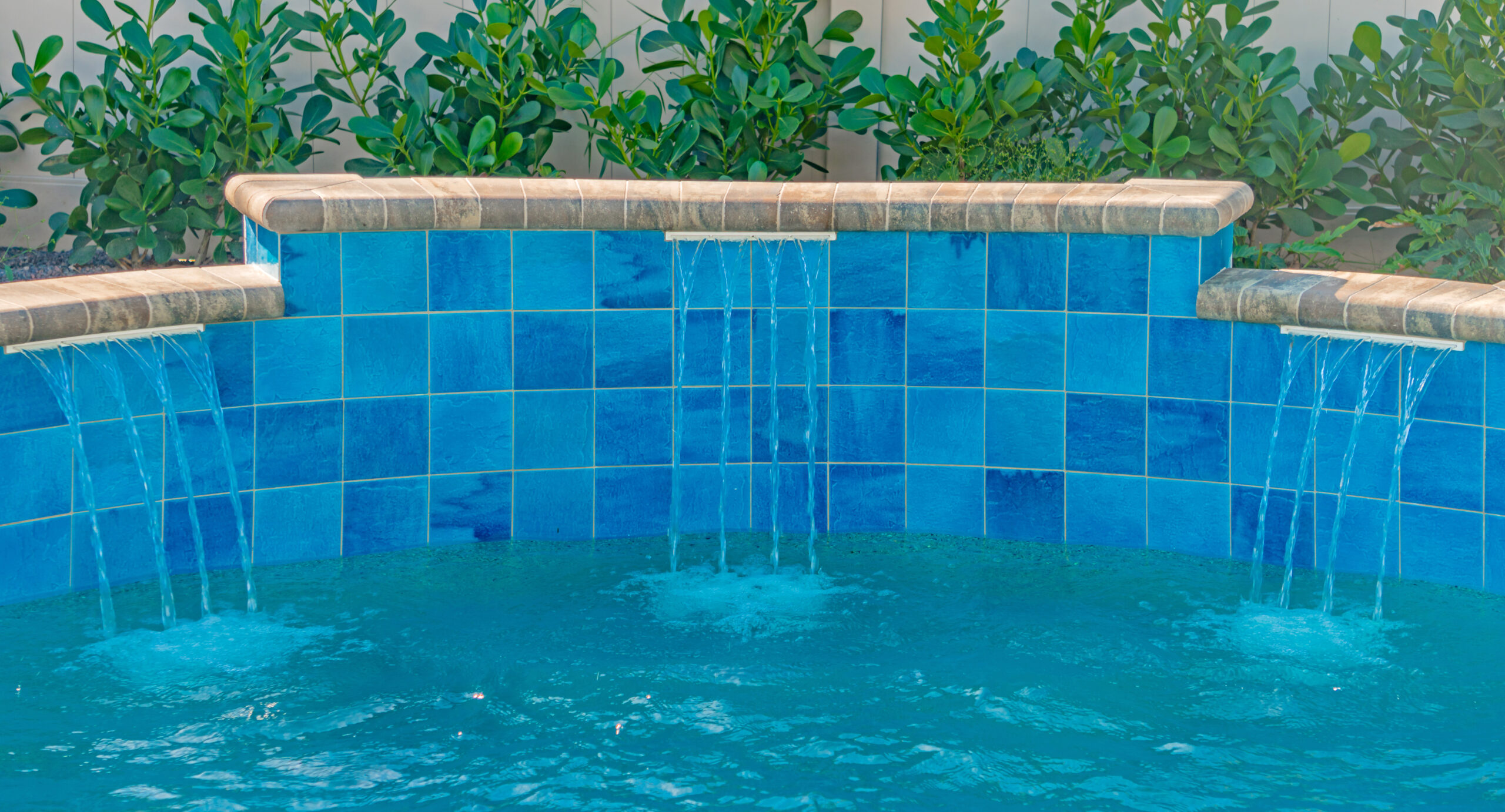
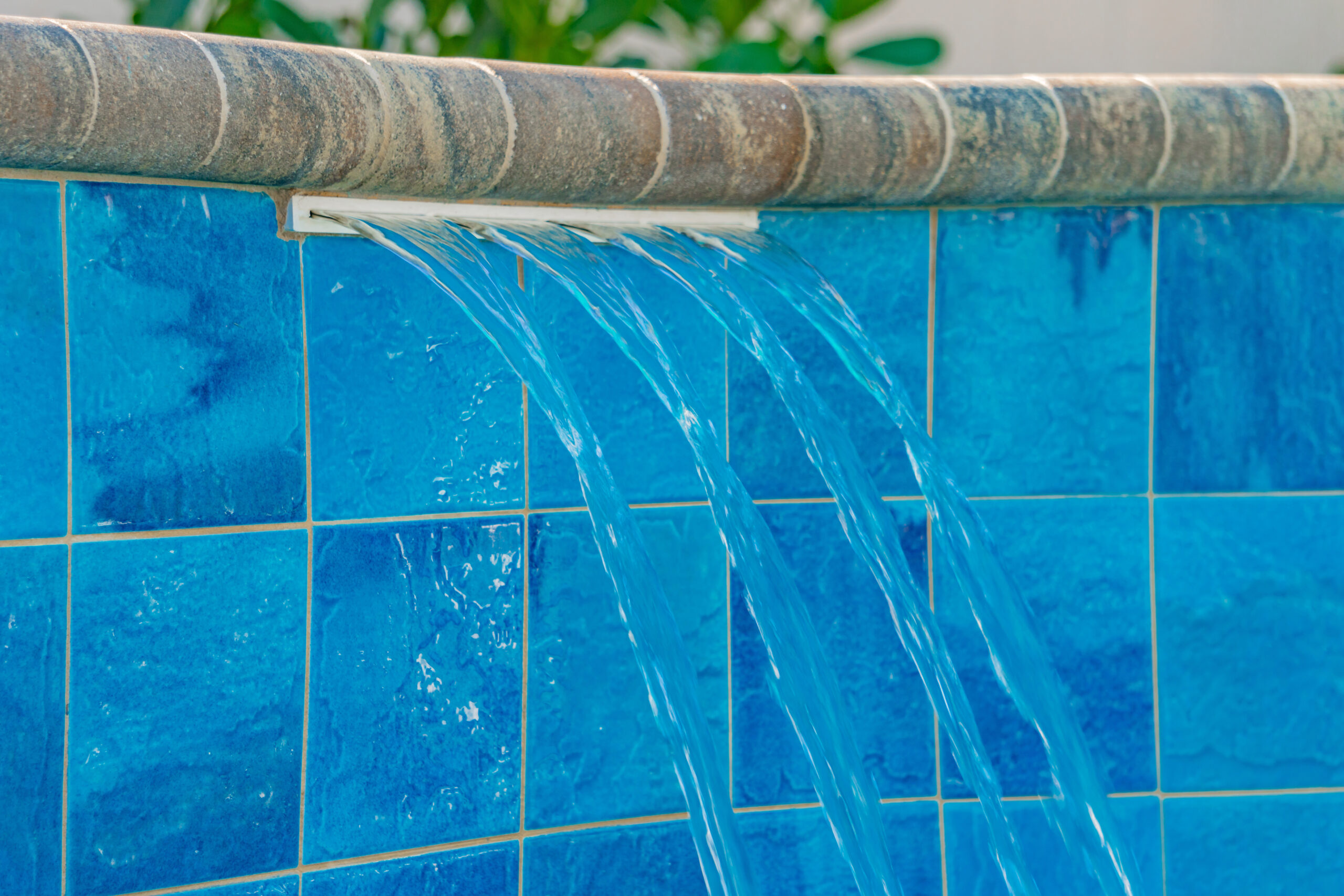
Water Changes the Way Tile Color Appears
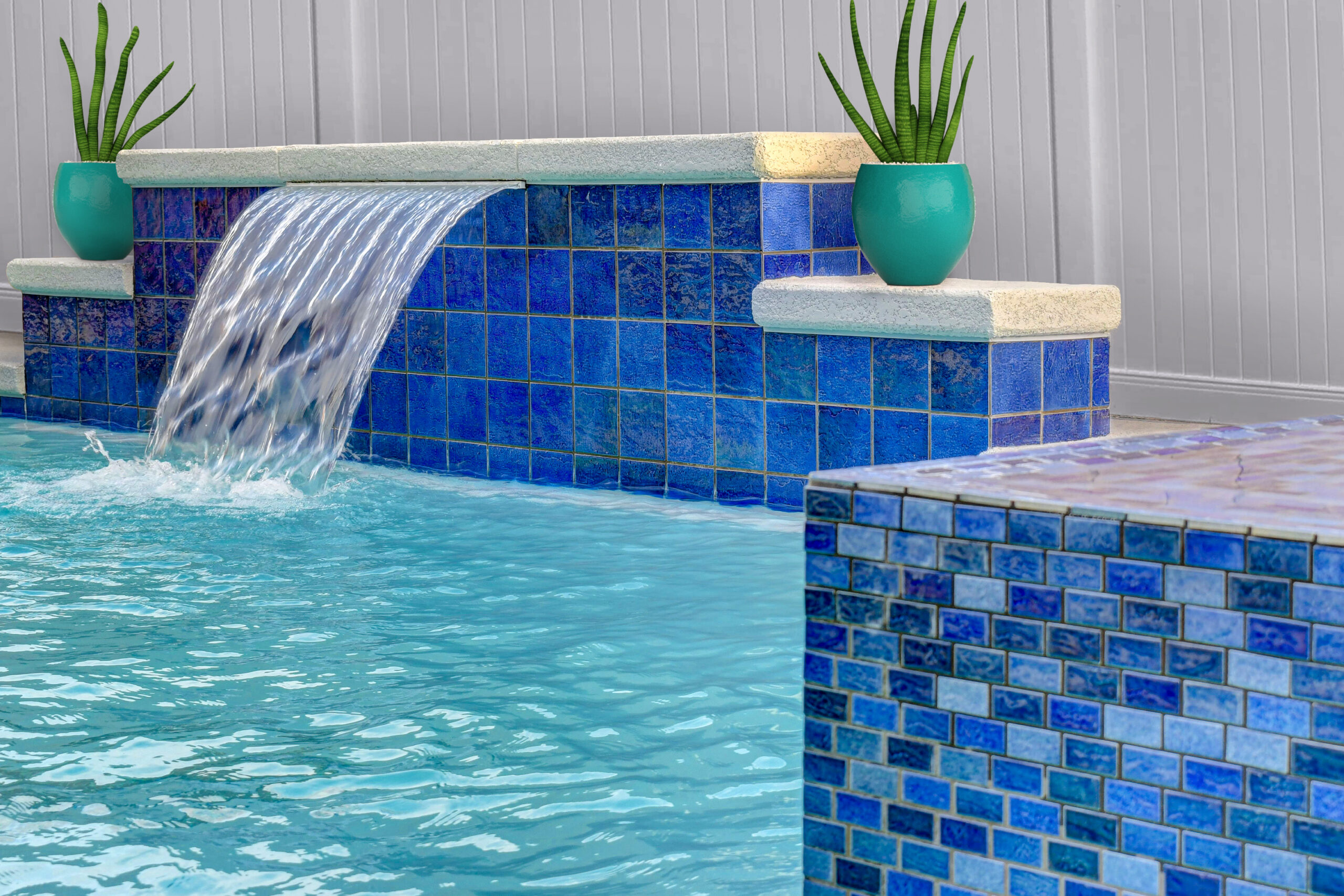
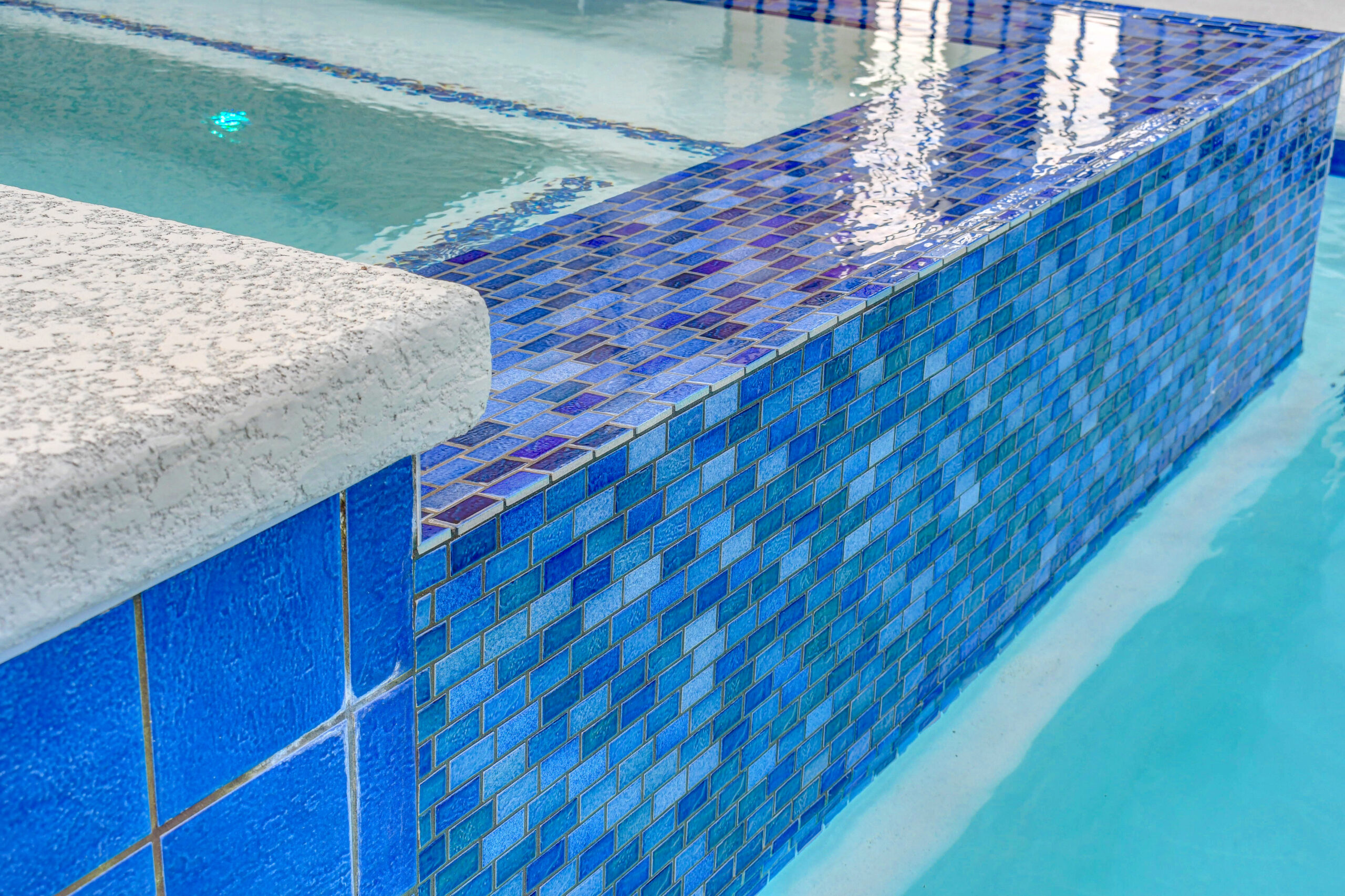
Water is one of the biggest reasons why a swimming pool tile can look different after installation.
Light entering a pool must travel through the water to reach submerged surfaces, then travel back through the water to reach your eyes.
Water is one of the biggest reasons why a swimming pool tile can look different after installation. Light entering a pool must travel through the water to reach submerged surfaces, then travel back through the water to reach your eyes. The U.S. Geological Survey explains how water absorbs components of visible light and notes that a swimming pool can appear blue because light reflected from the bottom travels through enough water that part of its red component is absorbed.
That helps explain why the same tile can look different when viewed dry, wet, or completely underwater.
It also means that viewing a sample outside the pool cannot accurately predict how the material will look once submerged.
Water Depth Makes a Difference
The amount of water between you and the tile matters too. A tile installed on a shallow step or Baja shelf may not appear exactly the same as the identical tile installed several feet below the surface. As light travels through a greater volume of water, more of its wavelengths are absorbed. This can cause deeper areas of a pool to appear cooler or bluer than shallow areas.
The result is not identical across all pools. Water clarity, the interior finish, sunlight, tile reflectivity, viewing angle, and other factors all contribute to what you ultimately see.
This is why the same tile can have a noticeably different appearance at the waterline, on steps, across a shallow shelf, and in the deep end.
Sunlight and Shade Change Color Perception
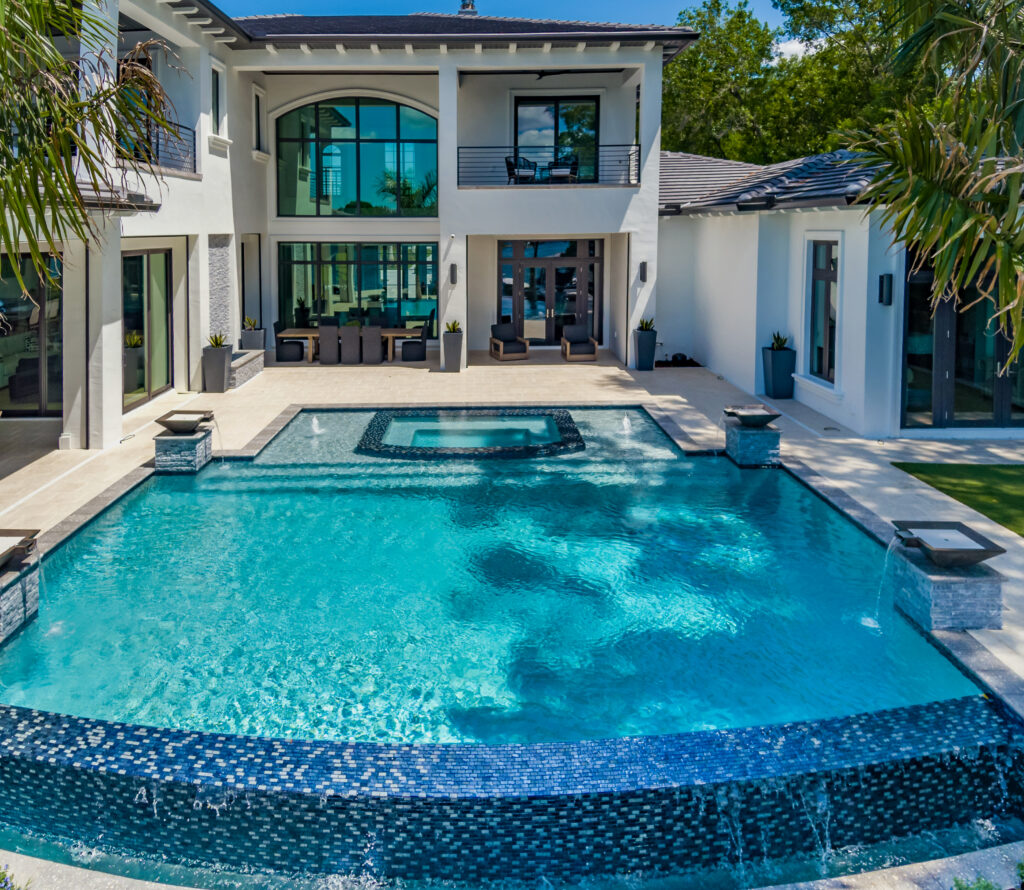
Pool tile also changes visually with changing lighting conditions. The National Institute of Standards and Technology explains how lighting affects our perception of color. A glossy glass mosaic may appear especially bright and reflective in direct midday sun, while the same pool may look cooler or more subdued in shade or under an overcast sky. Morning and evening light can also bring out different characteristics than midday sunlight.
A glossy glass mosaic may appear especially bright and reflective in direct midday sun. Move the same pool into the shade, and those highlights may become much less noticeable.
Morning and evening light may bring out warmer characteristics. An overcast day may make the installation appear cooler or more subdued.
That is why photographs of the same pool taken at sunrise, midday, sunset, and on a cloudy day can look surprisingly different even though nothing about the tile itself has changed.
There is no single lighting condition that accurately represents how pool tile will look throughout the day.
Moving Water Changes the View Again
Pool water is rarely completely still. Ripples continually change the angles at which light enters the pool, reaches the tile, and returns to the viewer. The viewing angle and illumination conditions therefore change from moment to moment. This can create moving highlights, reflections, shadows, and patterns across the tile.
NIST research on material appearance confirms that changes in illumination and viewing geometry can influence perceived color and other visual characteristics.
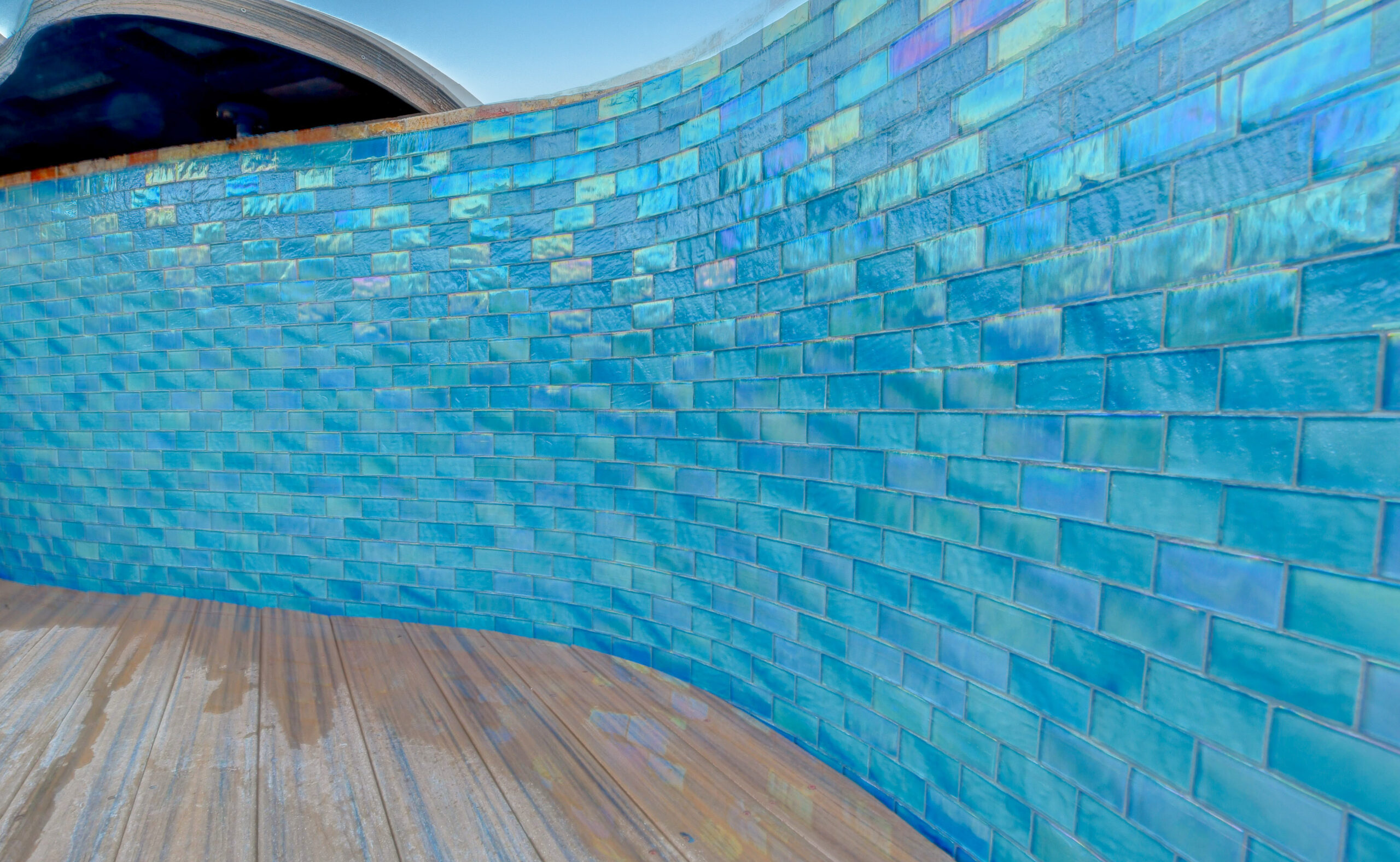
The effect can be especially noticeable with glossy, reflective, textured, or iridescent surfaces.
It is one reason a mosaic that appears relatively quiet when viewed dry on a sample board can look much more dynamic once installed beneath moving water.
Grout, pool finish, coping, pavers, and surrounding materials all influence the final appearance of pool tile and can shift how its color is perceived
The Materials Around the Tile Influence What You See
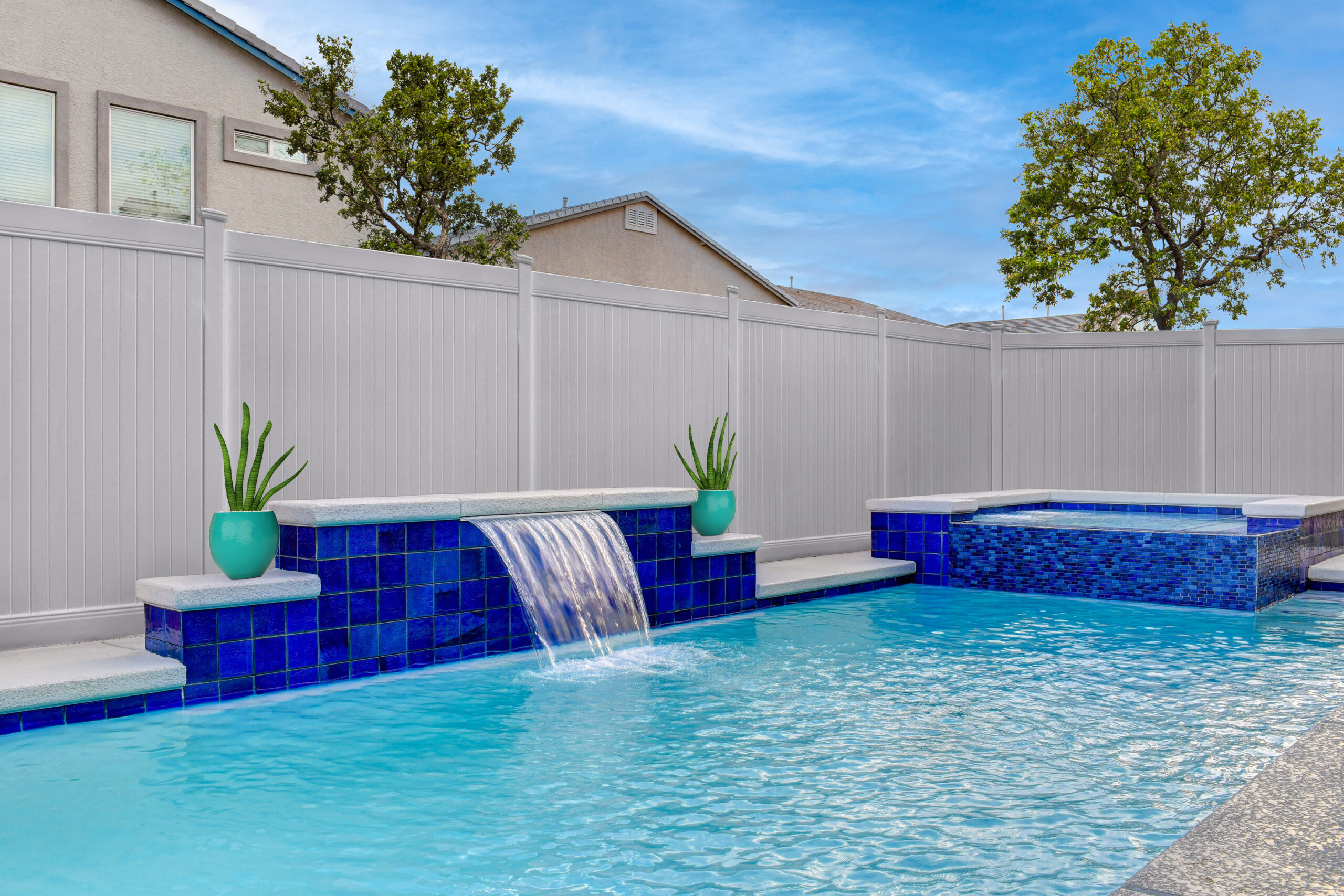
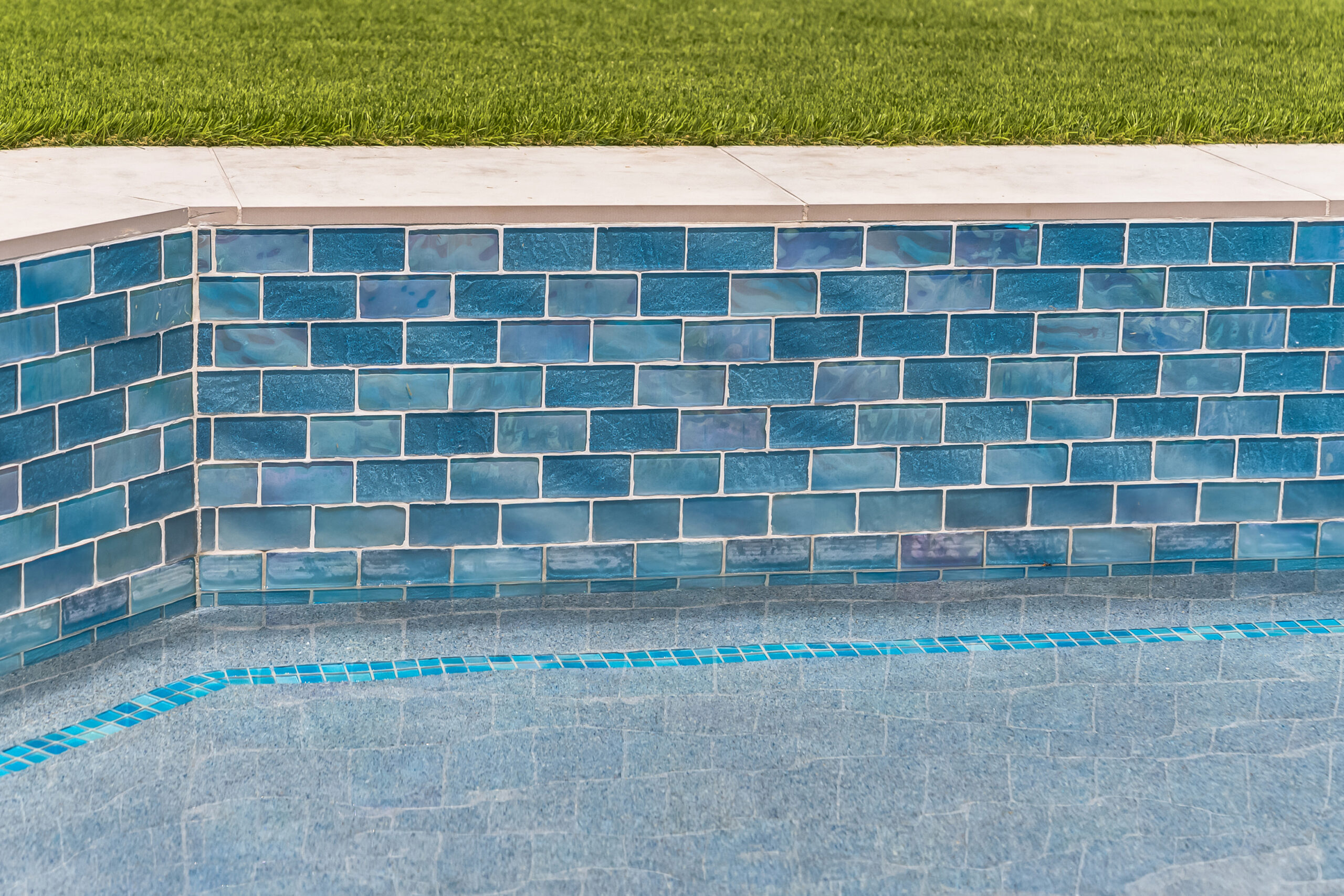
Tile is never viewed in isolation once a pool is finished. The interior pool finish, coping, pavers, decking, landscaping, walls, furniture, and other surrounding colors all become part of the visual environment. A blue or green mosaic beside a bright white pool finish may appear different from the same tile surrounded by gray, beige, or darker materials, even though the tile itself has not changed.
Research into human color perception shows that the color we perceive is influenced by the colors surrounding it. In simultaneous color contrast studies, physically identical colors can appear different depending on the colors surrounding them.
That same principle matters when choosing pool materials.
A blue or green mosaic beside a bright white pool finish may appear different when the identical tile is surrounded by gray, beige, or darker materials.
The tile itself has not necessarily changed. The visual context around it has.
For this reason, it is helpful to evaluate pool tile alongside the intended pool finish, coping, pavers, and other major materials, rather than choosing each one independently.
Grout Color Can Change the Overall Appearance
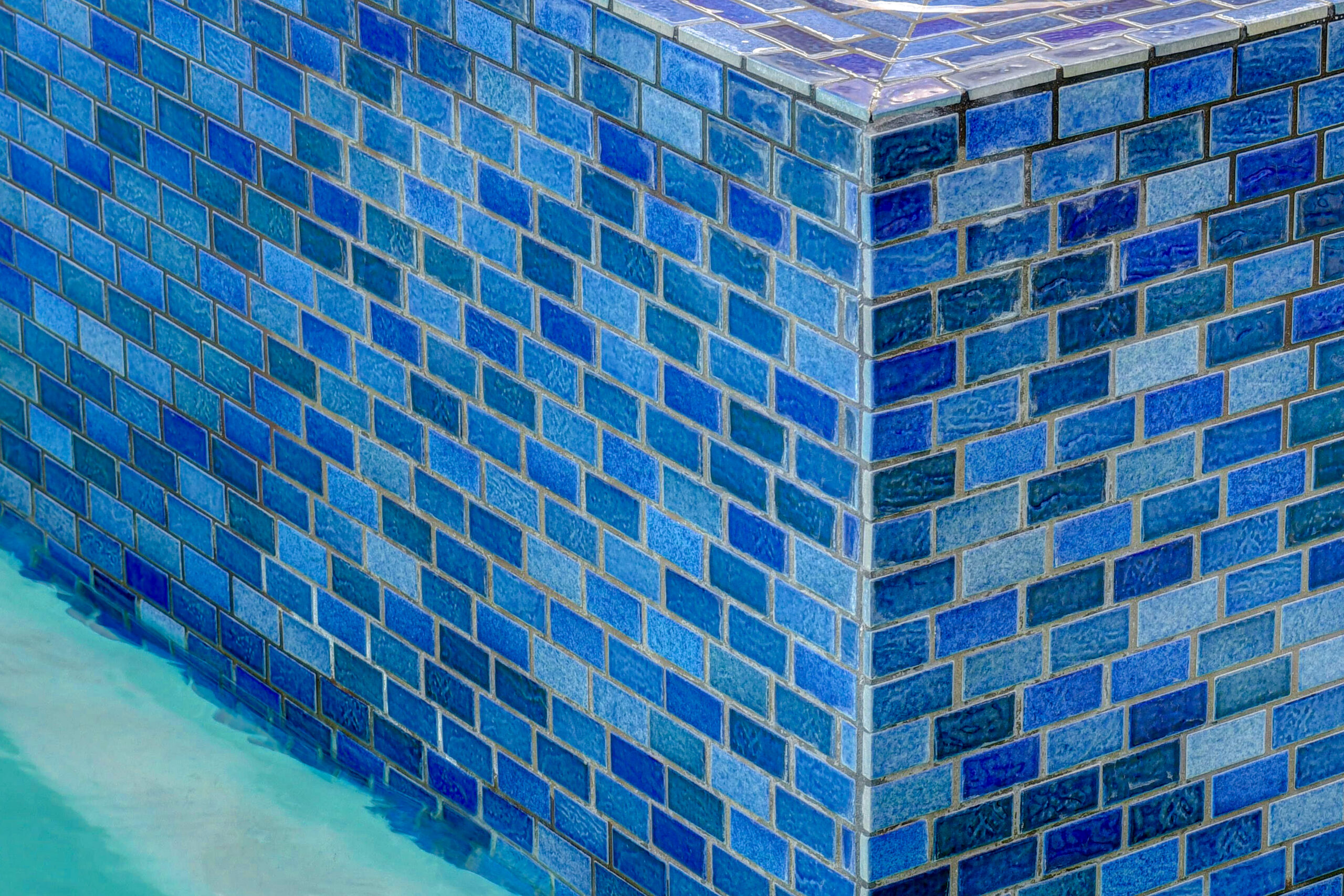
With mosaics, grout becomes part of the finished design. Every grout joint creates a visible border between individual pieces. A grout color that closely coordinates with the tile tends to allow the surface to read more continuously, while a contrasting grout can make individual pieces and patterns more prominent. Aquabella’s Grout Match Finder lets you select your tile and compare curated grout options based on the overall look you want to achieve before making a final selection.
The final appearance of grout itself can also vary. The Tile Council of North America explains several factors that can contribute to grout color variation, including the amount of water used during mixing, mixing procedures, cleaning methods, moisture, joint preparation, and installation technique. For that reason, grout samples and digital representations should be considered guides rather than guarantees of the exact finished appearance.
For that reason, a grout color chart or digital representation should be considered a guide rather than an exact prediction of the finished installation.
With Glass Tile, What Is Behind the Tile Can Matter
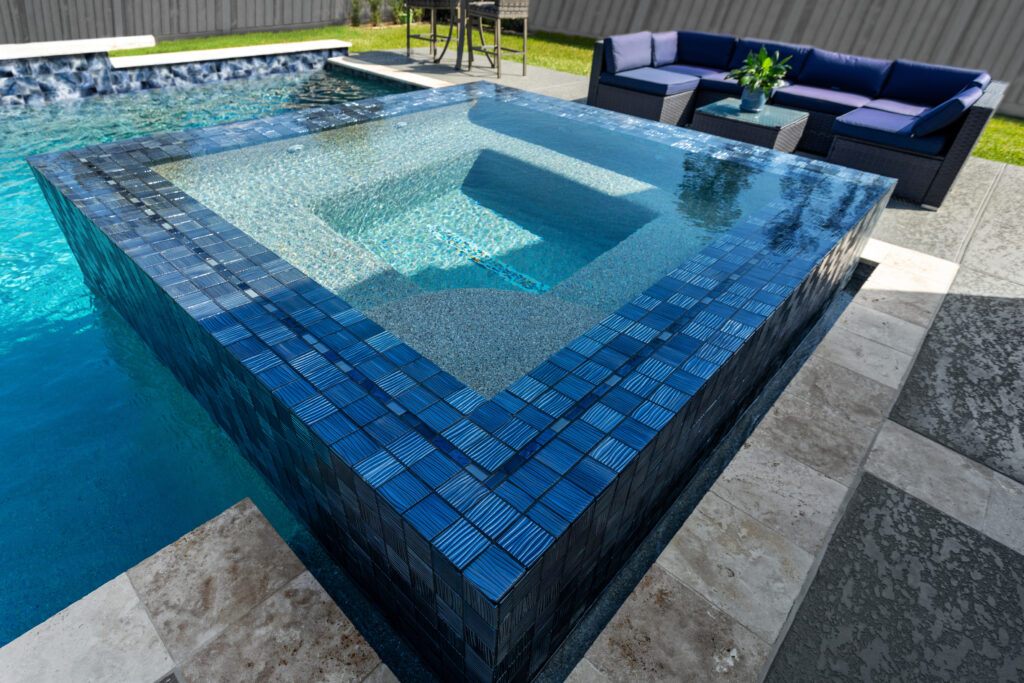
Transparent and translucent glass mosaics introduce another consideration. Because light can travel through the glass, the setting material and installation behind the tile may remain visible and can influence the finished appearance. The Ceramic Tile Education Foundation explains that mortar ridges and inconsistencies can remain visible through translucent glass tile, making consistent mortar coverage and proper installation techniques especially important.
This makes proper installation particularly important with clear and translucent glass mosaics.
Installation materials and methods should always be selected according to the requirements of the specific tile and the conditions of a submerged swimming pool application.
Why a Tile Sample and a Finished Pool May Not Look Identical
A physical sample is one of the most useful tools when choosing pool tile, but it should be considered a representation of the product rather than a guarantee of one exact final appearance. Whenever possible, request an Aquabella sample to evaluate the actual color, texture, and finish before making a final selection.
The sample may be dry instead of submerged, viewed indoors rather than in direct sunlight, or represent only a small portion of a product with noticeable variation. It may also be viewed without the final grout, pool finish, coping, or pavers. All of those conditions change once the pool is completed.
It may be dry instead of submerged. It may be viewed indoors rather than in direct sunlight. It may represent only a small portion of a product with substantial shade variation. It may not be viewed beside the final grout, pool finish, coping, and pavers. It also does not have several feet of water between the tile surface and the viewer.
All of these conditions can change after installation.
The result is that the finished pool can look noticeably different from the small sample you originally held in your hand, even though there is nothing wrong with either the sample or the installed material.

How to Minimize Surprises Before Installation
There are several steps that can help homeowners, designers, builders, and installers better understand what the finished pool may look like.
Review several pieces or sheets rather than relying on a single small sample. For products with noticeable shade variation, review enough material to understand the overall range. Compare the tile with the planned grout, interior finish, coping, and pavers whenever possible. Look at the materials outdoors and under different lighting conditions.
Before installation, confirm that the supplied material is appropriate for the project and review the carton information for differences in shade or production lot. Material should also be pulled from several cartons during installation so that natural variation is distributed throughout the project rather than concentrated into individual areas. The Ceramic Tile Education Foundation specifically recommends opening several cartons and blending pieces throughout an installation.
For transparent and translucent glass, proper setting materials and consistent coverage behind the tile are especially important.
Most importantly, review the material’s overall appearance before the installation is completed.
Expect Your Pool to Change Throughout the Day
One of the characteristics that makes pool tile so visually interesting is that it does not always look exactly the same. Sunlight moves. Water moves. Reflections change. Different areas of the pool have different depths, and surrounding materials influence how colors are perceived. You can also explore the Aquabella Pool Gallery to see how tile, finishes, and hardscape materials appear in completed pool environments.
The tile you see in bright afternoon sunlight may look different in the morning, richer when wet, cooler underwater, darker in the deep end, and different again when the pool is illuminated at night. Those changes are part of the way tile, water, light, and the surrounding environment interact.
Understanding them before installation makes it easier to choose materials with realistic expectations and appreciate the changing character of the finished pool.