How do you connect the pool, outdoor kitchen, and dining area without creating one giant patio?
That is one of the most important questions to consider when designing an outdoor living space. Backyards have evolved into another extension of the home, and homeowners want much more than simply a swimming pool surrounded by concrete. Today’s outdoor spaces may include a pool, an outdoor kitchen with a grill, a dining area, a lounge, walkways, a fire pit, and several gathering spots.
The challenge is making all of these spaces feel connected without making the entire backyard look like one large, uninterrupted patio.
The easiest way to answer this question is to think of the backyard as a series of connected outdoor rooms.
When you are designing the inside of your home, each room has a different purpose while still sharing an overall design style throughout the home. Outdoor spaces should work the same way. Each area can have its own identity while still feeling like part of the same home.
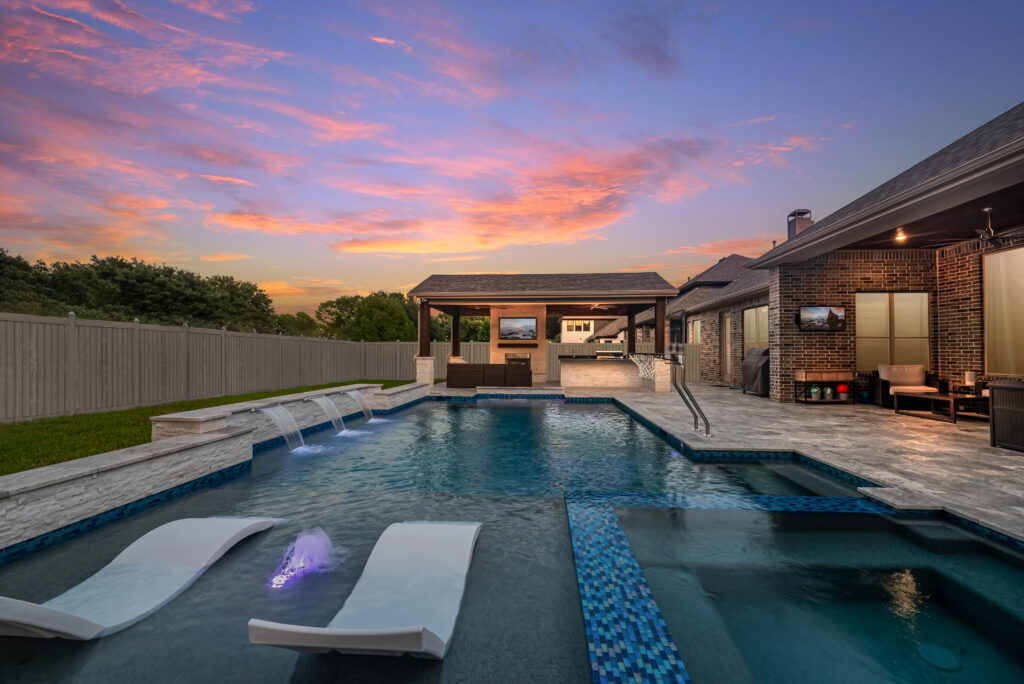
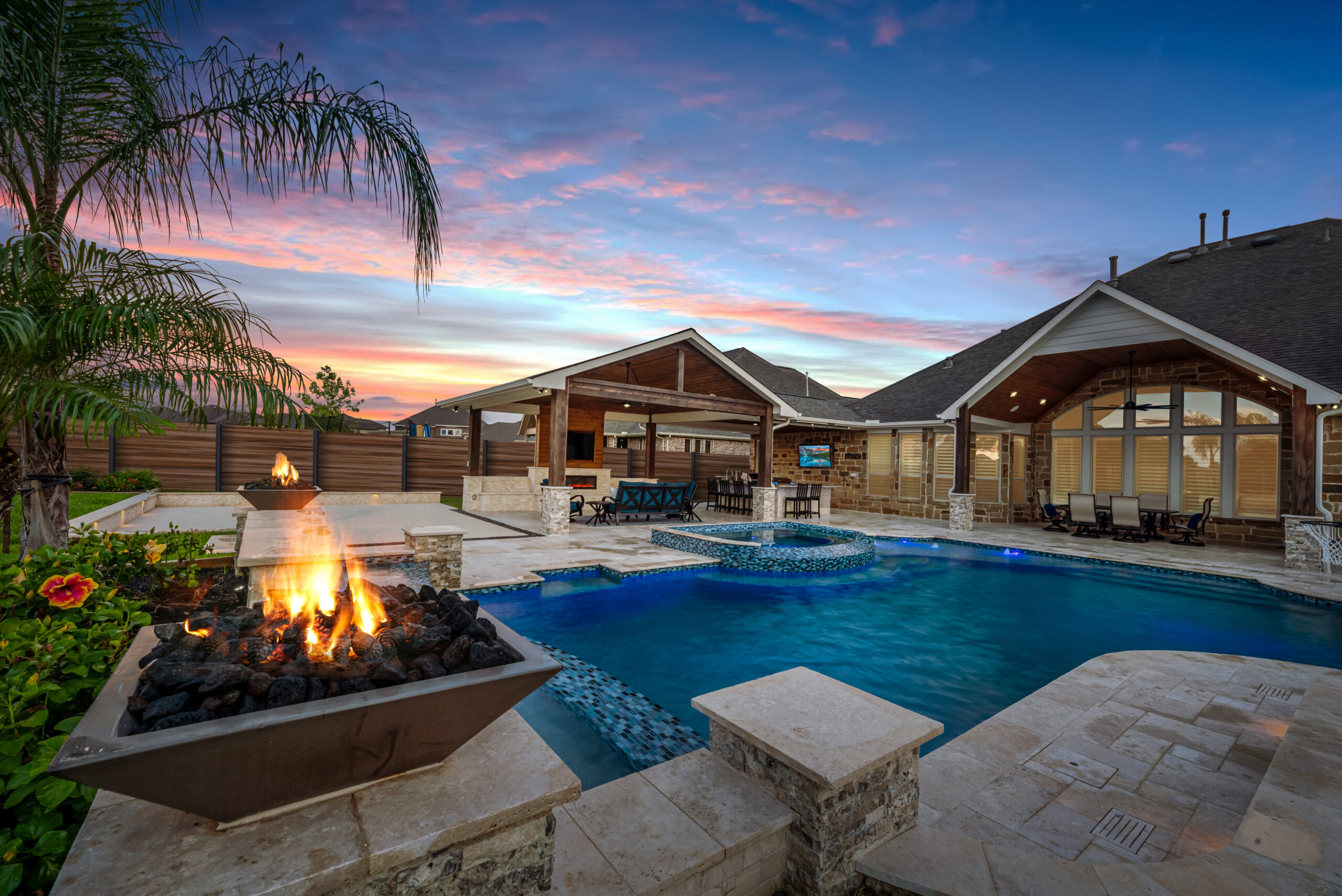
The pool can be the focal point, the outdoor kitchen can serve as an entertaining space, and the dining or fire pit area can provide a comfortable place to gather. Each space should feel like it is meant to be there on its own, but when viewed together, the spaces should make sense and create a natural flow throughout the backyard.
Create Separation Without Losing the Connection
The idea is not to make everything look the same. Using exactly the same materials and finishes everywhere can make a large backyard feel flat and monotonous, with very little personality.
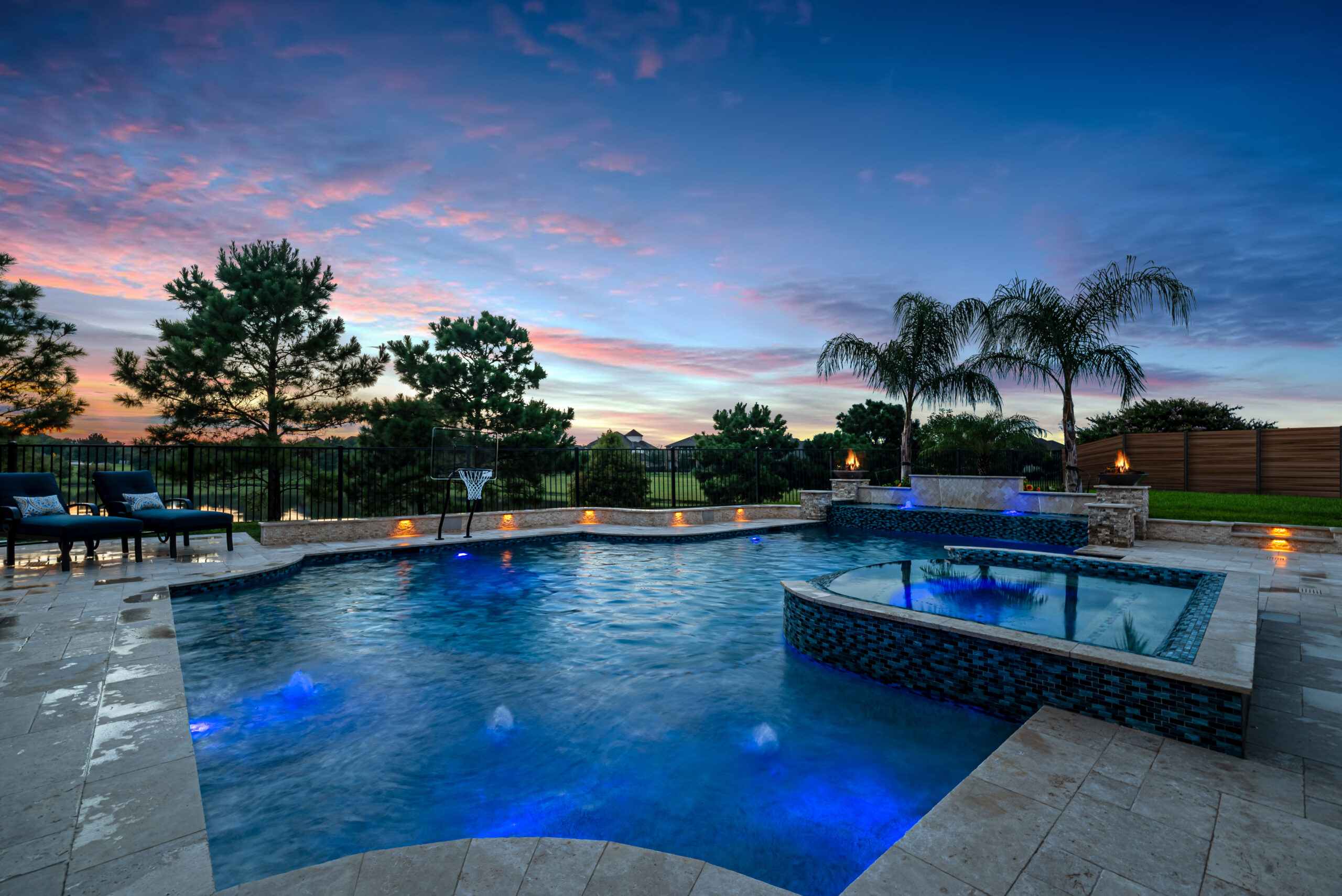
Instead, each space can be defined through changes in materials, color, and texture. This might include waterline tile in the pool, glass tile on the steps or spa, hardscapes on a fire feature, landscaping, or even subtle shifts in elevation.
These transitions help establish where one outdoor room ends and another begins while still allowing the entire backyard to feel connected.
Repeat Colors, Tones and Textures
Choose materials that complement one another and carry subtle similarities from one space to the next.
A color, tone, texture, or finish from the pool area might be echoed in the outdoor kitchen or dining area, while another material, such as a beautiful bright tile, can be introduced to give that space its own character.
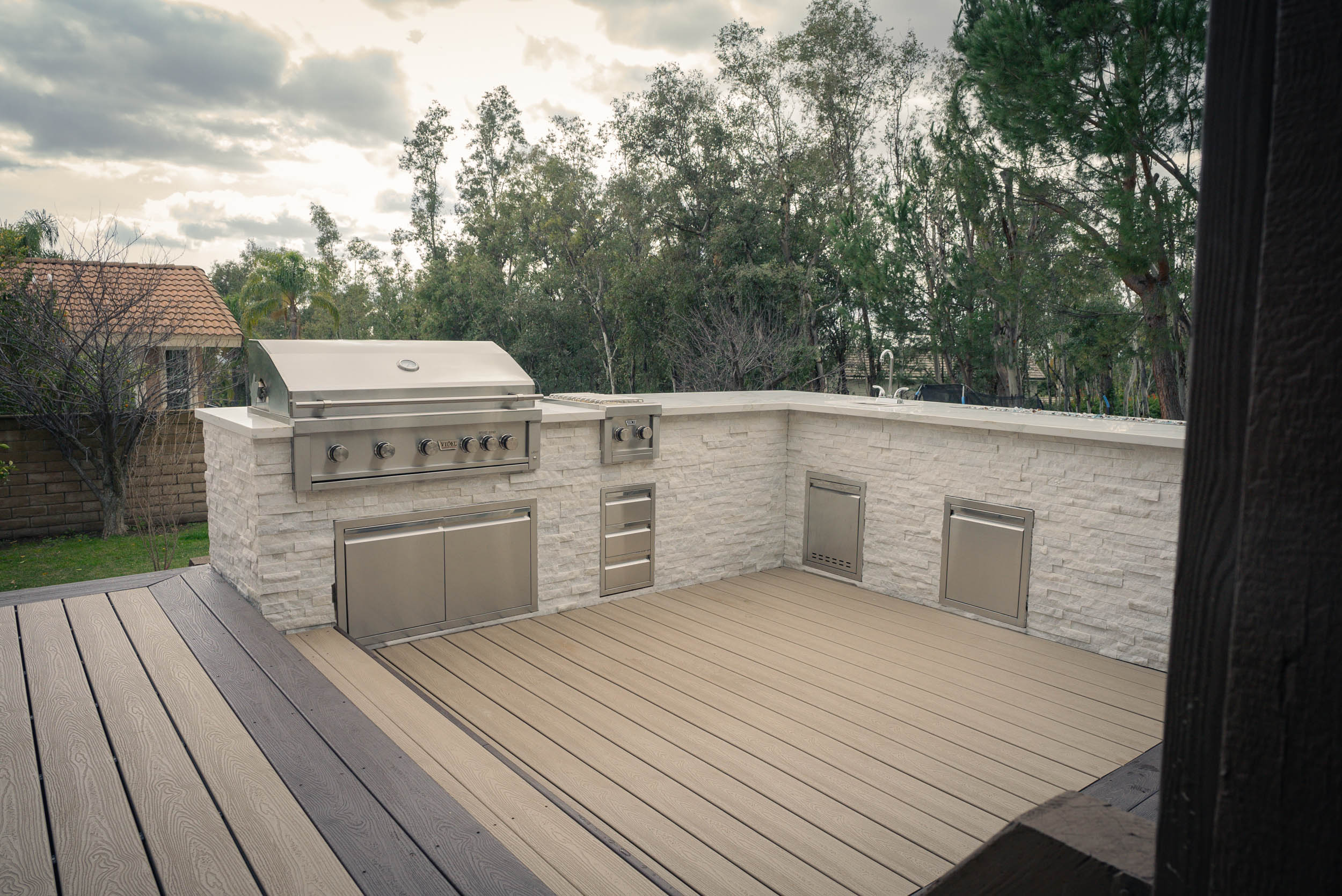
For example, a color found in the pool tile could be repeated in the outdoor kitchen backsplash. A ledgerstone used on an outdoor fire feature might appear again in the lounge area or on a retaining wall.
The repetition does not have to be exact. Sometimes it is simply a similar color or texture that visually connects one area to another.
A Material Combination That Shows How It Works
One example of this approach is the Luxury Lagoon moodboard from Aquabella®.
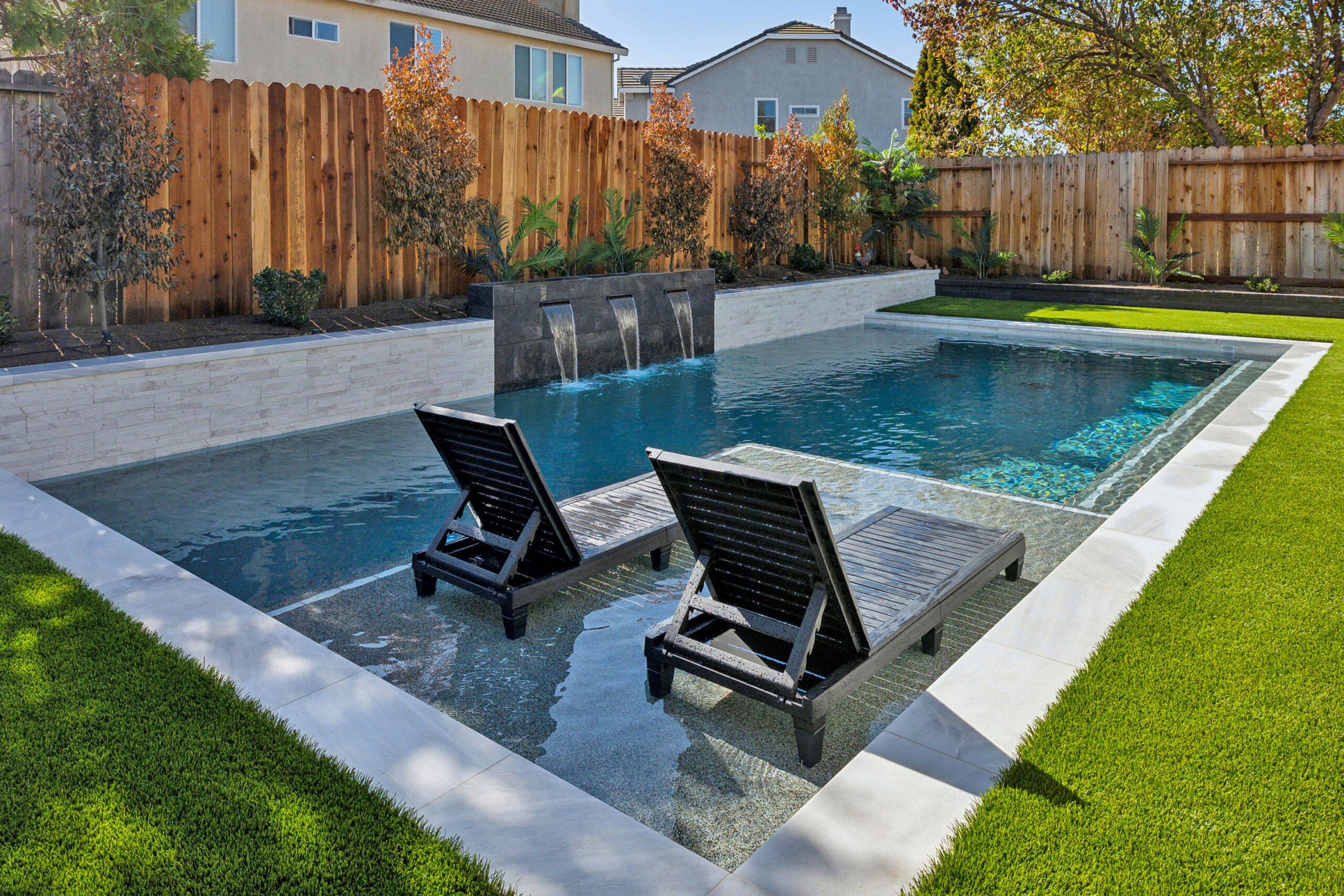
The design brings together several different materials while maintaining a very clear relationship between them. Blue Stone pavers, coping, and ledgerstone provide the natural stone foundation, while the grey and blue tones connect beautifully with the Quantum Prism 6 x 6 waterline tile.
The blue tones in that tile are then carried into the Constellations Leo 1 x 1 glass tile, which introduces a completely different texture and a much bigger wow factor.
The materials do not all look the same, and that is exactly what makes the combination interesting. Each one has its own identity, but they still feel like they belong together.
Use Pathways and Landscaping to Create Flow
Landscaping can also help ease the transition from one outdoor space to another.
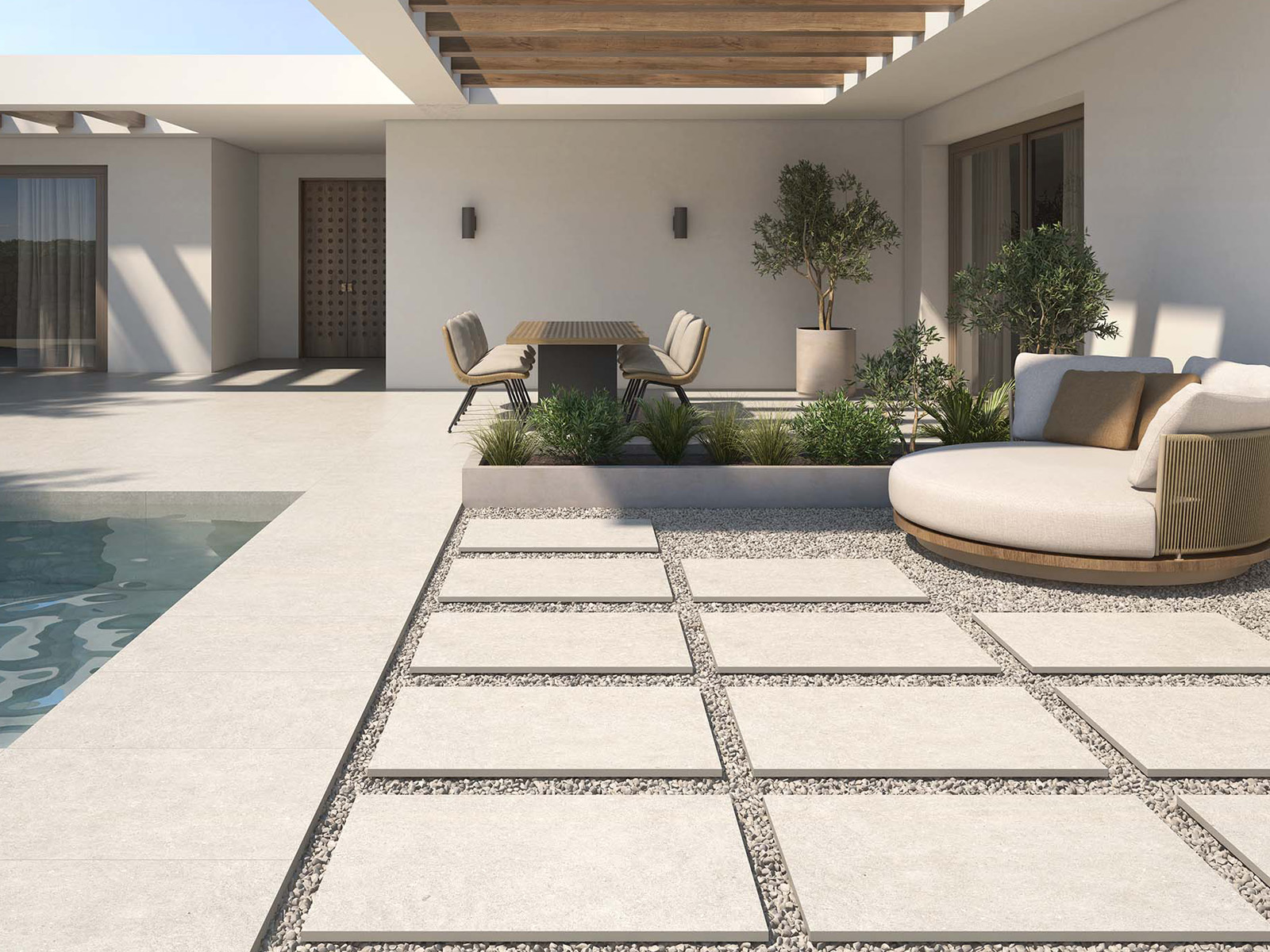
Pathways with porcelain pavers, planting areas and coordinated flooring can naturally guide you from the pool to the dining area, kitchen or fire pit. Changes in materials and elevation can also help signal that you are entering a different space without completely separating it from the rest of the backyard.
The result is not one giant patio with a pool, kitchen, and fire pit placed in the middle of it.
Instead, it becomes a collection of spaces thoughtfully placed based on how each area will be used and how it relates to the surrounding spaces.
Each area feels unique, but the materials still work together as part of one overall design. The end result is a beautiful variation without visual chaos.
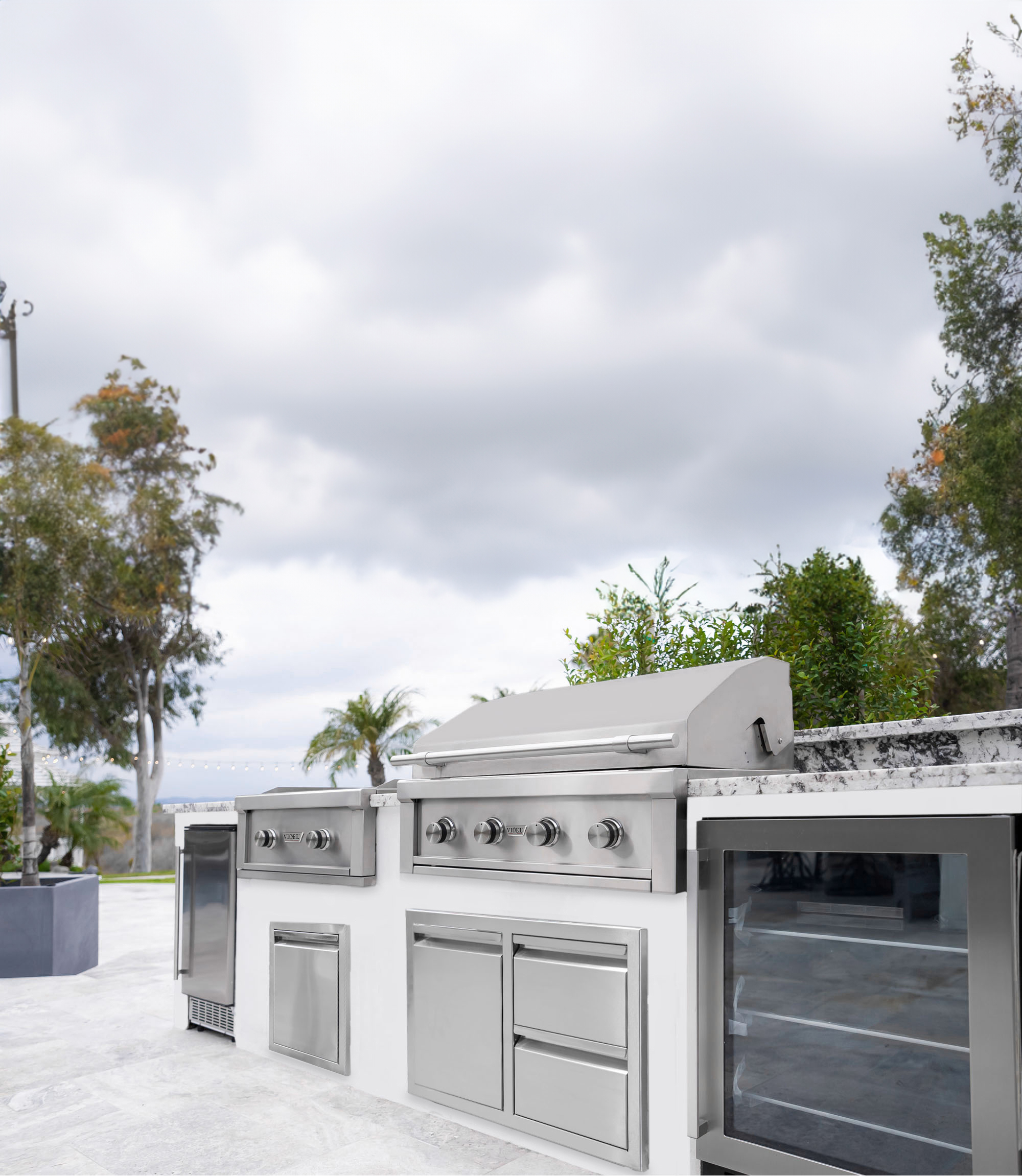
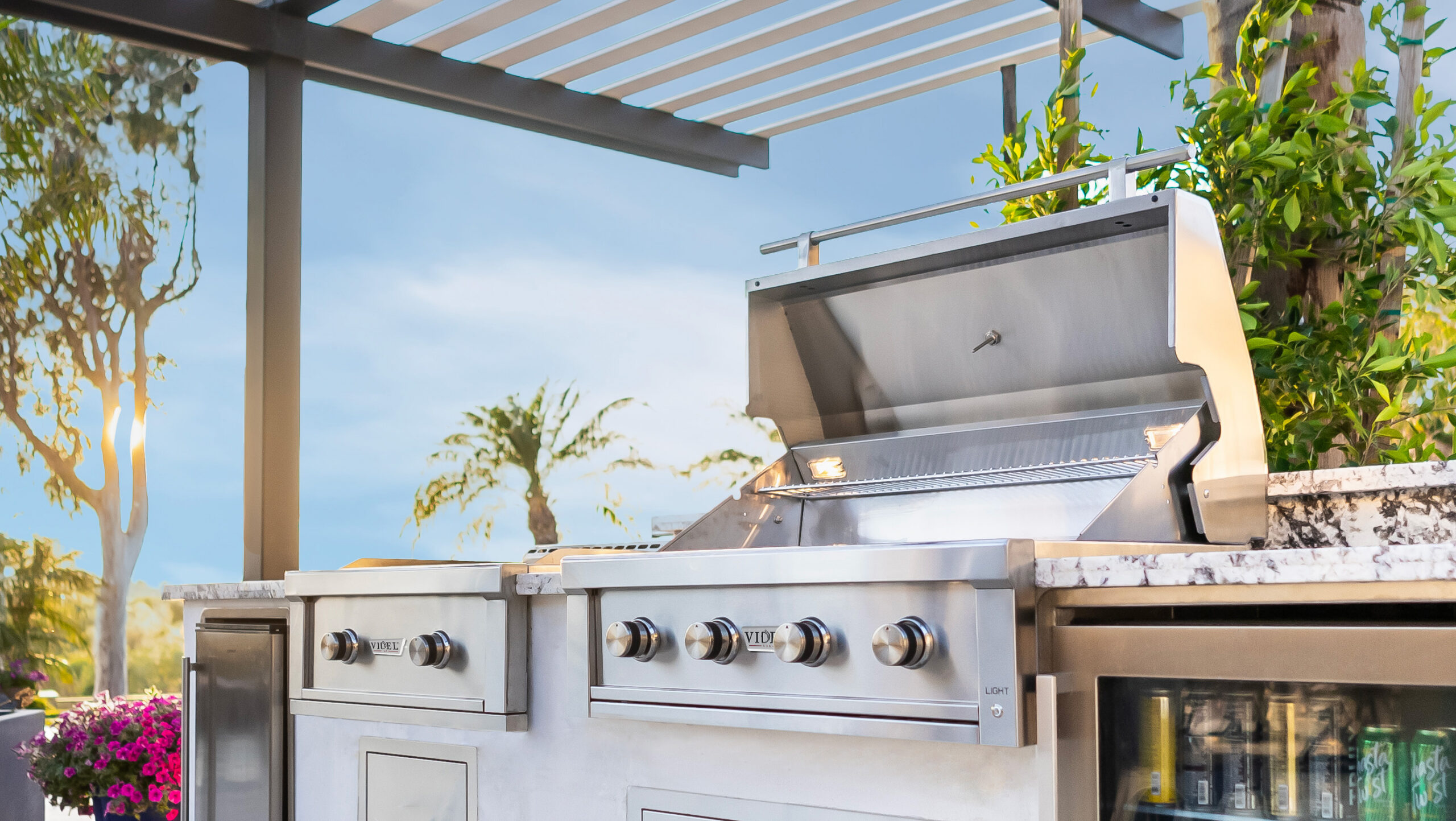
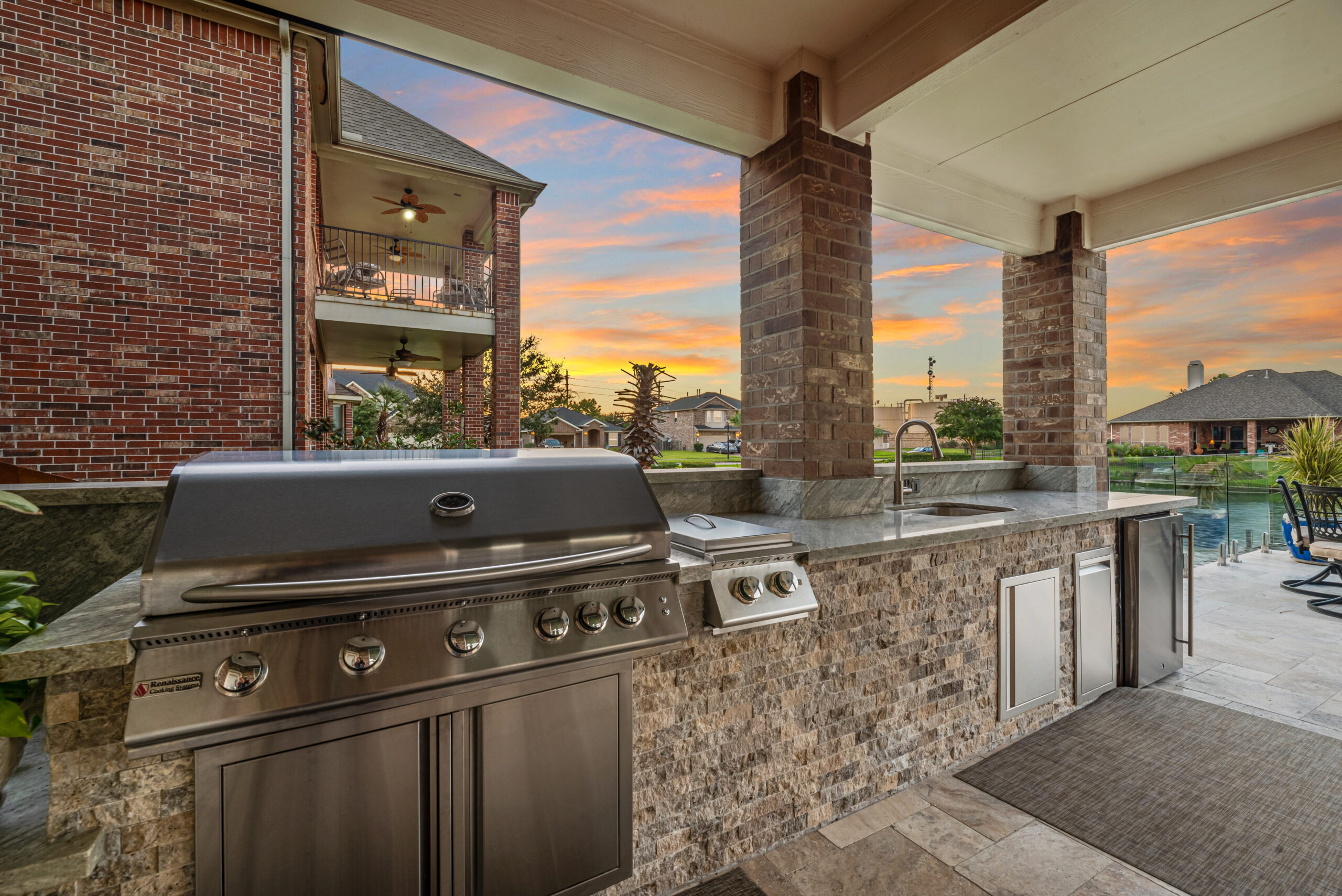
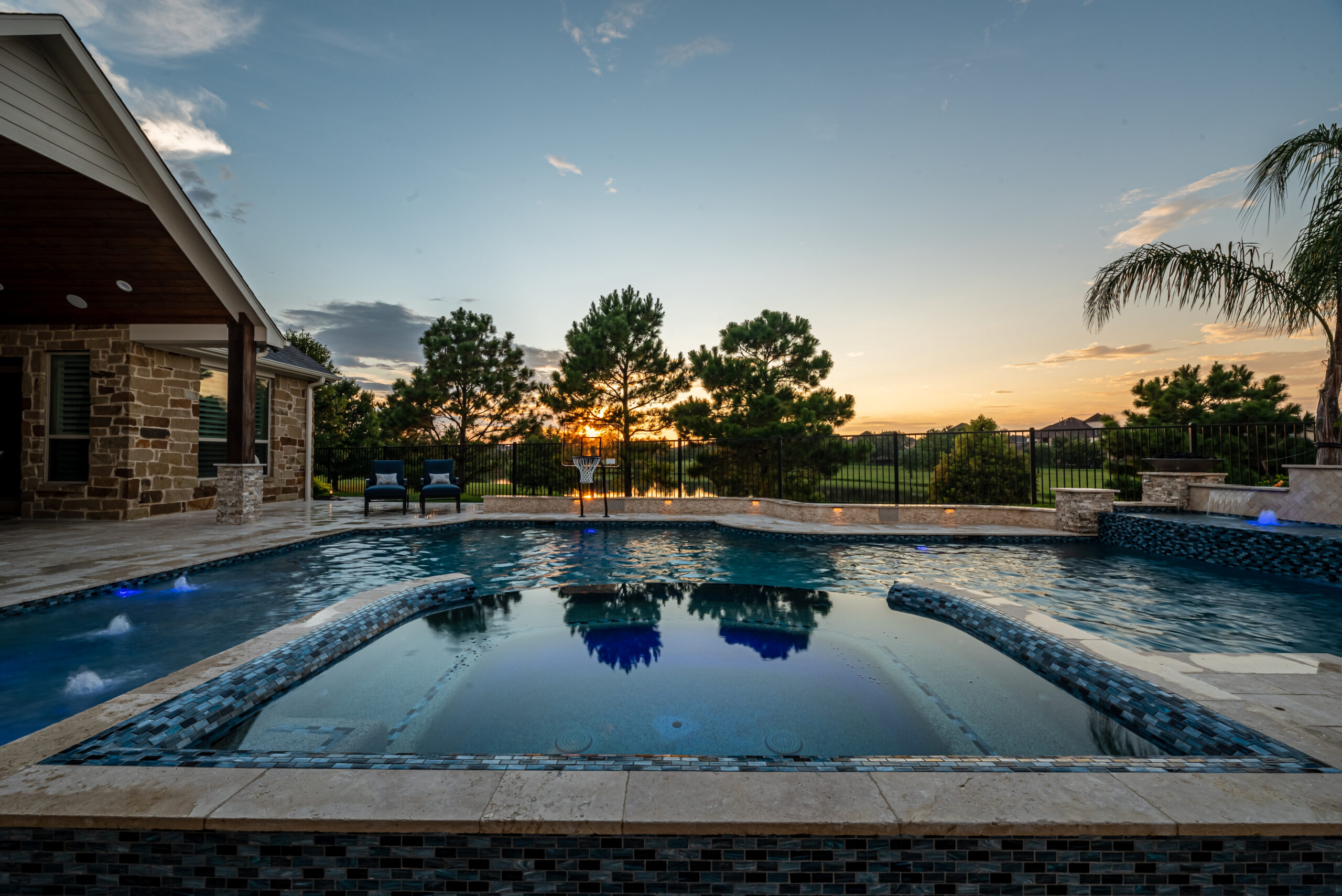
Select Materials as a Complete Palette
A complete material selection can make such a difference.
When the pool tile, coping, hardscapes, porcelain pavers, ledgerstone, and other outdoor features are considered together, the materials become much more powerful together than they are separately. They help create a natural flow from the pool into the surrounding outdoor spaces.
That is why the material selection process should be conducted as a whole rather than selecting each product independently.
When a homeowner is selecting pool tile, they should already be thinking about what will surround the pool, including the coping, pavers, outdoor kitchen, ledgerstone, walkways, and fire features.
Not because everything needs to match, but because the choices need to make sense together.
Give Each Area Its Own Identity
The fun part of designing an outdoor space is being able to look across the backyard and not see the pool as one destination, the kitchen and dining area as another, and the fire pit or lounge sitting somewhere random in between.
Instead, you see several clearly defined destinations that all share the same design language.
Each area feels like it has a purpose. At the same time, the entire backyard feels as if it was designed as a whole rather than assembled one feature at a time.
Design the Backyard as a Whole
Ultimately, a successful outdoor living space should feel as natural and intentional as the home it extends from.
The goal is not to fill every inch of the backyard, but to create spaces that invite people to gather, relax, and enjoy their time.
When the materials and individual spaces are thoughtfully considered from the very beginning, the backyard becomes more than just a collection of features in one big space.
It becomes a place that feels designed as a whole.